Ingredients
-
1 For the Mooli Dhokla: medium radish with leaves (mooli), peeled and grated
-
1/4 cup gram flour (besan)
-
1/2 cup whole wheat flour (roti ka atta)
-
1 small bunch finely chopped fresh coriander leaves
-
1-2 green chillies, finely chopped
-
1 tsp roasted and coarsely pounded whole coriander seeds
-
1/2 tsp carom seeds (ajwain)
-
1 tsp Kashmiri red chilli powder
-
1/2 tsp asafoetida (hing)
-
1.5 tsp coriander powder
-
1/2 tsp turmeric powder
-
1/4 tsp baking soda (a pinch)
-
Salt, to taste
-
Oil, for greasing hands and steamer tray
-
1 cup For the Kadhi: sour curd (dahi)
-
2 tbs gram flour (besan)
-
1.5 - 2 cups water (adjust for desired consistency)
-
1 tsp oil + 2 tsp ghee (plus extra melted ghee for serving)
-
1/2 tsp fenugreek seeds (methi dana)
-
1 tsp mustard seeds (rai)
-
1 tsp cumin seeds (jeera)
-
1/2 tsp asafoetida (hing)
-
A small piece ginger, finely chopped
-
2-3 cloves garlic, finely chopped
-
1-2 fresh chillies, slit
-
A few curry leaves
-
1/2 tsp turmeric powder
-
1.5 tsp coriander powder
-
Salt, to taste
About

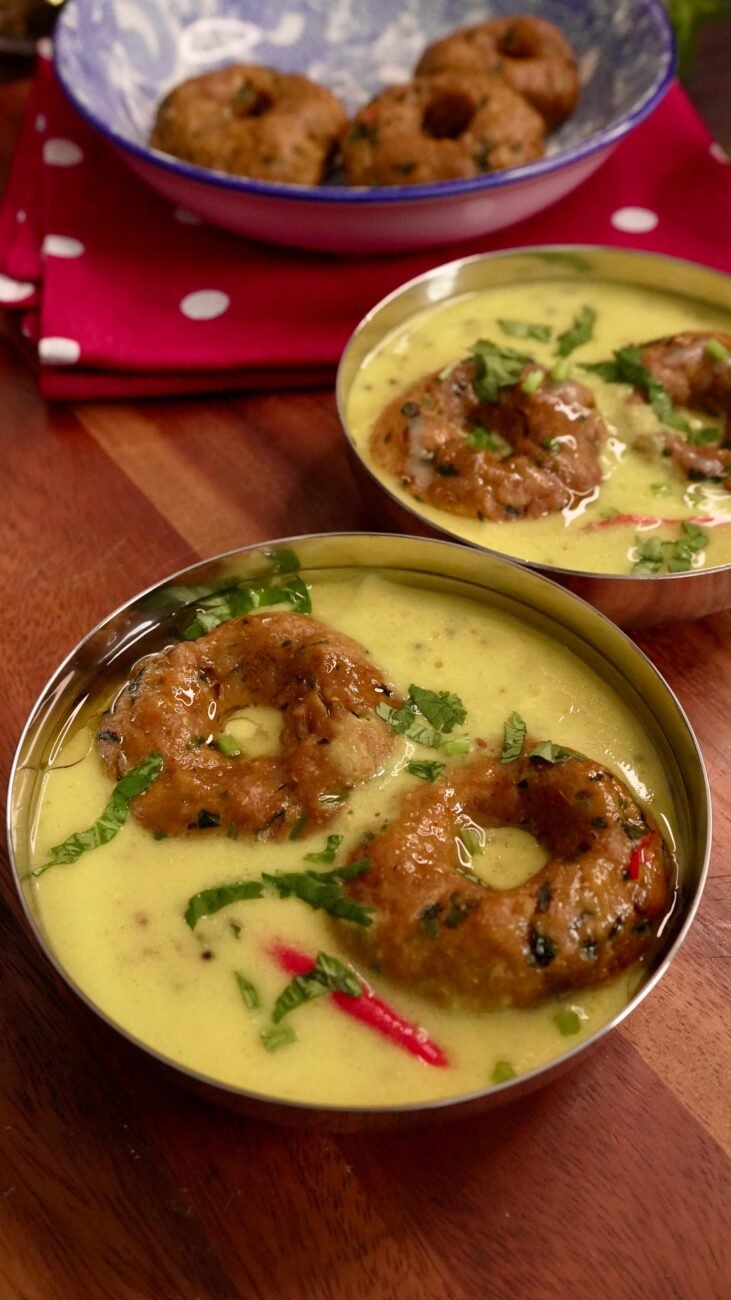
I tried mooli dhokla soaked in hot kadhi with melted ghee and I honestly cannot stop thinking about this single spoonful.
Nutrition
* Nutritional profile: Combining grated radish, whole wheat flour, gram flour, sour curd, and aromatic spices brings together dietary fiber, plant protein, fermented curd, and warming spices. Using ghee and oil adds richness and helps carry flavor and fat-soluble compounds.
* Estimated values (assuming 3 servings): Around 320–370 kcal per serving, with roughly 9–11 g protein, 38–44 g carbohydrates, and 14–17 g fat (exact numbers vary depending on how much extra ghee and kadhi you add at serving).
Zero-Waste & Substitutes
* Zero-waste ideas: Use the radish leaves and mooli peels in a stir-fry, sabzi, or knead them into dough for parathas or rotis; use any leftover kadhi as a base for vegetable soup or dough for soft rotis; pan-sear or air-fry leftover steamed dhoklas for a quick next-day snack.
* Substitutes: Swap whole wheat flour with jowar, bajra, or ragi flour for a millet variation; use buttermilk (chaas) instead of curd and water for the kadhi; omit garlic for a no-garlic version and rely on ginger and hing for flavor.
Steps
|
1
Done
|
In a wide bowl, combine the grated mooli, whole wheat flour, gram flour, chopped coriander leaves, finely chopped green chillies, roasted and coarsely pounded coriander seeds, ajwain, Kashmiri red chilli powder, hing, coriander powder, turmeric powder, baking soda, and salt. |
|
2
Done
|
Mix and knead into a soft dough using the natural moisture from the grated radish. Only add a splash of water if the dough feels too dry to come together. |
|
3
Done
|
Grease your palms and a perforated steamer tray with oil. Shape the dough into ring/donut-style dhoklas, place them on the tray, and steam over boiling water for about 20 minutes until cooked through. |
|
4
Done
|
Whisk together the sour curd, gram flour, and 1.5–2 cups of water until smooth and lump-free. |
|
5
Done
|
Heat 1 tsp oil and 2 tsp ghee in a pot. Add fenugreek seeds, mustard seeds, cumin seeds, and hing, letting them splutter. Stir in the chopped ginger, garlic, slit chillies, and curry leaves, followed by turmeric powder, coriander powder, and salt, and sauté briefly. |
|
6
Done
|
Pour in the curd-besan mixture and cook on medium-low heat, stirring continuously until it comes to a gentle boil and reaches your preferred consistency. |
|
7
Done
|
7. Place the warm mooli dhoklas in bowls, drizzle with melted ghee, pour plenty of hot kadhi over them until well-soaked, and serve immediately. |