Ingredients
-
1 cup Kohinoor Traditional Authentic Basmati Rice
-
Oil for sautéing (approx. 5 tsp total)
-
Finely chopped ginger (approx. 2 tsp total for sautéing and sauce)
-
Finely chopped garlic (approx. 2 tsp total for sautéing and sauce)
-
1 cup mushrooms, thinly sliced
-
3 tbsp soy sauce (2 tsp for mushrooms, 1 tbsp for sauce)
-
1 small zucchini, cut into thick juliennes
-
1 small carrot, cut into thick juliennes
-
150 gm tofu or paneer, cut into cubes
-
Bok choy
-
Salt and black pepper to taste
-
3 tbsp Gochujang
-
2 tsp sugar
-
2 tsp sesame oil
-
1/4 cup water
-
1 tsp vinegar
-
White sesame seeds (for garnish)
-
Spring onion (for garnish)
About

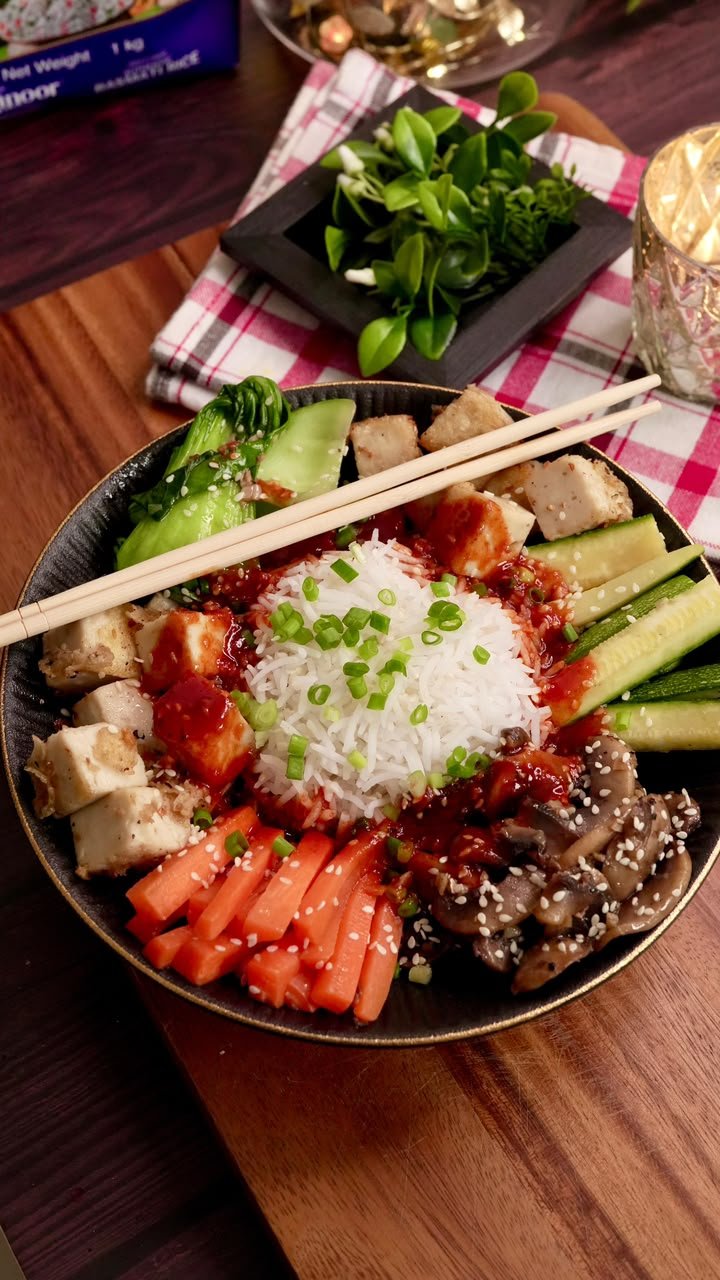
I have always loved Korean food, and I wanted to give my favourite dish a beautiful, aromatic twist! I made this vibrant, flavour-packed Korean Bibimbap at home using Kohinoor Traditional Authentic Basmati Rice. The 2-year naturally aged, extra-long grains give this spicy, saucy bowl the perfect texture, while my homemade Gochujang sauce ties all the fresh veggies and tofu together. The aroma in my kitchen right now is absolutely incredible! Try making this at home, share your photos or videos, and tag me and @kohinoorindiaofficial for a chance to win an exciting gift hamper!
Nutrition
This Bibimbap bowl is a wonderfully balanced meal. The Kohinoor Traditional Authentic Basmati Rice provides excellent carbohydrates for sustained energy, while the tofu or paneer adds a great source of plant-based protein. The colourful variety of vegetables—carrots, zucchini, mushrooms, and bok choy—ensures this dish is loaded with essential vitamins, minerals, and dietary fibre for good gut health. Estimated nutritional values (Assuming 2 servings total):
* Calories: ~450 kcal per serving
* Protein: 15g per serving
* Carbohydrates: 65g per serving
* Fat: 14g per serving
* Fibre: 6g per serving
Steps
|
1
Done
|
Cook 1 cup of Kohinoor Traditional Authentic Basmati Rice and keep it aside. |
|
2
Done
|
In a pan, take 2 tsp oil, add 1/2 tsp finely chopped ginger and 1/2 tsp garlic. Once it gets cooked, add 1 cup thinly sliced mushrooms, salt to taste, black pepper, and 2 tsp soy sauce. Let the mushrooms cook for 5-7 minutes or until they become dry. Take them out and keep aside. |
|
3
Done
|
In the same pan, take 1 tsp oil and 1/2 tsp finely chopped ginger and garlic. Once they are done, add the thick juliennes of 1 small zucchini and 1 small carrot, along with salt and pepper. Toss the vegetables and take them out immediately. Do not overcook, and keep aside. |
|
4
Done
|
Again in the same pan, take 1 tsp oil and 1/2 tsp finely chopped ginger and garlic. Once cooked, add 150 gm tofu or paneer cut into cubes, salt, and black pepper. Once they get brown edges, take them out. |
|
5
Done
|
Cook the bok choy in the exact same way. Please do not overcook the bok choy. |
|
6
Done
|
To make the Bibimbap Sauce, take a mixing bowl and add 3 tbsp Gochujang, 1 tbsp soy sauce, 2 tsp sugar, 2 tsp sesame oil, 1 tsp finely chopped garlic, 1/2 tsp finely chopped ginger, 1/4 cup water, and 1 tsp vinegar. |
|
7
Done
|
Mix everything well and cook the sauce in a pan until you get one boil. Take it out and bring it to room temperature. |
|
8
Done
|
To serve, place the cooked rice in the center of a bowl. Around the rice, place all the veggies and tofu/paneer, as shown in the video. |
|
9
Done
|
9. Drizzle the prepared Bibimbap sauce on top and garnish with white sesame seeds and spring onion. |
|
10
Done
|
Zero-Waste & Substitutes * Zero-Waste: I never throw away mushroom stems or carrot peels! I keep a dedicated bag in my freezer for all these vegetable scraps, and once it is full, I boil them to make a rich, flavorful vegetable stock that I use to cook my rice instead of plain water. * Substitutes: If you do not have tofu, paneer is a fantastic substitute that works just as beautifully in this bowl. If you are out of brown sugar for the sauce, a little jaggery powder or maple syrup will give you that exact same touch of sweetness to balance the spicy Gochujang. |