
10 Health Benefits of Eating Millets for Daily Nutrition
A small grain can make an everyday meal feel more nourishing and varied. The benefits of eating millets come from their mix of nutrients and fibre, but what they offer depends on the millet and how it fits into the rest of your meal.
Across India, millets such as ragi, jowar and bajra are familiar ingredients, but it can be hard to know what sets them apart or how to use them beyond roti or porridge. Millet is not one grain, but a group of cereal grains with different flavours, textures and nutritional profiles.
This guide explains what millet is and explores how its nutrients, fibre and antioxidant compounds relate to blood sugar, digestion and immunity. You’ll also learn why grain choice and preparation matter, including how soaking can affect cooking and texture, so you can add millets to everyday meals with confidence and plenty of flavour.
Key Takeaways
- Choose a millet variety to suit the dish, since grain size and texture affect the result.
- See how millet’s fibre and nutrients may fit into meals that support digestion and balanced blood sugar.
- Understand what antioxidants do in the body without treating them as a shortcut to prevent ageing or illness.
- Learn when soaking can help with preparation and how to troubleshoot grains that turn too soft or remain firm.
- Explore measured millet recipes and find fresh ideas for adding these grains to everyday meals.
Antioxidants and oxidative stress
Antioxidants are part of the conversation about millet grains, but they are not a cure or a shortcut to youthful skin. Understanding the terminology helps put claims about ragi, jowar and other cereals in perspective.
Antioxidant Content
Antioxidant content refers to compounds in food that can interact with reactive molecules in the body. In millet, it is one aspect of a grain’s composition, alongside nutrients such as fibre and protein. Ragi, jowar and bajra are different grains, so a single figure cannot describe every millet variety or dish.
A meal’s antioxidant content also depends on its ingredients. A bowl of ragi porridge, for example, is not nutritionally identical to a mixed-grain dish with vegetables. Looking at the whole meal gives a more useful picture than treating “antioxidant” as a complete measure of food quality.
Antioxidant Properties
Antioxidant properties describe how compounds interact with reactive molecules. Oxidative stress refers to an imbalance involving these molecules and the body’s defences. This helps explain why foods containing antioxidant compounds are discussed in nutrition, but it does not show that one millet meal prevents disease or reverses damage.
Claims about anti-aging benefits also need care. Bajra or foxtail millet can be part of varied everyday meals, but neither grain is a treatment for ageing. Skin and general health are influenced by many factors, so one cereal cannot replace a varied diet and broader lifestyle habits.
Treat antioxidant content as a reason to add variety, not as a promise. In an Indian meal, ragi roti, jowar bhakri or bajra khichdi each bring a different grain and texture to the plate. Pairing them with vegetables, pulses and other foods creates a more balanced meal than relying on one ingredient for cholesterol, anti-aging or overall wellness.
Blood sugar control
Commonly eaten millets in India include ragi, jowar, bajra and foxtail millet, each with a distinct nutrient profile. Among the benefits of eating millets, their fibre and minerals can complement balanced meals. Research suggests they may affect blood sugar, blood lipids and blood pressure.
Blood Sugar and Glycemic Index
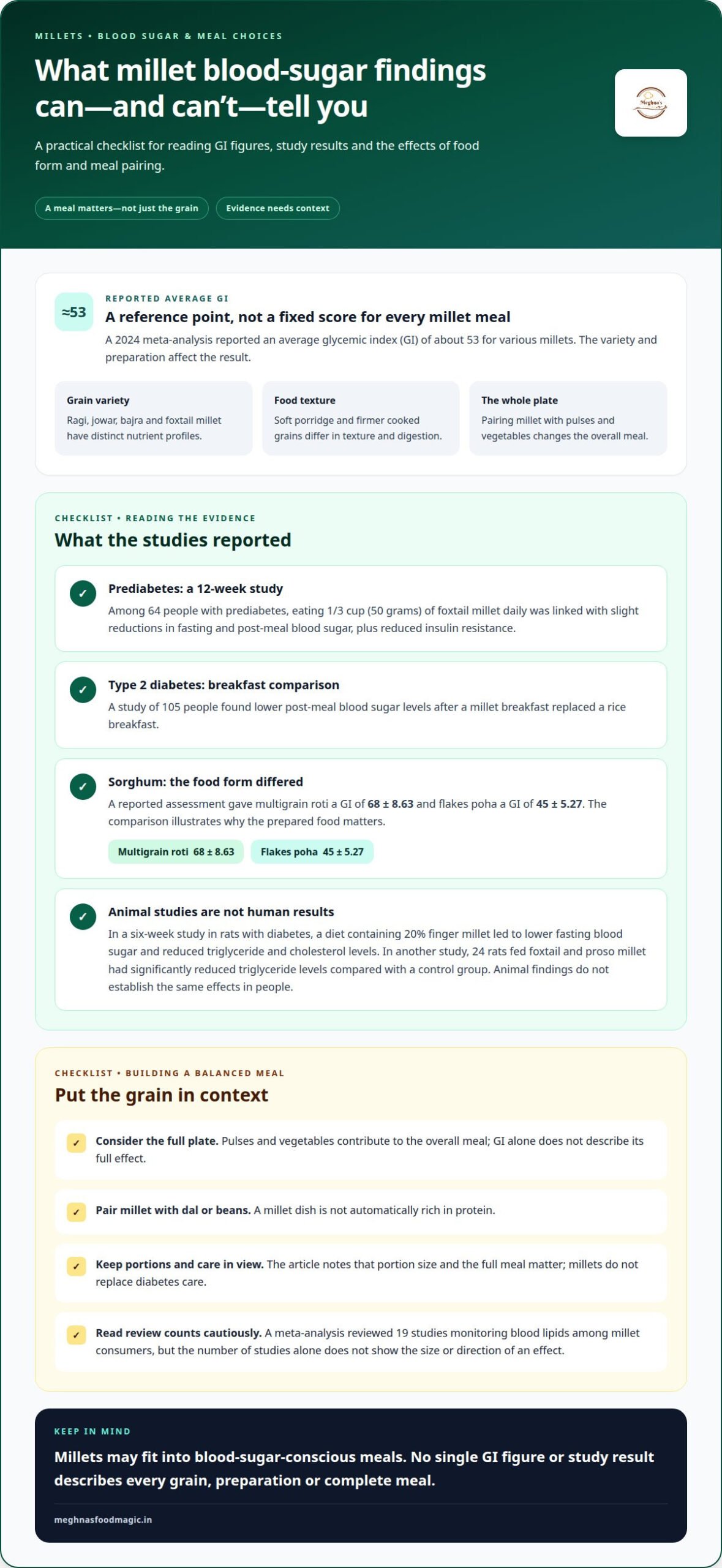
The glycemic index (GI) ranks carbohydrate foods by their effect on blood sugar after eating. A 2024 meta-analysis reported an average GI of about 53 for various millets, though variety and preparation affect the meal. Soft porridge and firm cooked grains differ in texture and digestion. Pairing millet with pulses and vegetables also changes the overall meal, so GI alone doesn’t describe its full effect.
Diabetes and Blood Sugar
Millets may fit blood-sugar-conscious meals, but they don’t replace diabetes care. In a 12-week study of 64 people with prediabetes, eating 1/3 cup (50 grams) of foxtail millet daily was linked with slight reductions in fasting and post-meal blood sugar, plus reduced insulin resistance. A study of 105 people with type 2 diabetes found lower post-meal levels after a millet breakfast replaced a rice breakfast. These findings don’t mean millet alone reduces diabetes risk or ensures weight loss; portion size and the full meal matter.
Millets contain potassium, which supports blood pressure regulation. A meta-analysis reviewed 19 studies monitoring blood lipids among millet consumers, but that review count alone doesn’t show the size or direction of an effect. Millets also contain fibre and prebiotics that promote beneficial gut bacteria. The benefits of eating millets can include adding variety to meals, but a millet dish isn’t automatically rich in protein; pair it with dal or beans for a more balanced plate. Explore millet cooking ideas for Indian-inspired serving ideas.
Animal evidence adds context but does not establish the same effects in people. In a six-week study in rats with diabetes, a diet containing 20% finger millet led to lower fasting blood sugar and reduced triglyceride and cholesterol levels. A study in 24 rats found that those fed foxtail and proso millet had significantly reduced triglyceride levels compared with a control group.
Sorghum foods also differed in a reported assessment: multigrain roti had a glycemic index of 68 ±8.63, while flakes poha had a glycemic index of 45 ±5.27. These findings underscore that food form can matter when considering blood sugar effects.
Millet protein, calcium, and other nutrients
Millet varieties provide different combinations of protein, fibre, minerals and carbohydrates. Consider both the grain and the serving to get a clearer picture than a single nutrient claim can offer.
Millet Nutritional Profile
A millet’s nutritional profile is its mix of nutrients, which matters when choosing grains for everyday meals. Little millet provides carbohydrates, protein, and dietary fibre. It also contains 17 milligrams of calcium, 9.3 milligrams of iron, and 119 milligrams of magnesium.
Finger millet, or ragi, stands out for calcium: one cooked cup (100 grams) provides 13% of the Daily Value. Millets are naturally gluten-free, but that fact alone doesn’t make a dish suitable for every nutritional need.
Nutritional Comparison With Rice and Wheat
Millets, rice and wheat differ in nutrient content, and comparisons depend on the specific grain and whether it is whole or refined. Millets provide protein, fibre and micronutrients such as magnesium, potassium and zinc. They are another useful grain choice, not an automatic replacement for every food.
For cooked millet, one cup (174 grams) contains 6 grams of protein and 2.2 grams of fibre. The glycemic index also varies by millet and preparation, so it shouldn’t be treated as a fixed value for every meal.
A listed serving of cooked millet is about 1 cup. There’s no universal adult frequency established here; rotate grains according to your usual meals and nutritional needs. For Indian dishes, use millet in place of rice in pulao or pongal, or cook it with dal and vegetables. A serving also provides magnesium and phosphorus, while ragi contributes calcium. This variety can support a balanced intake, but no single grain prevents disease or controls blood pressure on its own.
Digestive health and dietary fiber
Fibre gives millet a practical role in everyday digestive health. One cup (174 grams) of cooked millet contains 2.2 grams of fibre, which adds to your daily intake and helps support bowel regularity as part of a varied diet. The amount in a serving can differ by millet and preparation, so consider the whole meal rather than relying on one grain.
Little millet offers another example: it contains 9.8 grams of dietary fibre per 100 grams in the listed nutrition profile. Fibre adds bulk as food moves through the digestive tract. To make millet part of a comfortable meal, serve it in a familiar form, such as little millet pongal with moong dal, and adjust the portion to your usual eating pattern.
Millets also contain prebiotics, which promote the growth of beneficial gut bacteria. Gut health involves more than feeling full after eating. A bowl combining millet, lentils and vegetables brings different ingredients together; introducing new dishes gradually can also make it easier to notice how they suit you.
Whole cooked grains and millet flour create different textures, so choose the form that suits the dish. Cooked grains hold their shape in vegetable pulao, while millet flour works in roti or dosa batter. Fibre varies across millet varieties and forms; calcium and other minerals are separate nutritional features, not measures of fibre. Understand these benefits as part of an overall eating pattern, not a promise that millet alone will resolve digestive discomfort.
Immunity
Millets can contribute nutrients that support normal body functions, including immune function. They are not an immunity treatment, and no single grain can supply everything the body needs. Cooked millet with dal and vegetables adds variety, while the overall eating pattern matters more than any one ingredient.
Magnesium is one useful example. One cup (174 grams) of cooked millet provides 19% of the Daily Value for magnesium. This mineral supports many processes in the body, but that figure describes nutrient content, not a measured boost to immunity. Millet also contains zinc, another micronutrient involved in normal body functions, though levels vary by grain and serving.
Cooked millet provides B vitamins as well. One cup supplies 15% of the Daily Value for thiamin and 14% for vitamin B3. These vitamins help the body use energy from food; a varied diet can bring them together with other nutrients. For instance, serve millet with beans, greens, and seasonal vegetables rather than relying on a plain bowl alone.
Ragi, jowar and bajra have distinct nutritional properties, so rotating them can add variety to Indian meals. Finger millet is notable for calcium, while cooked millet contributes magnesium, phosphorus and iron. These nutrients support normal body functions, but millet is not a cure for infections or a substitute for medical care. Build a colourful plate by pairing millet roti with dal and vegetables, or folding cooked grains into vegetable khichdi. This brings different foods and nutrients together without relying on one grain.
Chef Meghna’s Notes
First, choose a grain in the form and texture you want. Foxtail millet works well as a separate, fluffy base for pulao, while little millet suits pongal, where a softer, cohesive texture is welcome. For rotis or cheelas, use millet flour rather than expecting whole grains to bind like dough. Choosing the right form makes the dish easier to prepare.
For a gentler cooking routine, soak whole grains before cooking. A general preparation method suggests soaking millet for 6-12 hours, then rinsing it; little millet can instead be soaked for 30 minutes to an hour as an optional step. Soaking softens the grains and can help them cook more evenly. Drain and rinse before adding fresh cooking liquid.
Use enough water or broth to cook the millet until tender, adjusting the amount to suit the grain. Bring it to a boil, then simmer for about 20 minutes. Keep the lid on while it cooks. Once tender, let it stand covered for 10 minutes so the remaining moisture settles through the grains before fluffing with a fork.
If the millet turns mushy, use less liquid next time or stop cooking as soon as the grains are tender. If the grains remain firm, add a little hot water and continue simmering with the lid on. For a rice-like pulao, little millet is one option; for creamy breakfast porridge, cook it longer with extra liquid. Taste before serving, then adjust with salt, lemon or spices to suit the dish. These small changes help you get the texture you want, whether you’re making a fluffy side or comforting khichdi.
Millet Recipes
Millets fit naturally into familiar Indian dishes when you match the grain to the texture you want. These recipes pair a soft, comforting pongal with a vegetable pulao made using distinct grains.
Little Millet Pongal
Moong dal makes the pongal creamy, while cumin, pepper and ginger add warmth. For two to three servings, use:
- 1 cup little millet
- ½ cup moong dal
- 3 cups water
- 1 teaspoon cumin seeds
- ½ teaspoon lightly crushed black pepper
- 1 teaspoon grated ginger
- 1 tablespoon ghee and salt to taste
Rinse the millet and dal, then cook them with water and salt until soft. Warm ghee in a small pan, add cumin, pepper and ginger, and stir the tempering into the cooked mixture. Add a little hot water if you prefer a looser consistency.
Foxtail Millet Vegetable Pulao
Foxtail millet makes a satisfying base for colourful pulao. Measure out:
- 1 cup foxtail millet and 2 cups water
- ½ cup diced carrot and ½ cup green peas
- 1 small sliced onion
- 1 tablespoon oil and ½ teaspoon cumin seeds
- ¼ teaspoon turmeric, ½ teaspoon garam masala, and salt
Rinse the millet. Sauté cumin and onion in oil, then add vegetables, spices and salt. Stir in the millet and water, cover and cook until tender. Leave covered to rest before fluffing. Replace peas with diced beans, or finish with chopped coriander.
If the pulao seems too firm, add a little hot water and continue cooking briefly; avoid repeated stirring to help the grains hold their shape. Serve either recipe with plain yoghurt or a vegetable side. For more inspiration with these grains, explore the millet recipe ideas on Meghna’s Food Magic’s YouTube channel.
Meghna’s Food Magic: Millets Recipes
Meghna’s Food Magic brings millet cooking ideas together for readers ready to turn nutrition knowledge into enjoyable everyday meals. If you’re deciding how to use ragi, jowar, bajra or little millet, explore its millet recipes for ideas featuring different grains, textures and familiar Indian-style dishes.
The Free Digital Recipe Database gives home cooks a place to browse ideas and find practical ways to vary their meals. Choose a preparation that fits your routine: a soft breakfast, a grain-based main or a snack made with millet flour. Picking by dish and texture makes it easier to start with an approachable recipe, rather than treating every millet as interchangeable.
If protein is a priority, explore the High Protein Recipes and Vegetarian High Protein Recipes collections. Find meal ideas to pair with millet, such as a grain dish served with dal, beans or vegetables. The Weight Loss Fitness Recipes collection offers more ideas for fitness-oriented meals while keeping flavour and familiar ingredients on the menu.
Use these collections for cooking inspiration, not as a prescribed diet or a promise of health results. Try a millet recipe, notice which grain and texture you enjoy, then add that dish to the variety of meals you already prepare. A simple kitchen experiment, such as swapping the grain in a familiar pulao, can make a new ingredient easier to use. Choose recipes to suit your tastes, meal preferences and cooking plans.
Explore Meghna’s Food Magic for more millet recipe ideas and everyday cooking inspiration.
Make Your Next Meal a Millet Meal
Let curiosity guide your next kitchen experiment. Choose a millet you haven’t cooked before and adapt a familiar dish to make it your own. Exploring the benefits of eating millets can start with one enjoyable meal, not a strict set of food rules.
Keep the process playful: try a new seasoning or pair the grain with a dal you already enjoy. If you’d like fresh ideas for your next kitchen experiment, browse millet recipe inspiration on Meghna’s Food Magic’s YouTube channel.
Everyday nourishment can be thoughtful and delicious. Enjoy discovering the combinations that work for you.
Frequently Asked Questions
What Is Millet?
Millet is a group of cereal grains, not one specific grain. Indian cooking uses varieties such as ragi, or finger millet, jowar, bajra, foxtail millet and little millet. Each has its own flavour and cooking qualities. Choose whole grains when you want distinct pieces in a dish, or millet flour when the recipe calls for a flour-based preparation.
How much protein, fiber, iron, calcium, and other nutrients do different millets contain?
Nutrient amounts vary by millet and by whether it’s measured dry or cooked. As a reference, a quarter-cup of dry millet contains 5.5 grams of protein and 4.25 grams of fibre. One cup of cooked millet provides 6% of the Daily Value for iron, while cooked finger millet provides 13% of the Daily Value for calcium per 100 grams. Check the specific grain and serving when comparing nutrition.
Do millets contain antinutrients, and how can soaking or cooking reduce them?
Don’t assume every millet contains the same antinutrients or that soaking and cooking remove them. Treat soaking and cooking as preparation steps, and follow the method for the particular grain and dish. A recipe may call for soaking to achieve its intended texture; that instruction alone does not show that antinutrients have been reduced. Soaking is not a guaranteed way to change a food’s nutritional content.
Are millets safe for people with thyroid conditions or gluten intolerance?
Millets are naturally gluten-free, so they can be an option for people avoiding gluten. For celiac disease, prevent gluten cross-contact during storage and preparation. Thyroid concerns need a separate consideration: a rat study found goiter more prevalent when millet supplied 74% rather than 37% of calories. That animal finding doesn’t establish the effect of ordinary portions in people or make millet a treatment for thyroid conditions.
How much millet should adults eat, and how often?
A serving of cooked millet is about 1 cup. There’s no universal adult frequency; rotate it into meals according to your usual eating pattern and nutritional needs.
Disclaimer
This is a recipe food blog page and not nutrition or doctor and hence do not claim to cure any illness. If you have specific health issues please consult a qualified doctor or certified nutritionist.
I do consult experts, research Internet and at times seek help from Gemini to collect relevant information to put together some of these blogs.

