
15 Best High Protein Recipes for Weight Loss and Fitness
What if the secret to your transformation isn’t a complex 100-page rulebook, but just 1 simple shift in how you view your plate? It’s completely normal to feel overwhelmed by conflicting diet advice or bored to tears by the same three “healthy” meals you’ve been rotating for weeks. You want to feel strong and light, but the struggle to find high-protein vegetarian options that actually taste good is real. We understand that wellness should feel like an invitation to create, not a list of restrictions to follow.
You’re about to discover the single most effective approach to sustainable weight loss and high-protein vegetarian cooking through Chef Meghna’s expert-led digital recipe database. This isn’t about clinical nutrition; it’s about celebratory food that fuels your body and soul. We’ve curated 15 incredible recipes that move beyond boring salads to bring joy and flavor back to your fitness journey. From clever uses of millets to protein-rich snacks, these dishes are designed to make your health goals feel like a treat rather than a task. Let’s get started on this delicious path to a healthier you.
Key Takeaways
- Discover how focusing on 1 simple shift in your nutrition can simplify your fitness journey while delivering massive results.
- Learn why millets like Jowar and Ragi are the ultimate superfoods for achieving your weight loss goals with ease.
- Understand the critical importance of soaking millets to ensure they are easy to digest and packed with nutrients.
- Master high-protein recipes that turn every meal into a vibrant celebration of flavor and health.
- Unlock an expert-led digital recipe database to find the perfect, single starting point for your wellness journey.
Understanding the Power of ‘1’: Why One Small Change Leads to Massive Results
Health often feels like a giant mountain of complex rules, but the truth is much simpler. The number 1 represents the origin of every great change. Instead of chasing a hundred different diet trends, focusing on a singular goal like high-protein nutrition can clear the mental fog. When you simplify your focus, you reduce the noise that usually leads to burnout and confusion. It’s about finding that single starting point that feels right for you.
The #1 rule in healthy cooking isn’t about counting every single calorie until you’re exhausted. It’s about the quality of the ingredients you put into your pan. Choosing nutrient-dense, whole foods naturally regulates your appetite and energy levels. It’s a shift from restriction to abundance. When you prioritize protein, you’re giving your body the building blocks it needs to thrive without feeling deprived.
We believe in a beautiful sense of unity in the kitchen. This means harmonizing those beloved, traditional Indian flavors with modern health requirements. You don’t have to give up the soul of your food to get fit. You just need to reimagine it. Starting with just one high-protein meal a day is a total game-changer. It builds a foundation of success that makes the next step feel effortless and exciting.
From Mathematical Unity to Culinary Harmony
In the world of numbers, 1 is the source of everything. In your kitchen, it represents that very first ingredient you choose to change. Chef Meghna advocates for a “One Holistic Lifestyle” where wellness isn’t a chore but a celebration. This harmony begins when you swap out a refined staple for a single, better alternative like Jowar or Ragi. It’s a small pivot that creates a massive ripple effect in how you feel throughout the day.
The #1 Obstacle for Home Cooks
Most people quit their health journey because of decision fatigue. There are too many recipes and too many conflicting opinions. This is the primary pain point that stalls progress for even the most dedicated home cooks. Instead of getting lost in a sea of random search results, you need a singular, trusted source. The Meghna’s Food Magic database serves as that one expert-led solution. Having one expert mentor to guide you through the process is far more effective than trying to piece together advice from a thousand different places. It turns cooking into a form of culinary therapy that brings harmony and excitement back to your daily life.
The #1 Superfood for Weight Loss: Why Millets are the Ultimate Wellness Staple
Millets are the heart of a vibrant, health-conscious kitchen. They aren’t just grains; they’re nutritional powerhouses that simplify your wellness journey. For anyone managing diabetes or looking to shed weight, millets like Jowar, Bajra, and Ragi are the #1 choice. They offer a low glycemic index, which means your blood sugar stays stable while you feel full and satisfied for longer. This single shift in your pantry can transform your energy levels almost overnight.
There’s one non-negotiable rule when cooking with these ancient grains: you must soak them. It’s not just about making them soft for the pot. Soaking is a technical necessity that transforms the grain from a hard seed into a digestible, nutrient-rich meal. When you integrate just one millet-based meal into your daily routine, you’re choosing a high-fiber, high-protein lifestyle that supports your fitness goals without the need for complex calorie counting.
The Science of Soaking: Chef Meghna’s Technical Guide
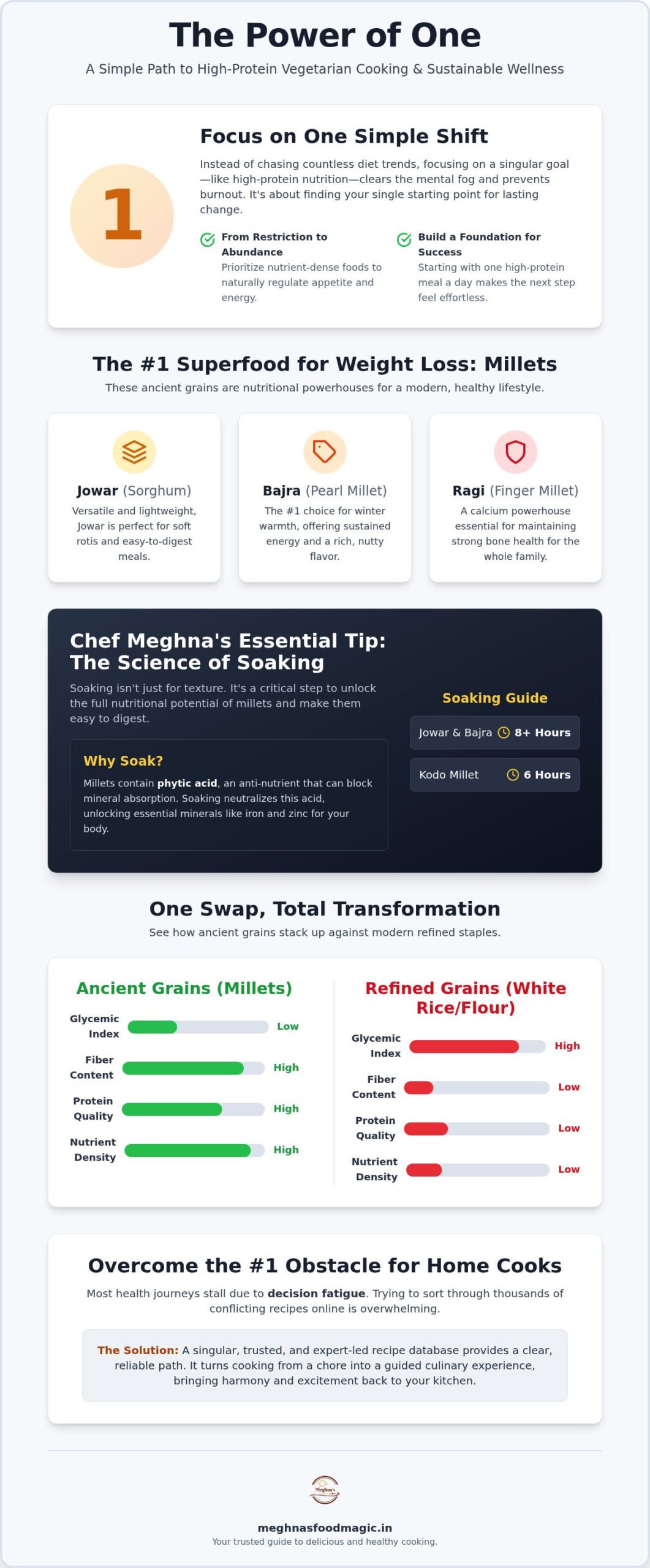
Why do we soak? These grains contain phytic acid, which acts as an anti-nutrient by inhibiting your body’s ability to absorb essential minerals like iron and zinc. By soaking, you neutralize this acid and unlock the grain’s full potential. Jowar and Bajra require at least 8 hours of soaking for proper texture and to ensure they’re easy on your digestive system. Kodo millet must be soaked for 6 hours to ensure a fluffy, digestible result that feels light and airy on the palate.
Choosing Your #1 Grain: Jowar vs. Bajra vs. Ragi
Every millet has its own unique personality and benefit. Jowar (Sorghum) is incredibly versatile and stands as the best option for soft rotis and lightweight dinners that don’t leave you feeling bloated. Bajra (Pearl Millet) is the #1 choice for winter warmth, offering sustained energy and a rich, nutty flavor that pairs perfectly with spicy dals. Ragi (Finger Millet) is the calcium powerhouse of the group, making it an essential staple for maintaining bone health in families.
Starting your millet journey doesn’t have to be intimidating. You can explore a variety of delicious, high-protein ways to prepare these grains by visiting Meghna’s Food Magic YouTube channel. By mastering these simple grains, you’re taking a bold step toward a more harmonious and healthy way of living.
One Swap, Total Transformation: Comparing Ancient Grains to Modern Staples
The transformation of your health doesn’t require a total kitchen overhaul; it begins with just 1 thoughtful swap. Replacing a single refined ingredient like maida with a whole grain alternative can significantly lower your body’s inflammation markers. Refined flours are stripped of their bran and germ, leaving only starch that spikes your blood sugar and triggers inflammatory responses. By choosing ancient grains, you’re inviting a sense of harmony back into your metabolic system. It’s a simple act of self-care that yields extraordinary results for your long-term wellness.
When we look at the satiety factor, the difference is night and day. A bowl of polished white rice might leave you hungry an hour later, but a serving of millet khichdi keeps you full for hours. This is because millets release energy slowly, providing a steady stream of fuel rather than a sharp peak and crash. From a cost-effectiveness standpoint, a kilogram of millets provides far more nutritional value than any processed “health food” in a fancy box. You’re getting more protein, more fiber, and more minerals for every rupee spent, making it a win for both your body and your budget.
Millet vs. Rice: The Nutritional Face-Off
In a nutritional face-off, millets win on almost every front. While polished rice is mostly simple carbohydrates, millets are packed with complex fibers that aid digestion and gut health. For vegetarians, the protein density in grains like Jowar and Bajra is a vital asset for muscle repair and fitness. Even after just 1 meal, the impact on your blood sugar is noticeably more stable, preventing that mid-afternoon energy slump that often leads to unhealthy snacking. Consider these key differences:
- Fiber Content: Millets contain significantly higher fiber than polished rice, helping you feel lighter and more energetic.
- Protein Density: Jowar and Bajra are excellent sources of plant-based protein, essential for those on a fitness journey.
- Glycemic Control: The slow-release carbs in millets prevent the insulin spikes associated with white rice and refined wheat.
The ‘Cake Therapy’ Revolution
Wellness should always be a celebration, and that’s where the “Cake Therapy” revolution comes in. By swapping refined sugar for jaggery and maida for Ragi, you turn a guilty pleasure into a nutrient-dense treat. This isn’t about deprivation; it’s about making better choices that still taste velvety and rich. You can even explore Air Fryer Recipes for Indian Food to achieve that perfect crispy texture without the heavy oil. Remember, you only need one good recipe to completely change your relationship with desserts and snacks. It’s all about finding joy in the creative process of cooking.
The #1 Kitchen Skills: 3 High-Protein Recipes Every Home Cook Needs
Mastering your health starts with mastering your kitchen. You don’t need a professional culinary degree to create meals that transform your body. You just need 1 reliable set of skills and a few expert-led recipes to get you moving. These three dishes represent the perfect balance of traditional Indian wisdom and modern fitness goals. They prove that high-protein vegetarian cooking is anything but boring. It’s time to turn your kitchen into a space of joy and wellness.
Recipe Spotlight: Jowar Appe & Bajra Khichdi
Breakfast is the spark that lights your metabolism for the day. For a quick, 15-minute start, try High-Protein Jowar Appe. Mix your soaked jowar flour with a bit of curd and protein-rich moong dal. These little paniyarams are crispy on the outside and airy on the inside, making them a favorite for both kids and adults. For dinner, nothing beats the comfort of a Bajra and Sprouted Moong Khichdi. This one-pot meal uses soaked bajra and fresh sprouts to provide a complete amino acid profile, making it a fantastic weight loss dinner. It’s hearty, warming, and incredibly satisfying after a long day.
Chef Meghna’s Notes: Always add a pinch of ginger to your millet dishes. Millets are dense in nutrients, and ginger acts as a natural digestive aid to help your body process them smoothly. If you find your appes are becoming too dry, ensure you’ve followed the 8-hour soaking times we discussed earlier to keep the grains hydrated and soft.
Cake Therapy: Ragi Brownies
We believe that everyone deserves a treat that loves them back. Our Ragi ‘Cake Therapy’ Brownies are naturally sweetened with dates and use Ragi flour as a calcium-rich base. It’s a guilt-free way to satisfy your sweet tooth while fueling your body with essential minerals. This recipe changes your relationship with desserts by proving that “healthy” and “delicious” can exist in the same bite. To test for doneness in a millet-based cake, insert a toothpick into the center; it should come out clean or with just a few moist crumbs attached. Because millets absorb moisture differently than wheat, the toothpick method is the most reliable way to ensure a perfect bake every time.
Chef Meghna’s Notes: If your ragi cake feels a bit dense or dry, don’t worry. You can easily increase the moisture by adding a tablespoon of yogurt or applesauce to the batter next time. This keeps the texture velvety without adding unnecessary fats. It’s a simple tweak that makes a world of difference in the final result.
Start Your Journey: How to Use the #1 Free Recipe Database for Weight Loss
Beginning a fitness journey is about making that first, vital commitment to yourself. Meghna’s Food Magic isn’t just a website; it’s the #1 free digital recipe database designed to simplify your life and bring joy back to your kitchen. Navigating the site is easy. You can search by ingredient, meal type, or specific health goal. Whether you’re looking for high-protein vegetarian options or guilt-free desserts, everything you need is at your fingertips. We’ve moved past the era of restrictive dieting. 2026 is truly the year of the ‘Millet Revolution’ in every Indian household, where ancient grains are finally reclaiming their rightful place at the center of the table.
Curated Resources for Your Fitness Goals
To help you stay on track, we’ve organized our resources into focused collections that take the guesswork out of healthy eating. If you’re new to the world of ancient grains, the 30+ Millet Recipes By Meghna is your daily source of inspiration. For those specifically targeting the scale, our Weight loss recipes section provides delicious, calorie-conscious meals that never compromise on taste. If you need a more structured approach to wellness, the Get Fit With Meghna series offers lifestyle tips and expert mentorship to keep you motivated and energized.
The Power of One Community
Wellness is infinitely more rewarding when it’s shared with others who are on the same path. We invite you to join our vibrant community on YouTube and Instagram. We’d love to hear from you. Share your own favorite healthy swap with us! It’s incredible to see how one small change can inspire thousands of others to start their own journey. For a deeper understanding of our culinary philosophy, explore the Food Magic: Redefining Healthy Indian Cooking pillar guide. This resource explains the “why” behind our methods, helping you master the art of nourishing your family with confidence. Your transformation doesn’t require a miracle; it starts with just 1 recipe and the courage to take that first step toward a more harmonious life.
Embrace Your Delicious Transformation
You’ve discovered that health isn’t about following a hundred rigid rules; it’s about making just 1 powerful choice to prioritize nutrient-dense staples. By embracing ancient grains like millets and mastering simple high-protein recipes, you’re choosing a lifestyle of abundance rather than restriction. Remember to always respect the technical “why” behind your cooking, like the essential soaking times for Jowar and Bajra, to ensure your body gets the most out of every bite. This approach turns every meal into a celebration of your wellness goals.
Join our vibrant community of health-conscious home cooks who are already redefining their kitchens. You’ll find over 30+ specialized millet recipes and our expert-led “Get Fit” video series waiting to inspire you. Wellness is a journey of joy and self-care, and we’re here to walk it with you every step of the way. Your kitchen is now a space for creative therapy and transformation.
We can’t wait to see the incredible dishes you create. Your path to a stronger, more vibrant self is officially open, so let’s start cooking with magic today!
Frequently Asked Questions
What is the #1 healthiest grain for weight loss in India?
Jowar is often considered the #1 healthiest grain for weight loss in an Indian context because of its high fiber and low glycemic index. It keeps you full for longer periods and prevents the sudden insulin spikes that lead to fat storage. Unlike refined wheat or white rice, these ancient grains provide sustained energy throughout your day. They are also packed with essential minerals that support metabolic health and overall fitness.
Can I eat millets every day for all three meals?
You can certainly enjoy millets every day, but it’s best to rotate different varieties to ensure a diverse nutrient intake. Eating the same grain for every single meal might become monotonous and limit the range of vitamins you consume. Try Jowar for breakfast, Ragi for lunch, and a light Bajra khichdi for dinner. This variety keeps your gut microbiome happy and ensures you don’t miss out on any specific micronutrients.
How long should I soak Jowar and Bajra before cooking?
You should soak Jowar and Bajra for at least 8 hours before you begin the cooking process. This technical step is crucial because it breaks down phytic acid, which otherwise prevents your body from absorbing vital minerals. Soaking also softens the tough outer hull of the grain, resulting in a much better texture. For other varieties like kodo millet, a shorter soaking time of 6 hours is usually sufficient for a fluffy result.
Is it possible to get enough protein on a vegetarian Indian diet?
It is absolutely possible to meet your protein requirements on a vegetarian Indian diet by being intentional with your pairings. When you combine millets with legumes like moong dal or chickpeas, you create a complete amino acid profile. Adding paneer, curd, or sprouts to your meals further boosts the protein content. This balanced approach ensures your body has everything it needs for muscle repair and fat loss without relying on animal products.
What is Chef Meghna’s #1 tip for picky eaters who hate vegetables?
Chef Meghna’s #1 tip is to transform vegetables into vibrant, familiar forms like colorful chilas or stuffed parathas. Pureeing spinach or carrots and mixing them directly into your millet dough makes the vegetables virtually invisible to picky eaters. You can also grate veggies into appe or paniyaram batters for a fun, bite-sized snack. This creative method ensures everyone gets their essential nutrients while still enjoying the textures and flavors they already love.
Are millet-based cakes really healthy for children?
Millet-based cakes are a fantastic, nutrient-dense alternative to traditional store-bought treats that are often loaded with refined sugar and maida. By using Ragi or Jowar flour and sweetening with dates or jaggery, you provide your children with calcium and iron. These Cake Therapy recipes turn dessert into a source of nourishment rather than just empty calories. It’s a wonderful way to teach kids that healthy eating can be incredibly delicious and celebratory.
What is the best way to store millets to keep them fresh?
The best way to store your millets is in airtight glass or high-quality plastic containers kept in a cool, dry, and dark pantry. Because whole grains contain natural oils, they can become rancid if they’re exposed to heat or moisture for too long. If you’ve purchased a large quantity, consider storing a portion in the refrigerator to extend its shelf life. Always check for a fresh, nutty aroma before you start your cooking.
How can I access Chef Meghna’s recipes for free?
You can access the entire database of Chef Meghna’s expert-led recipes for free by visiting the official website at meghnasfoodmagic.in. For those who prefer visual learning, the YouTube channel offers detailed, step-by-step video guides for every dish. You can also follow the journey on Instagram for daily inspiration and quick kitchen tips. This free resource is designed to empower every home cook to take charge of their health with confidence and creativity.
Disclaimer
This is a recipe food blog page and not nutrition or doctor and hence do not claim to cure any illness. If you have specific health issues please consult a qualified doctor or certified nutritionist.
I do consult experts, research Internet and at times seek help from Gemini to collect relevant information to put together some of these blogs.

