
Healthy Indian Recipes for Beginners: A Vibrant Guide to Nutritious Home Cooking in 2026
Why Healthy Indian Cooking is the Perfect Start for Beginners
Welcome to a world where healthy eating isn’t about bland salads or joyless restrictions—it’s a vibrant, flavorful celebration. Healthy Indian cooking, at its core, is a beautiful balance of aromatic spices, wholesome fiber, and lean protein. It’s about rediscovering the nourishing wisdom already present in our kitchens, from the incredible diversity of North Indian sabzis and dals to the light, fermented goodness of South Indian dosas and idlis.
Let’s debunk a common myth right away: authentic Indian food does not need to be swimming in oil or cream to be delicious. The real magic lies in the techniques and ingredients. This guide is your starting point for what we call ‘Culinary Therapy’—the empowering act of cooking at home to nourish your body and soul. In 2026, the shift is clear: we are embracing powerhouse ingredients like protein-rich Moong and ancient millets, transforming everyday meals into superfood feasts.
- A Balance of Flavors and Nutrients: We define healthy Indian cooking as a smart blend of metabolism-boosting spices, gut-friendly fiber, and muscle-building lean protein.
- Debunking the Myth: You can achieve authentic, rich flavors without deep-frying or using excessive oil. Techniques are everything.
- The Rise of Superfoods: We’ll explore the modern Indian kitchen’s move towards ingredients like Moong dal and a variety of millets for everyday nutrition.
The Philosophy of Nourishment vs. Restriction
True, sustainable wellness isn’t born from strict diets. It blossoms when you focus on adding nourishment to your plate, not just taking things away. Instead of counting every calorie, think about ‘crowding out’ unhealthy fats with vibrant vegetables and good fiber. A whole-wheat paratha stuffed with leafy greens and paneer, for example, is infinitely more satisfying and nutritious than a plain one made with refined flour.
This is where the wisdom of Indian cuisine shines. Spices like turmeric, cumin, and ginger aren’t just for flavor; they are natural anti-inflammatories and metabolism boosters. Food should be a joyful, celebratory part of life. When your meals are a feast for the eyes and the palate, you build a positive, long-term relationship with healthy eating.
Setting Your Beginner Health Goals
Before you begin, ask yourself: what is your primary goal? Are you cooking for weight loss, to support a fitness routine, or for general, vibrant wellness? Your answer will shape your journey. For many, starting with high-protein vegetarian recipes is the easiest and most rewarding entry point. Dishes built around paneer, lentils (dal), and soya chunks are filling, delicious, and simple to master.
Let’s define our mission with a single sentence: Healthy Indian recipes are a fusion of timeless, traditional taste and modern nutritional science, designed for a joyful and energetic life.
Building Your Nutritious Pantry: From Super-Spices to Ancient Grains
A healthy kitchen starts with a well-stocked pantry. You don’t need a hundred different ingredients to begin. Focusing on a few high-impact staples will empower you to whip up a nutritious and flavorful meal anytime. This is your foundation for creating everything from a hearty dal tadka to a crispy millet dosa.
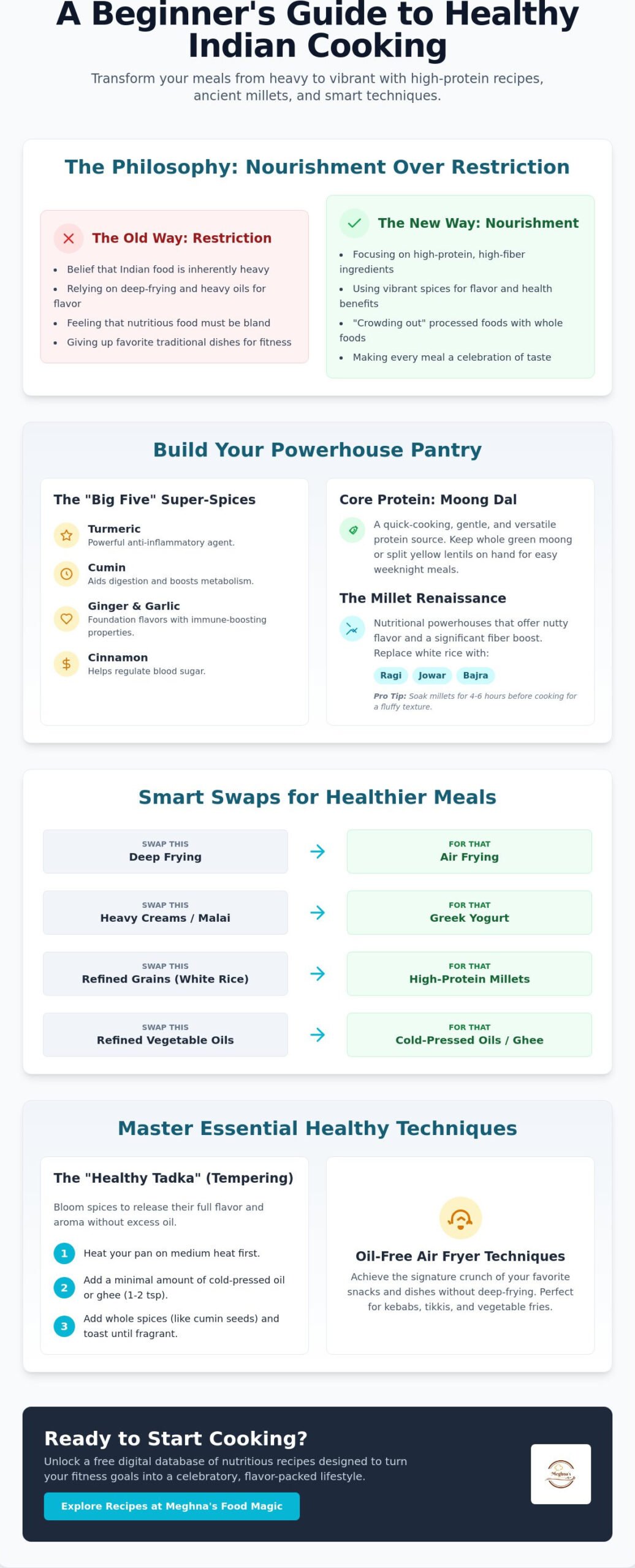
- The ‘Spice Starter Kit’: Turmeric (anti-inflammatory), Cumin (digestion), Ginger & Garlic (immunity), and Cinnamon (blood sugar regulation) are your non-negotiable essentials.
- The Millet Renaissance: It’s time to get familiar with Ragi, Jowar, and Bajra. These ancient grains are gluten-free, high in fiber, and incredibly versatile.
- Healthy Fats in Moderation: Transition from refined oils to minimal, high-quality fats. A touch of Ghee for tempering or cold-pressed mustard or coconut oil can elevate a dish.
- ‘Moong Magic’: Stock up on yellow moong dal. It’s one of the most easily digestible proteins, perfect for making light dals, savory cheelas (pancakes), and even desserts.
The Beginner’s Guide to Millets
Don’t be intimidated by millets! They are simpler to cook than you think and are a fantastic way to replace white rice, adding a boost of fiber and micronutrients to your diet. The key to a perfect texture is proper preparation.
Start by rinsing the millets thoroughly under running water. Soaking them for at least 4-6 hours (or overnight) is crucial; this step removes any bitterness and ensures they cook up soft and fluffy. You can easily swap rice for Foxtail or Barnyard millet in a simple khichdi or pulao for your first attempt. For more detailed guides, you can always check out video tutorials on platforms like YouTube that walk you through the process visually.
Protein-Packed Staples for Every Indian Kitchen
For a vegetarian diet, planning your protein sources is key. Keeping a few staples on hand makes it effortless to create satisfying, high-protein meals.
- Paneer, Tofu & Soya: Keep blocks of paneer or tofu in the fridge and dried soya chunks in the pantry. They are blank canvases, ready to absorb the flavors of your marinades and gravies for a quick weeknight sabzi or wrap filling.
- The Power of Dal: An Indian kitchen is incomplete without its dals. Stock a variety: Toor (arhar), Masoor, and Moong are great for everyday cooking, while Chana and Urad dal are perfect for more special preparations.
- Flours with Fiber: Ditch the refined ‘Maida’ and embrace whole wheat (atta) for your rotis and parathas. Keep chickpea flour (besan) for making savory cheelas and gluten-free millets flours like Ragi or Jowar for a nutritional upgrade.
Smart Swaps: Transforming Traditional Favorites into Healthy Delights
The secret to healthy Indian cooking isn’t about abandoning your favorite dishes; it’s about reimagining them with smart, simple swaps. You can still enjoy the creamy texture of a curry, the satisfaction of a stuffed paratha, and even the sweetness of a traditional laddoo—all while nourishing your body. This is where the real “food magic” happens!
- For Creamy Curries: Replace heavy cream with blended Greek yogurt (added at the end of cooking), soaked cashew paste, or even pumpkin puree for a rich, guilt-free texture.
- Beyond White Rice: Switch white rice in a ‘Biryani’ inspired bowl with nutrient-dense quinoa, cauliflower rice, or millet pulao for a lighter, fiber-rich meal.
- Better Batters: Use Moong Dal batter instead of a rice-heavy one for breakfast cheelas or dosas to dramatically increase the protein content and keep you full longer.
- Healthier Desserts: Embrace the ‘Cake Therapy’ approach to sweets. Use whole wheat flour, oat flour, or millet flour in place of refined flour. For sweetness, explore our collection of no-sugar recipes that use natural alternatives like dates, figs, or jaggery.
Reimagining Regional Classics
Healthy eating should never be boring. The vast landscape of Indian cuisine offers endless inspiration for nutritious meals. From Gujarati dhokla to Maharashtrian thalipeeth, almost every regional classic can be given a healthy twist.
- Healthy Parathas & Breads: Stuff your whole-wheat parathas with grated vegetables like carrots and zucchini or high-protein fillings like crumbled paneer or sattu (roasted gram flour). Pan-sear them with just a touch of ghee for that perfect crispness.
- Breakfasts from North to South: Master the art of a paper-thin Moong Dal Cheela from North India or a fluffy, fermented Millet Idli from the South. These dishes are naturally light, packed with protein, and perfect for weight management.
- Nourishing Dals & Sabzis: The humble dal is a nutritional powerhouse. A simple tadka (tempering) of spices in minimal oil is all you need to unlock incredible flavor. For sabzis (vegetable dishes), try steaming or stir-frying your vegetables instead of overcooking them to retain their nutrients and crunch.
Weight Loss Secrets & Guilt-Free Indulgence
Losing weight with Indian food is entirely possible and delicious. The key is to focus on fiber, protein, and mindful cooking techniques. Millet Khichdi, a one-pot meal of millets and lentils, is the ultimate comfort food for anyone on a weight loss journey—it’s easy to digest, incredibly filling, and packed with nutrients.
And when a sweet craving hits? You don’t have to reach for sugar-laden store-bought treats. You can create incredible homemade desserts like an Avocado Chocolate Mousse or a Date and Nut Laddoo. For dozens of creative ideas, dive into our curated list of healthy dessert recipes that prove indulgence can be nourishing.
The Beginner’s How-To: Master Essential Healthy Cooking Techniques
Once your pantry is set, it’s time to master a few fundamental techniques. These methods are the building blocks of healthy Indian cooking, allowing you to extract maximum flavor from your ingredients while using minimal fat and preserving nutrients.
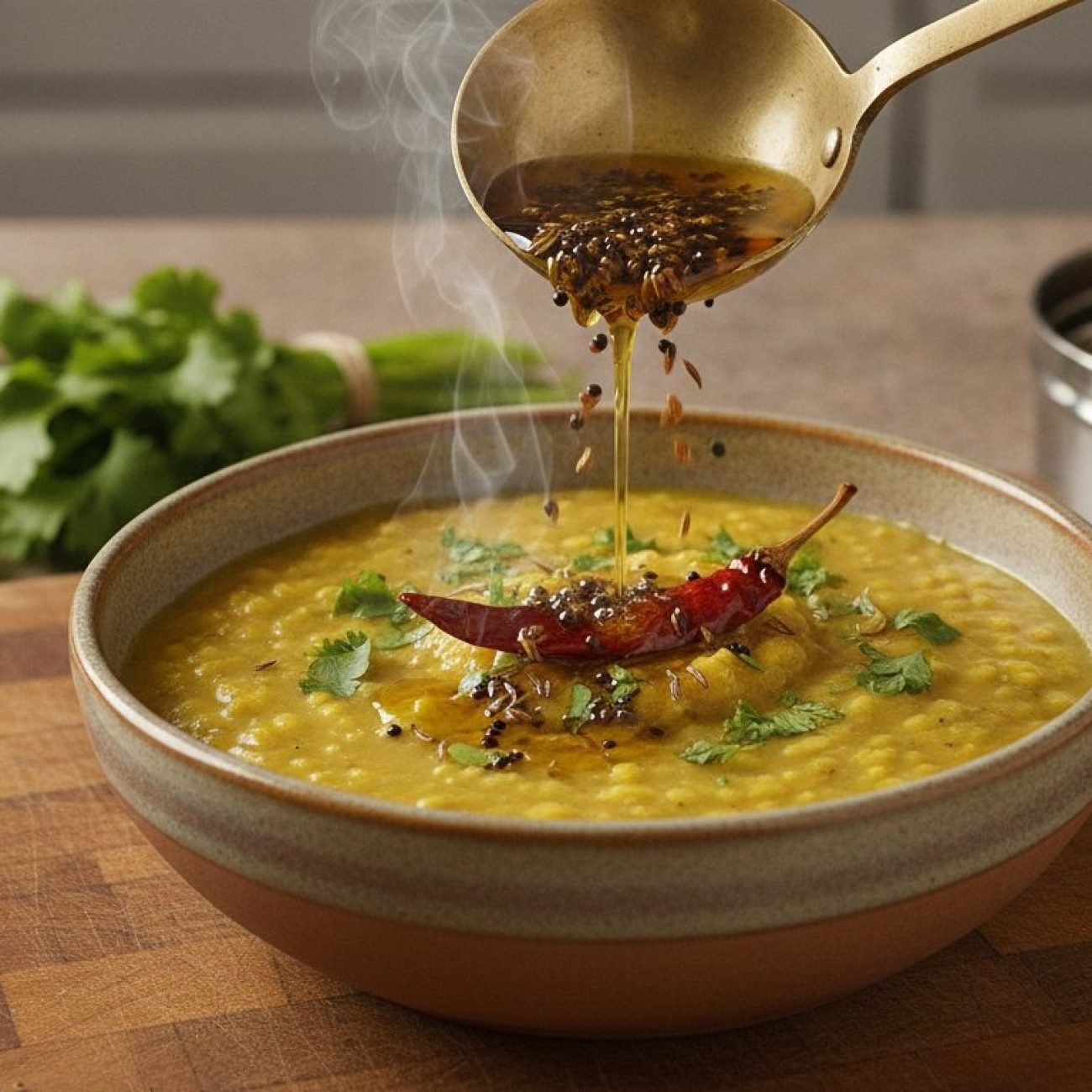
- The ‘Tadka’ (Tempering): This is the soul of many Indian dishes. Learn to bloom spices like cumin seeds, mustard seeds, and asafoetida in a tiny amount of hot ghee or oil. This technique releases their essential oils and infuses your entire dish with aroma and flavor.
- Steaming vs. Sautéing: For vegetable sabzis, steaming is a fantastic way to keep nutrients and colors intact. A quick sauté at the end with your spice mix is all you need. This is perfect for dishes like Gujarati dhokla or steamed vegetables for a side dish.
- One-Pot Wonders: Embrace your pressure cooker or instant pot. These tools are perfect for making nutritious one-pot meals like Tehri (vegetable rice) or Khichdi with almost no monitoring, saving you time and effort.
- Making Snacks Healthier: You can still enjoy crispy snacks! Instead of deep-frying, try pan-frying tikkis (patties) with minimal oil, baking samosas, or using an air fryer to get a satisfying crunch on everything from chickpeas to paneer cubes.
Meal Prep for the Busy Beginner
Healthy eating becomes effortless when you plan ahead. A little prep over the weekend can set you up for a week of nutritious, home-cooked meals, saving you from last-minute unhealthy choices.
- The ‘Mother Gravy’ Method: Prepare a large batch of a basic onion-tomato gravy that is low in fat. You can store it in the fridge for a week and use it as a base for various dishes—just add vegetables for a sabzi, paneer for a curry, or beans for a rajma.
- Pre-Soak Grains and Legumes: Soaking dals, legumes, and millets overnight not only improves their digestibility but also cuts down the cooking time by as much as 50%.
- Create ‘Healthy Tiffin’ Boxes: Pack your lunches for the week. A simple box with some millet pulao, a serving of dal, and a side of cucumber-carrot salad is a perfectly balanced meal that stays fresh and inviting until lunchtime.
Start Your Journey with Meghna’s Food Magic Free Recipe Database
Feeling inspired? This is just the beginning. Your journey into the vibrant world of healthy Indian cooking is a continuous adventure, and we’re here to guide you every step of the way. We invite you to explore our extensive, free digital recipe sanctuary, designed for real people with real kitchens.
Whether you’re looking for a quick weeknight dinner or a special weekend treat, you’ll find a world of flavor waiting for you. Dive into our complete collection of hundreds of healthy Indian recipes to find your next favorite meal. Our specialized collections for high-protein meals, millet innovations, and weight loss are curated to help you meet your specific wellness goals with joy and ease.
Why Our Community is Different
At Meghna’s Food Magic, we believe that healthy eating should feel like a special occasion, every single day. Our philosophy is built on a few core principles:
- Focus on ‘Food Magic’: We transform everyday ingredients into extraordinary meals, making healthy eating an exciting and creative process.
- Accessibility for All: Our recipes are designed for home cooks. They don’t require fancy equipment or hard-to-find ingredients, just a love for good food.
- A Blend of Tradition and Innovation: We honor the roots of traditional Indian cuisine while infusing it with modern nutritional wisdom and flavors inspired by our travels.
Next Steps for Your Healthy Kitchen
Ready to turn inspiration into action? Here’s how you can start today:
- Pick one new recipe to try this weekend. Maybe a Millet Dosa or a No-Sugar Laddoo? Choose something that excites you.
- Share your creations with us! Join our vibrant community on Instagram and use the hashtag #MeghnasFoodMagic to connect with fellow food lovers.
- Remember the journey. Wellness is a path, not a destination. Every healthy, delicious meal you cook for yourself is a victory worth celebrating.
Disclaimer
This is a recipe food blog page and not nutrition or doctor and hence do not claim to cure any illness. If you have specific health issues please consult a qualified doctor or certified nutritionist.

