
Debunking Every Major Misconception About Honey
What if the way you’ve been using honey is actually stripping away its most precious benefits? It’s a common worry in many Indian homes, where we often treat this living food as just another shelf-stable sweetener. Every single misconception about honey, from the fear of it turning toxic when heated to the myth that crystallization means it’s fake, stops you from unlocking its true nutritional power. You want the best for your family’s health, but the conflicting advice online makes it hard to know what’s real.
I understand that confusion because I’ve been there too, standing in the kitchen wondering if a drizzle of honey in my warm oats is a mistake. I promise to replace those kitchen myths with science-backed clarity so you can use honey as a tool for wellness rather than a source of guilt. We’ll explore the clear rules for cooking safely, the real differences between honey and jaggery, and how to identify pure quality without relying on unreliable old wives’ tales. It’s time to bring the magic back to your pantry with total confidence.
Key Takeaways
- Learn the scientific truth about heating honey and understand when it truly affects the nutritional profile of your recipes.
- Stop doubting your pantry staples by discovering why crystallization is a natural mark of purity rather than a sign of added sugar.
- Gain a clear fitness perspective on the glycemic index of honey compared to jaggery and refined sugar for smarter sweetening.
- Debunk every major misconception about honey to unlock its full potential as a “living food” in your daily wellness routine.
- Unlock Chef Meghna’s professional secrets for using honey to create moist, delicious treats in her signature Cake Therapy style.
What is a Misconception About Honey? Defining the Liquid Gold Mythos
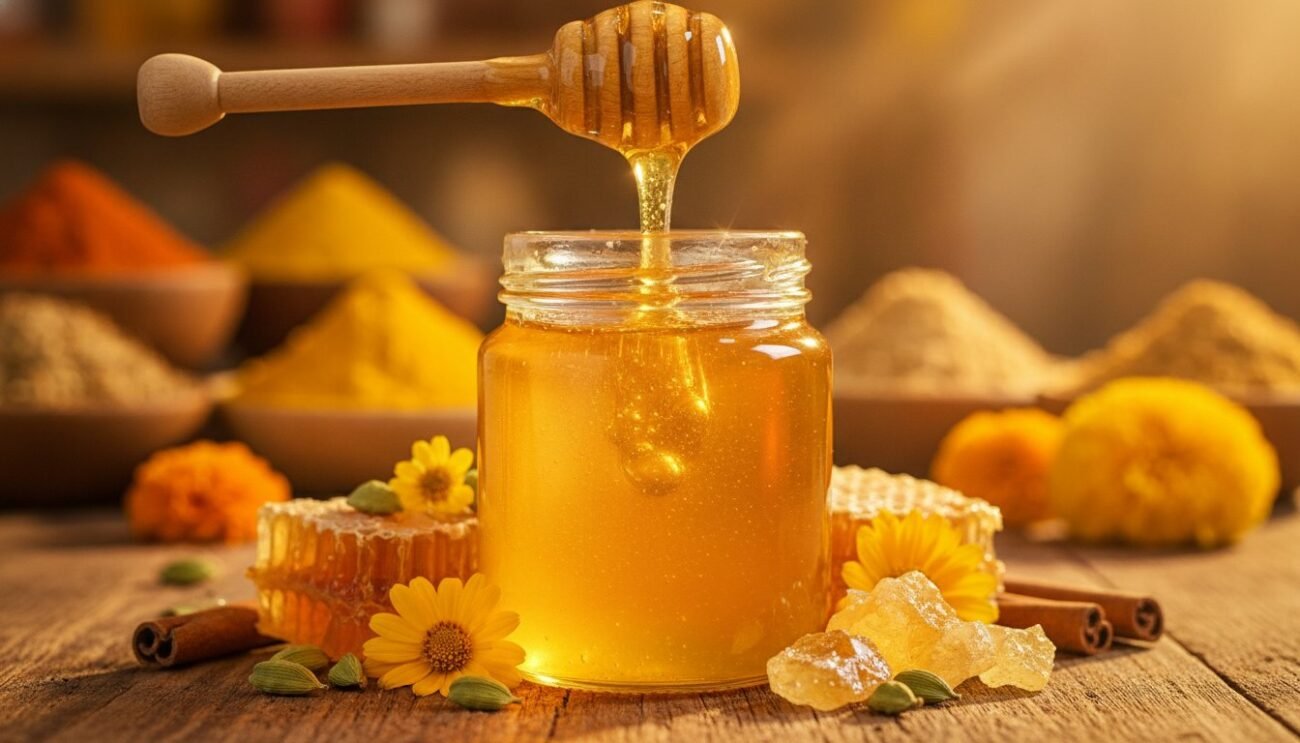
Honey is much more than a pantry staple; it’s a complex, biological miracle. Unlike refined sugar, which is a hollow source of calories, honey is a living food packed with enzymes, minerals, and potent antioxidants. Every common misconception about honey usually starts from a place of care but lacks a scientific foundation. Because honey has been used for thousands of years in everything from ancient medicine to modern weight loss recipes, the lines between traditional wisdom and modern science often get blurred. This confusion makes us hesitant to use it, fearing we might accidentally harm our families or ruin our fitness progress.
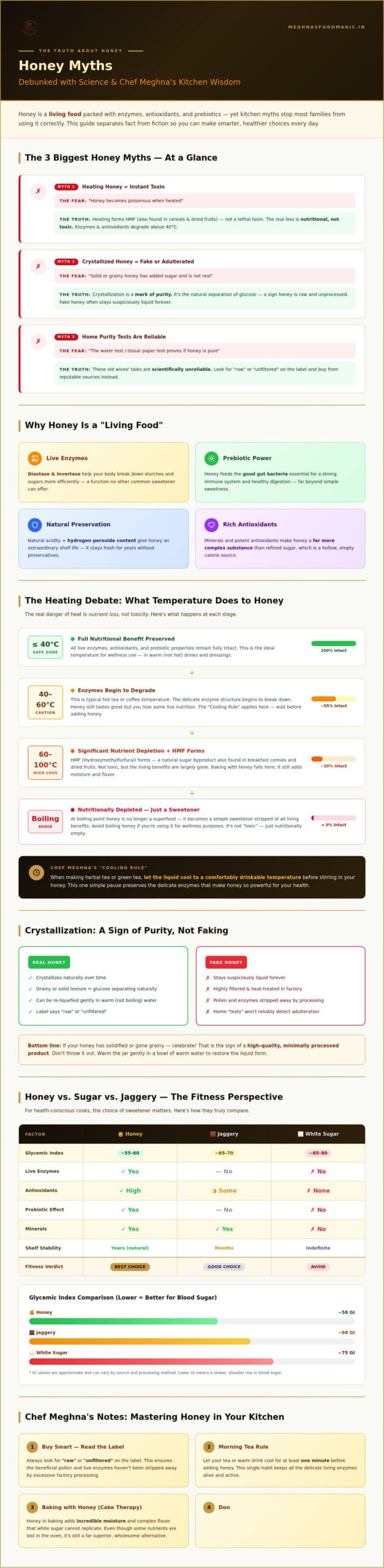
The top three myths that cause the most kitchen anxiety are the fear that heating honey creates toxins, the belief that crystallization proves a bottle is "fake," and the reliance on unreliable home purity tests. Understanding the truth behind these myths is vital if you want to use honey effectively for fitness goals. When you treat honey as a living ingredient rather than just a sweetener, you unlock its ability to aid digestion and provide sustained energy without the harsh crashes associated with white sugar.
Why Honey is More Than Just ‘Healthy Sugar’
The magic of honey lies in its live enzymes, specifically diastase and invertase. These enzymes are the secret workers that help your body break down starches and sugars more efficiently. This "living" nature is also why honey has an incredible shelf life; its natural acidity and hydrogen peroxide content keep it fresh for years. Beyond just sweetness, honey acts as a prebiotic. It feeds the good bacteria in your gut, which is essential for a strong immune system and a happy digestive tract.
The Cultural Roots of Honey Myths in India
In our Indian kitchens, we’ve grown up hearing whispers of Ayurvedic warnings. While traditional wisdom like Ayurveda is brilliant, it’s often misinterpreted in the context of modern, supermarket-processed honey. Ancient texts often spoke about "Madhu" (honey) in its raw, forest-fresh form. Today, the shift to highly filtered, heat-treated commercial honey has changed how the substance reacts. My philosophy of "Food Magic" is all about bridging this gap. We want to honor our traditions while using modern science to ensure we’re getting the most out of every drop.
Chef Meghna’s Notes
When you’re picking honey, look for "raw" or "unfiltered" on the label. This ensures the beneficial pollen and enzymes haven’t been stripped away by excessive factory processing. If you’re using honey in your morning tea, let the water cool down for a minute before stirring it in. This simple step preserves the delicate enzymes that make honey so special for your health. Remember, the goal isn’t just to sweeten; it’s to nourish!
The Great Heating Debate: Is Cooked Honey Actually Toxic?
Stop worrying about your morning tea for a moment. The fear that heating honey creates an instant poison is perhaps the most persistent misconception about honey in Indian households. Many of us grew up hearing that honey becomes toxic when it meets heat, but the scientific reality is much more nuanced. While it’s true that high temperatures change the chemical composition of honey, you aren’t creating a lethal substance; you’re simply changing how your body interacts with it.
When honey is heated, a compound called Hydroxymethylfurfural (HMF) begins to form. HMF is a natural byproduct of sugar breakdown and is actually found in many processed foods, from breakfast cereals to dried fruits. While food safety standards set specific limits for HMF in commercial honey to ensure freshness, the "toxicity" level isn’t reached during standard home cooking. The real tragedy of heating honey isn’t the production of poison, but the destruction of its "living" benefits. At temperatures above 40°C, the delicate enzymes and antioxidants we value so much begin to degrade. By the time honey reaches a boil, it’s no longer a superfood; it has been nutritionally depleted into a simple, albeit tasty, sweetener.
Safe Ways to Incorporate Honey in Hot Recipes
You don’t have to give up that comforting drizzle of honey just because your food is warm. The key is the "Cooling Rule." If you’re making a herbal infusion or a cup of green tea, let the liquid cool to a drinkable temperature before stirring in your honey. This simple pause ensures you keep those precious enzymes alive.
- Millet Porridges: When preparing Jowar or Ragi malt, cook the grain thoroughly first. Turn off the heat, let it sit for two minutes, and then fold in the honey.
- Sauces and Glazes: Add honey as a finishing touch to stir-fries after the pan is off the flame to preserve its floral notes and prebiotic benefits.
Chef Meghna’s Notes: Professional Temperature Hacks
Never use a microwave to decrystallize your honey. Microwaves create "hot spots" that can skyrocket the temperature in seconds, destroying every bit of nutritional value. Instead, use a gentle warm water bath. Place your honey jar in a bowl of warm (not boiling) water and let it sit until it turns liquid again. If a recipe requires high-heat frying or deep boiling, like in certain traditional Indian sweets, I recommend using jaggery or dates instead. Save your high-quality honey for raw applications or low-heat finishes where its medicinal properties can truly shine.
Crystallization and Purity: Debunking the ‘Fake Honey’ Tests
Have you ever reached for your favorite jar of honey only to find it has turned into a thick, cloudy, or even gritty solid? Many people immediately assume the worst, thinking they’ve been cheated with a jar of flavored sugar syrup. This is a massive misconception about honey that leads to perfectly good food being tossed in the bin. In reality, crystallization is one of the best indicators that your honey is raw, natural, and high quality. It’s a sign that the "magic" is still very much alive inside the jar.
The science behind this change is quite simple. Honey is a supersaturated solution of two main sugars: glucose and fructose. While fructose stays dissolved easily, glucose has a tendency to separate and form tiny crystals. The speed at which this happens depends on the floral source. Honey from certain flowers has a higher glucose-to-fructose ratio, making it solidify much faster. If your honey stays perfectly clear and runny for years on a shelf, it has likely been ultra-filtered and pasteurized at high heat to remove the very pollen and enzymes that make it a superfood.
You might have seen videos of the "Ant Test" or the "Water Test" used to prove purity, but these are scientifically unreliable. Ants are attracted to all forms of sugar, including the natural glucose in pure honey. Similarly, the way honey behaves in water depends more on its moisture content and the ambient temperature than its purity. Don’t let these "old wives’ tales" dictate what you keep in your healthy kitchen.
How to Read a Honey Label Like a Pro
When shopping for your family, look for the word "Raw" on the label. Raw honey hasn’t been heated beyond the temperature of a beehive, preserving its delicate nutritional profile. "Unfiltered" honey is also a great choice because it still contains tiny bits of pollen, which act as a natural fingerprint of the honey’s origin. If a bottle looks too perfect, too clear, and too consistent, it’s likely been heavily processed to appeal to supermarket aesthetics at the cost of your health.
Zero-Waste Kitchen: Salvaging ‘Hard’ Honey
In my kitchen, we never waste a single drop. Crystallized honey has a wonderful, spreadable texture that’s perfect for a healthy breakfast. Try spreading it over warm Ragi rotis or Jowar chilas; the residual heat from the grain will soften the honey just enough to create a delicious, melt-in-the-mouth experience. Once the jar is finally empty, don’t throw it away. Glass honey jars are perfect for storing your vegetable scraps for stock or keeping your homemade chutneys fresh. It’s a small step toward a more sustainable, mindful kitchen.
Chef Meghna’s Notes
If the texture of crystallized honey really bothers you, remember the "Warm Water Bath" we discussed earlier. Just place the jar in warm water (around 35-40°C) and stir gently. It will return to its liquid state without losing its enzymes. To prevent rapid crystallization in the first place, store your honey in a cool, dry pantry rather than the refrigerator. Cold temperatures actually speed up the formation of those glucose crystals!
Honey vs. Sugar vs. Jaggery: The Fitness Perspective
When you’re on a fitness journey, every calorie counts. It’s easy to get swept away by the "natural" label on a jar and assume it’s a free pass to sweeten everything in sight. A common misconception about honey is that its organic origin means you can consume it without limits. While honey is undoubtedly superior to refined white sugar, it’s still a concentrated source of energy. Understanding how it compares to jaggery and sugar is the secret to maintaining your weight loss progress without feeling deprived.
From a Glycemic Index (GI) perspective, honey usually sits around 58, which is lower than refined sugar at 65 and significantly lower than jaggery, which can soar up to 84. This means honey provides a more stable rise in blood sugar, preventing the aggressive insulin spikes that lead to fat storage. However, honey is denser than sugar; one tablespoon contains about 64 calories compared to sugar’s 48. The real "magic" isn’t in the calorie count, but in the micronutrients. Refined sugar is "empty," but honey brings potassium, magnesium, and B vitamins to your plate, helping your body process those sugars more effectively.
Honey in Weight Loss and High-Protein Diets
In my "Sugar-Free Serenity" approach to desserts, honey is a star because it offers more "sweetness per spoonful" than sugar. This allows you to use less overall. For those following a fitness routine, honey is a fantastic pre-workout fuel. Its mix of glucose for immediate energy and fructose for sustained release keeps you powered through a tough session. I love pairing a small drizzle with high-protein Moong dal chillas or stirring it into Greek yogurt. It provides the perfect flavor balance to earthy millets like Bajra without the chemical aftertaste of artificial sweeteners.
The Infant Safety Rule: A Non-Negotiable Fact
While honey is a superfood for adults, it’s a strict "no" for babies under 12 months. This isn’t just another kitchen myth; it’s a vital safety rule. Honey can contain spores of Clostridium botulinum, which can lead to infant botulism. An adult’s mature digestive system and stomach acid easily neutralize these spores, but a baby’s gut isn’t developed enough yet. For your little ones’ tiffins, stick to mashed bananas or dates as natural sweeteners until they cross that first-year milestone.
Chef Meghna’s Notes
Portion control is your best friend. I recommend limiting honey to 1-2 teaspoons per day if you’re actively trying to lose weight. To make your honey go further, try whisking it with a little lemon juice or vinegar to create a vibrant dressing for roasted vegetables. This is also a great way to use up the last bits of honey sticking to the sides of the jar. If you’re making a high-heat Indian dessert like Chikki, stick to jaggery for that classic crunch, and save your honey for raw toppings or "Cake Therapy" bakes where moisture is key.
Chef Meghna’s Guide: Mastering Honey in Your Healthy Kitchen
Bringing honey into your daily cooking is like adding a touch of liquid sunshine to your pantry. In my "Cake Therapy" sessions, I always emphasize that we aren’t just baking; we’re creating wellness. Using honey as a natural sweetener in cakes requires a little bit of finesse because it behaves differently than granulated sugar. It adds a deep, floral moisture that keeps your bakes fresh for days. The real magic happens when you pair honey with our traditional Indian millets. Jowar and Bajra have beautiful, earthy profiles that can sometimes feel a bit heavy or slightly bitter to new palates. A small drizzle of honey perfectly rounds out these flavors, making a simple millet pancake feel like a gourmet treat.
Sustainability starts right at your doorstep. When you buy honey, try to support local Indian apiaries. Choosing honey from your region isn’t just about zero-waste living; it’s about connecting with the local flora. This helps maintain the biodiversity of our countryside and ensures you’re getting a product that hasn’t been over-processed for long-distance travel. Every time you choose raw, local honey, you’re voting for a healthier planet and a more vibrant kitchen. Don’t let any lingering misconception about honey hold you back from experimenting. Cooking is an act of joy and self-care, not a series of rigid rules to be feared.
Chef Meghna’s Notes: Troubleshooting Honey Recipes
When you replace a cup of sugar with honey in a cake recipe, you’re introducing more liquid into the batter. To keep the texture perfect, reduce other liquids like milk or water by about one-quarter. If you’re using your air fryer, remember that honey-based glazes brown much faster than sugar because of the high fructose content. Lower your air fryer temperature by 10 or 15 degrees to prevent over-browning. Also, if you’re struggling with the strong taste of green vegetable juices, a teaspoon of honey is a pro-tip to balance that natural bitterness without ruining your detox goals.
Next Steps for Your Healthy Journey
I want you to feel empowered in your kitchen every single day. If you’re ready to start your healthy journey, dive into my Free Digital Recipe Database for hundreds of ideas that prioritize flavor and fitness. For those who prefer a visual guide, my Chef Meghna’s YouTube Channel features step-by-step honey-based dessert tutorials that make healthy living feel like a celebration. Don’t forget to join our vibrant, supportive community at Stay Fit with Meghna on Instagram, where we share daily inspiration to keep your wellness goals on track. Let’s make some food magic together!
Step Into a World of Sweet Wellness
You’re now equipped with the science-backed truth to treat honey as the biological miracle it truly is. We’ve moved past the fear of heating and the confusion of crystallization to reveal honey’s role as a potent partner in your fitness journey. Every misconception about honey you’ve let go of today opens up new possibilities for your family’s health and daily meals.
From zero-waste cooking hacks to chef-approved nutrition tips, your pantry is ready for a transformation. You can now use this liquid gold to balance your millet recipes or sweeten your "Cake Therapy" treats with total peace of mind. With over 1000 free healthy recipes available, the path to wellness has never been more delicious.
Go ahead and drizzle that honey with confidence. It’s time to celebrate the vibrant flavors and healing power of real food in your kitchen. Keep experimenting, keep learning, and above all, keep cooking with joy and self-care!
Frequently Asked Questions
Is it true that honey becomes toxic when added to hot milk or tea?
No, honey does not become toxic when added to hot milk or tea. While heating honey above 40 degrees Celsius degrades its live enzymes and antioxidants, it doesn’t transform into a poison. To get the most nutritional value, wait until your drink is at a comfortable sipping temperature before stirring in the honey. This simple habit ensures you enjoy the sweetness while keeping the "living" benefits of the honey intact.
How can I tell if my honey is pure without using unreliable home tests?
The most reliable way to check for purity is to read the label carefully for terms like "Raw" or "Unfiltered." Pure honey often looks slightly cloudy because it still contains natural pollen and propolis. Unlike processed versions, pure honey will have a complex floral aroma and a taste that varies by season. Don’t rely on the "ant test" or "water test," as these don’t account for the scientific properties of glucose and moisture.
Why does my honey turn into a thick, white solid in winter?
Your honey turns into a solid because of a natural process called crystallization. This is a common misconception about honey; many people think it means the honey has gone bad or contains added sugar. In reality, the glucose in raw honey naturally separates from the water and forms crystals, especially in cooler temperatures. If this happens, your honey is likely pure and unprocessed. You can gently warm the jar in a water bath to liquefy it again.
Can diabetics use honey as a safe alternative to white sugar?
Honey has a lower Glycemic Index (GI) than refined sugar, meaning it causes a slower rise in blood sugar levels. While it contains beneficial micronutrients that white sugar lacks, it is still a concentrated source of carbohydrates and calories. Diabetics should use honey only in moderation and as part of a balanced meal plan. It’s always best to consult your doctor or nutritionist to determine how honey fits into your specific dietary needs and fitness goals.
Is honey vegan, and what are the ethical considerations?
Strictly speaking, honey is not considered vegan because it is an animal-derived product produced by bees. However, many people who follow a plant-forward lifestyle choose to include honey if it’s sourced ethically. Supporting local, small-scale beekeepers ensures that the bees are treated well and that the hives aren’t over-harvested. Ethical beekeeping actually supports local biodiversity and helps protect bee populations, which are vital for our global food system and the pollination of our crops.
What happens if I boil honey while making Indian sweets like Chashni?
Boiling honey during the Chashni-making process destroys its delicate medicinal properties and live enzymes. While it will still provide sweetness and a lovely caramel flavor to your Indian sweets, it essentially becomes a simple sugar syrup. For recipes that require high-heat boiling, I recommend using jaggery or dates instead. Save your high-quality, raw honey for drizzling over warm desserts or stirring into recipes after they’ve been removed from the flame to preserve its magic.
How should I store honey to keep it fresh and nutrient-dense for years?
Store your honey in a cool, dry place away from direct sunlight, such as a pantry shelf. It’s best to keep it in a glass jar with a tightly sealed lid to prevent moisture from the air from getting in. You don’t need to refrigerate honey; in fact, cold temperatures will cause it to crystallize much faster. When stored correctly, honey can remain fresh and safe to eat for years, although its flavor and color may deepen over time.
Can I use honey in an air fryer without it burning or becoming bitter?
You can definitely use honey in an air fryer, but you must be mindful of the temperature. Honey contains natural sugars that caramelize and burn much faster than refined sugar. Another common misconception about honey is that it’s too delicate for modern appliances. To succeed, lower your air fryer temperature by about 10 degrees and check your food frequently. This prevents the honey from turning bitter and ensures a perfectly golden, sticky glaze on your snacks.
Disclaimer
This is a recipe food blog page and not nutrition or doctor and hence do not claim to cure any illness. If you have specific health issues please consult a qualified doctor or certified nutritionist.
I do consult experts, research Internet and at times seek help from Gemini to collect relevant information to put together some of these blogs.

