
Paryushan Food Rules 2026: A Complete Guide to Nutritious Jain Fasting Recipes
What if you could turn the eight most restrictive days of your culinary calendar into a vibrant celebration of flavor and vitality? I know how daunting it feels to navigate the traditional Paryushan food rules when you’re staring at a pantry without onions, garlic, or even a single sprig of green coriander. It’s easy to feel like your menu is shrinking by the minute, leaving you worried about protein intake and meal fatigue during this sacred time.
Here is the secret; these ancient guidelines aren’t just about what you leave out. They’re a beautiful invitation to rediscover the incredible potential of pulses and grains through a lens of mindfulness and creativity. You don’t have to settle for monotonous meals while honoring your spiritual commitments or sacrifice your health for tradition. We’re going to treat cooking during this festival as an act of joy and self-care.
In this guide, I’ll help you master the 2026 observance with precision. We’ll dive into the specific Shvetambar and Digambar dates, clarify exactly which foods are allowed, and explore chef-crafted recipes that prioritize your nutritional needs. From protein-packed dumplings to clever hydration tips, you’re about to transform your fasting period into a nourishing journey for both the body and the soul.
Key Takeaways
- Identify the exact 2026 dates for both Shvetambar and Digambar periods to ensure your meal planning aligns perfectly with the festival calendar.
- Master the core Paryushan food rules to honor the principle of Ahimsa while discovering how to substitute restricted ingredients without losing flavor.
- Learn professional techniques to bridge the protein gap using pulses like Moong and Chana to maintain high energy levels throughout the 8-10 day period.
- Discover “Chef Meghna’s Notes” for using dry mango powder and roasted flours to achieve the perfect tang and texture in traditional Jain recipes.
- Access precise, chef-crafted recipes for Moong Dal Chilla and Gatte ki Sabzi that are fully compliant with fasting restrictions yet incredibly satisfying.
Understanding Paryushan Food Rules: The Essence of Ahimsa in the Kitchen
Your kitchen transforms during these eight to ten days. It’s no longer just a place for cooking; it’s a sanctuary for spiritual cleansing and discipline. The Paryushan food rules aren’t designed to be a burden. Instead, they act as a beautiful framework to help you practice Ahimsa (non-violence) at the most fundamental level. By choosing simple, Sattvic meals, you’re clearing the path for deeper meditation and penance. This period of Paryushana invites you to embrace ‘Vairagya’ or detachment, where you step away from sensory indulgence to focus on the soul’s purity.
Transitioning from a standard Jain diet to the stricter requirements of this festival requires a shift in mindset. You’re moving away from fresh, vibrant greens toward the grounding stability of dried grains and pulses. This isn’t about lack. It’s about finding abundance in simplicity and making every meal a conscious choice that honors life in all its forms. It’s a time to prove that flavor and nutrition can coexist with the highest spiritual standards.
Paryushan 2026 Dates and Timing
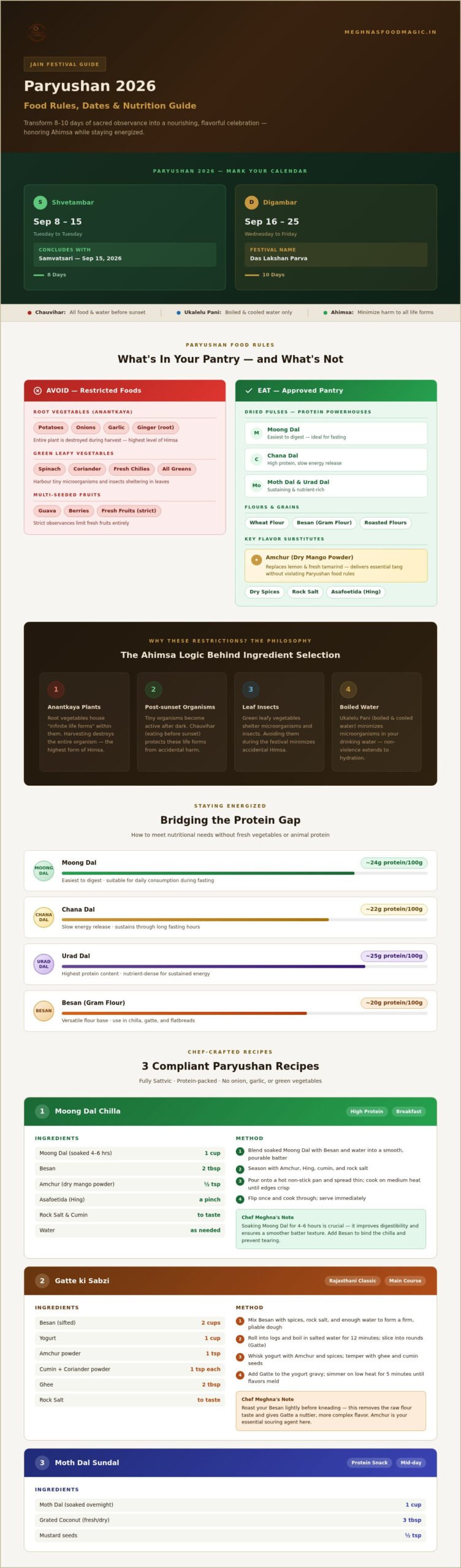
Mark your calendars for 2026 to stay prepared. The Shvetambar observance begins on Tuesday, September 8, and concludes with Samvatsari on Tuesday, September 15, 2026. For those following the Digambar tradition, Das Lakshan Parva starts on Wednesday, September 16, and ends on Friday, September 25, 2026. Timing is everything during these days. The rule of ‘Chauvihar’ is a core pillar, requiring you to finish all food and water consumption before sunset. This practice protects tiny organisms that become active after dark. Additionally, drinking ‘Ukalelu Pani’, water that’s been boiled and cooled, is essential. The boiling process minimizes microorganisms, ensuring your hydration remains as non-violent as your diet.
The Core Philosophy of Ingredient Selection
The logic behind these restrictions is fascinating and deeply compassionate. We avoid ‘Anantkaya’ plants, which are believed to house infinite life forms. This includes root vegetables like potatoes and onions where the entire plant must be destroyed to harvest the food. During this festival, we also pause the consumption of green leafy vegetables to avoid harming small insects that often seek shelter in them. Instead, we turn to dried pulses like Moong, Chana, and Urad. These ingredients provide the essential protein needed to sustain your energy. Following the Paryushan food rules means leaning into these staples. You can find creative ways to use them in my free digital recipe database, ensuring your meals remain nutritious while strictly adhering to the philosophy of minimizing ‘Himsa’ or harm.
Paryushan Diet: What to Eat and What to Avoid
Diving into the specifics of your pantry during this sacred time feels like a creative challenge. The Paryushan food rules help us align our physical habits with our spiritual intentions. As explained by The Pluralism Project, these restrictions are rooted in the profound practice of ahimsa, ensuring we cause the least possible harm to all living beings. This means saying a temporary goodbye to fresh greens and root crops to welcome the grounding energy of dried staples. It’s a shift that prioritizes consciousness over convenience and helps us focus on our inner journey.
The Prohibited ‘Green’ List
Clear your counter of spinach, coriander, and fresh chilies. These are avoided because they can harbor tiny microorganisms. Root vegetables like potatoes, onions, and garlic are strictly prohibited because harvesting them destroys the entire plant and harms soil-dwelling life. Even multi-seeded fruits like guava or berries are often restricted during this period. Some strict observances even limit fresh fruits entirely to minimize any risk of accidental harm. If you miss that hit of acidity usually provided by lemon, reach for dry mango powder (Amchur). It provides that essential tang without violating the festival’s sanctity.
The Approved ‘Dry’ Pantry
This is where your kitchen really starts to shine. Focus on stocking up on pulses like Moong dal, Moth dal, and Chana dal. These are your protein powerhouses. For flours, keep plenty of wheat and Besan (gram flour) on hand. Following Paryushan food rules strictly doesn’t mean your meals have to be boring; you can create incredible textures using only dry spices like turmeric, cumin, and dried ginger. Since fermented foods like curd and bread involve the growth of microorganisms, they are off the menu. We also avoid ‘Kachhu’ or raw dairy. All milk must be boiled before consumption to ensure it’s spiritually and physically pure. Stick to boiled milk and fresh, homemade grains to keep your digestion smooth and your energy high. Explore my YouTube channel for creative ways to make these simple ingredients feel extraordinary.
Nutritional Balance: Staying Energized Without Fresh Vegetables
Transitioning your diet doesn’t mean sacrificing your strength. While we step away from fresh greens to honor the spiritual call, we focus on the incredible versatility of dried staples. The Paryushan food rules provide a framework for detoxification and mental clarity, but you must be intentional about your macros. To maintain muscle mass and keep your metabolism firing, pulses become your best friends. They offer a concentrated source of protein that, when paired with whole wheat or husked grains, provides a complete amino acid profile to keep you feeling strong.
Fiber is equally critical during this time. Since you aren’t eating leafy greens, you need to rely on the natural husks of pulses and whole grains to keep your digestion moving. Natural energy boosters like jaggery and specific dry fruits provide a quick glucose spike when your energy dips, especially if you’re engaging in rigorous prayer or meditation. Hydration is the final piece of the puzzle. Drinking enough boiled water during the designated daylight hours prevents fatigue and helps your body process the denser, grain-based meals. Understanding the Jain dietary restrictions during Paryushana helps you realize that this isn’t just about what you can’t eat; it’s about making every bite count.
High-Protein Pulse Power
Moong Dal is a superstar in the Jain kitchen because it’s exceptionally easy to digest. You can go far beyond a simple khichdi by creating savory pancakes or thick, spiced stews. Besan, or gram flour, is another secret weapon. It has a unique ability to mimic the texture of vegetables in gravies and snacks, adding a nutty depth and a high-protein punch. If you’re looking for more ways to keep your meals satiating, check out my High Protein Recipes for creative inspiration that fits perfectly into your schedule.
Managing Digestion and Gut Health
It’s common to feel a bit of acidity when shifting to a grain-heavy diet. This often happens because dry foods require more digestive fire. You can combat this by using spices like Ajwain (carom seeds) and Hing (asafoetida) in every preparation. These aren’t just for flavor; they’re powerful carminatives that break down complex proteins and prevent bloating. Balancing heavy rotis with light, soupy pulse preparations ensures your gut stays happy. Following the Paryushan food rules effectively means listening to your body and adjusting textures to keep your system light and energized.
3 Nutritious Paryushan Recipes for Your 2026 Observance
Cooking within the Paryushan food rules is a beautiful opportunity to showcase how a few humble ingredients can produce extraordinary flavors. These recipes are designed to keep you satiated and energized during your 2026 observance, focusing on high protein and easy digestion. By removing fresh herbs and root vegetables, we allow the natural nuttiness of grains and the earthy depth of pulses to shine through. Let’s transform your kitchen into a space of Sattvic creation.
Recipe 1: Moong Dal Chilla (Savory Lentil Pancakes)
This chilla is a protein powerhouse that provides a steady release of energy throughout the day. It’s incredibly light on the stomach yet satisfyingly crisp.
- Ingredients: 1 cup yellow Moong dal (soaked for 3 hours), 1/2 tsp turmeric, salt to taste, 1/2 tsp cumin seeds, 1/4 tsp Hing (asafoetida).
- Method: Drain the soaked dal and grind it into a smooth, thick paste using very little water. Whisk in the turmeric, salt, cumin, and Hing. Heat a non-stick pan and pour a ladleful of batter, spreading it in a circular motion. Cook on a medium flame with a few drops of ghee or oil until the edges turn golden and crisp. Flip and cook the other side for a minute.
Chef’s Tip: Using a high-quality non-stick pan is essential here. It allows you to achieve that perfect crunch while significantly reducing oil consumption, keeping your meal light and healthy.
Recipe 2: Paryushan Gatte ki Sabzi
This traditional Rajasthani dish is a masterpiece of texture. We use boiled curd to ensure it aligns with strict dietary requirements while providing a lovely tang.
- Ingredients: 1.5 cups Besan (gram flour), 1/2 cup boiled and thickened curd, 1 tsp red chili powder, 1/2 tsp Amchur (dry mango) powder, salt to taste, and exactly 2 cups of water for boiling.
- Method: Mix the Besan with chili powder, Amchur, salt, and the thickened curd. Knead into a firm dough and shape into long cylindrical logs. Bring the 2 cups of water to a rolling boil in a deep pan. Drop the logs in and boil for 10 to 12 minutes until they float. Once cooled, slice them into small rounds. You can then simmer these slices in a simple yogurt-based gravy spiced with cumin and turmeric.
Recipe 3: Wheat Flour and Jaggery Sheera
Perfect for ‘Parna’ or as a high-energy evening meal, this sheera is a warm, comforting hug in a bowl. It uses jaggery for a more complex, mineral-rich sweetness compared to refined sugar.
- Ingredients: 1 cup whole wheat flour (Atta), 3/4 cup Ghee, 3/4 cup crumbled Jaggery, 2 cups warm water.
- Method: Melt the ghee in a heavy-bottomed pan and add the wheat flour. Roast on a slow flame, stirring continuously, until the flour turns a deep golden brown and releases a nutty aroma. Slowly pour in the warm water while stirring rapidly to avoid lumps. Once the water is absorbed, add the jaggery. Continue to stir until the jaggery melts and the sheera starts leaving the sides of the pan.
Explore more breakfast ideas in my Chila playlist
Chef Meghna’s Notes: Mastering restricted-ingredient cooking
Mastering the Paryushan food rules is like learning a new culinary language. You’re stripping away the loud flavors of onion and garlic to hear the subtle, beautiful notes of the grains themselves. To get that essential tang without lemon, I always reach for Amchur (dry mango powder) or Anardana (dried pomegranate seeds). Amchur provides a sharp, clean acidity, while crushed Anardana adds a complex, fruity tartness that elevates a simple dal into something extraordinary. These ingredients provide the brightness that your palate naturally craves when eating denser, grain-based meals.
If you’re worried about thin, watery gravies without onion paste, here’s my favorite professional secret. Lightly roast a tablespoon of Besan or wheat flour in a little ghee before adding your liquid. This creates a velvety base that thickens beautifully and adds a gorgeous nutty aroma. It acts as a natural roux, giving your sabzis a rich mouthfeel. If your Besan-based dishes like Gatte feel too dense, try whisking your batter for a full two minutes to incorporate air. This simple step makes a world of difference in creating a light, melt-in-the-mouth texture.
Substitution Secrets
You don’t have to lose the heat just because fresh green chilies are off the menu. Use freshly cracked black pepper for a sophisticated, warming bite, or high-quality dry red chili powder for that classic kick. If your family tradition allows dried herbs, a pinch of dried mint or crushed curry leaves can bring back that “fresh” profile you might be missing. Following Paryushan food rules doesn’t mean you have to skip on protein. For a substantial boost, you can explore my Paneer Recipes. Just remember the golden rule: all milk must be boiled and used within its specified window to stay spiritually and physically pure.
Staying Fit with Meghna During the Holy Days
Spiritual growth and physical wellness go hand in hand. While your energy might be lower during a fast, light stretches and mindful movement can actually help with digestion and circulation. The goal is harmony, not exhaustion. Once the festival ends, be kind to your system. Avoid the “rebound eating” trap of diving straight into heavy, fried foods immediately after Samvatsari. Instead, transition slowly with light, soupy meals to keep your gut happy. You can find more guidance on maintaining this balance in my Get Fit With Meghna YouTube Playlist.
This journey is about more than just food; it’s a beautiful reset for your soul and body. Approach your kitchen with a heart full of gratitude and a spirit of innovation. May your Paryushan be peaceful, nourishing, and filled with the joy of mindful creation.
Embrace Your Most Nourishing Paryushan Yet
You’ve now unlocked the secrets to navigating the 2026 observance with complete confidence and joy. By understanding the spiritual “why” behind the Paryushan food rules, you’ve turned a period of restriction into a vibrant celebration of Sattvic creativity. Whether you’re mastering protein-packed pulses or using my professional texture tricks to thicken gravies, you have the tools to stay energized and light throughout these holy days.
Millions of home cooks already trust my kitchen secrets to keep their families healthy while honoring tradition. Every recipe in my database comes with “Chef Meghna’s Notes” to help you troubleshoot and innovate, focusing on high-protein and weight-loss friendly meals that don’t compromise on flavor. It’s time to treat your cooking as an act of joy and self-care.
Approach your kitchen with a heart full of gratitude and a spirit of innovation. I can’t wait to see the beautiful, mindful meals you create during this sacred season. Happy cooking and Michhami Dukkadam!
Frequently Asked Questions
Can we eat curd or yogurt during Paryushan?
Curd and yogurt are typically avoided during this period because the fermentation process relies on the growth of live microorganisms. Following strict Paryushan food rules means excluding fermented items to uphold the principle of non-violence. If your specific tradition allows dairy, ensure the milk is boiled first. However, most practitioners choose to avoid curd entirely to maintain spiritual purity and minimize harm to invisible life forms during these eight to ten days.
Why are green vegetables and fresh fruits prohibited during these days?
These items are prohibited to minimize harm to living beings. Green leafy vegetables can harbor tiny insects that are difficult to see, while root vegetables involve destroying the entire plant and its soil ecosystem. Many fresh fruits are also restricted because they contain multiple seeds, representing infinite life forms. By sticking to dried grains and pulses, you ensure your diet remains as non-violent as possible during this sacred spiritual journey.
What is the best way to ensure enough protein intake during Paryushan?
Focus on a variety of dried pulses like Moong dal, Chana dal, and Urad dal to maintain your protein levels. These staples provide essential amino acids to support muscle mass when fresh vegetables are unavailable. You can also incorporate Besan, or gram flour, into your meals through dishes like gatte or chilla. Since you aren’t eating greens, these concentrated protein sources are vital for keeping your energy stable throughout the long hours of meditation.
Is it mandatory to eat before sunset (Chauvihar) every day?
Practicing Chauvihar, or finishing all food and water before sunset, is a fundamental pillar of the festival. This rule exists to prevent the accidental consumption or harm of small insects that become active after dark. While the level of strictness can vary based on individual health and specific community traditions, observing this timing is considered essential for achieving the full spiritual benefits and discipline intended during these eight to ten holy days.
Can we use dried ginger (Sonth) in our recipes?
Yes, you can absolutely use dried ginger, also known as Sonth, in your cooking. While fresh ginger is a root vegetable and therefore prohibited, the drying process transforms it into an approved spice. It’s an excellent addition to your Paryushan food rules compliant pantry because it adds a warm, spicy depth to dals and subzis. Dried ginger also helps with digestion, making it a functional and flavorful choice for your fasting menu.
What are the rules regarding drinking water during the festival?
You should only consume boiled water that has been cooled to room temperature. Boiling the water minimizes the presence of microorganisms, aligning with the core value of Ahimsa. It’s also important to remember that all water consumption must happen between sunrise and sunset. Keeping a dedicated bottle of boiled water ensures you stay hydrated during the day while strictly adhering to the traditional timing and purity requirements of the festival.
Are all types of pulses and grains allowed?
Most dried grains like wheat and rice, along with pulses like Moong and Chana, are perfectly acceptable. However, you must avoid sprouted pulses because the act of sprouting represents new, infinite life. Stick to fully dried versions that have been stored properly. This selection provides the necessary carbohydrates and fiber to keep your digestive system functioning well without the need for fresh produce, ensuring you remain nourished during your spiritual penance.
How can I make my Paryushan meals less gassy or bloating?
To reduce bloating, always include carminative spices like Hing and Ajwain in your pulse preparations. Since your diet becomes more grain-heavy, these spices are essential for breaking down complex proteins and aiding digestion. Soaking your pulses for at least three to four hours before cooking also helps significantly. Drinking warm, boiled water throughout the day further supports your gut, ensuring that your body feels light and comfortable while you focus on your prayers.
Disclaimer
This is a recipe food blog page and not nutrition or doctor and hence do not claim to cure any illness. If you have specific health issues please consult a qualified doctor or certified nutritionist.
I do consult experts, research Internet and at times seek help from Gemini to collect relevant information to put together some of these blogs.

