
PCOS Recipes: Flavorful, Balanced Indian Meals for Everyday Cooking
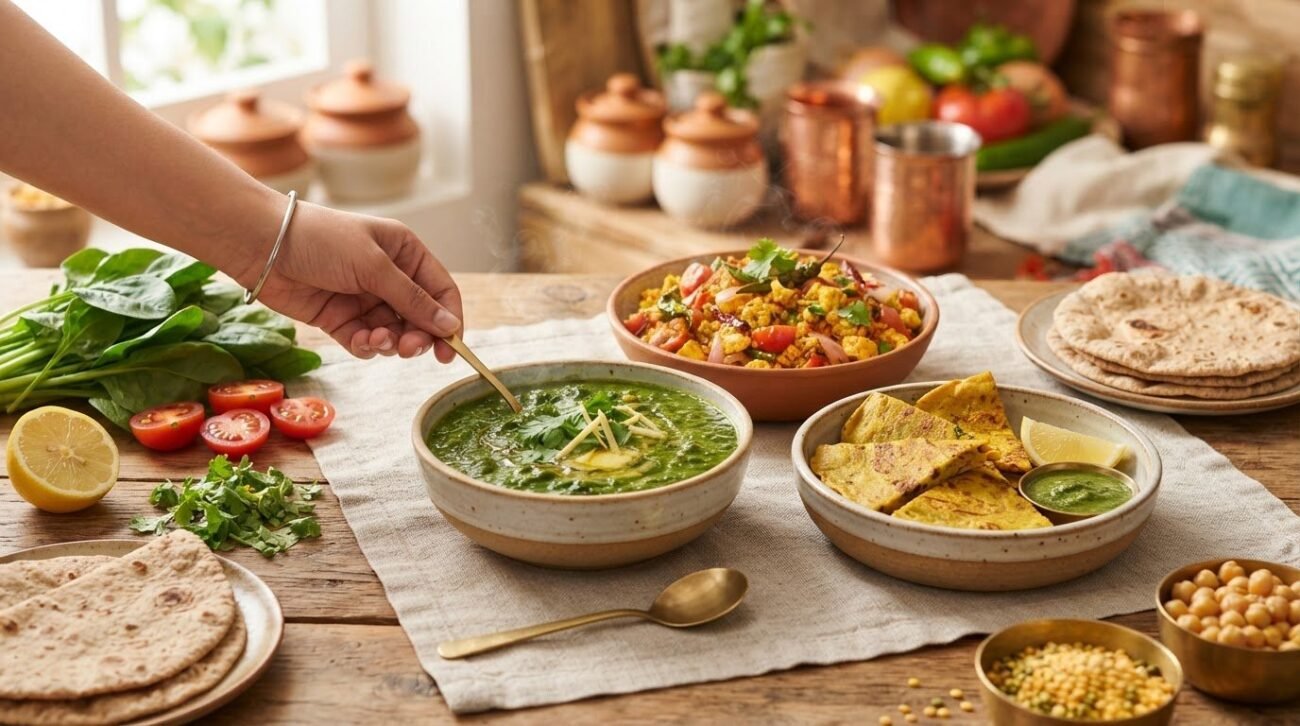
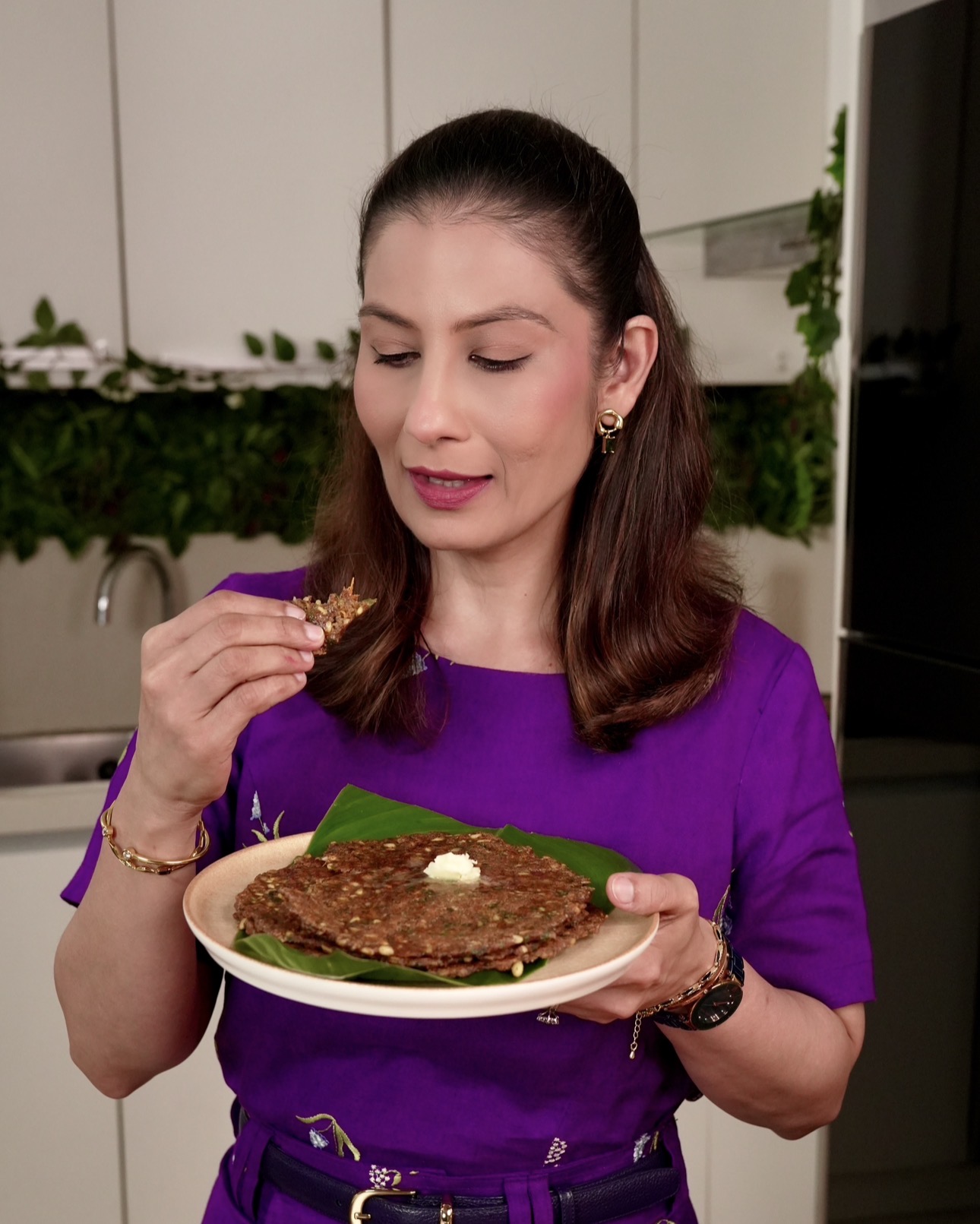
What if cooking for PCOS didn’t mean giving up the Indian meals you love? Conflicting food advice can make every choice feel like a rule to follow, while recipe lists often leave out the measurements that make dinner doable. But satisfying meals can start with familiar ingredients and a flexible balance of vegetables, protein, fibre-rich foods and flavour.
These Pcos recipes offer a practical place to begin, without treating any one ingredient as a cure or making strict food rules the goal. You’ll find three measured Indian recipes, from a savoury besan chila to comforting dal palak and quick paneer bhurji, plus simple ideas for adapting portions and ingredients to your preferences and routine. The aim is to make everyday cooking feel clearer and more enjoyable, whether you’re planning breakfast, lunch or a quick dinner. Let’s bring a little more confidence, colour and flavour to the plate.
Key Takeaways
- Build a satisfying plate by bringing together protein-rich foods, vegetables, fibre-containing ingredients and fats in combinations that suit you.
- Pcos recipes don’t automatically mean cutting out carbohydrates; learn to think about familiar staples in the context of preparation and pairing.
- Use the three measured Indian recipes as practical starting points, then adjust ingredients to match your taste and routine.
- A simple prep routine can make everyday cooking feel more manageable, while Chef Meghna’s Notes offer ideas for substitutions and troubleshooting.
What Makes a Recipe PCOS-Friendly? Start with Flexible, Satisfying Meals
Conflicting food advice can make an ordinary question, “What should I cook today?”, feel surprisingly complicated. One list may praise a familiar ingredient while another warns against it, leaving you unsure whether a comforting home-cooked meal belongs on your plate. A more useful starting point is flexibility: choose food you enjoy, then consider how its ingredients work together and what suits your own circumstances.
A PCOS-friendly recipe is a flexible meal idea that can support nourishing, satisfying eating; it isn’t a medical prescription or a treatment for PCOS. Recipes can offer inspiration, but food choices don’t cure the condition or replace advice tailored to you by a healthcare professional. For a general overview of polycystic ovary syndrome (PCOS), including its symptoms and management, consult a reliable health reference and discuss personal concerns with your care team.
How to think about PCOS-friendly recipes without rigid food rules
There isn’t one recipe, ingredient list or eating pattern that fits everyone. Preferences, daily routines, food access, allergies and individual health needs can all shape what works at home. Treat Pcos recipes as adaptable starting points, not mandatory menus or a list of foods to fear. If a recipe uses paneer, for example, you might choose tofu or eggs instead, depending on what you eat and have available.
That flexibility also means adapting to the kitchen you actually have. Use seasonal vegetables, adjust chilli to your comfort, or choose a familiar grain that suits the meal. No single ingredient defines whether a dish is “good” or “bad.” If you have specific medical needs or questions about how food choices fit your care, a qualified healthcare professional can offer individual guidance.
Why flavour and satisfaction belong in balanced meals
Enjoyment is part of making a meal you’ll want to cook again. Think of the contrast between a soft besan chila, crisp vegetables and a tangy chutney, or the warmth of dal with ginger and spices. Colour, aroma and texture make simple ingredients feel inviting; a mix of components can also make a meal feel more complete and satisfying. These are practical cooking aims, not promises of symptom relief or a particular health outcome.
Indian kitchens already offer plenty of flexible building blocks: dal, chana, vegetables, eggs, paneer, curd, rice and roti can be combined in different ways to suit the occasion. There’s no need to turn familiar cooking into a special set of rules. Start with a dish you like, then consider what would complement it: perhaps vegetables beside dal, or a protein-rich filling in a chila. The next sections explore how meal components work together and how to think about carbohydrate-containing staples without fear.
You’ll also find three measured Indian recipes, with clear cooking steps and practical guidance for adjusting them to taste and routine. Think of them as dependable ideas to make your own, not a prescribed plan. A little curiosity, a well-seasoned pan and familiar ingredients can make everyday cooking feel far more approachable.
Build a Balanced PCOS Recipe: Understand the Role of Each Meal Component
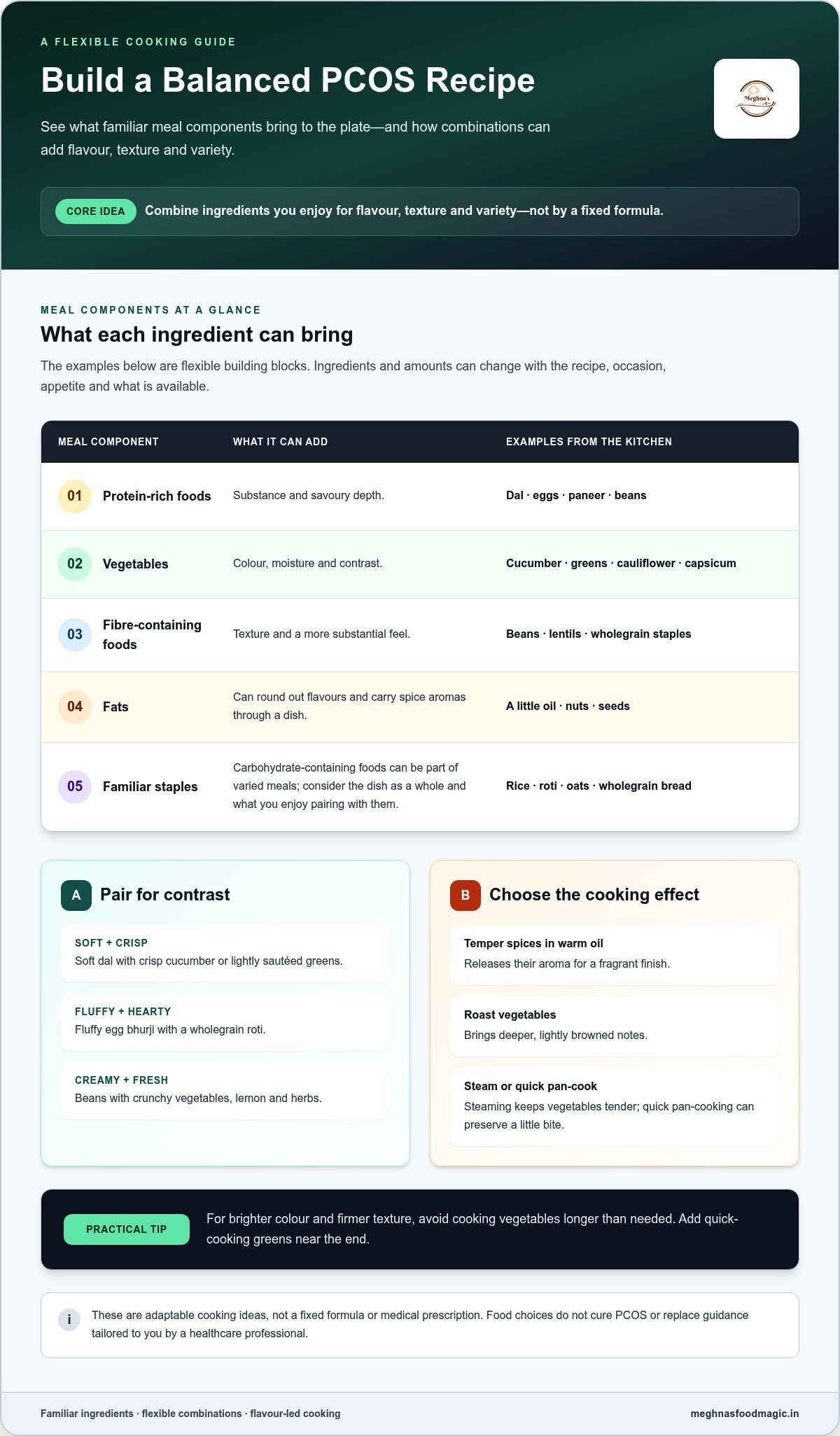
Once you think beyond a list of “allowed” ingredients, it becomes easier to build meals by considering what each component brings to the plate. Protein-rich foods can give a dish substance and savoury depth: think dal, eggs, paneer or beans. Vegetables contribute colour, moisture and contrast, while fibre-containing ingredients such as beans, lentils and wholegrain staples add texture and help make a meal feel substantial. A little oil, nuts or seeds can round out flavours and carry aromas from spices through a dish.
Build a flexible plate by combining ingredients you enjoy for flavour, texture and variety, rather than following a fixed formula. It’s a cooking guide, not a universal prescription. The combinations and amounts can change with the recipe, the occasion, your appetite and what’s available in your kitchen.
Combine ingredients for variety, texture, and satisfaction
Think in contrasts. Pair soft dal with crisp cucumber or lightly sautéed greens; serve a fluffy egg bhurji with a wholegrain roti; or tuck paneer and chopped vegetables into a besan chila. Beans can add a creamy, hearty bite to a salad with crunchy vegetables, lemon and herbs. These examples are about how ingredients behave together: creamy elements soften sharper flavours, while crisp vegetables bring freshness and a lively bite.
Carbohydrate-containing staples such as rice, roti, oats and wholegrain bread can fit into varied meals. Rather than labelling them “good” or “bad,” consider the dish as a whole, how a staple is prepared, and what you enjoy pairing with it. A bowl of rice with dal and vegetables is a different combination from rice served on its own. Pcos recipes can make room for familiar staples, with choices adapted to personal preference and health needs.
Choose cooking methods that preserve flavour and make meals practical
Cooking technique shapes a meal as much as its ingredients. Tempering spices in warm oil releases their aroma and gives dal or vegetables a fragrant finish. Roasting brings deeper, lightly browned notes to cauliflower or capsicum. Steaming keeps vegetables tender and clean-tasting, while quick pan-cooking can preserve a little bite. For brighter colour and firmer texture, avoid cooking vegetables longer than needed; add quick-cooking greens near the end rather than at the start.
Swaps work best when you consider texture, not just the ingredient name. If replacing paneer with tofu, pat it dry first so it browns rather than steams in the pan. If you use a softer vegetable in place of a crisp one, add it later or shorten its cooking time. In a chila, finely chopped vegetables blend into the batter more easily than large pieces, which can make the pancake tear when flipped. Small adjustments help the dish keep its intended character.
For more ideas on how these techniques look in a home kitchen, explore Meghna’s cooking videos for visual inspiration. Use what you learn to build flavourful combinations that suit your own table, not to chase a perfect plate.
Do PCOS Recipes Mean Cutting Carbs? Compare Foods Without Fear
No. PCOS recipes don’t automatically require eliminating carbohydrates or giving up rice, roti, potatoes or other familiar staples. A staple is one part of a meal, not a verdict on the whole plate. How it’s prepared, what you serve alongside it, what you enjoy and your personal health context can all shape your choice.
No single ingredient or food rule suits everyone with PCOS; use meal combinations as inspiration, not universal instructions. The examples below show different ways to bring staple foods together with protein-rich ingredients and vegetables. They aren’t portion prescriptions, and they don’t replace individual guidance from a healthcare professional.
Can rice, roti, and other familiar staples fit?
They can feature in meals in different ways. A bowl of rice might be served with dal and a vegetable sabzi; roti can accompany egg bhurji and salad; potatoes can be cooked with chickpeas, spices and vegetables. These combinations offer variety in flavour and texture while keeping the food familiar. Choose ingredients and amounts that suit your appetite, preferences, routine and any guidance you’ve received from your clinician.
Use the table as a set of cooking prompts, not a ranking of better and worse foods.
| Familiar staple | Try pairing it with | Cooking idea |
|---|---|---|
| Rice | Dal and cooked vegetables | Serve rice with a tangy dal and a dry sabzi for contrast. |
| Roti | Eggs or paneer and vegetables | Make a wrap with spiced filling and crunchy sliced vegetables. |
| Potatoes | Chickpeas and greens | Cook together with ginger, cumin and a squeeze of lemon. |
| Oats | Eggs or vegetables | Prepare a savoury porridge with seasoning and chopped vegetables. |
How to assess diet claims and avoid all-or-nothing advice
Recipe inspiration helps answer “What could I cook?” It isn’t the same as individual medical nutrition guidance, which takes personal circumstances into account. Be cautious of content promising a cure, guaranteed weight loss or specific hormone changes from one food, recipe or restrictive rule. A colourful plate can be delicious without being a treatment.
Instead of asking whether a staple is forbidden, consider practical questions: Does this preparation appeal to me? What would make the meal more varied? Are there preferences or health needs I should account for? Those questions leave room for everyday cooking and thoughtful adjustments. If you have concerns about symptoms, medication, nutritional needs or a particular eating approach, seek advice from a qualified healthcare professional.
Pcos recipes work best as adaptable kitchen ideas, not a test of willpower. Keep familiar foods in the conversation, experiment with combinations that taste good, and let your individual needs guide any changes.
Three PCOS-Friendly Indian Recipes to Cook at Home
These Pcos recipes bring familiar ingredients together in practical, flavour-first meals. Measurements make each dish easy to repeat, while the suggested swaps leave room for what you have in your kitchen. Timing excludes soaking the moong dal, so soak it ahead and drain before blending.
Moong Dal Chilla with Fresh Coriander
Serves: 1 (2 chillas) | Prep: 10 minutes | Cook: 10-12 minutes
Ingredients: 1 cup soaked moong dal, drained; ¼ cup water; ¼ cup finely chopped onion; 2 tablespoons chopped fresh coriander; ½ teaspoon cumin; ¼ teaspoon turmeric; salt to taste; 1 teaspoon oil for cooking.
Method: 1. Blend the dal with water until smooth. The batter should pour easily but still coat a spoon; add water a teaspoon at a time if it’s too thick. 2. Stir in onion, coriander, cumin, turmeric and salt. 3. Heat a lightly oiled non-stick pan over medium heat. Pour in half the batter and spread it into a thin round. 4. Cook until the surface looks set and the edges lift, then flip and cook the other side until lightly golden. Repeat with the remaining batter.
Why this works: A smooth batter spreads evenly, while moderate heat gives the centre time to cook before the outside browns; the same gentle pan-cooking approach suits other ideas in the Breakfast Chila playlist. Add grated carrot in place of some onion if you like a sweeter, softer bite.
Paneer and Vegetable Masala Bowl
Serves: 1 | Prep: 10 minutes | Cook: 12-15 minutes
Ingredients: 150 g paneer, cubed; 1 cup mixed vegetables, chopped; 1 teaspoon oil; ½ teaspoon cumin; ¼ teaspoon turmeric; ½ teaspoon coriander powder; salt to taste; ½ cup cooked brown rice.
Method: 1. Warm oil in a pan and add cumin. Once fragrant, add the paneer and brown it lightly on several sides. Transfer to a plate. 2. Add the vegetables, turmeric, coriander powder and salt. Cook, stirring, until tender-crisp; add a splash of water if the pan gets dry. 3. Return the paneer to the pan and toss gently to coat with the spices. Serve with the cooked brown rice.
Why this works: Browning paneer first adds a toasted edge, while cooking vegetables briefly keeps their colour and bite. Use tofu instead of paneer, and adjust the cooking time so it warms through without breaking apart.
Egg and Spinach Besan Pancake
Serves: 1 large pancake | Prep: 8 minutes | Cook: 8-10 minutes
Ingredients: ½ cup besan; 1 egg; ⅓ cup water; ½ cup chopped spinach; 1 teaspoon oil; ¼ teaspoon ajwain; salt to taste.
Method: 1. Whisk besan, egg, water, ajwain and salt until smooth, then fold in spinach. 2. Heat oil in a non-stick pan over moderate heat and pour in the batter, spreading it gently. 3. Cook until the edges look set, flip carefully and cook through on the other side.
Why this works: A lump-free batter cooks more evenly; moderate heat helps the middle set without scorching the besan. For an egg-free version, omit the egg and add water gradually until the batter pours easily.
For more visual cooking inspiration, watch Meghna’s Indian cooking videos.
Make PCOS-Friendly Cooking Easier with a Simple Routine and Chef Meghna’s Notes
A little preparation can make everyday cooking smoother without turning it into a strict meal plan. Pick a few dishes that sound appealing, check what’s already in your pantry, then decide which ingredients are worth preparing ahead. You might wash and chop vegetables, cook dal for another meal, or make rice to serve with a freshly cooked sabzi later.
A flexible routine for planning PCOS-conscious meals
Keep the routine light and adjustable:
- Choose a few meal ideas. Mix a quick breakfast with dishes that can become lunch or dinner, and leave space to change plans.
- Check your ingredients. Note what needs using and choose practical swaps based on what’s available.
- Prepare only useful components. Chop vegetables or cook a grain when it saves time, rather than prepping every meal in advance.
- Store leftovers thoughtfully. Transfer cooked food to clean, covered containers and refrigerate promptly. Keep components separate when that helps preserve texture, then reheat thoroughly before serving.
Leftovers can become a new meal, not a duplicate: add cooked vegetables to an egg scramble, or serve extra dal with freshly made roti. For more flexible ideas, browse the free Indian recipe database and choose dishes that fit your appetite, preferences and routine. Pcos recipes are most useful when they make cooking feel more manageable, not when they add another set of rules.
Chef Meghna’s Notes: substitutions, troubleshooting, and cooking tips
Adjust chilla batter gradually. If it’s too thick to spread, add water a teaspoon at a time and stir well before adding more. A thinner batter spreads more easily, but adding too much at once can make the chilla fragile. Heat the pan before adding batter, then lightly oil it; a pan that’s too cool can encourage sticking, while excessive heat may brown the outside before the middle sets.
Account for vegetable moisture. Spinach can release water as it cooks, so wash and drain it well, then chop it finely. If you swap it for a watery seasonal vegetable, cook that vegetable briefly first and let excess moisture evaporate before adding it to batter. For a paneer or tofu filling, pat the pieces dry before pan-cooking so they brown instead of steaming.
Season in stages. Add whole spices to warm oil to release their aroma, then taste the dish near the end and adjust salt, lemon or fresh coriander. This gives you more control than adding all the seasoning at once.
For more meal inspiration, the free recipe database and cooking videos can help you explore dishes at your own pace.
Let Your Next Meal Be a Fresh Starting Point
Cooking confidence grows through small choices: try a new spice, adjust a vegetable to what’s in season, or make a familiar dish in a way that suits today. Let Pcos recipes be a source of ideas rather than another set of rules. Your preferences and routine can guide what makes it onto the menu, and individual health questions are best discussed with a qualified healthcare professional.
For your next meal, choose one recipe that feels appealing and manageable. Cook it once as written, notice what you’d change, then make the next version your own. That simple rhythm turns experimentation into a useful part of everyday cooking, without expecting every dish to be perfect.
Keep curiosity at the centre of your kitchen. One colourful, flavourful meal at a time, you can make home cooking feel more personal and enjoyable.
Frequently Asked Questions
What are the best recipes for PCOS?
There isn’t one best recipe for everyone with PCOS; choose dishes that suit your taste, routine and individual needs. For an easy lunch, try chana tossed with chopped cucumber, tomato, lemon and herbs, with a side of curd if you enjoy it. For dinner, dal palak with a vegetable side offers a different flavour and texture. Think of recipes as ideas to adapt, not a ranking or treatment.
Can I eat rice if I have PCOS?
Yes, rice can be part of meals for some people with PCOS, though individual needs and preferences differ. Try using leftover rice in a vegetable-and-egg stir-fry: add chopped beans or capsicum, season with ginger and pepper, then cook until piping hot. This offers a fresh way to use a familiar staple without making it the only ingredient in the dish. For personal dietary concerns, ask a qualified healthcare professional.
What is a good Indian breakfast for PCOS?
A good breakfast is one you enjoy and can make work for your morning. Try savoury oats cooked with peas, tomato and cumin, then finish with coriander and lemon. If you prefer a lighter option, have plain curd with chopped fruit and a small handful of nuts, as suited to your needs. These are everyday ideas, not a prescribed breakfast plan or a promise of specific health effects.
Do PCOS recipes need to be low-carb?
No, PCOS recipes don’t automatically need to be low-carb. Carbohydrate-containing foods can appear in a range of eating patterns, and personal needs vary. Rather than removing a whole food group based on a recipe label, consider what you like, how a dish is prepared and whether it fits any guidance you’ve received. If you’re considering a major dietary change, discuss it with a qualified healthcare professional first.
Can food cure PCOS?
No, food cannot be promised as a cure for PCOS. Recipes can make everyday meals more enjoyable and help you explore different ingredients, but they aren’t medical treatment. Be wary of claims that a particular dish or restrictive menu will cure the condition or guarantee a health result. If you have questions about symptoms, treatment or nutrition, speak with a qualified healthcare professional who understands your health history.
Are vegetarian PCOS recipes possible without millet?
Yes, vegetarian PCOS recipes can be made with plenty of familiar ingredients without using millet. Build meals around dal, chickpeas, kidney beans, tofu, paneer, eggs if you eat them, vegetables, rice, oats or wheat-based rotis. For example, make a chickpea and vegetable curry with roti, or tofu bhurji with toast. Choose combinations that fit your preferences and any individual advice you’ve received.
Disclaimer
This is a recipe food blog page and not nutrition or doctor and hence do not claim to cure any illness. If you have specific health issues please consult a qualified doctor or certified nutritionist.
I do consult experts, research Internet and at times seek help from Gemini to collect relevant information to put together some of these blogs.

