
Effective Fasting Methods: A Guide to Healthy Weight Loss


What if Fasting is less a shortcut to weight loss and more a pattern of meal timing that suits some people better than others? It’s easy to feel pulled between bold promises and conflicting advice, especially when intermittent fasting, religious observances and medically guided fasting are discussed as if they’re the same thing.
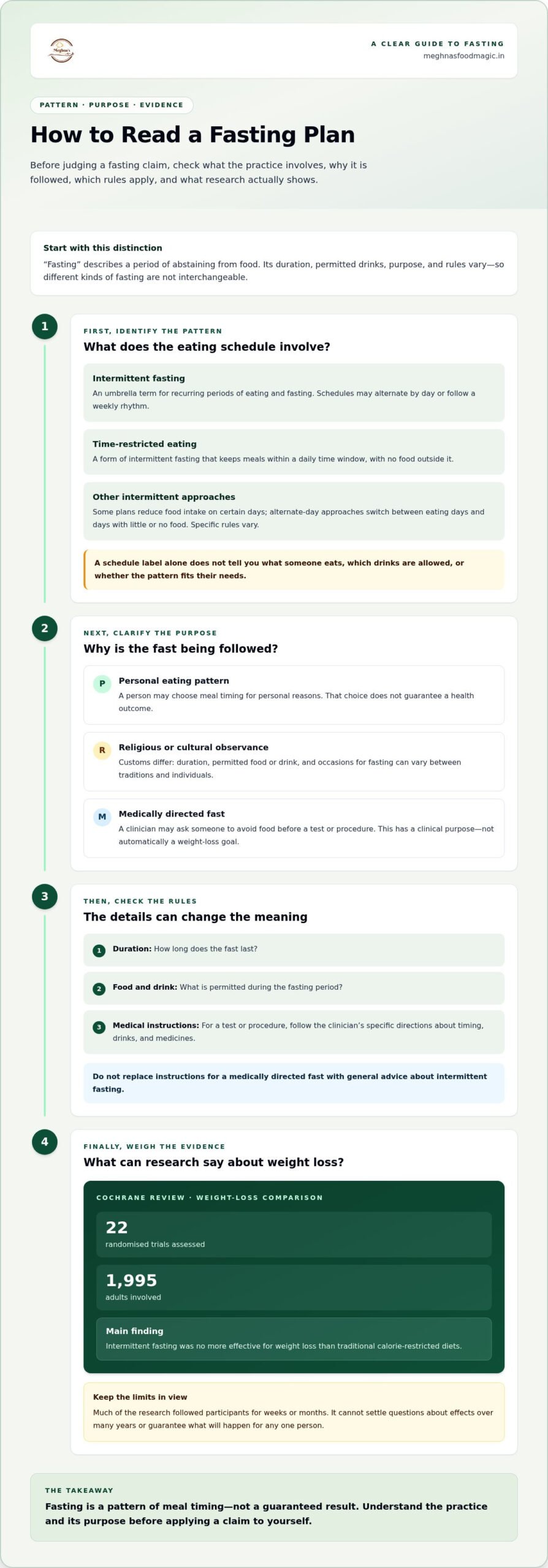
The evidence calls for realistic expectations: a February 2026 Cochrane review found that intermittent fasting was no more effective for weight loss than traditional calorie-restricted diets. That doesn’t make it right or wrong for everyone; it highlights why your health, routine and relationship with food matter. This guide explains common approaches, what research can and can’t tell us, and why fasting isn’t a universal prescription.
You’ll also find practical pointers on hydration, choosing satisfying meals within an eating window and easing back into food after a fast. We’ll explore approachable Indian-inspired ideas, from a soft moong dal chilla to gently seasoned vegetable dalia, so the meal that ends a fast feels nourishing and enjoyable, not like a test of willpower.
Key Takeaways
- Learn how daily eating windows, scheduled low-intake days, religious observances and medically guided fasts differ, so you can interpret advice in context.
- Assess Fasting claims with a clear view of what research can establish and why results may differ between people.
- Consider how age, health conditions, medicines, pregnancy and your relationship with food may affect whether fasting is appropriate.
- Explore three measured meal ideas and practical ways to make food around a fast nourishing, enjoyable and suited to your preferences.
- Use Chef Meghna’s cooking tips to adapt ingredients and troubleshoot texture, while treating fasting as a personal choice rather than a rule.
What Does Fasting Mean? Understand the Different Practices
It’s natural to be curious about fasting when the same word describes everything from a daily eating window to a religious observance or a preparation for a medical procedure. A balanced starting point is to look at what the practice involves, why someone follows it and what rules apply. The details matter because these approaches aren’t interchangeable.
Fasting is a period when a person abstains from food, with the duration and rules depending on the purpose and type of fast. Some practices allow water or other drinks; others restrict them for a set time. Fasting describes meal timing or abstention, not a guaranteed health outcome. A pattern that feels manageable for one person may be unsuitable for another.
How intermittent and time-restricted fasting differ
Intermittent fasting is an umbrella term for recurring periods of eating and fasting. The eating pattern may alternate by day or follow a weekly rhythm. For example, some plans involve eating as usual on certain days and reducing food intake on others; alternate-day approaches switch between eating days and days with little or no food. The specific rules vary.
Time-restricted eating is one form of intermittent fasting: meals are kept within a daily time window, with no food outside it. People often describe the window using paired numbers, but a label alone doesn’t tell you what someone eats, whether drinks are allowed or whether the pattern fits their needs. There’s no single schedule that suits everyone. For an overview of the terminology and approaches, see Intermittent Fasting.
Why people fast for different reasons
Motivation shapes the meaning of a fast. Someone may choose a meal-timing routine for personal reasons, while others fast as part of religious or cultural observance. Customs differ between traditions and individuals: the duration, permitted food or drink, and occasions for fasting can all vary. It’s best not to assume that one person’s practice represents everyone’s.
Health-related fasting is another broad category, but it doesn’t automatically mean a weight-loss routine. A clinician may direct someone to avoid food before a test or procedure, for example, and provide specific instructions about timing, drinks and medicines. Those directions serve a clinical purpose and shouldn’t be replaced by advice for intermittent fasting.
Before interpreting any claim about fasting, ask what kind is being discussed and what outcome is meant. A religious observance, a personal eating pattern and a medically directed fast have different contexts, rules and reasons. Keeping those distinctions clear makes it easier to assess information without treating every practice as a diet or assuming that all fasts affect people in the same way.
What Happens During Fasting, and What Does Research Actually Show?
It’s tempting to expect a precise switch to a special fat-burning state, followed by guaranteed weight loss. The body’s response is more complicated. During a period without food, it draws on available energy, including energy stored from earlier meals. How that feels and what happens over time depend on the person, the eating pattern and the food consumed during eating periods.
Fasting, energy use, and everyday hunger
As time passes after a meal, the body shifts how it uses energy, drawing on stored fuel as well as energy from food. This is a normal adjustment, not proof that a particular fasting schedule triggers a unique or guaranteed metabolic advantage. Hunger, focus and energy can also vary from person to person and from day to day. There isn’t one predictable timeline that everyone experiences.
Meal timing can change daily habits: a shorter eating window may mean fewer opportunities to snack, but it may also make meals feel rushed or lead someone to eat more when the window opens. The pattern itself doesn’t tell us whether someone is meeting their nutritional needs or how they’ll feel. Those details matter just as much as the clock.
Fasting and weight loss: separate possibility from promise
For weight management, the strongest takeaway is measured, not magical. A February 2026 Cochrane systematic review assessed 22 randomised trials involving 1,995 adults and found intermittent fasting was no more effective for weight loss than traditional calorie-restricted diets. Results across trials and individuals can differ, and a review cannot promise what will happen for any one person.
Trial length is another important limit: much of the research has followed participants for weeks or months, so it can’t settle questions about effects over many years. Study populations and fasting methods also vary, making broad claims hard to apply to everyone. Personal success stories can be meaningful, but they aren’t a substitute for controlled research or evidence that the same routine will work for others.
Some studies examine particular groups and clinical settings. For example, the NIH Research on Intermittent Fasting and Type 2 Diabetes reports findings from research involving people with Type 2 diabetes; those results shouldn’t be treated as a general prescription. A study’s participants, medical support and comparison diet all shape what its findings can tell us.
Research can compare tested fasting approaches with other eating strategies, but it can’t guarantee weight loss or a health benefit for every person. Food quality and overall intake still count. For ideas beyond meal timing, explore this balanced diet recipes guide for broader inspiration, or browse Meghna’s cooking videos for nourishing meal ideas.
Is Fasting Right for Everyone? Consider Safety and Common Misconceptions
A popular routine isn’t automatically a safe or suitable one. Fasting can affect people differently, and an approach that seems simple on paper may conflict with someone’s health needs, medicines, age or daily responsibilities. The sensible question isn’t only “Does it work?” but also “Is it appropriate for me, and what support would I need?”
When personal medical guidance matters
Speak with a qualified healthcare professional before changing your eating pattern if you have a health condition, take medicines that need to be taken with food, or have been advised to follow specific meal timings. This is especially important for medicines that affect blood glucose or blood pressure. Don’t skip, delay or adjust prescribed medicine to fit a fasting schedule; ask the prescriber how your treatment and meals should be managed.
Individual advice is particularly important for anyone under 18, who is pregnant or breastfeeding, has a history of an eating disorder, or has Type 1 diabetes and uses insulin. These circumstances can make unsupervised fasting inappropriate or risky. This isn’t a complete list, and it isn’t a diagnosis. A clinician can consider your health history and explain whether a change in meal timing is suitable.
Daily life matters, too. Consider whether a pattern could affect concentration, caring responsibilities, physical work, exercise or your ability to eat regularly. If you feel unwell or find that food rules are causing distress, don’t treat that discomfort as something you must push through. Pause and seek appropriate professional advice.
Common fasting claims to question
Be wary of claims that everyone should fast, that longer fasts are always better, or that a particular schedule guarantees weight loss. A more restrictive routine isn’t automatically more effective, and a schedule that disrupts sleep, work or social meals may be difficult to sustain. Marketing language can make a method sound universal; real-life needs are not.
“Detox” is another word that deserves scrutiny. It’s not evidence that a fasting routine removes unspecified toxins or delivers a guaranteed result. Ask what outcome is being claimed, how it was measured and whether the evidence applies to people like you. Anecdotes may describe one person’s experience, but they can’t establish what will happen for someone else.
Nor is feeling faint, unusually weak, distressed or persistently unwell proof that a fast is working. Discomfort isn’t a badge of progress. Personal responses vary, and symptoms should be taken seriously rather than romanticised or dismissed as a necessary adjustment.
Fasting is a personal choice, not a universal health requirement or a substitute for medical care. If health, medication or life circumstances make the answer uncertain, qualified guidance can help you weigh the decision without pressure. You can also choose nourishing, enjoyable meals without following a fasting routine at all.
How to Approach Meals Around a Fast, With Three Measured Recipe Ideas
A meal after a period without food can be simple, familiar and full of flavour. These three recipes are cooking inspiration, not a fasting schedule or medical advice. Adjust the amount to your appetite and routine; there’s no single portion that suits everyone. If you’re planning a varied vegetarian plate, this high-protein vegetarian guide offers more ideas for bringing different ingredients together.
Moong dal chilla
Ingredients, makes 2 small chillas: ½ cup (100 g) split yellow moong dal, soaked for 4 hours and drained; ¼ cup water, plus 1-2 tablespoons as needed; ¼ teaspoon ground cumin; ⅛ teaspoon turmeric; ¼ teaspoon grated ginger; 2 tablespoons finely chopped coriander; ¼ teaspoon salt, or to taste; 1 teaspoon oil for cooking.
Method: Blend the soaked dal with ¼ cup water until smooth. Stir in cumin, turmeric, ginger, coriander and salt. The batter should pour easily but still coat a spoon; add extra water a tablespoon at a time if it’s too thick. Warm a non-stick pan over medium heat, brush with a little oil, and spread half the batter into a thin round. Cook until the edges look set and the underside is golden, then flip and cook the other side. Repeat with the remaining batter. A thinner layer cooks more evenly and gives a tender centre with lightly crisp edges.
Paneer-and-vegetable bowl
Ingredients, makes 1 bowl: 100 g paneer, cubed; ½ cup diced capsicum; ½ cup chopped tomato; ¼ cup sliced onion; 1 teaspoon oil; ¼ teaspoon cumin seeds; ¼ teaspoon ground coriander; ⅛ teaspoon turmeric; ¼ teaspoon salt, or to taste; 1 teaspoon lemon juice; 1 tablespoon chopped coriander.
Method: Heat oil in a pan and let the cumin seeds sizzle briefly. Add onion and capsicum; cook until just tender but still colourful. Stir in tomato, ground coriander, turmeric and salt, cooking until the tomato softens. Fold in paneer and warm gently so it stays soft. Tofu can replace paneer, though it has a different texture; for more ways to prepare this mild, versatile ingredient, browse Meghna’s paneer recipe collection. For a milder bowl, replace capsicum with cooked peas.
Fruit-and-curd bowl
Ingredients, makes 1 bowl: ¾ cup (180 g) plain curd; ½ cup diced banana, apple or seasonal fruit; 1 tablespoon chopped roasted peanuts or almonds; 1 teaspoon seeds, such as sesame or pumpkin seeds; ¼ teaspoon ground cinnamon, optional.
Method: Spoon the curd into a bowl, arrange the fruit on top, then finish with nuts, seeds and cinnamon. Choose ripe fruit for natural sweetness; for crunch, add the nuts just before serving.
Fasting doesn’t require a special “breaking” recipe. Pick food that tastes good and feels comfortable for you, balancing soft, crisp, tangy and savoury elements as you like. For more optional meal inspiration, browse the weight-loss recipe collection; it’s a collection of recipes, not a fasting plan.
Chef Meghna’s Notes: Keep Fasting Decisions Personal and Food Joyful
Good food is flexible. These notes are here to help you adapt the three recipes to your kitchen and preferences, not to turn them into rules about what you should eat after a fast. Fasting is a personal choice, not a universal requirement or a medical prescription. You can enjoy these meal ideas whether or not you follow a fasting routine.
Chef Meghna’s Notes on flavour, texture, and substitutions
For moong dal chilla: If the batter resists spreading, loosen it with water a little at a time. If it runs across the pan like a thin liquid, blend in a spoonful of soaked dal, if available, or let the batter rest briefly to thicken. An unevenly cooked chilla often means the pan is too hot or the batter is spread too thickly; lower the heat and aim for an even layer. Add finely chopped spinach or grated carrot for a different flavour and texture, but keep additions small so the chilla still holds together.
For the paneer-and-vegetable bowl: Tofu can replace paneer, though it will have a different texture and may need gentler handling. Use vegetables you enjoy, such as beans or zucchini, cut into similar-sized pieces so they cook evenly. For brighter flavour, add lemon gradually and taste as you go; a little chopped mint can bring a fresh note. If the bowl tastes flat, check the salt and acidity before adding more spices.
For the fruit-and-curd bowl: Choose fruit that is ripe and pleasant to eat, such as mango, pear or papaya when available. A thicker curd gives a creamier base; if yours is loose, drain it briefly through a clean cloth. If nuts aren’t suitable for you or your household, leave them out or use extra seeds for crunch. Add toppings just before serving so they don’t lose their texture.
Think in contrasts: a soft chilla with a fresh chutney, warm vegetables with a squeeze of lemon, or creamy curd with crisp toppings. Adjust chilli, salt and tang to suit your palate. No ingredient needs to be labelled forbidden; the useful question is whether the combination tastes good and works for you.
Choose your next step without pressure
Before adopting a restrictive routine, take a moment to name your reason. Are you curious about meal timing, responding to advice you’ve heard, or hoping to address a specific health concern? Your answer can help you decide whether to explore the idea further, choose a less restrictive approach, or simply focus on enjoyable everyday meals. There’s no need to prove commitment by ignoring hunger or discomfort.
If health conditions, medicines, pregnancy, a history of disordered eating or another personal circumstance makes the decision complicated, seek guidance from a qualified healthcare professional. Recipe inspiration can help you cook; it can’t assess your health or replace individual medical advice.
Takeaway: These recipes offer flexible food inspiration, not a prescribed fasting plan or medical guidance. Let your needs, preferences and professional advice guide your choices.
For more approachable meal ideas and cooking inspiration, watch Meghna’s recipe videos.
Choose a Next Step That Feels Right for You
Let your next step be guided by curiosity, not pressure. If you’re considering Fasting, take time to reflect on what you hope to gain and whether the approach fits your health and everyday life. You can also focus on making regular meals more enjoyable, with colourful ingredients and flavours that leave you looking forward to the table.
For fresh ideas, Meghna’s free digital recipe database brings together health-conscious cooking, including high-protein and weight-loss-oriented recipes. The Get Fit With Meghna playlist adds fitness-focused food inspiration. Treat these as sources for enjoyable cooking, not as a fasting schedule or medical guidance.
There’s no single routine you need to follow to care for yourself. Keep what works, seek qualified guidance when you need it, and let good food bring a little more colour and confidence to your day.
Frequently Asked Questions
Can I drink water, tea, or coffee while fasting?
It depends on the kind of fast. Some time-based routines allow water and plain tea or coffee, while religious observances or instructions before a medical test may set different rules. Milk, sugar and other additions may also change whether a drink fits a particular fast. Follow the instructions specific to your practice or procedure rather than assuming every fast permits the same drinks.
Can I exercise while fasting?
Some people can manage gentle activity, such as an easy walk, but exercise tolerance varies with the person, workout and fasting routine. Pay attention to how you feel, and avoid pushing through weakness, dizziness or unusual discomfort. If you have a health condition, take regular medication, or plan strenuous training, discuss exercise timing and food needs with a qualified healthcare professional before changing your routine.
Does fasting affect sleep or concentration?
It can affect people differently. Hunger, changes to usual meal timing, or shifting meals late into the evening may influence comfort, sleep or focus for some, while others notice little change. Keep track of how you feel during ordinary tasks, not just during a planned workout. If poor sleep or difficulty concentrating persists, reconsider the routine and seek professional advice if you’re concerned.
Can I take prescribed medicine while fasting?
Don’t skip, delay or change prescribed medicine to maintain a fast. Some medicines need food or a particular timing, and fasting can complicate that schedule. Check with the prescribing clinician or pharmacist before changing your eating pattern, and explain the type of fast you’re considering. For a medical procedure, follow the care team’s instructions about medicines, food and drinks rather than general fasting advice.
What should I eat first after a fast?
Choose a familiar, comfortable meal and eat at a pace that feels good; there’s no universal first-food rule for every fast. For example, you might have a modest portion of rice with dal and cooked vegetables, then decide whether you want more. If your fast was medically directed, follow the instructions you were given, since the appropriate food and timing may depend on the procedure.
Is fasting the same as skipping meals?
Not necessarily. A meal can be missed because of a busy morning, low appetite or an unexpected change in plans. Fasting usually refers to a deliberate pattern or observance with particular timing or rules. A single skipped meal doesn’t automatically amount to a recurring fasting routine. The reason, frequency and context help distinguish the two, and neither should be treated as a guaranteed route to weight loss.
Can fasting cause headaches or dizziness?
Headaches or dizziness can occur during a fast, but they have various possible causes and shouldn’t be treated as proof that the routine is working. Sit or lie down if you feel unsteady, and don’t drive or do risky tasks while dizzy. If symptoms are severe, persistent or worrying, end the fast if appropriate and seek medical advice; urgent symptoms need prompt care. Repeated symptoms warrant professional guidance before fasting again.
Disclaimer
This is a recipe food blog page and not nutrition or doctor and hence do not claim to cure any illness. If you have specific health issues please consult a qualified doctor or certified nutritionist.
I do consult experts, research Internet and at times seek help from Gemini to collect relevant information to put together some of these blogs.

