
Smoothies Made Simple: A Flavorful Guide to Ingredients, Texture, and Easy Recipes
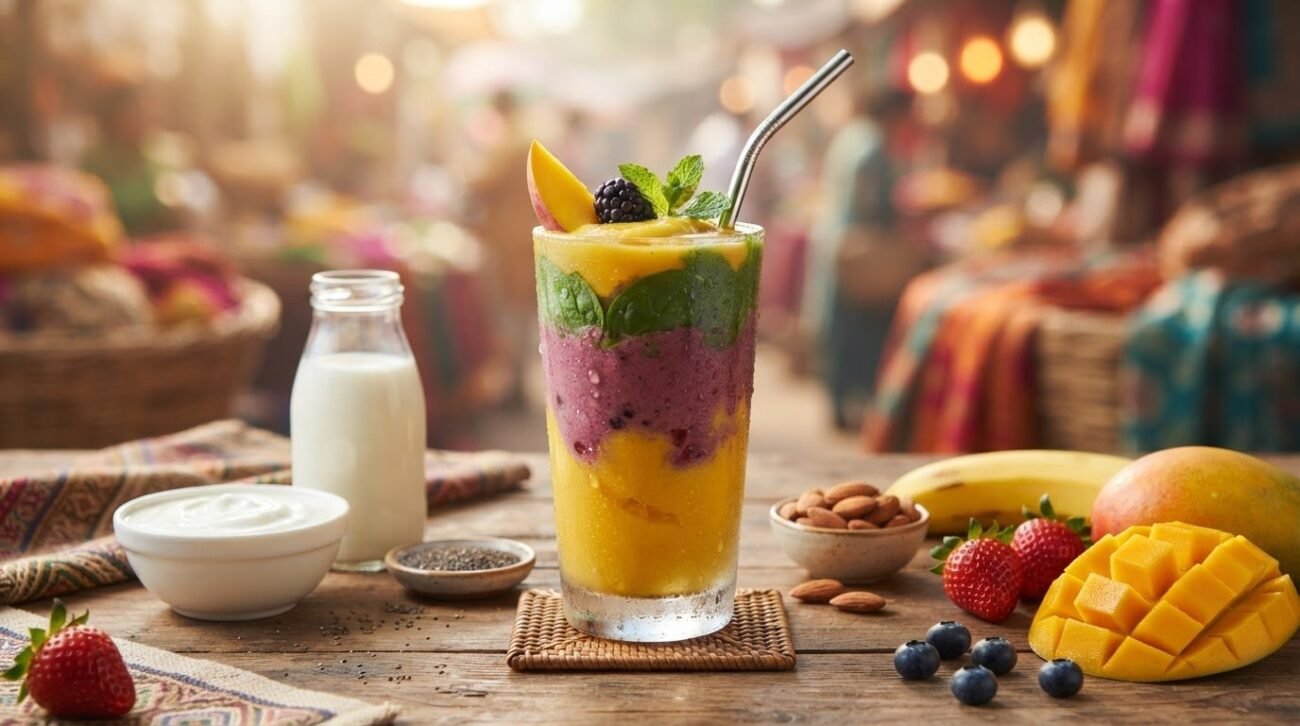
What if a delicious smoothie came down to balance, not a long list of trendy ingredients? Smoothies can be watery, gritty, or so thick they barely move through a straw, and a blend that tastes too sweet can be just as disappointing. The fix is often simple: choose ingredients that work together for flavour and texture, then adjust a little at a time.
If you’ve ever wondered how much liquid to pour in or what can soften a sharp, overly fruity taste, you’re not alone. This guide gives you an easy formula for building a satisfying smoothie, with practical ways to tweak sweetness, creaminess, and thickness using familiar ingredients such as curd, milk, and seasonal fruit.
You’ll also find three smoothie recipes with measured ingredients, plus substitution and troubleshooting tips to help each blend suit your taste. We’ll look at how fruit, a protein-rich ingredient, and a little fibre or healthy fat can create a more balanced drink, and why adding liquid gradually helps you avoid a watery result. No rigid rules, just a few useful cues and plenty of room to make every glass your own.
Key Takeaways
- Build smoothies around a flavour you enjoy, then choose a liquid base to shape the taste and creaminess.
- Use fresh or frozen fruit thoughtfully to help control the drink’s chill and thickness.
- Adjust sweetness by considering the fruit, any added sweetener, and the flavour of your base.
- Try three easy recipes with measured ingredients and clear blending directions.
- Use simple troubleshooting tips to fine-tune texture, make substitutions, and remember combinations you’d happily blend again.
What Makes a Smoothie Delicious, Balanced, and Easy to Make?
You want a tasty drink you can customise with what’s in the kitchen, but the first blend can be a gamble: too thin, too thick, too tart, or unexpectedly sweet. A smoothie is a blended drink made by combining a liquid with chosen ingredients. That simple definition leaves plenty of room for creativity, from fruit-led blends to richer, more filling combinations. For a general overview of ingredients and types, see What is a Smoothie?
The key is proportion. Liquid helps the blender move ingredients; fruit brings flavour and body. Add-ins change the result, too. A spoonful of yoghurt can make a blend creamier and gently tangy, while nut butter contributes richness. Oats give the drink more substance and can make it thicker, especially if you let the blended mixture stand briefly. Even a small change in quantity can shift how the drink tastes, feels, and pours.
A well-balanced blend isn’t defined by a single “perfect” ingredient list. It’s one where the flavours suit your palate and the texture matches how you want to enjoy it. A ripe banana, for instance, can soften the sharpness of berries; a little extra liquid can loosen a thick blend. Taste as you go, and make small adjustments rather than adding several ingredients at once.
A simple smoothie formula: liquid, fruit, and flavour
Start with a liquid, add fruit for flavour and body, then choose an ingredient to shape the texture. Milk or curd can bring creaminess; water gives fruit flavours more room to shine. Yoghurt adds a smooth, tangy quality, while nut butter makes a blend feel richer. Oats create a heartier texture, so add them gradually if you prefer a lighter sip.
Start with liquid, add fruit, then build flavour and texture with small, considered additions.
Start with the flavour and occasion you want
Choose a direction before you reach for the blender: creamy with banana and curd, tangy with citrus or berries, cocoa-rich with a little cocoa powder, or warmly spiced with a pinch of cinnamon. Then consider the occasion. Are you making a snack, a breakfast accompaniment, or a refreshing drink? Your answer can guide the ingredients and richness, without locking you into a fixed recipe or portion.
It’s also useful to separate enjoyment from assumptions about nutrition. A smoothie isn’t automatically a complete meal or a guaranteed health solution; its ingredients and portions determine what it contains. A fruit-and-water blend serves a different purpose from one with yoghurt, oats, or nut butter. Think of each glass as a flexible part of your day, not a shortcut that has to meet every need. With a flavour in mind and a few thoughtful choices, blending becomes simple, personal, and far less guesswork.
How Smoothie Ingredients Change Flavour, Texture, and Thickness
The same fruit can produce a very different drink depending on what you blend it with. A neutral liquid lets fruit lead, while a creamy base softens sharper flavours and gives the blend more body. Temperature matters too: fresh fruit makes a less-chilled drink, while frozen fruit chills and thickens it as it blends. These small choices are what let you steer a smoothie towards a light, pourable sip or a richer, spoonable texture.
Choosing a liquid base for the taste you want
Milk gives fruit a familiar, rounded creaminess. For a thicker, gently tangy base, loosen curd or yoghurt with a little water or milk before blending. Plant-based drinks, such as oat, soy, or almond drink, each bring their own flavour, so choose one that complements rather than competes with your fruit. None is automatically best; it’s a matter of the taste and consistency you want.
Begin with less liquid than you think you’ll need. Blend, check how easily the ingredients move, then pour in a small splash and blend again if the mixture is too dense. This gradual approach is easier than trying to rescue a thin blend with extra ingredients. If your blender needs help catching the fruit, pause and scrape down the sides before adding more liquid.
Fruit changes both flavour and temperature. Fresh mango or banana blends into a soft, mellow drink, while frozen pieces make the result colder and thicker. Frozen fruit can also make the blender work harder, so cut large pieces smaller and add enough liquid for the blades to catch. A tart fruit, such as orange or berries, brings brightness; pairing it with a ripe, sweeter fruit can round out the flavour without immediately reaching for added sweetener.
Using fruit and add-ins without overpowering the blend
Oats, yoghurt, nut butter, and seeds can all add body, but they don’t behave alike. Oats make a blend more substantial; yoghurt adds a creamy tang; nut butter gives a pronounced, rich flavour. Seeds add a little texture, so use a light hand if you want a silky finish. Start with a modest amount, blend thoroughly, then taste before adding anything else.
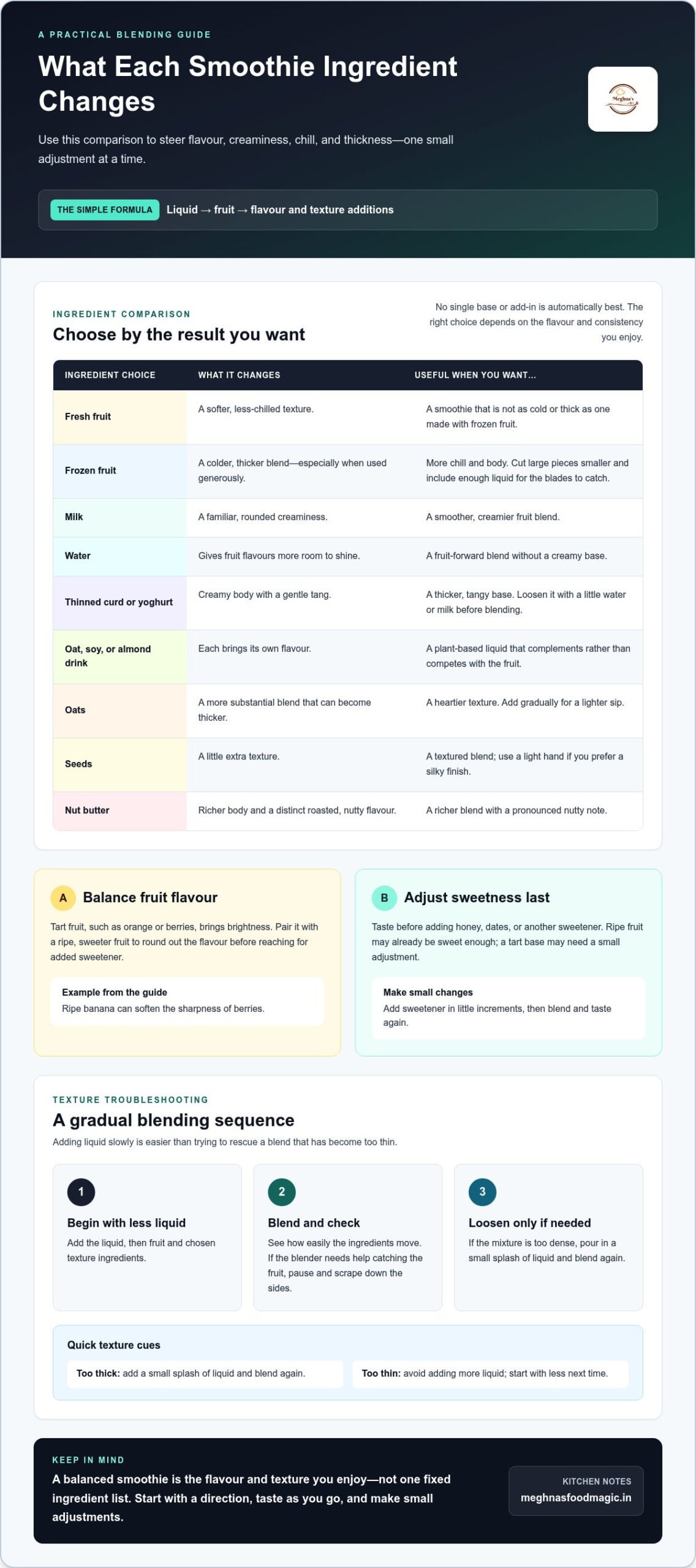
A quick comparison makes ingredient choices easier to remember:
- Fresh fruit: softer, less-chilled texture.
- Frozen fruit: colder and thicker, especially when used generously.
- Milk or plant-based drink: a smoother, more pourable blend, with flavour shaped by the base.
- Thinned yoghurt: creamy body with a tangy note.
- Oats or seeds: more texture and a thicker feel.
- Nut butter: richer body and a distinct roasted, nutty flavour.
Taste the blend before adding honey, dates, or another sweetener. Ripe fruit may already provide enough sweetness, while a tart base might call for a small adjustment. Add sweetener in little increments and blend again; it’s easier to add more than to correct an overly sweet drink. For more blending inspiration, explore Meghna’s recipe videos.
Are Smoothies Too Sweet or Unsatisfying? Build One to Suit You
There’s no single sweetness level or ingredient combination that suits everyone. A blend made with ripe mango, sweetened yoghurt, and juice will taste quite different from one made with tart berries, plain curd, and water. Portions matter too: adding more fruit, sweetener, or a flavoured base can shift the overall taste quickly. So if a smoothie feels too sweet or too light, treat that as a cue to adjust the ingredients, not as proof that smoothies are always one way.
How to adjust sweetness without losing flavour
Taste the blend before adding honey, sugar, dates, or another sweetener. Very ripe fruit may already give it plenty of sweetness. If the flavour feels cloying, add a little tangy yoghurt or plain curd to bring contrast; a modest pinch of unsweetened cocoa can also deepen a fruit-and-banana blend without adding another sweet note. These additions change flavour as well as sweetness, so begin with a small amount, blend, and taste again.
For a sharper blend, a little citrus or a tart fruit can lift the flavour. If it’s too tangy, balance it with a small portion of ripe banana rather than pouring in sweetener straight away. Flavoured milk, sweetened yoghurt, and packaged juice can each make the finished drink taste sweeter, so account for them before adding anything extra. Preferences differ, and small adjustments give you better control than trying to correct the whole recipe at once.
Choosing ingredients for a more substantial smoothie
A light, pourable blend can be refreshing, while yoghurt, oats, or nut butter create a thicker, richer texture. Oats make the drink feel more substantial; yoghurt adds creamy tang; nut butter contributes richness and a distinct flavour. These are texture and taste choices, not guarantees that a drink will work as a complete meal. Choose an addition that fits the flavour you want, and keep the amount modest until you know how it changes the result.
If you’re aiming for more staying power, think about what accompanies the drink and what else you plan to eat. A smoothie may work as a snack, alongside breakfast, or as part of a broader meal, depending on its ingredients and your appetite. For vegetarian protein ideas beyond the blender, explore the High Protein Guide for Indian Vegetarians. For broader meal choices, Meghna’s diet recipes can offer more inspiration.
- Creamy: Add yoghurt or curd for a smooth, tangy finish.
- Lighter: Use a more pourable base and keep rich add-ins minimal.
- Tart: Pair sharp fruit with a small amount of ripe fruit for balance.
- Richer: Blend in a little nut butter or oats, then adjust to taste.
The most reliable guide is your own palate. Make one small change at a time, note the combinations you enjoy, and you’ll be able to recreate a favourite without relying on guesswork.
Three Easy Smoothie Recipes with Measured Ingredients
These three blends take familiar ingredients in different directions: sunny and creamy, gently spiced and hearty, or softly fragrant with cardamom. Each recipe makes one smoothie. For an even blend, add the liquid and softer ingredients first, then the fruit and other additions; blend until smooth and pause to scrape down the sides if needed.
Mango-Yoghurt Smoothie
- 1 cup mango, peeled and diced
- ½ cup plain yoghurt
- ½ cup milk
- 1 teaspoon chia seeds
Add the milk and yoghurt to the blender, followed by the mango and chia seeds. Blend until creamy, stopping to scrape the sides if any fruit sticks. This makes one thick, tangy-sweet smoothie. Serve straight away; if you prefer a looser texture, blend in a small splash of milk at a time.
Banana-Oat Smoothie
- 1 medium banana, peeled and sliced
- ¾ cup milk
- 2 tablespoons rolled oats
- 1 tablespoon peanut butter
- ⅛ teaspoon cinnamon
Pour the milk into the blender, then add the banana, oats, peanut butter, and cinnamon. Blend until the oats are finely incorporated and the drink looks smooth. This yields one rich, gently spiced smoothie with a thicker body. Serve promptly, as the oats continue to absorb liquid if the blend stands.
Cocoa-Papaya Smoothie
- 1 cup papaya, peeled, deseeded, and cubed
- ½ cup plain yoghurt
- ½ cup water
- ¼ teaspoon ground cardamom
Blend the water and yoghurt first, then add the papaya and cardamom. Continue until silky, scraping down the blender if needed. This makes one light, gently fragrant smoothie. Serve chilled for a refreshing finish. The measured cardamom adds warmth without taking over the mild papaya flavour.
Chef Meghna’s Notes
For a dairy-free version, replace the milk with an unsweetened plant-based drink and use plant-based yoghurt in place of plain yoghurt. Choose flavours that complement the fruit, and remember that a sweetened alternative can change the taste. If a blend is too thick, add liquid a tablespoon at a time and blend after each addition. If it’s watery, add 1 tablespoon of oats or ¼ cup of measured fruit, then blend again; oats will make the texture more substantial.
For more fruit-based ideas to adapt at home, browse the recipe database. The recipes above offer measured starting points; keep a note of your favourite adjustments as you try them.
Make Smoothies Your Own with Meghna’s Practical Kitchen Approach
The best blend is the one you enjoy making and drinking. Use the recipes and ingredient guidance as a starting point, then let your taste, the fruit on hand, and the moment you’re making it for shape the next glass. A simple routine keeps that experimenting joyful rather than random: choose a flavour, select a base, blend, taste, and adjust.
A repeatable routine for experimenting at home
Change one ingredient at a time. If you loved a mango blend but want it less rich, try changing the base before changing the fruit and add-ins too. This helps you notice which ingredient made the difference, so you can repeat a combination you like instead of guessing next time.
- Choose a flavour: Decide whether you want something creamy, tangy, gently spiced, or cocoa-rich.
- Select a base: Pick milk, a plant-based drink, or yoghurt thinned with liquid to suit that flavour.
- Blend, then pause: Check that the ingredients are smooth and the mixture pours as you like.
- Taste and adjust: Add a little liquid if it’s too thick, or make a small flavour adjustment if it needs more balance.
- Make a note: Record the ingredients and what you’d change, so a favourite is easy to recreate.
Blend, taste, adjust, and write down what you’d happily make again.
Make adjustments before serving, not after adding a handful of extras all at once. A small splash of liquid can loosen a thick blend; if the flavour needs lift, a touch of tang can provide contrast. Taste after each change. That pause matters: it helps you understand how each ingredient affects the finished drink and keeps the result from becoming thin, overly rich, or too sweet. Over time, your notes become a personal guide to combinations that work for you.
Find more inspiration for everyday cooking
That same flexible approach works across the kitchen: start with what you enjoy, make a thoughtful choice, and adjust as you go. For more practical home-cooking ideas, explore the recipe database. If you’re also looking for vegetarian protein ideas to build into meals beyond the blender, the High Protein Guide for Indian Vegetarians can offer a useful next direction.
Keep the process relaxed. Not every experiment needs to become a new favourite; each one teaches you something about flavour, texture, and the ingredients you like together. If you’d enjoy seeing more approachable cooking ideas in action, browse Meghna’s recipe videos for a little inspiration for your next kitchen creation.
Keep Creating Blends That Feel Like You
Let your next glass be a small kitchen experiment. Try a flavour combination you haven’t blended before, then make a note of what you’d keep or change. With each try, smoothies can become a more personal part of your everyday routine, shaped by the ingredients you enjoy and the textures you prefer.
There’s no need to get every blend perfect on the first try. Stay curious, enjoy the process, and let one good idea lead to the next.
Here’s to many happy moments of blending and discovering a new favourite.
Frequently Asked Questions
Can you make a smoothie the night before?
Yes, you can prepare one the night before and keep it covered in the refrigerator. Use a clean, airtight container and chill it promptly rather than leaving it on the counter. Ingredients may settle or the colour may change slightly as the drink stands, so shake it well or stir before pouring. If the aroma or appearance seems unusual, don’t drink it.
Can you use frozen fruit instead of fresh fruit in a smoothie?
Yes, frozen fruit works well and can make the drink colder without adding ice. Add pieces in manageable sizes so they blend evenly, especially if your blender is less powerful. If the blades struggle to catch them, let the fruit soften briefly or add a little of the recipe’s liquid before blending again. The finished smoothie may be thicker than one made with fresh fruit.
Do you need ice to make a smoothie?
No, ice is optional. Use chilled milk, curd, or another cold base if you want a cool drink without ice. Ice can chill and thicken the blend while you’re mixing it, but as it melts, it may dilute the flavour. For a colder result that stays more flavourful, use frozen fruit instead and serve the smoothie soon after blending.
How can you make a smoothie without a blender?
You can make a rough, small-batch version by mashing very soft fruit, such as ripe banana or papaya, with a fork until few lumps remain. Whisk in curd and milk gradually, then press the mixture through a sieve if you want it smoother. This method won’t break down firm fruit, seeds, or oats as finely as a blender, so choose soft ingredients and expect a more textured drink.
Can smoothies replace a meal?
Sometimes, but a smoothie isn’t automatically a meal just because it’s filling or served in a large glass. Its suitability depends on its ingredients, quantity, and what else you’ll eat that day. For instance, a fruit-only blend may not feel like enough for your usual breakfast. If you’re still hungry, enjoy it alongside a meal rather than assuming every smoothie can stand in for one.
Why does my smoothie separate after blending?
Some separation is normal: liquid and fruit particles can settle at different rates after blending, particularly if the drink sits for a while. Give it a stir or shake to bring the mixture back together. For a more uniform pour, blend until the fruit is fully broken down and serve soon after. If separation comes with an unusual smell or appearance, discard the drink.
What can you add to a smoothie to make it thicker?
For a thicker finish, add a few pieces of frozen banana or a spoonful of thick curd, then blend and check the consistency. These options also affect flavour, so choose one that suits the fruit. If using chia seeds, allow the blended drink to stand briefly so they can absorb some liquid, then stir again. Add small amounts at a time to avoid making the smoothie too dense.
Disclaimer
This is a recipe food blog page and not nutrition or doctor and hence do not claim to cure any illness. If you have specific health issues please consult a qualified doctor or certified nutritionist.
I do consult experts, research Internet and at times seek help from Gemini to collect relevant information to put together some of these blogs.

