
Festival Recipes: Three Joyful Indian Dishes for Celebrations
Planning Festivals recipes for a celebration can feel overwhelming, especially when you want a menu with a crisp, savory bite, a satisfying main, and something sweet. But a festive table does not need to mean a marathon in the kitchen. A few well-chosen dishes can feel generous and special without making the cooking unnecessarily complicated.
This guide shows you how to build a complementary menu, use techniques that bring out flavor and texture, and prepare three celebration-worthy recipes with precise measurements. Practical substitutions and troubleshooting tips will help you adapt the dishes to your kitchen and preferences, so health-conscious choices can sit happily alongside the pleasure of sharing a meal.
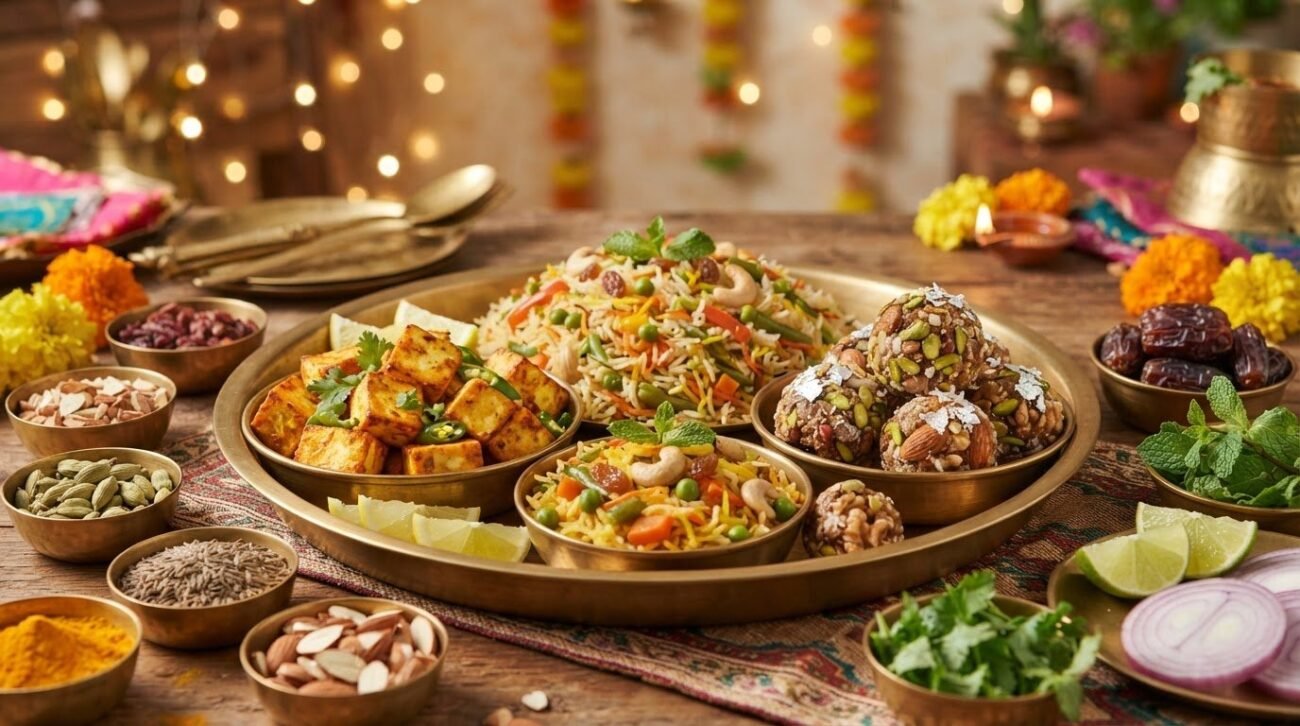
The menu features baked paneer bites, vegetable pulao, and date-and-nut ladoos: a warmly spiced snack, an aromatic main, and a naturally sweet finish. Use the recipes as a starting point, then make the meal your own.
Key Takeaways
- Build a simple festive menu around a savory snack, a main dish, and a sweet.
- Measure and prepare ingredients before cooking, then manage heat to help dishes cook evenly.
- Make baked paneer bites, vegetable pulao, and date-and-nut ladoos with the recipes below.
- Reduce last-minute pressure by separating make-ahead steps from cooking best done just before serving.
- Use practical fixes for dry paneer, sticky rice, and ladoos that will not hold their shape.
Festival Recipes: How to Build a Celebratory Indian Menu
A festival meal begins before the first dish reaches the table: spices bloom in warm oil, a savory snack comes fresh from the kitchen, and everyone gathers to share what has been prepared. That sense of abundance does not require a long menu. A simple framework helps you choose dishes that complement one another and fit both your guests and your available time.
Think in three parts: a snack to welcome everyone, a main dish to anchor the meal, and a sweet to finish. Baked paneer bites bring a savory, gently crisp start; vegetable pulao adds aromatic comfort; and date-and-nut ladoos offer a sweet finish. Treat this as a flexible menu, not a prescribed spread for any particular festival.
Choose dishes for the occasion and the people at your table
Diwali, Holi, Eid, Ganesh Chaturthi, and Pongal each carry distinct meanings and food traditions. Practices also vary by region, community, and household, so no single menu represents every celebration. The range of Indian cuisine reflects this diversity. Let your family’s customs and the occasion guide your choices rather than assuming one festive spread fits all.
Before choosing dishes, consider who is coming and how you will serve the meal. For a seated lunch, a filling main with a suitable accompaniment may be enough. For a gathering where guests arrive at different times, a snack that is easy to portion can be useful. Ask about guests’ food preferences and plan vegetarian options accordingly. If everyone is eating vegetarian food, vary the flavors and textures across the snack, main, and sweet rather than repeating the same ingredients throughout.
Balance festive flavors, textures, and effort
A satisfying menu offers contrast. Pair a crisp or savory bite with a comforting main, then finish with something sweet. Fresh herbs or a bright accompaniment can balance warm, rich flavors. Also consider how much attention each dish needs: a recipe that requires last-minute cooking works best alongside components you can prepare earlier.
A festive menu feels complete when each dish brings a different texture, flavor, and kind of comfort to the table.
Use your available time as a menu-planning tool. If the celebration is busy, choose recipes with familiar methods and ingredients already in your kitchen. If you have more time, add a garnish or accompaniment rather than taking on several complicated dishes. This keeps the meal generous without making cooking feel like a race.
Finally, make the framework your own. Swap the snack for a family favourite, choose a main that suits your guests, or serve a small portion of sweet after the meal. The best Festivals recipes are the ones that honour your household’s traditions and make sharing food feel joyful.
The Cooking Techniques That Make Festival Recipes Memorable
Great flavor depends on more than the ingredients. The order you prepare them, the heat you use, and when you adjust the seasoning all shape a dish’s taste and texture. A little attention to these details makes festive cooking calmer and helps each ingredient contribute its best.
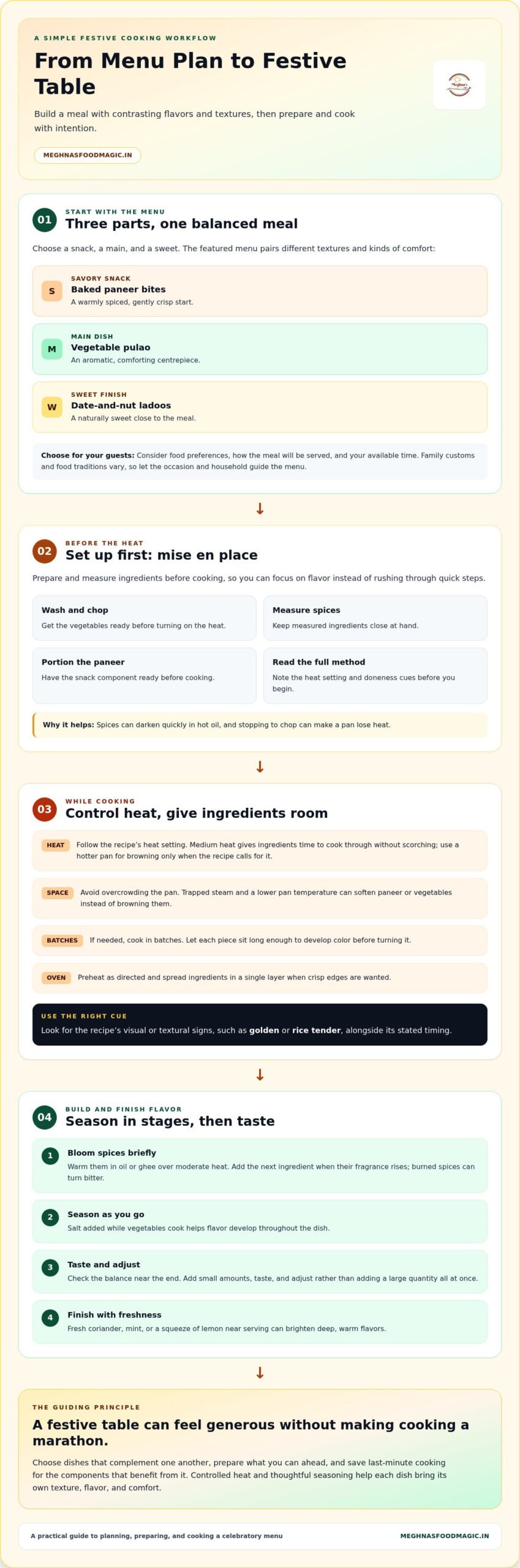
Mise en place means preparing and measuring everything before cooking. It keeps you organized and lets you focus on flavor instead of rushing. Wash and chop vegetables, measure spices, portion the paneer, and set ingredients near the stove before turning on the heat. This is useful because some steps move quickly: spices can darken in hot oil, and a pan can lose heat while you stop to chop.
Prepare ingredients and manage heat with intention
Follow the recipe’s heat setting and check its doneness cues. Medium heat gives ingredients time to cook through without scorching their surfaces. A hotter pan can help with browning, but use it only when the recipe calls for it. If the method says to cook until golden or until the rice is tender, use that visual or textural cue alongside the stated timing.
Give ingredients room in the pan. Overcrowding traps steam and lowers the pan’s temperature, so paneer or vegetables may soften instead of browning. Cook in batches if needed, letting each piece sit long enough to develop color before turning it. For oven cooking, preheat as directed and spread ingredients in a single layer when you want crisp edges.
Build flavor without making recipes feel complicated
Season in stages. Salt added while vegetables cook helps their flavor develop throughout the dish; a final taste gives you a chance to correct the balance. Sweetness can round out a tangy chutney, while lemon juice or another acidic ingredient specified in the recipe can lift a rich preparation. Add small amounts, taste, and adjust instead of adding a large quantity all at once.
When a recipe asks you to bloom spices, warm them briefly in oil or ghee over moderate heat. The fat carries their aroma through the dish, but spices can turn bitter if they burn. Have the next ingredient ready and add it as soon as the fragrance rises. Fresh coriander, mint, or a squeeze of lemon added near serving can brighten deep, warm flavors.
These details are especially useful for Festivals recipes, when several dishes may need attention at once. Read the full method before starting, keep a spoon and tasting bowl close, and resist raising the heat just to save a few minutes. Controlled cooking helps you get more reliable browning, tenderness, and aroma.
If you enjoy seeing cooking methods demonstrated, find more approachable recipe inspiration on Meghna’s cooking channel.
Three Festival Recipes for a Savory Snack, a Main, and a Sweet
These three dishes bring contrasting textures and flavors to the table: warmly spiced paneer, fragrant vegetable rice, and date-and-nut ladoos. The recipes below make the stated yields, so scale the ingredient quantities evenly if you are cooking for a larger group.
Baked paneer bites
Yield: 4 servings. The yogurt marinade helps the spices cling to the paneer and seasons it throughout. A light coating and space between the pieces allow hot oven air to brown their edges instead of trapping steam.
- Paneer, cut into 2.5 cm cubes: 250 g
- Thick plain yogurt: 60 g
- Ginger-garlic paste: 1 tsp
- Kashmiri chilli powder: ½ tsp
- Ground cumin: ½ tsp
- Garam masala: ¼ tsp
- Salt: ½ tsp
- Besan: 2 tbsp
- Oil: 1 tsp
- Heat the oven to 200°C. Line a tray with baking paper.
- Mix the yogurt, ginger-garlic paste, spices, salt, besan, and oil until smooth. Fold in the paneer and coat gently. Leave to marinate for 15 minutes.
- Arrange the cubes in one layer with space between them. Bake for 12-15 minutes, turning once. They are ready when the edges have golden patches and the coating looks set. Serve hot with lemon wedges or mint chutney. Find more recipe ideas at Meghna’s Food Magic.
Vegetable pulao
Yield: 4 servings. Rinsing removes excess surface starch, helping the grains cook more separately. Resting the pulao off the heat allows moisture to settle, so the rice is less likely to break when fluffed.
- Basmati rice: 200 g (1 cup)
- Water: 400 ml (2 cups)
- Mixed diced carrots, peas, and beans: 200 g
- Ghee or oil: 1 tbsp
- Cumin seeds: 1 tsp; bay leaf: 1
- Salt: 1 tsp; garam masala: ½ tsp
- Chopped coriander: 2 tbsp
- Rinse the rice until the water runs mostly clear, then drain.
- Heat the ghee in a heavy pot over medium heat. Add the cumin and bay leaf; stir until fragrant. Add the vegetables and cook for 3 minutes.
- Stir in the rice, salt, and garam masala. Add the water and bring to a boil. Cover, reduce the heat to low, and cook for 12 minutes, until the water is absorbed and the rice is tender. Turn off the heat and leave covered for 10 minutes. Fluff gently and garnish with coriander.
Date-and-nut ladoos
Yield: 10 ladoos. Finely chopped dates soften with gentle heat and bind the nuts. If the mixture feels crumbly, a little extra ghee can help it hold together.
- Pitted dates, finely chopped: 200 g
- Almonds, chopped: 40 g
- Cashews, chopped: 40 g
- Ghee: 1 tbsp
- Cardamom powder: ¼ tsp
- Toast the nuts in a dry pan over low heat for 3-4 minutes, stirring until fragrant. Transfer them to a plate.
- Warm the ghee in the pan over low heat. Add the dates and stir for 3-5 minutes, until softened and forming a sticky mass. Mix in the nuts and cardamom.
- Cool the mixture until comfortable to handle, then press and roll it into 10 balls. Cool completely before storing in an airtight container in the refrigerator. For more sweet-finish inspiration, explore the healthy home-cooking recipe collection.
Make Festival Recipes Easier with Smart Prep and Flexible Choices
A calm cooking plan leaves more room to enjoy the celebration. Decide what can be prepared early and what tastes best fresh, rather than trying to finish every dish at once. For this menu, shape the ladoos ahead, wash and chop the vegetables, and measure the spices before cooking. Bake the paneer bites and cook the pulao closer to serving so their textures stay inviting.
Plan the cooking order to reduce last-minute pressure
Use this sequence to keep the work clear:
- Choose dishes. Set the menu and note each recipe’s cooking method and serving temperature.
- Check ingredients. Confirm that you have the measured quantities, suitable cookware, and serving dishes.
- Prepare components. Wash and chop vegetables, measure spices, mix the paneer marinade, and shape the ladoos.
- Cook in order. Start with tasks that can wait, then cook the rice and bake the paneer nearer to mealtime.
- Serve thoughtfully. Bring out the hot dishes fresh and arrange the ladoos on a clean serving plate.
Set out serving bowls and spoons before you start. This small step prevents a scramble when a dish is ready. Keep ingredients that need refrigeration chilled until you are ready to use them, and use clean utensils and surfaces for preparation and serving. Avoid leaving perishable ingredients or prepared dishes out longer than necessary; plan serving and storage around the conditions in your kitchen.
Timing also protects texture. Pulao is at its best after its covered rest, followed by a gentle fluff just before serving. Bake the paneer bites while setting the table; serving them soon after cooking helps retain their browned edges. Ladoos are more flexible, so making them earlier frees your attention for the hot dishes. Choose any additional recipes to suit your menu and available cooking time.
Adapt the menu while keeping its festive spirit
Substitutions work best when they preserve the purpose of the ingredient. In the pulao, replace one diced vegetable with another that cooks in a similar time and holds its shape. For the ladoos, choose nuts that can be chopped finely and mixed into the sticky date base; large pieces can make shaping harder. If changing the paneer, choose an ingredient that can be cut into cubes and hold its shape during baking.
Adjust the chilli to suit your household by using less in the marinade, then offer a spicier accompaniment separately. Guests can season their portions to taste without changing the whole batch. A celebratory menu can include nourishing dishes and familiar treats together. You do not need to turn the occasion into a set of food rules; focus on flavors your guests enjoy and a workload you can manage.
Chef Meghna’s Notes: Finish Your Festival Menu with Confidence
Even a well-planned meal can need a small adjustment before serving. Identify what caused the texture problem, then make a measured change rather than adding ingredients or heat at random. These notes can help you improve the result while keeping the dish’s original flavor and character intact.
Troubleshoot texture and flavor before serving
- Paneer feels dry: Overcooking is a common cause. Check the bites as they bake and take them out once the coating is set and the edges have golden patches. Paneer can firm up further with continued heat, so do not extend the bake simply to deepen the colour. For another paneer idea, browse the paneer recipes collection.
- Pulao turns sticky: Excess surface starch can make grains cling together, so rinse the rice until the water runs mostly clear and drain it well. Measure the liquid as directed rather than adding extra by eye. After cooking, let the covered pot rest off the heat before gently fluffing with a fork. Vigorous stirring can break tender grains and make the texture seem heavier.
- Ladoos won’t hold their shape: If the mixture crumbles when pressed, return it to a pan over low heat and warm it gently so the chopped dates soften. Add ghee gradually, starting with a small amount, and mix before deciding whether it needs more. The mixture should feel pliable, not greasy. Let it cool until comfortable to handle, then press firmly as you shape each ladoo.
For substitutions, keep the recipe’s purpose in mind. In pulao, use vegetables that cook in a similar time and retain their shape. Finely chopped nuts are easier to bind into ladoos than large pieces. If you want to vary the snack’s spice, adjust the chilli in the marinade instead of changing the amount of yogurt or besan, which help form its coating.
Before serving, taste the pulao and ladoo mixture and make any adjustments gradually. A little more salt can sharpen savory flavors; a pinch more cardamom can bring the date-and-nut mixture into balance. Small corrections are easier to control than trying to fix a dish after adding too much.
Explore more festival cooking inspiration
These Festivals recipes are a starting point, not a rulebook. Keep the techniques that work for your kitchen, adapt the seasoning to your household, and let familiar dishes share the table with new ideas. For snack inspiration, explore Meghna’s Tea Time Snacks playlist for more possibilities to serve at a gathering.
Meghna’s Food Magic YouTube channel shares more approachable cooking inspiration and ideas for your next celebration: Meghna’s Food Magic YouTube channel.
Make Your Next Celebration a Little More Your Own
Let your next festive meal become a tradition in the making. Invite someone at home to choose a garnish, adjust a seasoning to suit the family, or help shape the ladoos. Small choices like these make cooking a shared part of the celebration, and the recipes you return to can grow with your household over time.
Keep exploring with curiosity. Meghna’s Food Magic brings together a free digital recipe database and health-conscious, flavor-focused inspiration, so you can find ideas for everyday cooking as well as special occasions. A cooking video can also make a new technique easier to follow, from the first step to the final flourish.
Let Festivals recipes be a starting point, not a strict set of rules. Cook at your own pace, make the menu meaningful to your guests, and enjoy the moments gathered around the table.
May your next celebration bring warm aromas, shared laughter, and a dish everyone remembers fondly.
Frequently Asked Questions
What are some easy Indian festival recipes to make at home?
Baked paneer bites, vegetable pulao, and date-and-nut ladoos make a manageable menu. Match each dish to your kitchen setup: prepare the ladoos ahead, then bake the snack while the stovetop is free for rice. Keep portions modest if you are serving other dishes, and set out a small bowl of chutney or another accompaniment.
Can festival recipes be made healthier without losing flavor?
Keep the aromas and textures you enjoy, and make thoughtful choices about preparation and portions rather than treating celebration food as something to avoid. Serve a flavorful vegetable dish alongside a familiar sweet, and use spices, herbs, or lemon to bring brightness to the meal. Festivals recipes can feel satisfying and celebratory without every dish needing to be rich or heavily seasoned.
How do I plan a festival menu for guests?
Start with the meal format: a sit-down meal needs different pacing from a gathering where people snack as they arrive. Choose dishes that suit the setting, then consider guests’ food preferences and any family customs that matter to them. A quick ingredient check prevents last-minute substitutions, while a written cooking order helps you see which dishes need the oven or stovetop first.
What can I prepare ahead for a festival meal?
Measure dry ingredients, wash produce, chop vegetables, and arrange serving plates before cooking. Keep prepared ingredients covered and chilled when they need refrigeration, and use clean utensils when handling ready-to-eat foods. Some components are best finished close to mealtime: crisp snacks can soften as they sit, while rice may become less fluffy if repeatedly stirred or reheated. Follow the recipe’s storage and serving guidance.
How do I keep vegetable pulao from becoming sticky?
Use the rice and liquid measurements specified in your recipe, since grain type and cooking method affect how much water the rice absorbs. Rinse the rice well and drain it before cooking to clear loose starch from the surface. Keep the pot covered during cooking, avoid frequent stirring, and allow the finished pulao to stand before fluffing. If the grains still seem firm, check doneness before adding any liquid.
What should I do if date-and-nut ladoos will not hold their shape?
Check the mixture before shaping: the dates should be soft enough to bind the chopped nuts. If it crumbles, warm it gently so the dates soften, then mix thoroughly. Add ghee in small increments only if needed, since too much can make the mixture greasy. If it feels overly sticky, let it cool further before rolling. Press each portion firmly, then place the shaped ladoos on a plate to set.
Can I make festival recipes without paneer?
Yes. Paneer is one possible snack, not a requirement for a festive meal. Choose a different savory bite that suits your guests, then consider how its seasoning and texture will sit beside the pulao and dessert. If adapting the paneer-bite method with another ingredient, remember that different ingredients release moisture and cook at different rates. Use appropriate doneness cues rather than relying on paneer’s timing.
Disclaimer
This is a recipe food blog page and not nutrition or doctor and hence do not claim to cure any illness. If you have specific health issues please consult a qualified doctor or certified nutritionist.
I do consult experts, research Internet and at times seek help from Gemini to collect relevant information to put together some of these blogs.

