
Diwali Recipes: A Joyful, Make-Ahead Menu of Festive Favourites
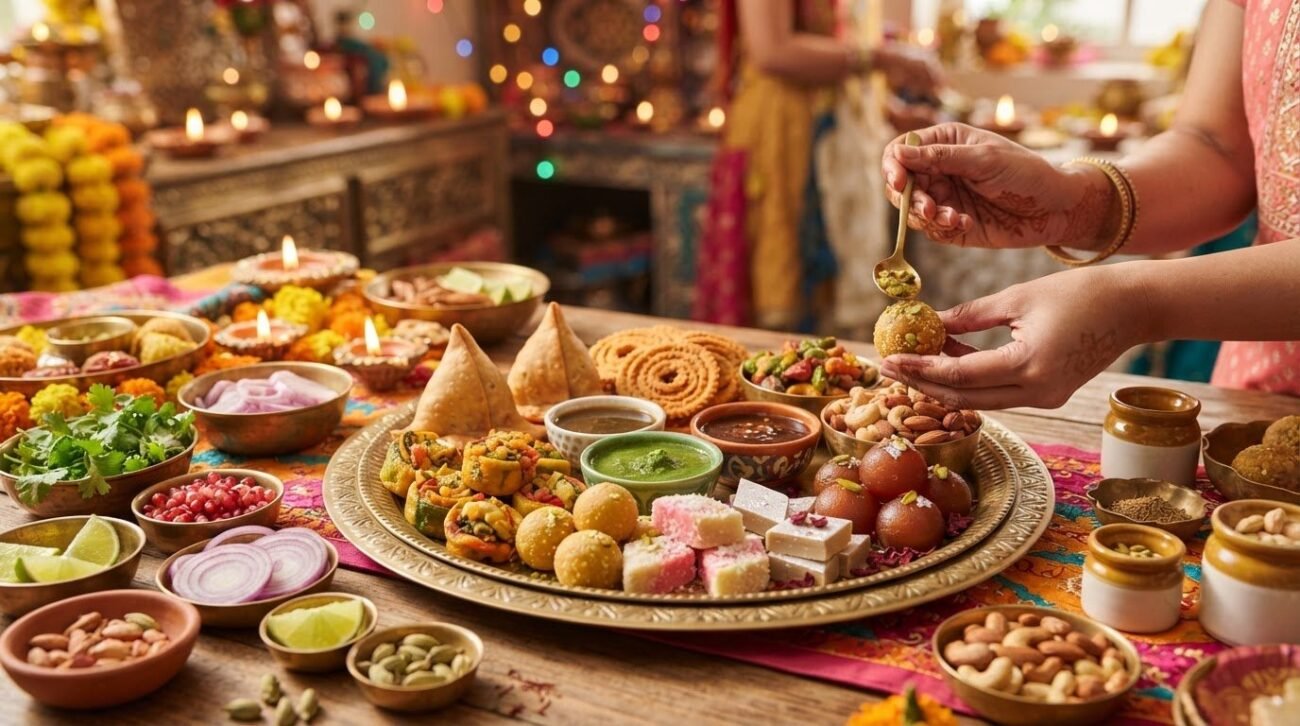
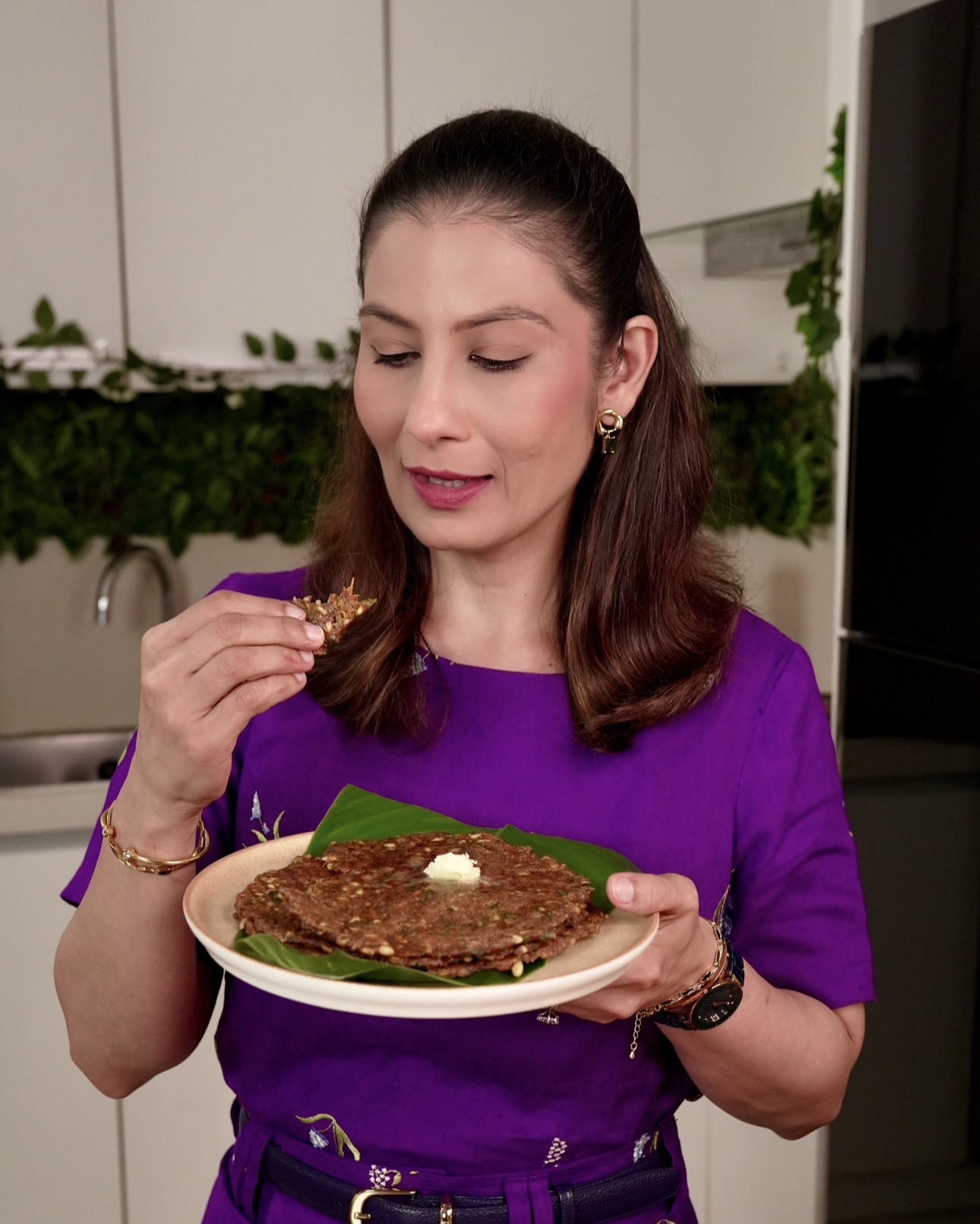
What if your Diwali menu felt abundant without keeping you in the kitchen all day? The best Diwali recipes aren’t simply a long list of festive favourites; they work together, with flavours, textures and preparation steps that make hosting feel joyful instead of rushed.
It’s easy to get overwhelmed by tempting sweets and snacks, especially when you’re unsure what can be prepared ahead or whether a lighter choice will still feel special. A little planning makes all the difference: choose a balanced menu, prepare sturdy dishes in advance and save a few fresh finishing touches for the celebration.
Here, you’ll find a simple make-ahead plan, three clearly measured recipes and practical ways to bring extra sparkle to each dish. From savoury bites to sweet treats, every recipe is designed to help you cook with confidence and enjoy more of the festival with the people around your table.
Key Takeaways
- Build a balanced festive menu by choosing a snack, savoury centrepiece, accompaniment and sweet instead of collecting too many dishes.
- Use the three measured Diwali recipes as a practical starting point, with cooking cues to help you recognise when each dish is ready.
- Compare familiar, simplified and contemporary options to shape a menu that suits your table and cooking time.
- Plan ingredient preparation separately from final cooking and assembly to make festival-day kitchen tasks easier to manage.
- Use Meghna’s cooking videos to follow visual texture and doneness cues as you prepare festive favourites.
Diwali Recipes: How to Build a Festive Menu Without Overplanning
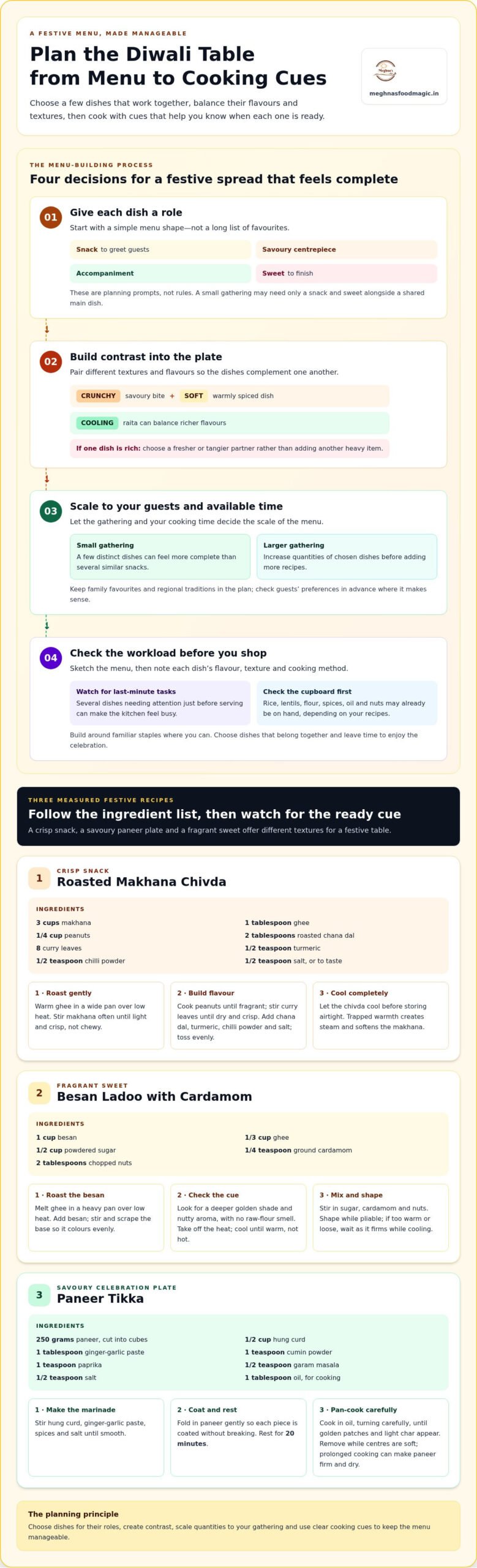
A special Diwali table doesn’t need to be crowded to feel generous. If you want to welcome family and friends while keeping the cooking manageable, start with a simple menu shape rather than saving every tempting recipe you see. Choose a few dishes that offer different flavours and textures, then give each one a clear place on the table.
Traditions vary between households and regions, and food is one way families make the celebration their own. For a broader overview of Diwali, the Hindu festival of lights, see the festival’s history and celebration practices. Use your own family favourites, guests’ preferences and the time you have as your guide, not a fixed checklist.
What belongs on a Diwali menu?
Think in four useful categories: a snack to greet guests, a savoury centrepiece, an accompaniment and a sweet. These are planning prompts, not rules. A small gathering might need just a snack and sweet alongside a shared main dish, while a longer celebration may call for more variety.
Build contrast into your choices. A crunchy savoury bite can sit beside a soft, warmly spiced dish; a cooling accompaniment, such as raita, can balance richer flavours; and a sweet offers a celebratory finish. If one dish is already rich, choose a fresher or tangier partner rather than adding another heavy item. This balance helps every plate feel considered without multiplying your workload.
Let family and regional traditions inspire the menu. Perhaps a particular sweet marks the occasion in your home, or a familiar savoury snack is always shared with guests. Keep the dishes that carry meaning, then adapt the rest. You can also ask about preferences in advance, especially if guests avoid particular ingredients, and plan one appealing alternative where it makes sense.
How many Diwali dishes should you prepare?
Let your guest count and available cooking time decide the scale. For a small group, a few distinct dishes can feel more complete than a spread of several similar snacks. For a larger gathering, increase quantities of the dishes you’ve chosen before adding more recipes. That keeps the menu easier to shop for, prepare and serve.
Before choosing dishes, sketch a quick menu and note each one’s main flavour, texture and cooking method. If your snack is crisp and fried, for example, a soft savoury centrepiece and cooling accompaniment create more contrast than another crunchy snack. Also consider how many dishes need attention just before serving. A menu that relies on several last-minute tasks can make the kitchen feel busier than the guest count suggests.
Finally, check your cupboards before shopping. Ingredients such as rice, lentils, flour, spices, oil and nuts may already be on hand, depending on the recipes you choose. Building around familiar staples can simplify your list and reduce unnecessary purchases. The aim isn’t to make the smallest possible menu; it’s to choose dishes that belong together and leave you with enough time to enjoy the celebration.
Three Diwali Recipes with Clear Measurements and Better Cooking Cues
A festive spread can combine a crisp snack, a warmly spiced savoury dish and a fragrant sweet. These three Diwali recipes use straightforward methods, but small details matter: gentle roasting builds flavour, an even coating helps seasoning cling, and cooling at the right moment makes ladoos easier to shape.
Roasted Makhana Chivda for a Crisp Festive Snack
Ingredients
- 3 cups makhana
- 1 tablespoon ghee
- 1/4 cup peanuts
- 2 tablespoons roasted chana dal
- 8 curry leaves
- 1/2 teaspoon turmeric
- 1/2 teaspoon chilli powder
- 1/2 teaspoon salt, or to taste
Method: Warm the ghee in a wide pan over low heat. Add the makhana and roast, stirring often, until they feel light and crisp rather than chewy. Low heat lets moisture escape gradually without scorching the outside. Add the peanuts and cook until fragrant, then stir in the curry leaves until dry and crisp. Mix in the chana dal, turmeric, chilli powder and salt, tossing so the spices coat the ingredients evenly. Cool completely before storing in an airtight container; trapped warmth creates steam and softens the makhana.
Besan Ladoo with Fragrant Cardamom
Ingredients
- 1 cup besan
- 1/3 cup ghee
- 1/2 cup powdered sugar
- 1/4 teaspoon ground cardamom
- 2 tablespoons chopped nuts
Method: Melt the ghee in a heavy pan over low heat. Add the besan and roast steadily, stirring and scraping the base so it colours evenly. It’s ready when the mixture turns a deeper golden shade and smells nutty, with no raw-flour aroma. Take the pan off the heat and let the mixture cool until warm, not hot. Stir in powdered sugar, cardamom and nuts. Shape while it’s still pliable; if it feels too warm or loose, wait a little longer, as the mixture firms as it cools.
Paneer Tikka for a Savoury Celebration Plate
Ingredients
- 250 grams paneer, cut into cubes
- 1/2 cup hung curd
- 1 tablespoon ginger-garlic paste
- 1 teaspoon cumin powder
- 1 teaspoon paprika
- 1/2 teaspoon garam masala
- 1/2 teaspoon salt
- 1 tablespoon oil, for cooking
Method: Stir the hung curd, ginger-garlic paste, spices and salt into a smooth marinade. Fold in the paneer gently so each piece is coated without breaking. Rest for 20 minutes to let the seasoning cling and flavour the surface. Heat a pan with oil and cook the cubes, turning carefully, until golden patches and light char appear. Remove them while the centres are still soft; prolonged cooking can make paneer firm and dry.
For a visual companion to these cooking cues, explore Meghna’s recipe videos and watch how colour and texture change as a dish cooks.
Traditional or Lighter Diwali Recipes: Choose the Menu That Suits Your Table
A festive menu can be deeply traditional, thoughtfully simplified or playfully contemporary. None is more authentic than another: the right choice is the one that feels welcoming to your household and guests. Easier cooking can still feel special, too. Fragrant spices, a pleasing mix of textures and a little care in serving do more for a dish than complicated preparation alone.
Use this comparison to choose a direction, or borrow from each. Preparation effort depends on the recipe and how much you make, so treat the table as a planning guide rather than a fixed rule.
| Menu direction | Preparation effort | Flavour profile | Serving role |
|---|---|---|---|
| Familiar favourites | Varies; some sweets and snacks take several steps | Recognisable spices and family-loved flavours | Anchor the table with dishes guests look forward to |
| Simplified choices | Often easier to organise with fewer components | Clear, balanced flavours with less last-minute work | Make hosting manageable while keeping the meal celebratory |
| Contemporary additions | Ranges from simple adaptations to more involved dishes | Classic flavours presented in a fresh combination | Add curiosity and contrast alongside familiar food |
How to balance familiar favourites with new dishes
Start with the dish your family most associates with Diwali, whether that’s a particular sweet, savoury snack or main. Keep its familiar flavour central, then add just one new recipe so guests have something to discover without losing the comfort of tradition. A fusion dessert can sit beside a much-loved ladoo; it doesn’t need to replace it.
Balance richness and spice with contrast. A cooling accompaniment, fresh herbs, citrus or a tangy chutney can brighten a robust savoury dish. This works because acidity and freshness lift the palate between richer bites, while a change in texture keeps the spread interesting. Ask what guests enjoy, too. Their preferences can guide which flavours stay prominent and which experimental dish belongs on the side.
When a lighter festive choice makes sense
“Lighter” can describe the cooking method, the size of a portion or the overall variety on the table. It doesn’t mean stripping away flavour. Toasted spices, crisp edges, roasted nuts and a carefully chosen garnish can make a simpler preparation feel generous and festive. Offer a range of portions and let guests choose what suits them, rather than labelling dishes as virtuous or indulgent.
An air fryer can suit recipes intended to develop a dry, crisp or browned exterior, provided the ingredients and method are appropriate for the appliance. It won’t give every dish the same result as deep-frying, so choose it for recipes where that texture works, and avoid overcrowding so hot air can circulate. For dessert, a modest change such as serving smaller pieces or adding fruit alongside a sweet can create variety without turning celebration into restriction. Keep the table vivid and inviting: a neat platter, contrasting colours and a finishing sprinkle of nuts or herbs make even uncomplicated choices feel occasion-worthy.
Diwali Prep Plan: What to Do Ahead & Chef Meghna’s Notes
A calm festive kitchen comes from sequencing, not from cooking everything early. For this menu, the makhana chivda can be prepared first because it needs time to cool, while the besan ladoo benefits from an unrushed roast and cooling period. Paneer tikka is best cooked closer to serving so its edges stay lightly charred and the centre remains soft.
A simple make-ahead sequence for festive cooking
- Shop and organise. Check the ingredient list, then group items by recipe. Measure spices and nuts into small bowls, cut the paneer, and whisk the tikka marinade. This mise en place keeps you from searching through cupboards while a pan is heating.
- Prepare the snack. Roast the makhana gently and season it while warm so the spices cling. Spread the chivda out to cool completely before transferring it to an airtight container. Sealing it while warm traps steam, which can take away its crisp texture. Keep the snack separate from moist dishes and garnishes.
- Make the sweet. Roast the besan steadily, watching for its deeper colour and nutty aroma rather than relying only on the clock. Let the mixture cool until warm enough to handle before shaping. This gives it time to firm while remaining pliable.
- Finish close to serving. Keep the marinated paneer chilled until you’re ready to cook it. Cook until the pieces show light char, then plate them while warm. Add final seasoning, chutney and fresh garnishes just before serving, so crisp items stay crisp and bright flavours don’t fade.
If you’re adding a dip or chutney, Meghna’s chutney and pickle videos can help you plan a flavourful accompaniment. For more savoury snack inspiration alongside the chivda, browse the tea-time snack collection.
Chef Meghna’s Notes: Substitutions and troubleshooting
Adjust heat with balance. For a gentler chivda, reduce the chilli powder rather than removing all seasoning; turmeric, curry leaves and salt still give it character. If your tikka marinade tastes too sharp or intense, use a little less chilli or garam masala next time, keeping the cumin and ginger-garlic for savoury depth.
Bring back makhana crunch. Soft makhana usually needs more gentle roasting, not higher heat. Stir over low heat until the pieces feel crisp, then spread them out and cool fully. Warm makhana sealed in a container releases steam, which softens the snack again.
Choose a suitable paneer alternative. Firm tofu can stand in for paneer in the same cubed, marinated and pan-cooked format. Pat it dry first so the marinade coats rather than slides off, and turn the pieces carefully because tofu can be more delicate. The flavour will differ, but the seasoned, lightly charred texture still suits the plate.
Use your senses as the final guide: besan should smell toasted, makhana should feel crisp after cooling, and paneer should show colour without becoming hard. For more visual cooking guidance, explore Meghna’s recipe videos.
Bring Your Diwali Recipes to Life with Meghna’s Cooking Videos
Written instructions and measured ingredients give you a reliable starting point; a cooking video adds another kind of guidance. You can see how thick a marinade looks, how quickly spices change colour in a hot pan, and what “golden” or “lightly charred” means in practice. Those visual details are especially useful when a recipe’s doneness depends on texture and aroma as much as elapsed time.
Use the video alongside the recipe, not instead of its measurements. Read the ingredients first, set them out, then watch the relevant cooking step before you begin. Notice the heat level, how often the cook stirs, and how the food changes from one stage to the next. For makhana, look for the way pieces move and feel crisp after cooling. For besan, observe the gradual colour shift and listen for the cue that its raw aroma has become nutty. With paneer, watch for browned edges while the cubes still hold their shape.
How video guidance can support festive cooking
A visual check can help you understand why a step matters. If a mixture looks looser than expected, for example, compare it with the demonstration before adding extra ingredients. If a pan is browning too quickly, the video’s stirring and heat cues can remind you to lower the flame. These small observations help you make informed adjustments while keeping the recipe’s intended flavour and texture in view.
For more snack ideas to add to your festive cooking repertoire, browse Meghna’s Tea Time Snacks playlist. If you’re choosing a tangy or cooling accompaniment, the Chutney, Pickle, and Achar playlist offers more inspiration. Think about how that extra flavour will work with the dishes you’ve already chosen, so it complements rather than competes with them.
Meghna’s free recipe database is another place to continue exploring festive-friendly snacks, sweets and other approachable cooking ideas. Choose recipes that suit your table, then use written steps and visual cues together. The aim isn’t to copy every movement perfectly; it’s to understand what you’re looking for as ingredients cook.
Choose your next recipe and start cooking
Make your next step simple. Pick one dish from your menu and prepare it before the celebration day, when you can pay attention to how it smells, looks and feels without a house full of guests waiting. Keep the ingredient list nearby, pause the demonstration when you need to inspect a texture, and make a note of any adjustment you’d like to repeat. That small practice run can help you feel more familiar with the method when you cook again.
Festive cooking is a chance to share care as much as food. Let the recipes guide you, trust your senses, and make the spread your own. A few well-chosen Diwali recipes can feel wonderfully abundant when each dish has a clear place on the table.
Let Your Festive Table Reflect You
The most memorable part of a celebration isn’t a perfectly crowded table. It’s the feeling around it: familiar flavours shared with loved ones, a little room for curiosity, and the pleasure of making something with care. Let your Diwali recipes reflect what your household enjoys, and give yourself permission to keep the plan flexible. A small personal touch, such as a favourite garnish or serving dish, can make the meal feel distinctly yours.
As you prepare, treat each dish as a chance to enjoy the process, not another task to complete perfectly. Taste as you go, notice the aromas as spices bloom, and leave space to be present with your guests. That’s where the warmth of a festive meal really comes through.
May your celebration be full of flavour, welcome surprises and happy moments around the table. You’ve got this.
Frequently Asked Questions
What does faral mean in Diwali cooking?
Faral commonly means a selection of festive snacks and sweets associated with Diwali, particularly in some regional and family traditions. It isn’t a fixed menu: one home might prepare savoury bites and sweet treats, while another may focus on a few favourites. Treat the term as an invitation to create a celebratory spread that suits your family, combining homemade specialties with simple dishes you enjoy serving.
Is every Diwali recipe vegetarian?
No. Food customs differ between households and communities, so there isn’t one menu that represents everyone. Many familiar Diwali dishes are vegetarian, but choose food that fits your own traditions and the preferences of your guests. If you’re hosting a group, label dishes clearly and mention key ingredients such as paneer, nuts or dairy. That small courtesy helps guests make comfortable choices without assumptions about what everyone eats.
Can I make Diwali sweets without refined sugar?
Yes, some sweets can be made with dates or jaggery, but the change can affect more than sweetness. Jaggery brings its own flavour and moisture, while dates can make a mixture softer or denser. Use a recipe created for the sweetener you have chosen rather than swapping equal quantities into a sugar-based recipe. If you’re experimenting, make a small test batch first and adjust gradually.
How do I keep homemade chakli crisp?
Cool chakli completely before packing it in a clean, dry, airtight container. Residual warmth releases steam, and moisture softens the crisp spirals. Keep the container away from damp areas and avoid leaving it open while serving. If the chakli turns soft, spread it in a single layer and warm it gently, watching closely so it dries without darkening too much. Let it cool again before closing the container.
Can I make Diwali snacks in an air fryer?
Some snacks suit air-fryer cooking, but results depend on the dough, shape and texture the recipe is meant to produce. Choose instructions written for an air fryer rather than treating oven or deep-frying directions as interchangeable. Arrange pieces with space around them, cook in batches if needed, and check colour and crispness as they cook. A test batch can help you judge how your appliance handles that snack.
Which oil is best for frying Diwali snacks?
Choose an oil suitable for the recipe’s frying temperature and one that fits your household’s usual cooking preferences. Keep the pan from becoming crowded, since adding too much food at once can lower the oil temperature and leave snacks greasy or unevenly cooked. Fry manageable batches and look for consistent colour. Don’t reuse oil that has darkened, developed an unpleasant smell or contains visible food debris.
Disclaimer
This is a recipe food blog page and not nutrition or doctor and hence do not claim to cure any illness. If you have specific health issues please consult a qualified doctor or certified nutritionist.
I do consult experts, research Internet and at times seek help from Gemini to collect relevant information to put together some of these blogs.

