
Five healthy sweets with jaggery and nuts, from cookies to halwa
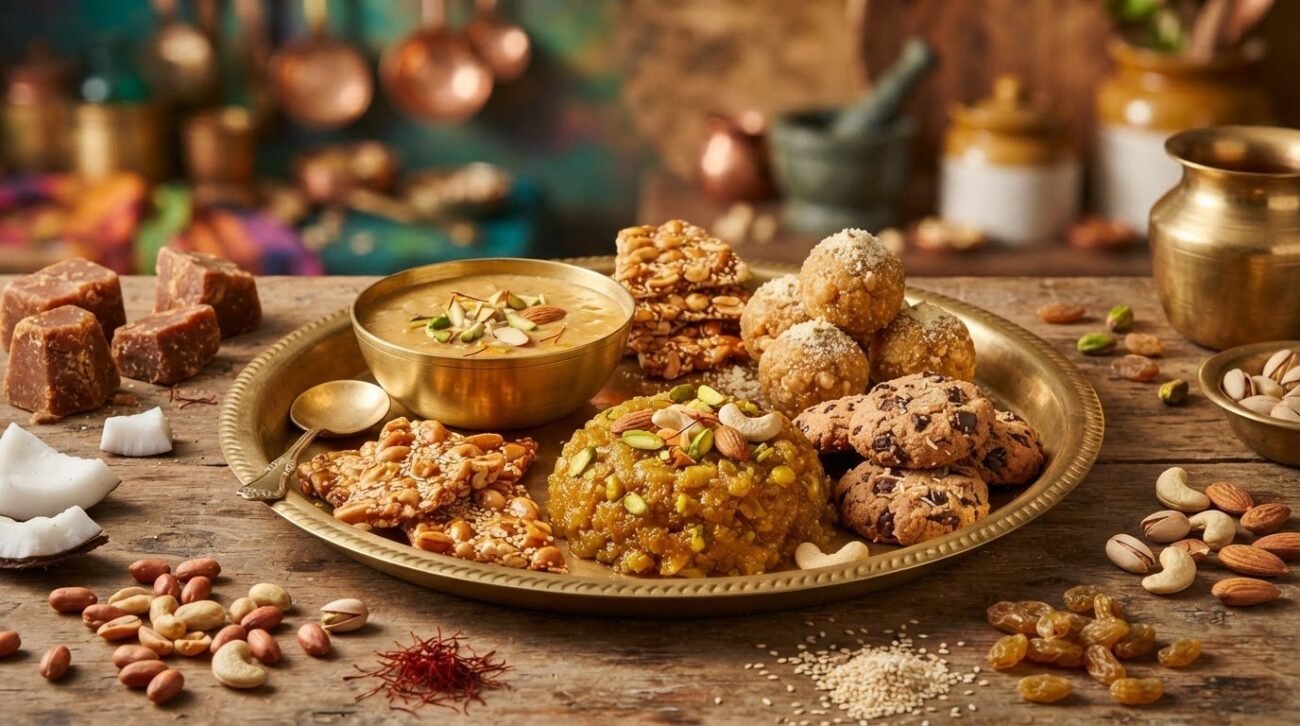
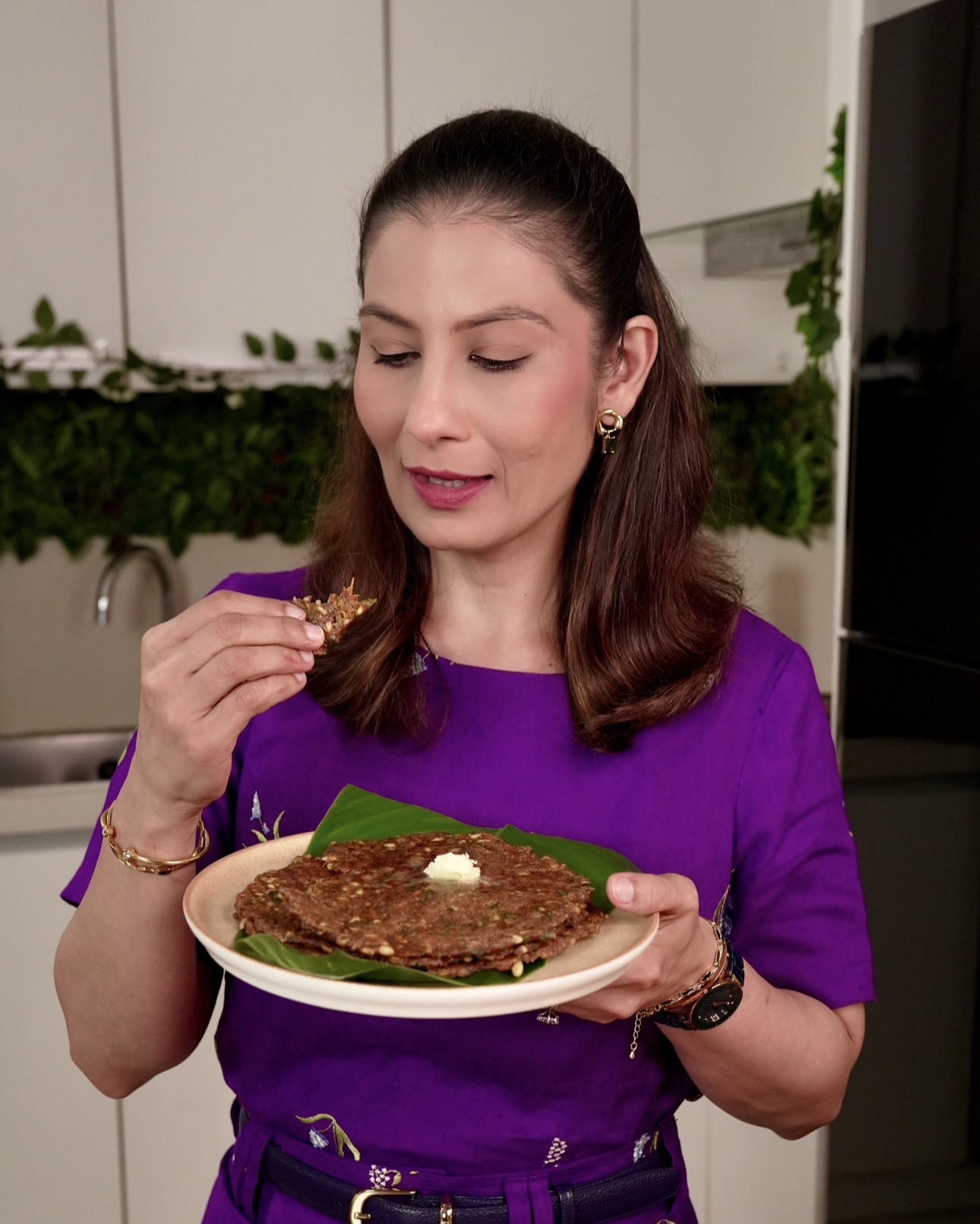
Healthy sweets with jaggery and nuts range from crisp coconut flour cookies to rich moong dal halwa. This collection brings together five ideas: coconut flour chocolate-chip cookies, gond laddoos, chikki, date-palm jaggery kheer and moong dal halwa with saffron and chopped nuts. Each has a distinct texture and flavour, with jaggery adding deep sweetness and nuts bringing a satisfying crunch.
A sweet can feel special without making the cooking complicated. These treats show how familiar ingredients can shine in different ways. Moong dal halwa is a standout: slowly cooked lentils turn soft and fragrant, while jaggery, saffron and nuts add warmth and richness. You’ll also find a crunchy snack, spoonable kheer, festive laddoos and cookies with a modern twist. Explore the recipes to find something crisp, chewy or warmly indulgent.
Key Takeaways
- Explore five sweet ideas, from crisp cookies and crunchy chikki to festive laddoos, creamy kheer and rich halwa.
- Learn how jaggery can sweeten cookies and how its texture and flavour work across different kinds of desserts.
- Discover why gently roasting ingredients helps build the aroma and texture of gond laddoos and moong dal halwa.
- Find practical cues for shaping chikki and adding jaggery to kheer for a balanced, comforting finish.
- Use Chef Meghna’s tips to adapt ingredients and troubleshoot the sweets as you cook.
1. Coconut flour chocolate-chip cookies with a jaggery option
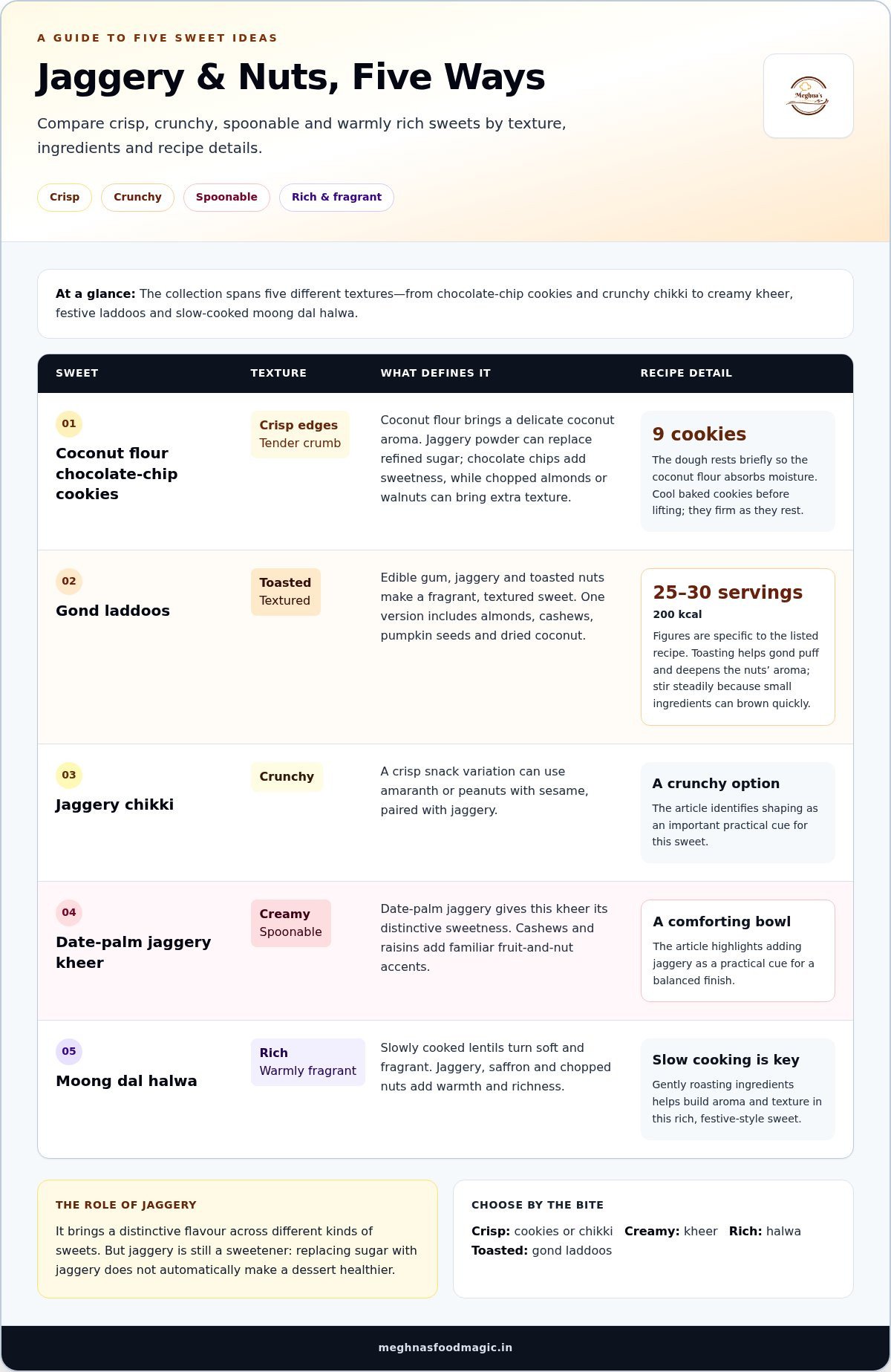
Coconut flour gives chocolate-chip cookies a tender crumb and delicate coconut aroma. For a jaggery variation, replace refined sugar with jaggery powder. This small-batch recipe makes 9 cookies, with chopped nuts or raisins adding extra texture. These healthy sweets with jaggery and nuts can bring varied flavours to tea time, though jaggery remains a sweetener.
Ingredients for 9 cookies: ½ cup coconut flour, ¼ cup softened butter, ⅓ cup jaggery powder, 1 egg, ⅓ cup chocolate chips, ½ teaspoon vanilla extract, ½ teaspoon baking powder and ⅛ teaspoon salt. For a nutty version, replace some chocolate chips with chopped almonds or walnuts.
Beat the butter and jaggery powder until combined, then mix in the egg and vanilla. Stir together coconut flour, baking powder and salt before adding them gradually. Fold in chocolate chips and any chopped nuts. Let the dough rest briefly so the coconut flour absorbs moisture, then shape 9 portions on a lined tray. Bake until the edges look set, and cool before lifting. The cookies firm as they rest.
For a traditional companion, prepare coconut jaggery burfi, also called Thengai Vellam Burfi, Nariyal Burfi or jaggery coconut fudge. A jaggery coconut barfi recipe uses 2 cups grated coconut, 1 cup jaggery, 2 tablespoons ghee and ½ teaspoon cardamom powder. Cook the coconut and jaggery gently, stirring until thickened. Add cardamom, spread the mixture in a greased tray, and let it set before cutting.
Pair coconut burfi with tea or serve a piece after lunch for a festive finish. Chewy coconut and fragrant cardamom make each bite satisfying. These healthy sweets with jaggery and nuts offer varied textures, from soft cookies to sliceable burfi.
Is jaggery healthier than white sugar in sweets? Jaggery has a distinctive flavour and contains some minerals, but it is still a sweetener. Replacing sugar with jaggery doesn’t automatically make a dessert healthier.
What is the nutrition and calorie content of jaggery nut sweets? It varies by recipe and serving. Coconut, chocolate, nuts and butter all affect a sweet’s nutrition and energy content.
How much jaggery and nuts should you eat per serving? Choose a modest portion, considering the recipe’s sweetness and nut content. A cookie and a piece of burfi can differ in size and ingredients.
Are jaggery sweets suitable for people with diabetes? Not automatically: jaggery is still a sweetener. Ingredients and portion size matter when considering carbohydrate intake.
How can you make jaggery sweets with less added sugar and ghee? Use jaggery instead of adding another sweetener. Reduce ghee carefully in burfi, as it helps the mixture cook and set.
How should homemade jaggery nut sweets be stored, and how long do they last? Cool cookies completely, then store them in an airtight, dry container. Refrigerate coconut burfi; fresh coconut and moisture affect its texture and quality over time.
2. Gond laddoos with jaggery, almonds and dry fruit
Gond laddoos combine edible gum, toasted nuts and jaggery for a fragrant, textured sweet. One version includes almonds, cashews and pumpkin seeds, with organic jaggery and dried coconut adding sweetness and richness. Toasting helps the gond puff and deepens the nuts’ aroma. Stir steadily, as small ingredients can brown quickly in a hot pan.
Cool the toasted mixture before shaping, then add melted jaggery gradually. The mixture should hold together without becoming greasy or hard to roll. The listed gond laddoo recipe yields 25-30 servings and contains 200 kcal. Treat those figures as specific to that recipe, since changing the ingredients or serving size changes the result.
For a simpler almond-and-jaggery sweet, try badam laddoos. Coarsely ground almonds combine with melted jaggery powder and ghee, then form into laddoos while warm. Almond jaggery burfi offers a sliceable alternative: use 1 ½ cups almonds or 2 cups fine almond flour, 1 ¼ cups loosely measured jaggery and ¼ cup water. Add ⅛ teaspoon green cardamom powder, or 4 cardamoms, for fragrance. The recipe yields 25 pieces and suggests 1 teaspoon sesame seeds or chopped pistachios for garnish.
For burfi, dissolve jaggery in water and cook until the mixture thickens. Stir in the almond meal so it coats evenly. Spread it in a tray and leave it undisturbed for 5 to 6 hours to set. A clean, firm cut signals that the mixture has cooled and settled.
Keep almonds coarse for laddoos, but grind them finely for burfi. Pulse whole almonds in intervals of 30 to 40 seconds; long grinding warms them and releases their oils, turning meal into paste. Stop when the texture looks like fine crumbs, then sift out any larger pieces.
For a softer variation, ragi halwa can pair with chikoo, cashews and almonds. Ragi’s earthy flavour meets chikoo’s natural sweetness, while toasted nuts add contrast. A listed ragi halwa contains 280 kcal; its exact nutrition depends on the ingredients and portion.
Date, oat, almond and seed energy bites offer another chewy option. For a dates-and-nuts variation, use 1 cup seedless dates, ½ cup mixed nuts, 1 tablespoon ghee and ½ teaspoon cardamom powder. Soak dates before blending for a smoother paste, then mix in finely chopped nuts. The separate listed date-and-nut energy-bite recipe yields 32 bites, with 95 kcal and 2 g protein per serving.
For more recipe inspiration, explore Meghna’s recipe videos for ideas to bring into your home kitchen.
The almond jaggery burfi gets its flavour from ⅛ teaspoon of green cardamom powder, or 4 cardamoms, an option that keeps the seasoning tied to a clearly measured amount.
Dink nutri bites are also known as Dink Laddu, Edible Gum Laddu, Antina Unde or Dry fruit Ladoo. These names can help you recognise this edible-gum sweet across different recipe titles and variations.
3. Jaggery chikki with amaranth or peanuts and sesame
Chikki turns roasted seeds or peanuts into a crisp, glossy sweet. To make peanut chikki, roast the peanuts and remove loose skins, then mix them with melted jaggery powder. Spread the hot mixture flat, let it cool, and cut it before it hardens completely. Earthy peanuts pair beautifully with jaggery’s deep, toffee-like flavour.
Amaranth, also called rajgira, gives chikki a lighter, delicate crunch. The listed rajgira chikki contains 3 g of fibre. That figure belongs to the specified recipe, and ingredients or serving sizes can change a sweet’s nutrition. To make the mixture, fold puffed amaranth into melted jaggery, then spread it evenly on a greased surface. Press gently with a spatula so the grains bind without crushing.
Timing determines the texture. Have the roasted peanuts or amaranth ready before melting the jaggery, because the syrup firms as it cools. Stir the jaggery over gentle heat until fluid, then mix quickly and spread it at once. If the mixture cools in the pan, it can be hard to flatten. A lightly greased rolling pin helps level the warm chikki without sticking.
Sesame seeds pair especially well with jaggery in Indian sweets. Their toasted, nutty flavour works in sesame-and-jaggery laddoos and crisp til chikki. For til ke ladoo, roast the sesame seeds, combine them with melted jaggery powder, and roll the warm mixture into balls. Shape them while pliable, using lightly greased hands. Chopped almonds or pistachios add extra crunch.
Which nuts and seeds pair well with jaggery in Indian sweets? Sesame, peanuts, almonds and pistachios all complement jaggery. Choose peanuts for familiar chikki crunch or sesame for fragrant laddoos and a finer bite.
For a festive finish, sprinkle sesame seeds or chopped nuts over warm chikki before it sets. Press the garnish lightly into the surface so it stays in place after cutting. Keep the topping modest; too much can stop the jaggery mixture from holding together neatly.
A listed til gur laddoo recipe yields 10 servings and contains 250 kcal and 7 g of protein. These values describe that recipe, not every sesame sweet. Jaggery replaces refined sugar in these preparations, but it remains a sweetener. Nuts and seeds contribute texture and flavour; the final nutrition still depends on the full mixture and portion.
Once the chikki has cooled, separate the pieces and store them in an airtight container. Moisture can soften the crisp surface, so let it cool fully before covering. For neat pieces, score the spread while it is slightly warm, then finish cutting once it has set.
4. Date-palm jaggery kheer with cashews and raisins
Date-palm jaggery brings a rounded, caramel-like sweetness to kheer. In Bengal, this ingredient is known as Nolen Gur, and its fragrant flavour pairs beautifully with creamy milk. A listed Nolen Gur kheer uses 1 litre of low-fat milk and contains 300 kcal. That figure applies to that recipe, not every version made at home.
For a dates-based variation, use ½ cup dates with 2 cups milk or almond milk. The recipe lists 10 minutes preparation, 15 minutes cooking and 25 minutes total. Cashews add a buttery crunch, while raisins bring chewy sweetness. Add them as garnishes or stir them into the cooked kheer, depending on the texture you enjoy.
Begin by warming the milk in a heavy-bottomed pan. Stir regularly to keep milk solids from catching on the base. If using dates, chop them finely or blend them with a little warm milk. Smooth date paste disperses evenly, while chopped dates leave soft, distinct pieces in each spoonful.
Gently cook the milk until it thickens slightly, then lower the heat. Add date-palm jaggery gradually, stirring until it dissolves. Avoid adding jaggery while the milk is boiling vigorously; gentle heat helps keep the mixture smooth. Taste before adding more, as dates and Nolen Gur both contribute natural sweetness.
Toast cashews in a little ghee until pale gold, then add raisins. The raisins plump as they warm, and the cashews develop a delicate roasted aroma. Fold them into the kheer just before serving to retain some crunch. For a softer finish, stir them in earlier and simmer briefly.
Milk gives this dessert its creamy body and contributes calcium; almond milk offers a plant-based alternative. The dates-and-milk recipe is a wholesome starting point, but jaggery remains an added sweetener. Replacing refined sugar with jaggery changes the flavour, not its basic role as a sweetener. Adjust the amount to the dates’ ripeness and your preferred taste.
Serve the kheer warm in small bowls, or chill it until it thickens. A few cashews and raisins on top make each serving inviting without elaborate decoration. For a festive touch, add a pinch of cardamom and let the Nolen Gur aroma shine. Stir chilled kheer before serving, as it may thicken while resting.
For a variation on the date-based version, try jaggery-sweetened sabudana kheer, which uses ½ cup of soaked sabudana. That quantity applies to the sabudana recipe, not the dates-based version described here. It’s another way to make jaggery the defining sweet note while changing the main ingredient. Cashews and raisins can still be served on top, or keep the bowl simple to let the jaggery and sabudana stand out.
Jaggery cookies offer another way to use jaggery: substitute jaggery powder for sugar and add oats, nuts or raisins. The creamy kheer remains the centrepiece, while cookies make a complementary option for a shared table. Raisins can link the cookies to the kheer garnish without requiring the same preparation. Together, these desserts bring jaggery’s sweetness to the table in different forms.
5. Moong dal halwa with jaggery, saffron and chopped nuts
Moong dal halwa earns its place among Indian festive sweets through patient cooking. Slowly toasted lentils develop a nutty aroma, then jaggery, saffron and chopped nuts add sweetness and fragrance. Stir steadily so the dal cooks evenly and doesn’t catch on the pan. This is a rich, spoonable dessert, not a quick, mix-and-serve sweet.
A listed moong dal halwa recipe takes 40 minutes in total, yields 2 servings and contains 350 kcal. Those figures describe that recipe and serving size. Moong dal contributes protein, while ghee and jaggery add richness and sweetness. Nuts bring crunch, but they don’t make the dessert low in energy. Enjoy it as dessert, with the portion guided by your appetite and meal.
Rinse the moong dal and drain it well. Toast it patiently in ghee, stirring until the grains smell nutty and turn lightly golden. This builds flavour and helps the dal cook into a soft, cohesive halwa. Add liquid gradually, stirring as it absorbs. Once the lentils soften, mash or stir them until the mixture is thick and even.
Prepare the jaggery syrup separately so you can assess its texture before adding it. Drop ½ teaspoon of syrup into a bowl of water; it should form a soft ball. This stage helps bind the halwa without making it watery. Add the syrup gradually and combine thoroughly with the cooked moong dal.
Stir saffron into a little warm liquid before adding it, so the strands release their colour and aroma evenly. Fold chopped almonds or cashews through the halwa near the end, saving a few pieces for the top. Their crunch contrasts with the soft lentils, while saffron lifts jaggery’s deep sweetness.
For shaping or setting the halwa, grease a pan with 1 teaspoon almond oil or ghee. For a classic spoonable finish, serve it warm instead. If the mixture feels loose, continue cooking and stirring until it thickens. If it becomes too firm, loosen it gradually with warm liquid. Adjust based on how much moisture the dal absorbs.
Chef Meghna’s Notes
For a softer flavour, replace saffron with cardamom. If the halwa sticks, lower the heat and scrape the pan’s base with a flat spatula. Add chopped nuts near the end to preserve their texture. For a smoother finish, mash the softened dal before adding syrup. Taste before the final addition, as jaggery’s sweetness varies.
The key is not to rush the roasting. That early stage builds depth, while the soft-ball syrup test helps guide the final texture. Make this halwa for a festive meal or whenever a warm, fragrant dessert suits the occasion.
Meghna’s Food Magic: Free Digital Recipe Database
Meghna’s Food Magic offers a Free Digital Recipe Database for home cooks seeking fresh ideas beyond these sweets. Explore Weight Loss Fitness Recipes for fitness-focused cooking, or browse Ragi recipes to discover millet-based dishes. These collections offer a starting point when you want to explore new ingredients or find inspiration for everyday meals. Choose a recipe that suits your cooking goals, then bring your own flavours and preferences to the kitchen.
Make Your Next Sweet a Kitchen Ritual
Let your next batch be a chance to cook by feel, not just follow a recipe. Choose a texture that suits the occasion, then notice how roasting, stirring and setting shape the finished sweet. A brief note on the jaggery’s flavour or the nuts’ crunch can help you refine your version next time.
Healthy sweets with jaggery and nuts can turn familiar ingredients into a fresh kitchen ritual. Make them with family, serve them with tea or save a favourite variation for a festive table. The best recipe to keep is the one you enjoy preparing and eating.
For more cooking inspiration, explore Meghna’s free recipe videos and choose an idea for your next kitchen session.
Enjoy the process, trust your taste and let each batch inspire the next.
Frequently Asked Questions
What are easy healthy sweets made with jaggery and nuts?
Try date-and-nut bites, sesame laddoos or puffed-rice treats for sweets that need little shaping or setting. Pori urundai combines puffed rice with melted jaggery, while sesame laddoos offer a seed-forward option. For a varied plate, pair a crisp sweet with a soft, chewy one. Keep portions modest: jaggery is still a sweetener, and nuts add richness.
How do you make jaggery nut ladoos at home?
For date-and-nut ladoos, blend 1 cup seedless dates into a paste, then mix with ½ cup chopped mixed nuts, 1 tablespoon ghee and ½ teaspoon cardamom powder. If the dates feel firm, soak them first so they blend smoothly. Warm the mixture gently until it holds together, cool until comfortable to handle, then shape into balls. Press each ladoo firmly so it stays intact.
Disclaimer
This is a recipe food blog page and not nutrition or doctor and hence do not claim to cure any illness. If you have specific health issues please consult a qualified doctor or certified nutritionist.
I do consult experts, research Internet and at times seek help from Gemini to collect relevant information to put together some of these blogs.

