
Koh Samui travel choices for getting around and staying
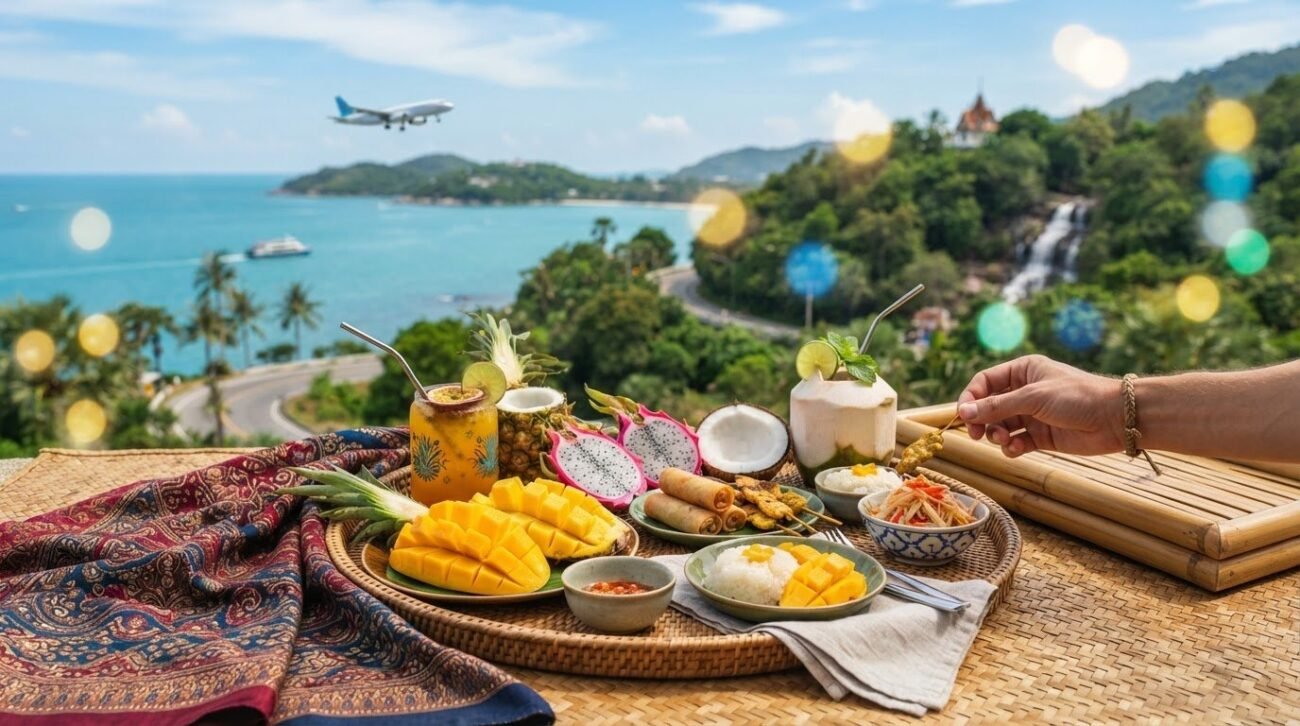
Getting around Koh Samui is easiest when you match transport to the day: use songthaews for short rides, choose a scooter for flexible exploring, or take an air-conditioned car for a longer island loop. The ring road is about 50 km long. To reach the island, you can fly from Bangkok, with the flight taking about an hour, or travel by ferry across the water.
Planning a trip to Koh Samui is part of the adventure. It helps to know how your arrival connects with where you’ll stay and what you want to see. This guide covers flight and ferry options, ways to get around the island, areas to consider for your stay, and memorable stops such as temples, waterfalls, and coastal viewpoints. With the main choices in view, you can shape a trip that feels relaxed rather than rushed.
Key Takeaways
- Choose your base by the experience you want, from lively beachfront areas to quieter corners of the island.
- Compare flying with ferry routes by weighing convenience, connections and how you want to begin your trip.
- Match local transport to the day’s plans, and build in time for the island’s winding routes and inland stops.
- Pair cultural visits and waterfall outings with practical choices about clothing, weather and travel pace.
- Use the island’s history and tourism growth to add context to the places you’ll see along the way.
1. Where to stay on Koh Samui?
Choose your base according to the experience you want, not just the accommodation view. Chaweng suits visitors looking for a lively beach setting, while Lamai offers another coastal base with shops and dining nearby. Bophut puts you close to Fisherman’s Village, where the waterfront and village atmosphere offer a different pace in the evening. Each area gives your days a distinct shape, so consider where you’ll spend most of your time.
For a beach-focused stay, choose accommodation near the stretch of sand you plan to enjoy. If your itinerary includes temples and inland sights, consider how you’ll travel beyond the coast. A scooter gives confident riders flexibility, while a car can suit longer outings. On Koh Samui, a central location may help balance beach visits with trips to villages and attractions, especially if you want to avoid repeatedly crossing the island.
Season can influence the kind of stay you prefer. The dry, calm, sunny season runs roughly from December to April. May to September is a shoulder season, with occasional afternoon showers, while the wet season runs from October to December. November is typically the wettest month. If open-air beach time is central to your plans, use these seasonal patterns to decide how much flexibility to leave between outdoor activities.
For a cultural stop, visit Wat Phra Yai, also called the Big Buddha Temple. Its Buddha statue stands 12 metres tall and makes a memorable landmark for a half-day outing. Wear modest clothing at temples, and plan the visit at a comfortable pace. The Secret Buddha Garden offers a contrasting inland setting among the island’s hills. Pairing a temple with one nearby stop keeps the day from becoming a rushed series of long drives.
Mu Ko Ang Thong Marine Park adds a boat excursion to a beach-based trip. The park lies about 30 km west of Koh Samui and includes 42 limestone islands. It is open from 08:00 to 17:00 and closes each year during the monsoon, roughly from the start of November to the middle of December. Visitors can reach the park only with a licensed tour operator, so plan this outing as a dedicated day trip.
Before departure, complete the Thailand Digital Arrival Card up to 72 hours before landing, according to Thailand Immigration Bureau. Then compare accommodation areas by beach access, village atmosphere, and the excursions you expect to take. This simple planning step helps you settle into a base suited to your trip, whether you want relaxed shoreline days or a varied itinerary across the island.
2. Flights, ferries and airport access
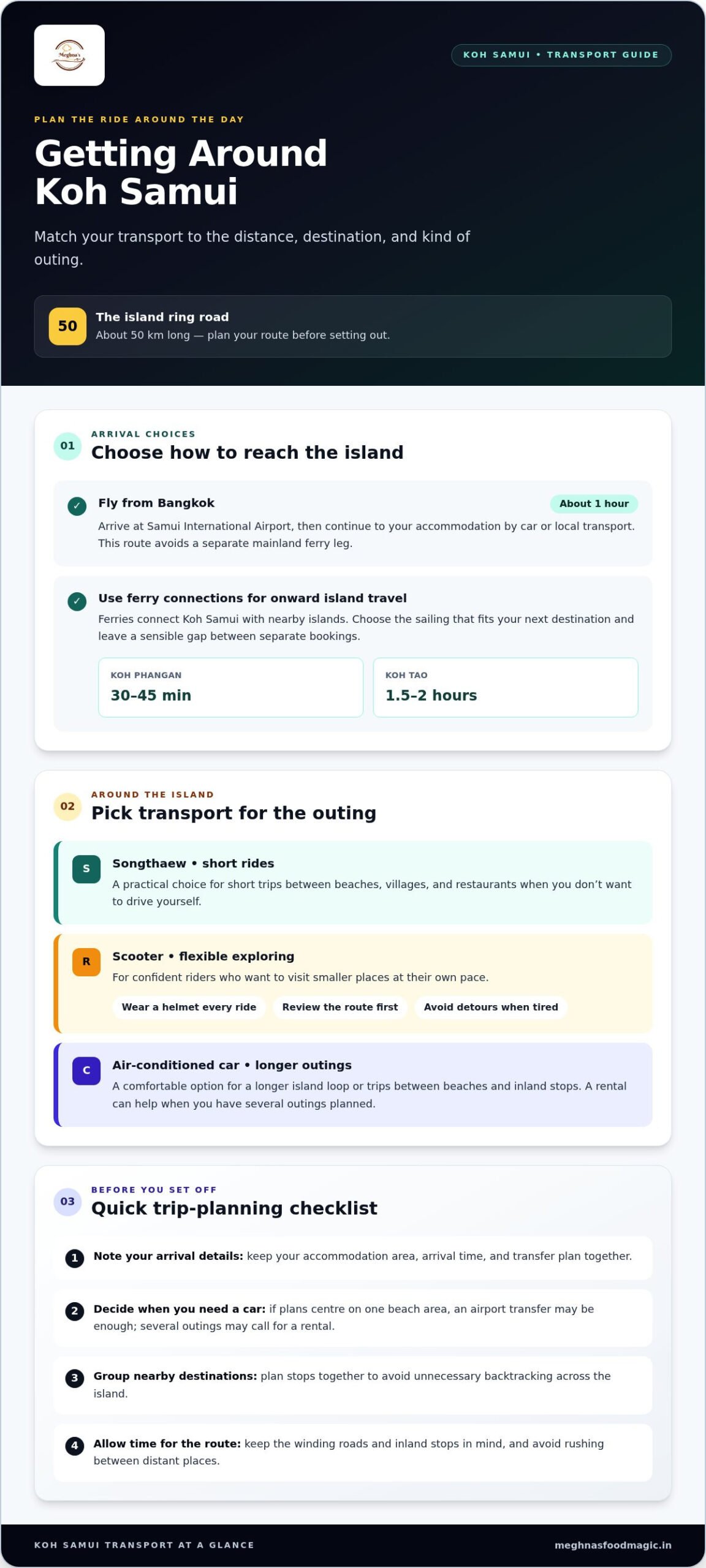
For a direct arrival on the island, fly from Bangkok to Samui International Airport, then continue to your accommodation by car or local transport. The flight takes about an hour. Travellers from India can plan an international itinerary through Bangkok, keeping the connecting flight and onward ride in mind. This route avoids a separate mainland ferry leg and can make sense when beach time is the priority.
Ferries suit travellers whose plans include the mainland or nearby islands. From Koh Samui, the trip to Koh Phangan takes 30 to 45 minutes, while Koh Tao takes 1.5 to 2 hours. These routes serve different itineraries, so match your sailing with the next destination rather than choosing by journey time alone.
Plan your airport transfer before landing. Note your accommodation area, arrival time, and intended transport option. A pre-arranged car can simplify arrival with luggage, while a rental car can help if you’re planning several outings. For drives around Koh Samui, an air-conditioned car is more comfortable than an unairconditioned vehicle, especially for longer trips between beaches and inland stops.
Before renting, decide whether you need a car for your whole stay or only on selected days. If your plans centre on one beach area, a transfer from Samui International Airport may be enough. If you expect to visit restaurants, a garden, and several coastal spots, a rental can give you more freedom. Group nearby destinations together to avoid unnecessary backtracking across the island.
The airport terminal expansion was scheduled to begin in the second quarter of 2026, with capacity planned to reach six million passengers a year. For your own journey, keep the airport name, arrival details, accommodation address, and transfer plan together. When combining flights and ferries, leave a sensible gap between separate bookings. A delay on one leg can otherwise disrupt the next connection.
Keep ferry tickets and onward travel details easy to access, especially when travelling between a pier and an airport. For example, travellers connecting from Surat Thani should plan the mainland transfer and ferry as separate legs. Those arriving through Bangkok should confirm their connecting airport and ride arrangements. A little organisation makes the transition from international travel to island transport smoother.
Long travel days can also make snacks useful between connections. Prepare something portable before leaving, rather than relying on a meal stop at exactly the right time. For simple homemade ideas, browse Meghna’s recipe videos, including air-fryer inspiration for easy bites.
3. Activities, waterfalls and scooter travel
Plan outings around the contrast between Koh Samui’s beaches and forested interior. Na Muang Waterfalls are a pair of falls in the lush inland landscape, making them a worthwhile focus for a nature day. Allow time for the walk and surrounding scenery instead of squeezing the waterfalls between distant coastal stops. A village meal nearby can add a cultural pause before you return to the shore.
A scooter lets confident riders visit smaller places at their own pace. Before setting off, choose your destination, review the route, and wear a helmet for every ride. Koh Samui’s roads can feel unfamiliar if you’re used to driving elsewhere, so avoid adding detours when tired. If you’re not comfortable riding, a songthaew is a practical option for short trips between beaches, villages, and restaurants.
Songthaews work well when you want to travel without driving yourself. Take one for a beach-to-village trip, a restaurant visit, or the return journey after an evening out. Agree on your destination before boarding, then group stops in the same area. A beach visit followed by a nearby meal, for example, makes a simpler outing than crossing Koh Samui several times in one day.
For a different kind of activity, try a Muay Thai class. Choose a class that suits your energy, then leave room to rest afterward. A relaxed beach afternoon pairs better with a demanding session than stacking several strenuous activities together.
Take care around the water, whether you’re swimming or kayaking. Be cautious of ocean currents and choose conditions suited to your ability. Jellyfish are rare but known in the Koh Samui region, so stay alert near the shore. During the shoulder season, occasional afternoon showers can change outdoor plans; wet paths around waterfalls also call for careful footing.
Build each day around one main activity and a nearby second stop. You could visit Na Muang Waterfalls, then enjoy a village meal, or take a songthaew to an east coast beach and return after dinner. If you ride a scooter, keep your helmet on and stop before fatigue sets in. This simple rhythm leaves space for spontaneous moments while keeping travel manageable across the island.
4. History and tourism development
Koh Samui’s tourism story grew from a long-established island community into an international destination. Its first settlers arrived around 15 centuries ago, and the island remained largely self-sufficient until the tourism boom of the late 20th century. That shift changed how visitors experienced the coast, but local villages and temples still offer glimpses of life beyond the resort areas.
Early mapmaking gives the island a recorded history beyond modern tourism. Chinese maps dating to 1687 identify it as Pulo Cornam. International backpackers began visiting in the 1970s, bringing a new kind of travel to the island. For tourists today, that history adds context: beaches and resorts sit alongside communities with roots reaching far earlier than the first visitor routes.
Government planning helped shape the next phase. Thailand’s National Economic and Social Development Plan included Koh Samui tourism development from 1982 until 1986. In 1985, the Tourism Authority of Thailand launched a tourism development master plan for Ko Samui and Surat Thani. These milestones show tourism becoming a planned part of regional development, rather than only an informal route for backpackers from Bangkok.
Local administration also evolved as the island grew. Ko Samui became a subdistrict municipality in 1999, then a town municipality in 2008, and a city municipality in 2012. These dates help explain why today’s visitor experience includes both resort infrastructure and settled communities. A trip through a village or local market offers a different perspective from a day spent entirely beside the beach.
Weather shapes how visitors use the island’s outdoor attractions. The 1991-2020 climate period records a mean annual temperature of 28.0 °C and mean annual precipitation of 1,994.3 millimetres. November averages 444.6 millimetres of precipitation. Those conditions make flexible plans useful: pair open-air sightseeing with indoor stops, and allow weather to guide the day’s pace rather than trying to force every activity into one schedule.
Think carefully before taking part in elephant tourism. Research the activity, including how close visitors get to the animals and whether it involves touching or riding. A responsible choice prioritises observing animals without pressure to perform for tourists. If an attraction’s approach feels unclear, choose another way to experience Thai culture, such as a temple visit or village walk. An elephant encounter doesn’t have to be part of your holiday.
Tourism development is easiest to understand by connecting these landmarks across time: Pulo Cornam on a 1687 map, backpackers in the 1970s, development planning in the 1980s, and municipal changes through 2012. Seeing those layers alongside a working village or temple makes the island’s growth more tangible than a resort stay alone.
5. Flights and ferries to Koh Samui
Choose your arrival route by deciding what matters most: a direct island arrival or a mainland-and-ferry journey. Bangkok is the key connection point for travellers flying onward, while Surat Thani offers a mainland route for ferry passengers. Both approaches involve either a ferry crossing or an island flight, so plan the final leg before settling other travel arrangements.
For a flight itinerary, keep the Bangkok connection and island flight together in your plans. Before booking separate legs, check that your arrival airport, departure airport, and transfer arrangements align. This matters especially if an international flight arrives late or uses a different Bangkok airport from your onward departure. Keep your accommodation details ready, then arrange the ride from Samui International Airport to your chosen area.
The ferry route suits travellers who want to include Surat Thani or nearby islands in their journey. From Samui, ferries connect with Koh Phangan and Koh Tao, while the slow ferry links Samui with Surat Thani. These routes suit different plans: Koh Phangan works for island-hopping, while Surat Thani can connect your island trip with mainland travel. Choose the route that fits your next destination, not just the boat departure.
For boat trips to the offshore archipelago, ferries can carry 200 passengers. That capacity makes it useful to think through the boarding process: keep your ticket and travel details accessible, organise luggage before arrival, and follow the operator’s boarding instructions. Ang Thong is a national marine park, so treat its boat journey as a planned excursion rather than an informal ferry hop. Visitors can reach the park only with a licensed tour operator.
Leave a sensible buffer when combining flights, road transfers, and ferries. A delay on the first leg can affect a separately booked departure, so avoid a tight sequence across different transport modes. Keep booking confirmations together and note the pier or airport for each leg. This preparation is especially useful when travelling from Bangkok to the island or continuing from Samui towards Surat Thani.
Use the journey to shape the trip itself. A flight works well when island time is the priority; a ferry adds a water crossing and can connect your plans with Koh Phangan or the mainland. Once on Samui, the Big Buddha at Wat Phra Yai offers a memorable landmark, while a boat excursion to Ang Thong brings beautiful limestone scenery into your itinerary. Decide which experience matters most, then choose an arrival route that leaves enough room for it.
Meghna’s Food Magic: Free Digital Recipe Database
Meghna’s Food Magic offers a Free Digital Recipe Database for home cooks seeking practical meal ideas. Try these simple dishes when you want an easy, satisfying meal at home. For lighter inspiration, explore weight-loss recipe ideas or browse the air-fryer recipe collection.
Air-fryer spiced chickpeas: Toss 1 cup drained chickpeas with 1 teaspoon oil, ½ teaspoon cumin, and ¼ teaspoon paprika. Air-fry until crisp, shaking the basket halfway through.
Paneer pepper bowl: Toss 150 g paneer cubes and ½ cup sliced bell pepper with 1 teaspoon oil and ½ teaspoon garam masala. Air-fry until the paneer is lightly browned; serve with rice or flatbread.
Chef Meghna’s Notes
Dry chickpeas thoroughly before air-frying so they crisp instead of steaming. For the paneer bowl, cut the pieces evenly so they cook at the same pace; add salt to taste.
Explore more everyday cooking ideas in the Free Digital Recipe Database.
Make Your Island Plans Your Own
A memorable trip often begins with one clear choice: decide what you want most, whether that means slow mornings, active days, or a little of both. Use that preference to shape your Koh Samui itinerary, then leave space for the unexpected. A quiet village meal, an unplanned beach stop, or a change of pace can become the moment you remember most.
As you prepare, keep your plans practical and personal. Choose activities that genuinely interest you, allow time to travel between them, and make room to enjoy each place without rushing. The best itinerary isn’t the fullest one; it’s the one that lets you be present for the experience.
For fresh inspiration for everyday cooking, explore Meghna’s Food Magic on YouTube.
Here’s to thoughtful planning, joyful discoveries, and a trip that feels completely yours.
Frequently Asked Questions
How to get around Koh Samui?
Use songthaews for straightforward shared rides, and choose a scooter when you want more flexibility. For longer drives or a day with several stops, an air-conditioned car can make travel more comfortable. Group destinations by area before setting out; for example, combine a beach visit with nearby restaurants instead of crossing the island repeatedly. If you’re not confident on a scooter, choose another transport option.
What to pack?
Pack mosquito protection, a broad-brimmed sun hat, linen clothing, and shoes that slip off easily for temple visits. These choices suit warm outdoor days and make cultural stops simpler. Keep a light bag ready for day trips, with sun protection and water for beach or inland outings. If you plan to swim or kayak, remember that ocean currents require attention: choose suitable conditions and stay alert.
Where to stay on Koh Samui?
Choose your area according to the rhythm you want. Chaweng works well as a lively beach base, while Bophut places you near Fisherman’s Village and its evening atmosphere. Lamai offers another beach-oriented option. Before booking, compare your planned activities with the accommodation location. If your itinerary includes inland sights and several beaches, transport access may matter as much as being beside the sand.
What are the best beaches and attractions on Koh Samui?
Chaweng and Lamai are useful beach choices, while Bophut offers a village and waterfront setting. For culture, visit Wat Phra Yai, also known as the Big Buddha Temple. Na Muang Waterfalls take you into the island’s green interior, and Mu Ko Ang Thong Marine Park offers a boat trip among limestone islands. Choose attractions that match your preferred pace rather than trying to fit every stop into one day.
How do you get around Koh Samui, and what are the local transport costs?
Songthaews suit short shared journeys, while scooters give independent riders more control over their route. An air-conditioned rental car is practical for longer drives or multiple stops. Transport costs vary with distance, vehicle type, rental period, and whether a ride is shared or private. Compare the overall travel plan, not just one fare: several short rides can affect your daily spend differently from a single arranged transfer.
What safety risks, local rules, and travel tips should visitors know about Koh Samui?
Wear a helmet on scooter or motorbike journeys, and stay cautious around ocean currents when swimming or kayaking. Jellyfish are rare but known in the region. At temples, wear modest clothing; slip-off shoes can make entry easier. Pack mosquito protection for outdoor activities, and research elephant tourism before choosing an encounter. For a calmer trip, plan outdoor activities around the weather and avoid rushing between distant stops.
How many days should you spend on Koh Samui?
Plan to spend 4 to 5 days on Koh Samui, or four or five nights if you also want to explore the island and take a boat trip to Ang Thong Marine Park.
What are typical hotel, food, transport, and activity prices on Koh Samui?
Prices on Koh Samui vary widely based on your travel style and preferences. Budget street food and local eateries offer affordable meals, while mid-range and luxury restaurants cost significantly more. Accommodation ranges from simple guesthouses to high-end beach resorts. Transport costs depend on whether you choose shared songthaews, rental scooters, or private cars, and activity prices vary by tour type, such as boat trips or park entries.
Disclaimer
This is a recipe food blog page and not nutrition or doctor and hence do not claim to cure any illness. If you have specific health issues please consult a qualified doctor or certified nutritionist.
I do consult experts, research Internet and at times seek help from Gemini to collect relevant information to put together some of these blogs.

