
10 Healthy and Easy Chat Varieties for Your Menu
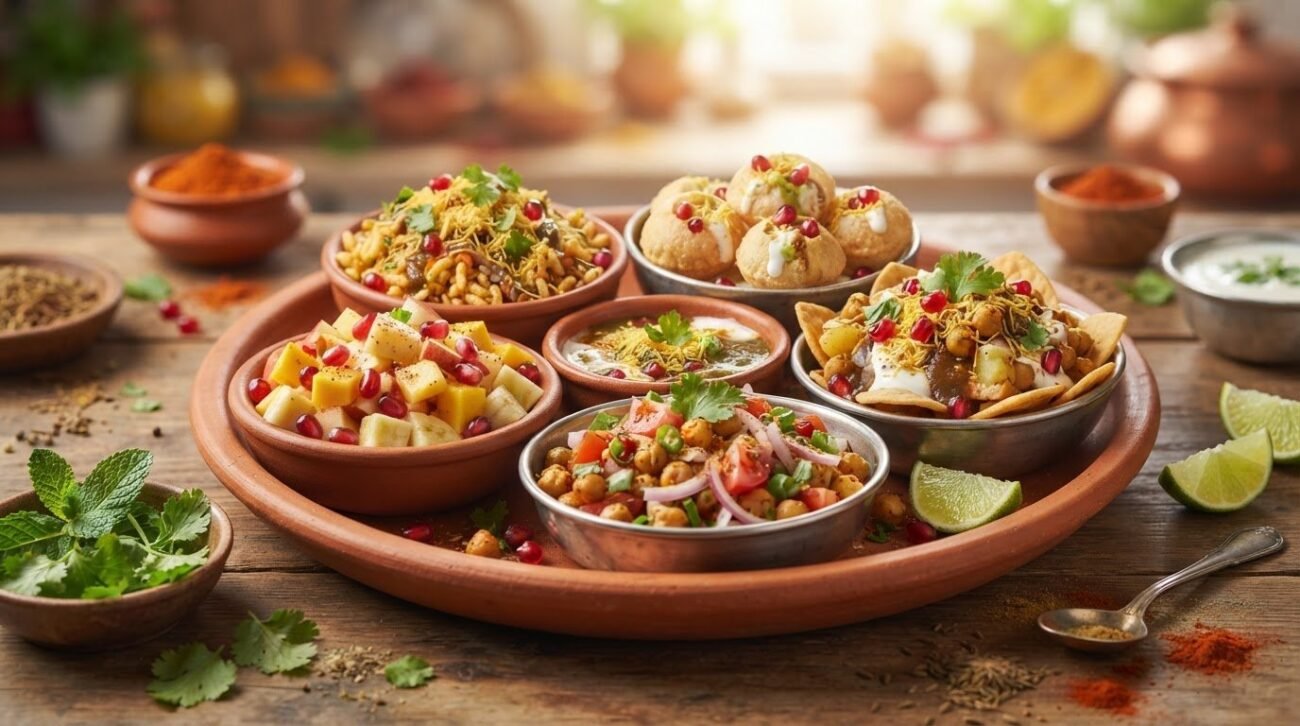
Ten chat varieties can bring crisp, creamy, tangy, and spicy flavors to an Indian menu, from bhel puri and dahi puri to papri chaat and fruit chaat. Chaat originated in the subcontinent, and its diverse forms reflect local ingredients and tastes. The same love of a sweet, salty, and tangy balance can look very different from one place to another.
That variety is part of the appeal: chaat can be light and fruit-forward, hearty with chickpeas, or layered with yogurt, chutneys, and crunchy toppings. If you know one familiar version, trying others shows how much the ingredients and textures can vary.
Explore how chaat developed and how different local styles evolved across the country, highlighting unique flavor profiles and traditional methods. As featured on Meghna’s Food Magic, this guide also introduces ten approachable options for your menu, with ideas for balancing freshness, crunch, and satisfying flavor at home.
Key Takeaways
- Build a balanced chaat by pairing crisp or soft bases with fresh toppings, chutneys, and a creamy element.
- Choose toppings and textures to shape each serving, from a lighter fruit-led plate to a more filling legume-based option.
- Compare chaats by their ingredients and preparation methods; fried bases, sev, chutneys, and yogurt all influence the overall nutrition.
- Make simple swaps to suit your menu while keeping the mix of tangy, spicy, and crunchy flavors enjoyable.
- Explore free recipe ideas for high-protein, millet-based, and weight-loss-focused cooking when you want more ways to plan satisfying meals.
How do you make common chaat varieties at home?
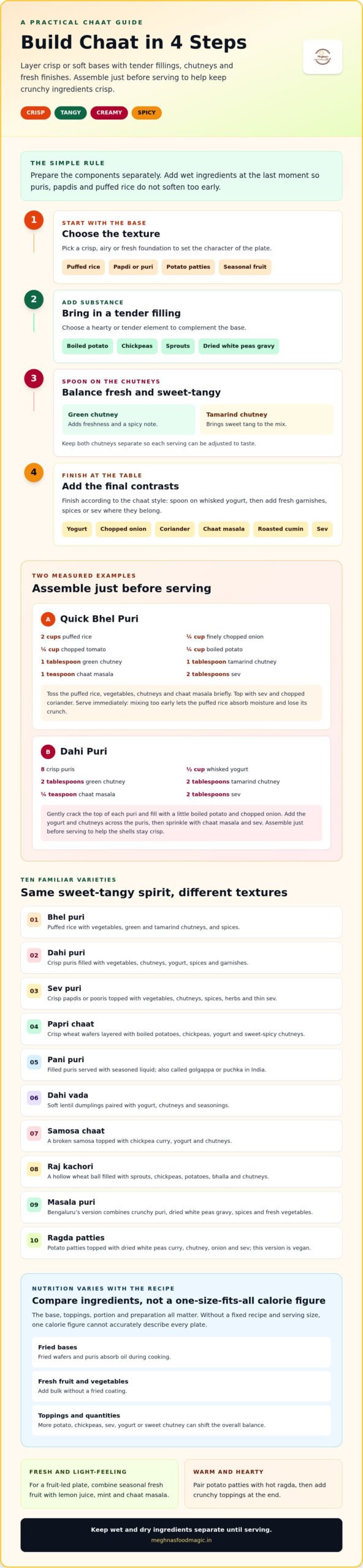
Build chaat with contrasting textures: a crisp base, tender vegetables or legumes, chutney, and fresh garnishes. Prepare the components separately and assemble each serving just before eating. This keeps puris and papdis crunchy instead of letting them soften under yogurt and sauce. Chat varieties are easier to serve at home when you group ingredients by texture first.
Start with boiled potatoes, cooked chickpeas or white peas, chopped onion, coriander, and chutneys. For whipping up fresh, small-batch green chutneys or purees on demand, portable blending appliances from CraftCart can make kitchen prep effortless. Set out sweet tamarind chutney and spicy green chutney separately so everyone can adjust the balance. Whisk plain yogurt until smooth before spooning it over the chaat. Finish with chaat masala, roasted cumin, or sev where the style calls for them.
Use this simple assembly order for most plates:
- Choose the base: Use puffed rice, papdi, puri, potato patties, or seasonal fruit.
- Add substance: Try boiled potato, chickpeas, sprouts, or dried white peas gravy.
- Spoon on chutneys: Add green chutney for freshness and tamarind chutney for sweet tang.
- Finish at the table: Add yogurt, onion, coriander, spices, or sev as the variety requires.
For a quick, crisp bhel puri, combine 2 cups puffed rice, ¼ cup finely chopped onion, ¼ cup chopped tomato, and ¼ cup boiled potato. Add 1 tablespoon green chutney, 1 tablespoon tamarind chutney, and 1 teaspoon chaat masala. Toss briefly, then top with 2 tablespoons sev and chopped coriander. Serve immediately; mixing too early lets the puffed rice absorb moisture and lose its crunch.
For dahi puri, arrange 8 crisp puris on a plate and gently crack the top of each. Fill each with a little boiled potato and chopped onion. Spoon in ½ cup whisked yogurt, then add 2 tablespoons green chutney and 2 tablespoons tamarind chutney across the puris. Sprinkle ¼ teaspoon chaat masala and 2 tablespoons sev over the top. Assemble just before serving so the shells stay crisp.
With the components ready, explore ten familiar options. Their ingredients show how a shared sweet, tangy, and savory profile takes different forms across Indian menus. These chat varieties also make it easy to serve contrasting bases and toppings together:
- Bhel puri: Puffed rice meets vegetables, green chutney, tangy tamarind chutney, and spices.
- Dahi puri: Fill crisp puris with vegetables, chutneys, yogurt, spices, and garnishes.
- Sev puri: Top crisp papdis or pooris with vegetables, chutneys, ground spices, herbs, and thin sev.
- Papri chaat: Layer crisp wheat wafers with boiled potatoes, chickpeas, yogurt, and sweet-spicy chutneys.
- Pani puri: Serve filled puris with seasoned liquid; it is also called golgappa or puchka in India.
- Dahi vada: Pair soft lentil dumplings with yogurt, chutneys, and seasonings.
- Samosa chaat: Spoon chickpea curry, yogurt, and chutneys over a broken samosa.
- Raj kachori: Fill a hollow wheat ball with sprouts, chickpeas, potatoes, bhalla, and chutneys.
- Masala puri: Bengaluru’s version combines crunchy puri, dried white peas gravy, spices, and fresh vegetables.
- Ragda patties: Top potato patties with dried white peas curry, chutney, onion, and sev; this version is vegan.
For a fruit-led version, combine seasonal fresh fruit with lemon juice, mint, and chaat masala. For a warm serving, pair potato patties with hot ragda and add crunchy toppings at the end. Keep wet and dry ingredients separate until serving to preserve crispness and bring out the contrast in textures.
Chef Meghna’s Notes
If green chutney tastes too sharp, stir in a little more yogurt for a milder finish. If bhel softens before serving, keep the puffed rice, vegetables, and chutneys separate, then toss them together at the last moment. For crunch without sev, add chopped onion or coriander just before serving. Chat varieties are flexible: use the same chutneys with different bases, then tailor the toppings to each one.
Papri chaat: Layer crisp papdis with yogurt, chopped onions, coriander, sev, and chaat masala. Chaat is commonly served with ingredients such as yogurt, chopped onions, coriander, sev, and chaat masala. Keep these accompaniments nearby so diners can finish each serving to taste.
Common chaat varieties include bhel puri, dahi puri, panipuri, dahi vada, papri chaat, and sev puri. Samosa chaat is a North Indian street food served with chickpea curry, yogurt, and chutneys. Alu chaat is made with potatoes cut into small pieces, fried until crisp, and served with chutney.
What are the calorie and nutrition differences between popular chaats?
Chaat’s nutrition varies with its base, toppings, portion, and preparation. A plate built around fruit differs from one with fried wafers, sev, yogurt, and chutneys. Recipes also differ: extra oil, more potato, or additional chickpeas changes what contributes most. Without a fixed recipe and serving size, one calorie figure cannot accurately describe every plate.
Compare the ingredients first. Puffed rice, papdi, puri, potato patties, chickpeas, yogurt, and fruit each provide a different mix of carbohydrates, protein, fat, and other nutrients. Cooking method matters too. Fried bases absorb oil during cooking, while fresh fruit and chopped vegetables add bulk without a fried coating. Generous amounts of sev, yogurt, or sweet chutney can shift the balance further.
- Bhel puri: Puffed rice and chopped vegetables form its base. Chutneys and sev add flavor, while the quantity of sev and sweet chutney affects the final balance.
- Papri chaat and sev puri: Crisp wheat wafers or papdis provide the foundation. Potato, chickpeas, yogurt, chutneys, and sev make each version more layered and substantial.
- Dahi puri: Crisp shells meet potato, yogurt, chutneys, and toppings. The puris and sev contribute a fried crunch; yogurt adds a creamy component.
- Ragda patties: Potato patties pair with dried white peas curry, chutney, onion, and sev. The peas bring legumes into the mix, while the patty and finishing toppings affect the overall composition.
- Fruit chaat: Seasonal fruit, lemon, mint, and chaat masala make a fresh alternative. Its ingredients differ from plates centred on fried bases or legume curry.
There is no fixed ranking. A small portion of papri chaat with modest sev may differ from a generously topped serving. Fruit chaat also varies according to the fruit and any sweet additions. The recipe, serving size, and preparation method all matter, so compare similar portions rather than treating a dish name as a complete nutrition label.
For a practical home comparison, serve the same portion size and record the ingredients. Note whether the base was fried, how much oil went into the patties, and whether the plate included yogurt, sev, or sweet chutney. This helps show which choices shape your version without assuming every household recipe has the same calories or nutrients.
To adjust a plate, change one component at a time. Add more chopped vegetables to bhel puri, or include chickpeas when you want a legume-based topping. Measure sev and chutney to taste instead of scattering them freely. For papri chaat, serve yogurt and chutneys separately so each person can tailor their plate. These changes preserve chaat’s contrast and make the ingredient balance easier to see.
Nutrition labels and measured recipes can help when ingredients come packaged, but homemade chutneys and street-style servings may use different amounts. A useful comparison therefore starts with what’s actually on your plate: the base, cooking fat, legume or fruit component, and finishing toppings. For more preparation ideas, explore Indian recipe demonstrations and notice how ingredient choices shape each dish.
Add chopped vegetables to bhel puri or chickpeas where they suit the recipe, while keeping the serving size consistent. These choices change the plate but do not establish its calorie total. The useful comparison is the ingredient list: note what is present and how much of each component you serve. A rating or familiar dish name cannot replace checking the recipe.
The name chaat is believed to have originated from “chatpatta,” referring to a salty, sweet and tangy flavor in savory Indian snacks and dishes. Culinary anthropologist Kurush Dalal dates the emergence of chaat as a distinct group of dishes in northern India to the late 17th century. The page identifies Uttar Pradesh, Delhi, Gujarat, Rajasthan, Odisha, West Bengal, Bihar, Madhya Pradesh, and the Bhojpuri region among the regions associated with chaat. Chaat is typically served as an hors d’oeuvre or sold at roadside stalls and food carts across South Asia, so the dish name alone does not specify one fixed ingredient combination. Chooza chaat is a Delhi snack commonly made with shredded chicken, bell peppers, mustard paste, ginger-garlic paste, lemon juice, olive oil, salt, and black peppercorns. Its listed ingredients provide a different basis for comparison from papdi, puri, or fruit chaat, but the recipe and serving still matter. TasteAtlas gives papri chaat a rating of 4.2; that rating describes a dish rating, not its calories or nutrients. For nutrition, compare the actual portions and ingredients on the plate.
Meghna’s Food Magic: Free Digital Recipe Database
Meghna’s Food Magic offers a free digital recipe database for home cooks seeking fresh meal inspiration. After exploring chaat, browse recipe ideas for other dishes, including high-protein recipes, millet recipes, and weight-loss fitness recipes. For more cooking inspiration, the recipe video collection offers another way to discover ideas and bring new flavors to your home menu.
Make Your Next Chaat Menu Your Own
Shape your menu around the people gathered at your table. Exploring chat varieties can inspire playful choices: offer a fresh fruit-led option, a legume-rich plate, or a mix of textures that guests can finish to taste. Simple steps, such as serving chutneys separately and adding crunchy toppings at the last moment, let everyone shape their plate while keeping the spirit of the dish.
For your next cooking session, choose a familiar preparation and give it a personal twist. Try a different seasonal fruit, adjust the balance of tangy and sweet, or bring a new grain into another part of the meal. Meghna’s Food Magic also shares recipe inspiration through its YouTube channel, with more ideas to explore for your home menu.
Keep experimenting, follow the flavors you love, and enjoy making each meal your own.
Frequently Asked Questions
What are the different varieties of chaat in India?
India’s chaat includes crisp, filled, fruit-based, legume-rich, and potato-led preparations. Beyond familiar puri and papdi plates, try Lucknow’s basket chaat, served in an edible potato bowl, or Delhi’s ram ladoo, made from moong-dal fritters with radish and chutney. Alu chaat offers another potato-based option, while phalon ki chaat combines fruit with seasonings. Together, these examples show how chaat ranges from crunchy street snacks to fresh, tangy plates.
What are the most popular types of chaat and their ingredients?
Popular choices include bhel puri, papri chaat, and aloo tikki with chole, each built around a distinct base. Bhel puri combines puffed rice, vegetables, chutneys, and spices. Papri chaat layers wheat wafers with potato, chickpeas, yogurt, and chutneys. Aloo tikki with chole pairs potato patties with chickpea curry. For a fruit-led option, phalon ki chaat combines mixed fruit with cumin, amchur, mint, lemon, and black pepper.
Which chaat varieties are regional specialties in India?
Regional specialties include basket chaat in Lucknow, ram ladoo and phalon ki chaat in Delhi, and masala puri in Bengaluru. Their local character comes through in the bases and toppings: Lucknow’s edible potato bowl holds layered fillings, Delhi’s snacks feature fritter or fruit preparations, and Bengaluru’s version pairs crunchy puri with dried white peas gravy. Regional names and ingredients make chaat a lively way to explore India’s food traditions.
Disclaimer
This is a recipe food blog page and not nutrition or doctor and hence do not claim to cure any illness. If you have specific health issues please consult a qualified doctor or certified nutritionist.
I do consult experts, research Internet and at times seek help from Gemini to collect relevant information to put together some of these blogs.

