
Healthy Rice Replacements for an Indian Diet and Weight Loss
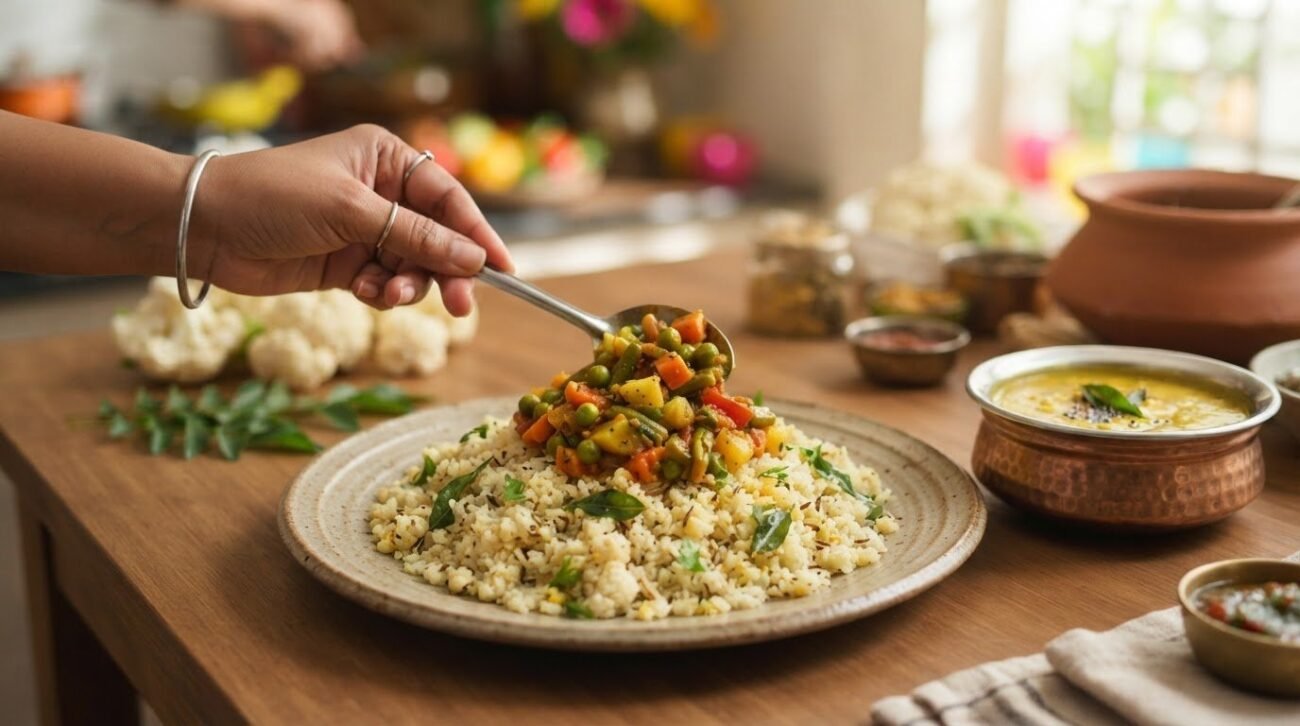
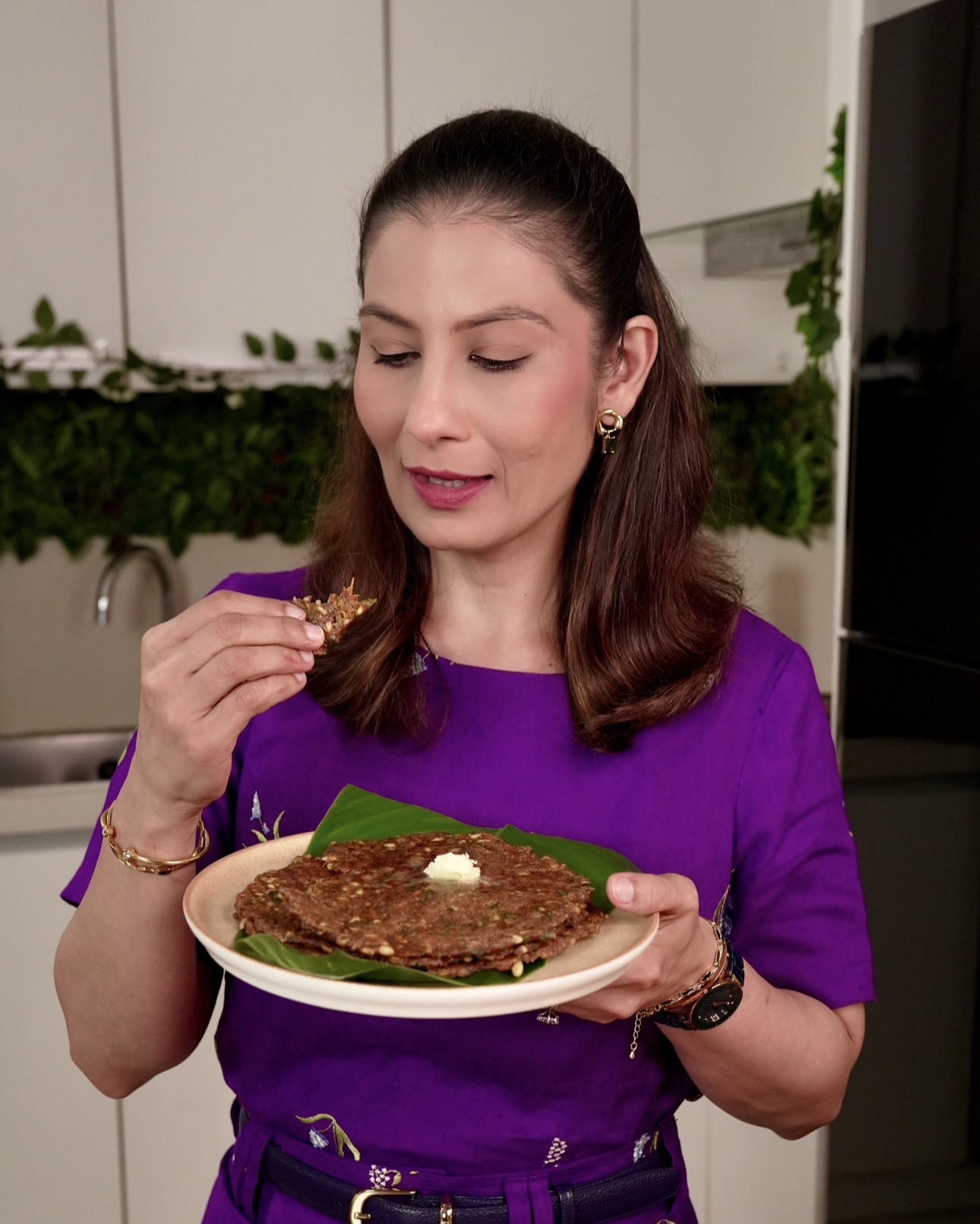
Millets can be a healthy replacement for rice in an Indian diet, especially when you want more fibre and variety than polished white rice provides. But they aren’t the only choice: brown rice, quinoa and cauliflower rice each suit different meals and weight-loss goals. The best option is the one that fits your appetite, cooking routine and favourite Indian flavours.
Rice is familiar, comforting and easy to pair with dal or curry, so changing your staple can feel like giving up more than a grain. You don’t have to switch all at once. This guide compares millets, cauliflower rice, quinoa and other practical alternatives, including their textures and cooking uses. You’ll also find ways to fit them into Indian meals and choose a satisfying option for your plate.
Key Takeaways
- Choose a rice alternative based on what your meal needs: more protein, a lighter texture, or a familiar grain to pair with curry and dal.
- Quinoa can bring a protein-rich, gluten-free option to meals such as upma and pulao.
- Cauliflower rice works as a low-carbohydrate, low-calorie swap, especially when you want a lighter base for vegetables and spices.
- Bulgur wheat offers a lower-calorie grain alternative; its texture and cooking method can help determine where it fits best in your meal plan.
- Explore a mix of Indian staples and new ingredients, then use Meghna’s Food Magic’s weight-loss and high-protein recipes for fresh meal ideas.
1. Which rice replacement is best for weight loss?
No single grain guarantees weight loss. Millets, brown rice, quinoa and chopped cabbage offer different textures and nutrients, so the right choice depends on your meal and appetite. Pair your alternative with dal, paneer or another protein-rich side instead of treating a grain swap as the whole strategy.
Rice substitutes in India don’t have one fixed price compared with white rice. Cost varies by grain, brand, processing, pack size and shop, so compare equivalent quantities where you usually shop.
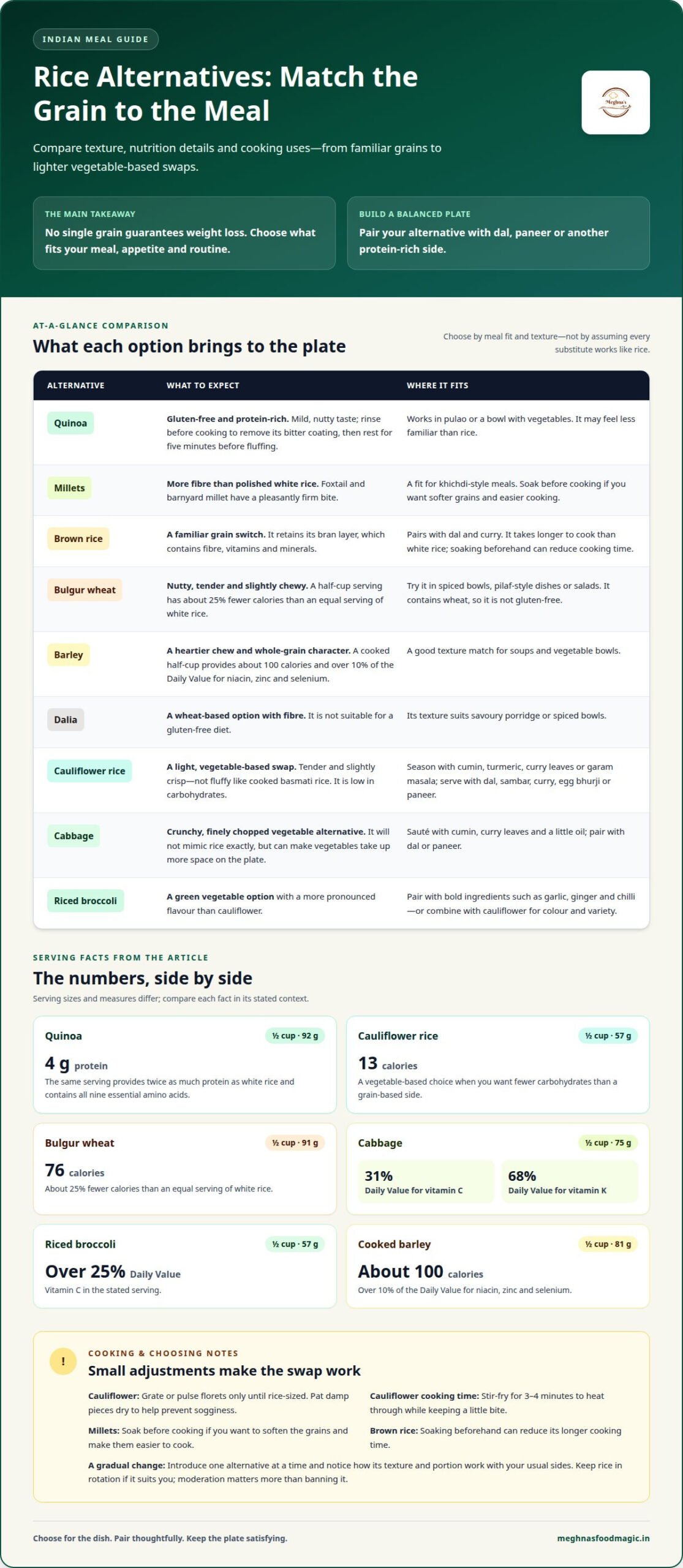
Quinoa is a gluten-free, high-protein alternative for meals such as pulao or a bowl with vegetables. A half-cup serving of cooked quinoa, weighing 92 grams, provides 4 grams of protein and contains all nine essential amino acids. The same serving provides twice as much protein as white rice. Rinse quinoa before cooking to remove its bitter coating, then let it rest for five minutes before fluffing with a fork. Its mild, nutty taste works with Indian spices, but it may feel less familiar than rice.
Millets such as foxtail and barnyard offer more fibre than polished white rice, and can bring a pleasantly firm bite to khichdi-style meals. Soak millet before cooking if you want to soften the grains and make them easier to cook. Brown rice is another straightforward switch: it retains its bran layer, which contains fibre, vitamins and minerals. It takes longer to cook than white rice, while soaking beforehand can reduce cooking time. Dalia adds a wheat-based option with fibre and a texture that suits savoury porridge or spiced bowls.
For a vegetable-based alternative, finely chop cabbage and sauté it with cumin, curry leaves and a little oil. It won’t mimic rice exactly, but it adds crunch and pairs well with dal or paneer. A half-cup serving of cabbage, weighing 75 grams, provides 31% of the Daily Value for vitamin C and 68% for vitamin K. Use it when you want vegetables to take up more space on the plate, rather than expecting it to provide the same texture as cooked grains.
Choose an alternative that suits your dietary needs and meal. Quinoa is gluten-free, while wheat-based dalia isn’t suitable for a gluten-free diet. A sudden change in grain or fibre may also feel unfamiliar during digestion. Introduce one alternative at a time and notice how its texture and portion work with your usual sides.
For weight-loss meal planning, keep rice in rotation if it suits you. Moderation matters more than banning it. Try brown rice with dal, quinoa with spiced vegetables, or millet alongside paneer. If a large serving of rice leaves your dinner unbalanced, one or two whole wheat rotis with sabzi, paneer, egg curry or dal offer another familiar option. A healthy replacement for rice in an Indian diet is a practical choice, not a rigid rule.
2. Riced cauliflower as a low-carb and low-calorie option
Grated cauliflower creates a light, vegetable-based alternative to rice. A half-cup serving, weighing 57 grams, contains 13 calories. Its low carbohydrate content makes it useful for meals where you want fewer carbohydrates than a grain-based side provides. The texture is tender and slightly crisp, rather than fluffy like cooked basmati rice.
Make cauliflower rice at home by grating a washed cauliflower or pulsing florets in a food processor. Stop when the pieces resemble rice grains, since prolonged processing can turn them into wet paste. If the cauliflower looks damp, pat it dry before cooking. This helps reduce excess moisture and keeps the finished dish from becoming soggy.
Riced broccoli offers another green vegetable choice. A half-cup serving, weighing 57 grams, provides over 25% of the Daily Value for vitamin C. Its flavour is more pronounced than cauliflower’s, so it pairs well with bold ingredients such as garlic, ginger and chilli. Use cauliflower for a milder base, or combine both vegetables for colour and variety.
For Indian meals, season cauliflower rice with cumin, turmeric, curry leaves or garam masala. Serve it with dal, sambar or vegetable curry, where spices and gravy bring familiar flavours. It also works as a base for egg bhurji or paneer, though it won’t absorb sauce like steamed rice. Add a protein-rich side to make the plate more substantial.
Try this quick cauliflower fried rice with the measured ingredients below. The short cooking time keeps a little bite, while the egg and mixed vegetables make it a more complete dish.
- 2 cups cauliflower rice
- 1 egg
- ½ cup mixed vegetables
- 1 tablespoon soy sauce or tamari
- 1 teaspoon sesame oil
- ½ teaspoon minced garlic
Warm sesame oil in a pan and cook the garlic briefly. Add mixed vegetables and stir until tender, then add cauliflower rice. Cook for 3–4 minutes, stirring, so the grains heat through without releasing too much moisture. Add the egg and scramble it through the vegetables. Stir in soy sauce or tamari, then cook for another 1–2 minutes.
Cauliflower rice suits low-carbohydrate meals, but it isn’t a like-for-like nutritional or textural replacement for grain rice. Build the dish around vegetables, egg, paneer or dal, and season it to suit the rest of the meal. For more vegetable-forward cooking inspiration, explore weight-loss recipe ideas.
3. Which Rice Alternative is Best for Your Diet?
Bulgur wheat suits meals where you want a grain with a lighter calorie count than white rice. A half-cup serving, weighing 91 grams, contains 76 calories, about 25% fewer than an equal serving of white rice. Its nutty taste and tender, slightly chewy texture work in spiced bowls, pilaf-style dishes and salads. Because bulgur is wheat, it isn’t a gluten-free choice.
Barley brings a heartier chew and whole-grain character to soups or vegetable bowls. A half-cup serving of cooked barley, weighing 81 grams, provides about 100 calories and over 10% of the Daily Value for niacin, zinc and selenium. For hulled barley, use one part grain to four parts water and cook for about 25–30 minutes. The extra water helps the firm grains soften evenly.
Bajra and jowar bring familiar Indian flavours to dishes beyond roti. Cook them as porridge or serve them in place of rice alongside dal and sabzi. Foxtail and barnyard millet are naturally gluten-free and fibre-rich. Rinse millet, soak it to soften the grains, then simmer until tender. Choose a smaller-grained millet for a softer bowl, or a firmer variety when you want distinct grains.
For nutrition, brown rice retains its bran layer, while millets and other whole grains generally contain more fibre and nutrients than polished white rice. Quinoa adds protein, and cauliflower rice is a vegetable-based, low-carbohydrate option. Per cooked half-cup, bulgur provides 76 calories and barley about 100 calories; the listed figures for these alternatives don’t provide a complete calories, carbohydrate, fibre and protein comparison for every grain. Each grain’s texture and the accompanying dal, vegetables or paneer also shape the meal.
Whole-grain options such as barley, bulgur, brown rice and millet can replace polished white rice. Blood-sugar response depends on the grain, its processing and cooking, the portion, and what else you serve, so no single choice suits every meal. For a gluten-free option, choose foxtail or barnyard millet, or quinoa. Avoid wheat-based bulgur and barley.
Indian favourites can adapt without losing their character. Use millet or quinoa in pulao, or try a millet-based batter for idli or dosa. The grain’s texture affects how the batter holds together. For curd rice, fold cooked, cooled millet into curd and finish with mustard seeds, curry leaves and ginger. Start by replacing some of the rice in one dish, then adjust as you learn which grain your household enjoys. Let the dish’s texture, your preferences and the rest of the meal guide the change.
4. Is quinoa better than rice?
Quinoa offers a useful alternative when a meal needs more plant protein. A half-cup serving of cooked quinoa, weighing 92 grams, provides 4 grams of protein. It also contains all nine essential amino acids, making it a complete protein source. White rice can still suit meals where its soft, neutral texture matters most. The better fit depends on your priorities, recipe and preferred texture, not a universal ranking.
Quinoa is naturally gluten-free, with small, separate grains and a mild, nutty taste. Rinse it before cooking to remove its bitter surface coating, then simmer until tender. Let the cooked grains rest for 5 minutes before fluffing them with a fork. This short rest helps steam settle, so the grains separate more easily instead of clumping. Use quinoa in pulao, savoury upma, warm bowls or salads.
For Indian-style pulao, briefly toast rinsed quinoa with cumin, whole spices and vegetables before adding water. The grains stay distinct, so stir gently. For upma, add cooked quinoa after sautéing onions, ginger and vegetables to help preserve its texture while it takes on the seasoning. Chilled quinoa also makes a fresh salad with cucumber, herbs, lemon and roasted vegetables.
A quinoa and black bean bowl shows how to build a filling meal around the grain. Combine these measured ingredients:
- 1 cup cooked quinoa
- ½ cup black beans
- ½ an avocado
- ¼ cup cherry tomatoes
- 1 tablespoon lime juice
Fold the black beans into the quinoa, then add quartered cherry tomatoes and avocado. Finish with lime juice and toss gently to keep the avocado pieces intact. The beans add plant-based protein, while the tomatoes and lime bring freshness. For an Indian flavour, serve the bowl with cumin, coriander or chilli, seasoning it to complement the ingredients without masking quinoa’s gentle taste.
Quinoa can replace rice in some dishes, but it won’t behave exactly like basmati. Its smaller grains and softer bite suit pulao and salads better than recipes that rely on sticky rice. Pair it with dal, vegetables, paneer or beans for a more complete plate. Quinoa provides protein, but it isn’t a complete meal by itself, so include ingredients that add flavour, variety and satisfying texture.
Choose quinoa if its protein and naturally gluten-free qualities suit your dietary needs. Choose rice if you prefer its familiar aroma or texture, and alternate between them across meals. Quinoa’s mild flavour works well with Indian spices such as turmeric, cumin and curry leaves, making it easy to adapt without turning dinner into a different cuisine.
5. What are healthy alternatives to white rice commonly eaten in India
Indian meals offer plenty of rice alternatives, from familiar grains to vegetables. Millets have a long place in Indian cooking and suit different preparations. Use jowar or bajra for roti, porridge or a rice-style side. Choose according to the dish: soft khichdi calls for a different texture from pulao with separate grains.
Oats offer a fibre-rich base for a savoury meal. Cook them into a thick porridge with vegetables, or season them with mustard seeds, curry leaves and turmeric. Fibre can help you feel full and may support digestion. For an evening meal that feels lighter, oats or cauliflower rice can replace a heavier grain base while keeping vegetables and spices on the plate.
Quinoa brings a mild, nutty flavour to Indian dishes. Use it in place of rice for pulao, or cook it with vegetables and spices for an upma-style meal. Its small grains stay distinct, making it a good fit when you want a separate-grain texture. Serve it with dal, beans or paneer for a more satisfying meal.
Cauliflower rice is made by grating or processing cauliflower into small pieces. Sauté it briefly with cumin, ginger and curry leaves, then serve it with dal or curry. Unlike whole grains, it’s a low-carbohydrate, low-calorie vegetable alternative. It doesn’t have the same texture as rice, so choose it when you want vegetables to form the base of your meal.
Sweet potatoes offer another way to move beyond a large rice serving. Their fibre and complex carbohydrates release energy slowly and may help prevent late-night hunger. Roast or steam sweet potato and serve it with a protein-rich side and vegetables. Its natural sweetness contrasts with spicy dal or savoury vegetable curry, creating a balanced plate without copying rice exactly.
Barley is a chewy, fibre-rich grain suited to soups, bowls and spiced one-pot dishes. It can support digestion and help regulate cholesterol levels. Cook it until tender, then combine it with vegetables and spices. Its firm bite holds up well in a hearty meal. For an easier transition, try barley in a mixed-grain dish before making it the main base.
There’s no need to remove rice completely. Keep it in your routine in moderation unless a doctor has advised otherwise, and change one meal at a time. Try oats at breakfast, millet with dal at lunch, or cauliflower rice beside an evening curry. Pair any option with vegetables and a protein-rich food, then explore weight-loss recipe ideas for more meal inspiration.
Meghna’s Food Magic: Weight Loss Fitness Recipes
Meghna’s Food Magic makes it easier to turn rice swaps into enjoyable meals with its free digital recipe database. For ideas on using quinoa, millets and other ingredients in everyday cooking, browse Weight Loss Fitness Recipes and High Protein Recipes. The Millets Recipes collection offers inspiration for bringing grains such as jowar, bajra or ragi into familiar Indian dishes, with flavour and variety on the plate.
Chef Meghna’s Notes
For grain-based bowls, cook the grain separately from saucy vegetables, then combine them just before serving. This keeps the texture distinct and lets you adjust the seasoning without making the dish watery. Explore Meghna’s Food Magic for more recipe ideas and inspiration.
Make your next meal a fresh starting point
A healthy replacement for rice in an Indian diet doesn’t have to become a permanent rule. Think of it as another way to shape your cooking, guided by the flavours and textures you enjoy. A small change can help you discover which ingredients feel at home in your everyday meals.
Let curiosity guide your next choice. Notice which options you enjoy preparing and eating, then keep those ideas in your regular rotation. A meal that suits your taste is easier to return to than a swap that feels restrictive. Your approach can evolve with your routine, recipes and appetite.
Keep experimenting, enjoy what works for you, and let each meal bring a little more creativity to your table.
Frequently Asked Questions
Are millets healthier than rice?
Millets can offer more fibre and nutrients than polished white rice, but what’s healthier depends on your meal and needs. Choose foxtail or barnyard millet for a naturally gluten-free grain, or use jowar and bajra in familiar Indian dishes. Cook the grain until tender and pair it with dal, vegetables or paneer. The rest of the plate matters, too.
Can I completely stop eating rice at dinner?
Yes, you can choose a different dinner base, but you don’t need to eliminate rice unless a doctor has advised otherwise. Try a meal built around vegetables and protein, with oats, quinoa, millet or one or two whole wheat rotis. If rice is a favourite, keep it in rotation and adjust the overall meal instead of treating it as forbidden.
Can oats replace rice for dinner?
Yes. Savoury oats can replace rice in a simple dinner, especially alongside vegetables and a protein-rich side. Cook oats with water or broth, then season with ginger, cumin, turmeric or curry leaves. Stir in peas or spinach for extra vegetables. Their soft, porridge-like texture suits a warm bowl, but won’t resemble separate rice grains.
Do rice replacements help with bloating?
Cauliflower rice or oats can be lighter-feeling dinner choices if a large meal leaves you uncomfortably full. Prepare cauliflower rice with modest seasoning, or make oats into a simple savoury bowl. Bloating can have different causes, so changing the grain alone won’t identify or resolve them. Notice which meal ingredients and portions feel comfortable for you.
Is quinoa better than rice?
Quinoa is a good choice when you want a naturally gluten-free grain with more protein than white rice. Rice may suit you better if you prefer its aroma, familiar texture or role in a particular dish. Use quinoa in salads, pulao or bowls, and keep rice for meals where its texture matters. Neither grain is automatically best for everyone or every recipe.
What is the easiest rice replacement for Indian meals?
Brown rice is often an easy first swap because it keeps a familiar grain shape and works with dal, curry and many rice-based meals. For a softer transition, mix it with your usual rice in pulao or serve it alongside the same sabzi. If you want a vegetable-based option, season cauliflower rice with Indian spices.
Which Rice Alternative is Best for Your Diet?
Choose according to the dish, your dietary needs and the texture you enjoy. Quinoa and foxtail or barnyard millet are naturally gluten-free; bulgur and barley are wheat grains. Cauliflower rice suits meals where you want a vegetable base, while oats work well as a soft savoury bowl. Pair your choice with vegetables and a protein source for a more balanced meal.
Which rice replacement is best for weight loss?
No single substitute guarantees weight loss. Cauliflower rice is a low-calorie option, while quinoa can add protein to a meal. The practical choice is one you enjoy and can pair with vegetables and protein-rich foods such as dal, beans or paneer. For a lighter dinner, serve a moderate portion of grain with plenty of vegetables instead of relying on a large bowl alone.
Disclaimer
This is a recipe food blog page and not nutrition or doctor and hence do not claim to cure any illness. If you have specific health issues please consult a qualified doctor or certified nutritionist.
I do consult experts, research Internet and at times seek help from Gemini to collect relevant information to put together some of these blogs.

