
10 Healthy Sugar-Free Indian Dessert Recipes to Try
Indian mithai can be reimagined with sweetness from dates or alternatives such as stevia and monk fruit. This collection brings together 10 sugar free Indian desserts, including bajra churma ladoo, lauki halwa and kaju katli, with ideas for portioning and choosing a sweetener. The result is a festive range of flavours and textures, not just one substitute for sugar.
It’s understandable to want a lighter-feeling sweet without giving up the comfort of familiar Indian treats. These sugar free Indian desserts include nutty ladoos, creamy halwa and classic mithai, with practical tips for choosing a sweetener and serving a modest portion. From cooling kaju katli to warm lauki halwa, there are plenty of ways to add sweetness to the table with care and flavour.
Key Takeaways
- Explore festive favourites such as bajra churma ladoo, lauki halwa and kaju katli, each with its own flavour and texture.
- Keep portions modest, especially when serving rich mithai or sweets made with dates and nuts.
- Choose a sweetener to suit the recipe: dates add a fruit-forward taste, while stevia and monk fruit offer different ways to sweeten.
- Use cooking and chilling time to help desserts reach the texture you want, from soft halwa to set kaju katli.
- Try different mithai styles, including nut-based barfi and chilled kulfi, to make your dessert table varied and inviting.
1. Bajra churma ladoo and portion guidance
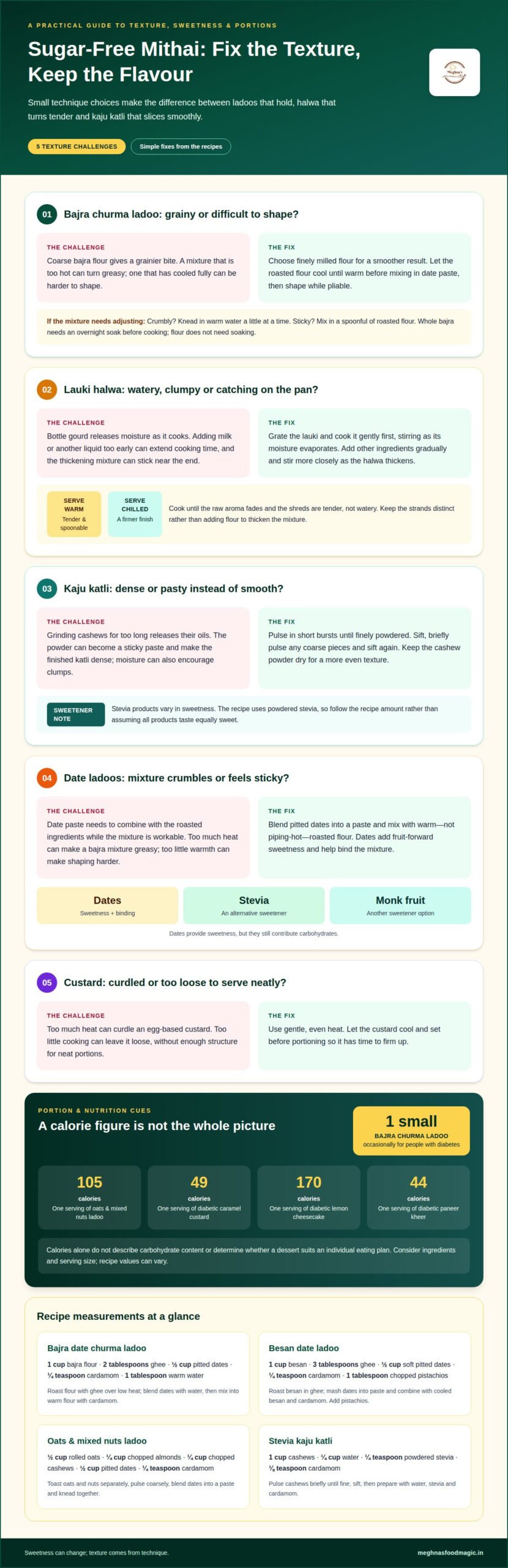
For bajra churma ladoo, choose finely milled bajra flour for a smoother bite; coarser flour gives a grainier texture. If using whole bajra, soak it overnight, cook the grains until tender, then dry and grind them. Flour itself doesn’t need soaking. Soaking softens whole grains, while the flour’s texture determines the final feel of the churma.
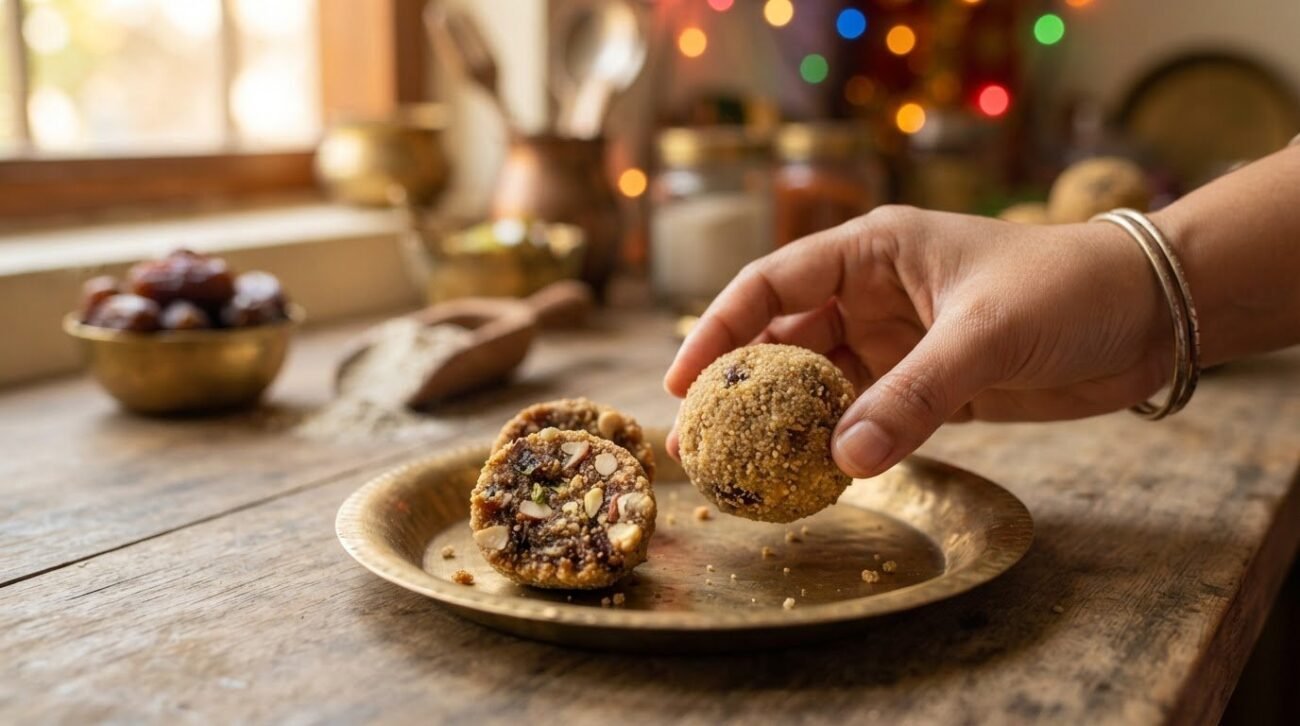
Bajra date churma ladoo: Measure 1 cup bajra flour, 2 tablespoons ghee, ½ cup pitted dates, ¼ teaspoon cardamom and 1 tablespoon warm water. Roast the flour with ghee over low heat, stirring until fragrant. Blend dates with water into a paste, then mix into the warm flour with cardamom. Shape while pliable. The dates bind the mixture and sweeten it without refined sugar.
Besan date ladoo: Use 1 cup besan, 3 tablespoons ghee, ½ cup soft pitted dates, ¼ teaspoon cardamom and 1 tablespoon chopped pistachios. Roast besan in ghee over low heat, stirring until it smells nutty and turns a deeper golden colour. Mash the dates into a paste, combine with the cooled besan and cardamom, then shape. Add pistachios for a crisp finish.
Oats and mixed nuts ladoo: Gather ½ cup rolled oats, ¼ cup chopped almonds, ¼ cup chopped cashews, ½ cup pitted dates and ¼ teaspoon cardamom. Toast oats and nuts separately, then pulse them coarsely. Blend dates into a paste and knead everything together with cardamom. Shape into small ladoos. One serving of an oats and mixed nuts ladoo recipe contains 105 calories; its carbohydrate amount depends on the ingredients and serving size.
For people with diabetes, the portion guidance is 1 small bajra churma ladoo occasionally. Calories and carbohydrates vary across recipes, so a calorie figure alone can’t describe a dessert’s carbohydrate content. Dates provide sweetness, but they still contribute carbohydrates. Keep the recipe’s ingredients and portion in mind, and serve one small sweet rather than combining several ladoos on the same plate.
For an even finish, let the roasted flour cool until warm before adding date paste. If the mixture is too hot, it can become greasy; if fully cool, it may be harder to shape. If it crumbles, knead in warm water a little at a time. If it feels sticky, mix in a spoonful of roasted flour. These adjustments help the ladoos hold their shape while keeping bajra’s earthy flavour.
2. Lauki halwa and diabetic caramel custard
Lauki halwa turns mild-tasting bottle gourd into a soft, fragrant dessert. Grate the lauki so it cooks evenly, then cook it gently in a heavy-bottomed pan. Stir as moisture releases and gradually evaporates. Steady cooking softens the shreds without letting them catch on the base. The finished halwa should be tender, not watery, with distinct strands still visible.
For a delicious result, cook the lauki until its raw aroma fades before adding flavourings. A pinch of cardamom complements the gourd’s gentle taste, while chopped nuts add contrast. Keep stirring near the end: as the liquid reduces, the mixture thickens and can stick more easily. If the halwa looks loose, continue cooking gently rather than adding flour, which can make the texture heavy.
The key to a pleasing halwa is controlling moisture. Lauki releases water as it cooks, so adding milk or another liquid too early can extend the cooking time. Let the grated vegetable soften first, then add the other ingredients gradually. Stirring distributes heat and keeps the shreds from clumping. Serve it warm for a tender, spoonable texture, or chill it for a firmer finish.
Diabetic caramel custard offers a smooth, set contrast to warm halwa. One serving of the diabetic caramel custard recipe contains 49 calories. That number describes calories, not carbohydrates, and it doesn’t by itself determine whether a dessert suits an individual’s eating plan. “Diabetic” in a recipe name isn’t a substitute for checking its ingredients and portion size.
For custard, texture depends on gentle, even heat. Too much heat can make an egg-based custard curdle, while too little cooking can leave it too loose to serve neatly. Let the custard cool and set before portioning so its structure has time to firm. A caramel-style topping adds a familiar bittersweet note, so balance its flavour without overwhelming the creamy base.
These two desserts suit different occasions: serve lauki halwa warm after a meal, or offer chilled custard for a make-ahead finish. Keep portions measured and consider the whole recipe, not just its sweetener or calorie figure. For more home-cooking inspiration and dessert ideas, explore Meghna’s recipe videos.
Gajar ka halwa is a winter treat made by slow-cooking shredded carrots in milk until the milk is absorbed. Khaas malpoi, stuffed pancakes filled with carrot halwa, offers another way to serve that filling. Together, these dishes bring distinct textures to a dessert spread, from slow-cooked carrots to filled pancakes.
Other recipe choices include diabetic lemon cheesecake and diabetic paneer kheer. A serving of the diabetic lemon cheesecake recipe contains 170 calories, while a serving of the diabetic paneer kheer recipe contains 44 calories. People with diabetes are advised to eat whole fruits instead of fruit juices and milk shakes when making dietary choices. Consider the ingredients and serving size as well as the calorie count when deciding what fits an individual eating plan.
3. Sugar-free kaju katli with cashews and stevia
Kaju katli is a favourite for its delicate cashew flavour and smooth, sliceable texture. For a small home batch, measure 1 cup cashews, ¼ cup water, ¼ teaspoon powdered stevia and ⅛ teaspoon cardamom. Grind the cashews in short pulses until finely powdered. Stop before their oils release, which can turn the powder into a sticky paste and make the finished katli dense.
Sift the cashew powder into a bowl. Pulse any coarse pieces briefly, then sift again for an even texture. Keep the powder dry, as moisture encourages clumps. Stevia products vary in sweetness, so use a plain powdered stevia whose label allows ¼ teaspoon for this quantity. If the stated equivalent differs, follow the package conversion rather than adding more by guesswork.
Pour the measured water into a heavy-bottomed pan and stir in the stevia. Warm gently until it dissolves, then add the cashew powder and cardamom. Stir continuously over low heat. As moisture evaporates, the mixture thickens; steady stirring helps prevent scorching. It is ready to leave the pan when it gathers into a soft dough and pulls cleanly from the sides.
Transfer the dough to a plate and let it cool until comfortable to handle. Knead gently until smooth, then place it between two sheets of baking paper. Roll it evenly without adding flour, which would change the cashew flavour and surface. Cut diamond shapes with a sharp knife, wiping the blade between cuts for tidy edges.
Chill the shaped kaju katli for 15 minutes to help it set. This rest firms the surface, making the pieces easier to lift without bending. Serve a modest piece: stevia changes the sweetness, not the richness of cashews. The nuts still contribute energy, so a refined-sugar-free recipe is not an invitation to eat unlimited portions.
If the dough cracks while rolling, knead it gently while it is still warm and pliable. If it sticks to the paper, let it cool a little longer before rolling. Avoid adding water unless the dough is genuinely dry; excess moisture can make the katli soft and difficult to cut. For a neat finish, separate the pieces with baking paper in an airtight container.
These details help preserve the classic look and keep the cashew aroma at the centre. A light touch of cardamom supports the nutty flavour, and careful rolling gives each piece a clean finish. Since stevia’s sweetness varies by product, match the measured amount to the package guidance for the form you’re using. This helps balance the recipe without changing its simple, cashew-forward character.
4. Sweeteners including stevia, monk fruit, xylitol and dates
Choosing a sweetener changes more than sweetness. Stevia, monk fruit and xylitol can sweeten recipes, while dates add fruit flavour, moisture and body. Their different forms affect how they dissolve and blend, so powder, liquid and whole fruit won’t behave identically in Indian sweets. Match the sweetener to the dessert’s texture and cooking method.
Stevia suits recipes where you want sweetness without adding dates. Its concentrated taste can become noticeable if you use too much. Start with the product’s conversion guidance, then adjust carefully. Kaju katli needs balanced flavour, so don’t let the sweetener overpower the cashews. Monk fruit is another option; its taste and concentration depend on the product form.
Xylitol appears in a cherry and cacao mousse jar. It can sweeten a chilled dessert without changing its fruit-and-cocoa character as dates would. Follow the recipe’s stated amount, and don’t assume sweeteners can be swapped measure for measure. A mousse depends on a smooth, even mixture, so dissolve or blend the chosen sweetener thoroughly.
Dates work differently. They add sweetness, fruit solids and a sticky texture, making them useful in ladoo-style sweets and fudge. Cacao, hazelnut and date fudge combines dates with dark chocolate and hazelnuts. Blend the dates into a paste before mixing to distribute their sweetness and bind the ingredients. Dates contain carbohydrates, so “no refined sugar” doesn’t mean carbohydrate-free.
What are the downsides of sugar substitutes in desserts? Sweeteners can change flavour and texture, and dates still contribute natural sugars. Sugar-free sweets still call for moderation, whether they use dates, stevia, monk fruit or xylitol. For people with diabetes, artificial sweeteners are advised only if necessary when preparing these desserts.
Sweetener choice alone doesn’t make a dessert a weight-loss food. The European Commission memorandum says replacing sugar with sweeteners isn’t recommended for weight reduction or preventing chronic non-communicable diseases, because it won’t achieve the desired weight-loss effect. Consider the whole recipe, portion and accompanying foods rather than judging a dessert by its sweetener alone.
Whole fruits can add sweetness and texture to homemade desserts. Use mashed fruit when moisture helps, or finely chopped fruit when you want distinct pieces. Dates, for example, bind a nut mixture, while fruit pieces add chew to a chilled dessert. Keep the recipe’s balance in mind: extra fruit can change moisture and sweetness, so adjust gradually and taste as you go.
To choose a sweetener, consider the dessert’s purpose: dates help bind, stevia sweetens with little added bulk, and monk fruit or xylitol offer other options. Whichever you choose, serve a measured portion and enjoy the flavour, not just the label.
5. Sugar-free Indian mithai varieties
The most interesting sugar-free mithai choices aren’t limited to ladoos. Almond malai kulfi, anjeer barfi and two-in-one phirni show how familiar Indian sweets can vary in flavour and texture. For people with diabetes, no single mithai is automatically the best choice. Check the full ingredient list, serving size and total carbohydrates, then choose a modest portion that fits their individual eating plan.
Almond malai kulfi is described as free of refined sugar, while grilled almond barfi uses just two ingredients. Faldhari badam barfi combines nuts and dry fruits; anjeer barfi brings together figs and cashews. These examples vary in sweetness, richness and texture. Figs and dry fruits still contribute natural sugars, while nuts add richness, so “sugar-free” shouldn’t be taken to mean unlimited.
For a creamy option, try two-in-one phirni, described as free from refined sugar. Its familiar spoonable texture sets it apart from nut-based barfi. Choose a small bowl and consider the rice, milk, fruit and sweetener together. This ingredient-first approach is more useful than choosing by a “sugar-free” label alone, especially when planning dessert for someone managing diabetes.
In India, packaged mithai is available through sweet shops and food sellers. Healthy Mithai lists Sugar Free Alphonso Mango Kalakand in a 400 g pack. Cost varies by seller, pack size and ingredients; compare the stated pack weight and composition rather than assuming all sugar-free sweets cost the same.
For packaged desserts, read the ingredient list and nutrition information. Look for added sweeteners and ingredients such as dates, fruit concentrates or syrups, which may contribute sugars or carbohydrates. Compare the serving size with the amount you plan to eat. A “sugar-free” claim on the front of a package alone doesn’t tell you how much carbohydrate a serving contains.
Dairy-heavy sweets can be adapted to be vegan or lactose-free. Replace dairy milk with a suitable plant-based alternative, and use plant fat instead of ghee where the recipe allows. In phirni, milk provides creaminess, so a substitute may change the thickness and flavour. Add it gradually and stir as the rice cooks; adjust the final texture through cooking rather than adding extra sweetener.
These varieties make it easy to build a mithai platter with contrasting textures: creamy kulfi, soft phirni and sliceable barfi. Keep portions modest and label ingredients when serving guests, especially nuts, dairy and dried fruit. This helps everyone choose thoughtfully without mistaking a refined-sugar-free sweet for a carbohydrate-free one.
Meghna’s Food Magic: Easy desserts recipe ideas
Meghna’s Food Magic offers easy dessert recipe ideas in its Free Digital Recipe Database, with inspiration for everyday treats and festive cooking.
Chef Meghna’s Notes
For a dairy-free dessert, choose a plant-based milk that suits the recipe’s flavour. If the mixture is too loose, cook it gently for longer to let moisture evaporate; if it thickens too quickly, gradually stir in a little liquid. Taste as you go, since changing the sweetener can affect the final balance.
For recipe inspiration or help choosing what to make next, contact Meghna’s Food Magic.
Bring a little creativity to your next dessert
Start your next kitchen experiment with a flavour you already love, then make one thoughtful change. Adjust the sweetness, try a different texture or serve a familiar treat in a new way. Small choices make cooking feel personal, and sugar free Indian desserts leave plenty of room to explore without losing their celebratory spirit.
As you choose what to make, think about who will share it and what will make the occasion special. A homemade sweet can be an afternoon treat or part of a festive table. Keep your approach flexible: taste as you cook, notice how ingredients behave and let each attempt teach you something for next time.
Ready for fresh inspiration in your home kitchen? Explore more recipe ideas and find a delicious project to try next.
Enjoy the process, follow your curiosity and make the next sweet your own.
Frequently Asked Questions
What are popular sugar-free Indian desserts?
Popular choices include gajar halwa, oats kheer, modak and fruit-based sweets. For a winter-style dessert, slow-cook grated carrots in milk until the milk is absorbed to create a soft, rich halwa. Oats kheer has a porridge-like texture with nuts and dry fruits. Modak brings a festive shape and flavour, while whole fruit can add natural sweetness to a simple chilled dessert.
Which Indian desserts can be made without added sugar?
Carrot halwa, oats kheer and fruit-based desserts can be made without adding table sugar. Depending on the recipe, sweetness can come from whole fruit or dates. For example, use mashed ripe fruit in a dessert mixture, or cook grated carrots until tender and let their natural flavour shine. Check every ingredient: “no added sugar” doesn’t mean a recipe contains no naturally occurring sugars.
What natural sweeteners are used in sugar-free Indian desserts?
Dates and whole fruits are common ways to add natural sweetness to homemade desserts. Dates also help bind mixtures, while fruit can bring moisture and flavour to puddings or chilled sweets. Stevia and monk fruit are other sweetening options, though they aren’t fruits. Choose according to the recipe’s texture and taste, and remember that natural sources of sweetness can still contribute sugars or carbohydrates.
Are dates, jaggery, honey, or coconut sugar suitable for sugar-free desserts?
No. Dates, jaggery, honey and coconut sugar may replace refined sugar in a recipe, but they don’t make it sugar-free. Dates add fruit sugars, while jaggery, honey and coconut sugar are also sweetening ingredients. If you’re avoiding added sugars, choose a recipe that doesn’t use them. For someone managing diabetes, consider all the ingredients and the portion, not just the sweetener’s name.
How do you make sugar-free kheer at home?
Make oats kheer with oats, nuts and dry fruits, using a suitable sweetener such as stevia or monk fruit. Enjoy it in moderation.
Disclaimer
This is a recipe food blog page and not nutrition or doctor and hence do not claim to cure any illness. If you have specific health issues please consult a qualified doctor or certified nutritionist.
I do consult experts, research Internet and at times seek help from Gemini to collect relevant information to put together some of these blogs.

