
Healthy Broccoli Tikki Recipe for Weight Loss
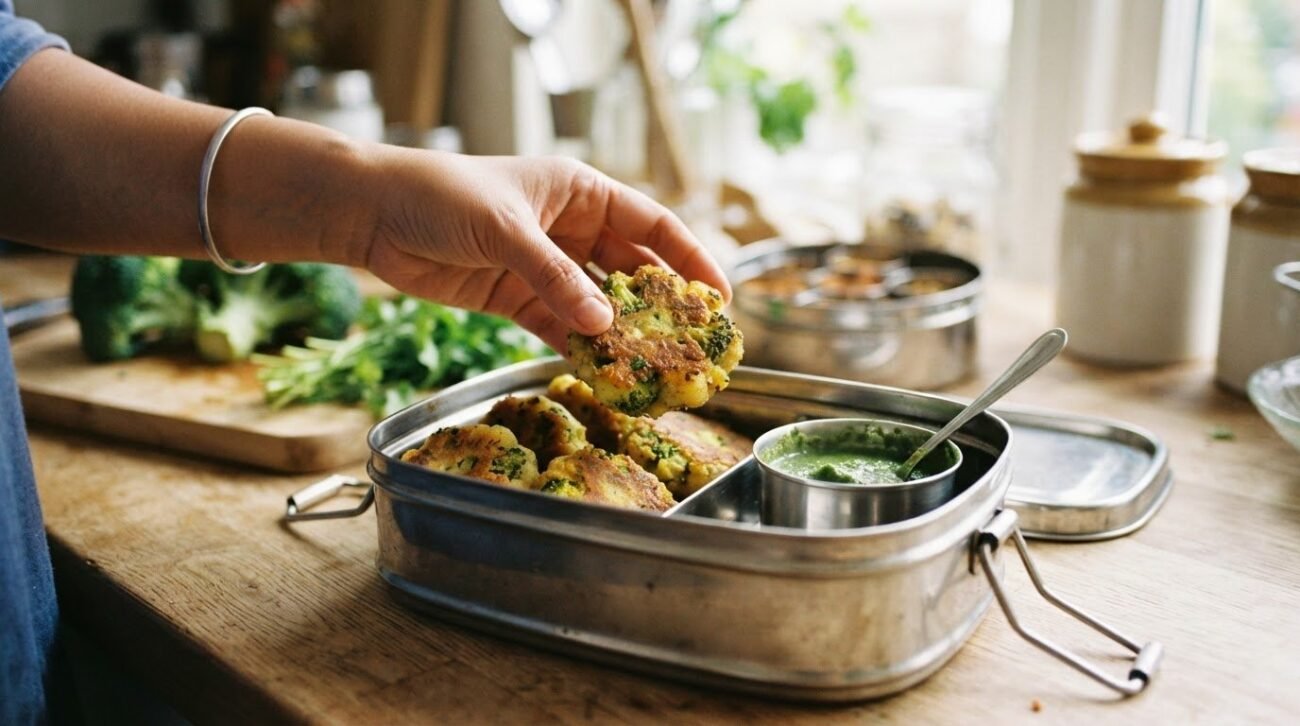
The crispest broccoli tikkis start before they reach the pan. If the Broccoli Tikki mixture is too wet, the patties can fall apart. Cook and drain the broccoli well so they hold their shape.
It’s easy to see the appeal of this snack: it pairs the savoury comfort of a tikki with broccoli. Here, you’ll learn what to add, how to mix and shape the patties, and how to shallow-fry them over medium heat for a golden outside and tender centre.
You’ll also find practical ways to pack the tikkis for lunch, with tips for loosening or firming the mixture when its texture needs adjusting. From the first chop to packing the lunch box, each step helps make this recipe satisfying to prepare and enjoy.
Key Takeaways
- Choose ingredients that add flavour and help bind the mixture, then adjust the binder if it feels loose.
- Cook the vegetables and potatoes until ready, then cool and drain them well before mixing.
- Squeeze out excess moisture, shape even patties, and shallow-fry them over medium heat for a crisp exterior.
- Pair the tikkis with chutney and pack them thoughtfully for a satisfying lunch-box meal.
- Explore measured tikki variations and use Chef Meghna’s troubleshooting tips to adapt the texture and ingredients.
Broccoli tikki ingredients
Unlike aloo tikki, which centres on potato, this version combines broccoli with paneer, peas and a little potato for a more vegetable-forward flavour. The key is balancing moisture and binder so the patties hold together.
Common pitfalls include using wet broccoli or too little binder. Drain the cooked vegetables well, then add roasted gram flour gradually. This helps firm up a loose mixture without making the patties heavy.
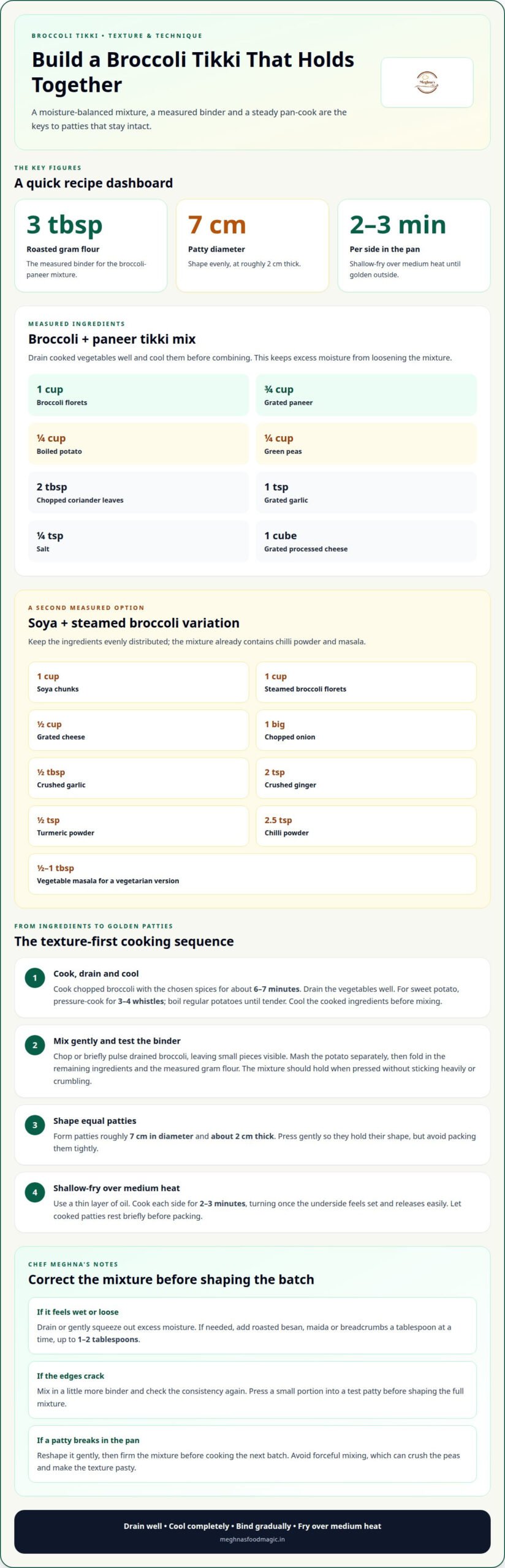
- Measure the broccoli-paneer ingredients: Use 1 cup broccoli florets, ¾ cup grated paneer, ¼ cup boiled potato and ¼ cup green peas. Add 2 tablespoons chopped coriander leaves, 1 teaspoon grated garlic, ¼ teaspoon salt and 1 cube grated processed cheese. Keep 3 tablespoons roasted gram flour ready as the binder.
- Prepare the soya variation: Measure 1 cup soya chunks and 1 cup steamed broccoli florets. Add ½ cup grated cheese, 1 big chopped onion, ½ tablespoon crushed garlic and 2 teaspoons crushed ginger. Include ½ teaspoon turmeric powder, 2.5 teaspoons chilli powder and ½-1 tablespoon vegetable masala for a vegetarian version.
- Season with care: The soya mixture already includes chilli powder and masala, so distribute them evenly rather than adding extra by guesswork. In the paneer mixture, coriander and garlic bring savoury depth. The measured salt seasons the vegetables and cheese without overpowering their flavour.
- Adjust the binder as needed: Begin with the measured roasted gram flour. If the combined ingredients still feel loose, add 1-2 tablespoons roasted besan, maida or breadcrumbs. Mix after each small addition and assess the texture. This helps the patties hold together while keeping the broccoli’s flavour distinct.
Recipe preparation and cooking time
To make broccoli tikki at home, cook the vegetables, cool the potatoes, mix, shape and pan-cook. Preparation and cooking times can vary depending on the recipe and method.
Spicing and Cooking the Broccoli
- Pressure-cook the sweet potato: Cook it for 3-4 whistles, then let it cool before mashing. For regular potatoes, boil until tender, drain and cool completely. Cooled potatoes stay firmer when mashed, helping the mixture hold together rather than turn sticky.
- Cook the broccoli with spices: Chop the florets finely, then cook them with the chosen spices for about 6-7 minutes. Stir so the seasoning coats the pieces evenly. Avoid leaving excess moisture in the pan, since wet broccoli can make the mixture difficult to shape.
- Cool the cooked ingredients: Set the broccoli and potatoes aside until they’re no longer hot. Warm ingredients can soften the binder and make the mixture feel loose. Use this pause to prepare the remaining ingredients and organise the next steps.
Shaping and Pan-Cooking the Tikkis
- Shape evenly: Divide the cooled mixture and form patties roughly 7 cm in diameter and about 2 cm thick. Press each one gently so it holds together, but don’t pack it tightly. Even patties cook more consistently, with a warmed centre and a lightly browned outside.
- Heat the pan: Add a thin layer of oil and set the pan over medium heat. Place the patties with space between them, then cook each side for 2-3 minutes. Medium heat gives the outside time to turn golden without scorching before the centre warms through.
- Turn with care: Flip once the underside feels set and releases easily. If a patty breaks, reshape it gently and firm the mixture before cooking the next batch. Let cooked patties rest briefly before packing, so their surfaces stay intact and the lunch box is easier to assemble.
Preparing the tikki mixture
- Drain the cooked vegetables: Transfer cooked broccoli and peas to a sieve, then let moisture escape. Press gently with the back of a spoon; excess water can make the mixture slack and harder to shape. Keep the vegetables tender, not waterlogged, so they blend smoothly without turning mushy.
- Break down the broccoli: Chop the drained florets finely or pulse them briefly. Stop while small pieces remain visible. A coarse texture gives each tikki a little bite, while large chunks can make the patties split when pressed or turned.
- Mash the potato separately: Use a fork or masher until no large lumps remain. Mix the potato into the broccoli gradually, rather than adding it all at once. This lets you judge how much is needed to bring the vegetables together without making the mixture heavy.
- Fold in the remaining ingredients: Add the paneer, peas, coriander, garlic, cheese and measured seasoning. Stir until the ingredients are distributed evenly. Gentle mixing matters: forceful mashing can crush the peas and leave the mixture pasty instead of pleasantly textured.
- Add the binder in stages: Mix in the roasted gram flour, then pause to assess the consistency. The mixture should hold when pressed between your fingers, without sticking heavily or crumbling apart. If it remains loose, add roasted besan, maida or breadcrumbs 1 tablespoon at a time, up to 1-2 tablespoons as needed.
- Check before shaping: Press a small portion into a compact patty. If its edges crack, mix in a little more binder; if it feels wet, drain or squeeze out excess moisture instead. This simple test helps correct the mixture before shaping the full batch, and is the key to patties that stay intact in the pan.
Shaping and shallow-frying tikkis
- Check the mixture before shaping: Scoop a small portion and press it gently between your palms. It should hold together without feeling wet or leaving a heavy coating on your hands. If moisture appears, squeeze the mixture gently through a clean cloth, then check its texture again. Avoid pressing so hard that the vegetables become pasty.
- Portion and shape evenly: Divide the mixture into equal portions for consistent cooking. Shape each patty to roughly 7 cm in diameter and about 2 cm thick. Smooth any deep cracks around the edges with your fingers. Even thickness helps the centre warm through while the outside browns, rather than leaving a thick middle beside fragile edges.
- Heat the pan over medium heat: Add a little oil and let it warm before placing the patties inside. Medium heat is important; high heat can darken the surface before the centre cooks. Leave space between tikkis, so you can turn each one without scraping or breaking its edges.
- Shallow-fry without rushing: Cook each side for 2-3 minutes, then turn when the underside is golden and set. Slide a flat spatula underneath, supporting the patty before flipping. If it sticks, give it more time instead of forcing it loose. A firm crust makes turning easier.
- Drain and store thoughtfully: Transfer cooked tikkis to a plate after frying. For advance preparation, place uncooked patties in an airtight container and refrigerate for up to 2 days. Separate layers to help prevent sticking. You can air-fry the uncooked patties instead of shallow-frying them, following your appliance’s cooking guidance.
Serving broccoli tikkis in lunch boxes
Serve the cooked patties with chutney and fresh sides for a satisfying lunch box. Let them cool slightly before packing to help preserve their texture.
Pairing Tikkis with Chutney
- Add chutney as a separate dip: Pair the savoury patties with mint or coriander chutney for a fresh, herbaceous contrast. Keep the chutney in a small sealed container instead of spooning it over the tikkis. This helps the browned surfaces stay firmer, while a pinch of roasted cumin powder can bring extra warmth to the dip.
Sharing Serving Suggestions
- Build a varied lunch box: Place the tikkis beside sliced cucumber, carrot sticks or a small portion of salad. For a more filling combination, add them to a whole-wheat wrap with lettuce and chutney. Keep juicy vegetables separate, so their moisture doesn’t soften the tikki before lunchtime.
Storing and Reheating the Tikkis
- Pack cooked leftovers carefully: Let the tikkis cool, then place them in a covered container in the refrigerator. To reheat, warm them in a pan over medium heat, turning once so both sides heat evenly. For a lunch box, pack them separately from chutney and moist salad. This answers how to store and reheat them without trapping steam against their crisp surfaces.
Reviewing Nutrition per Serving
- Use the listed serving figures as a guide: The recipe lists 58 kcal, 3 g protein and 1 g fibre per serving. These values describe the stated recipe serving, not every variation. Adding paneer, cheese, extra oil or a different binder changes the ingredients, so the figures may not match those adjustments. Consider the chutney and sides separately when planning the complete lunch box.
More Lunch-Box Tikki Recipes
Keep lunch interesting with these measured variations. Shape each batch into small patties and cook them through. Pack the chutney separately.
Soya and Broccoli Tikkis
Ingredients: 1 cup soya chunks, 1 cup steamed broccoli florets, ½ cup grated cheese, 1 big chopped onion, ½ tablespoon crushed garlic, 2 teaspoons crushed ginger, ½ teaspoon turmeric powder, 2.5 teaspoons chilli powder and ½-1 tablespoon vegetable masala.
- Cook the soya: Simmer the chunks in 2.5 cups water for 10 minutes or until tender. Drain, cool, then squeeze out extra water before chopping finely.
- Mix and shape: Combine the soya with broccoli, cheese, onion, garlic, ginger and spices. Mix evenly, then shape into compact patties. If the mixture feels loose, add a little roasted besan or breadcrumbs until it holds.
- Cook for the lunch box: Warm 1-2 tablespoons ghee in a pan. Shallow-fry the patties over medium heat until browned on both sides and cooked through.
Paneer, Pea and Broccoli Tikkis
Ingredients: 1 cup broccoli florets, ¾ cup grated paneer, ¼ cup green peas, ¼ cup boiled potato, 2 tablespoons coriander leaves, 1 teaspoon grated garlic, 1 cube grated processed cheese, 3 tablespoons roasted gram flour and ¼ teaspoon salt.
- Prepare the vegetables: Cook and drain the broccoli and peas, then cool them. Mash the potato separately, so it combines evenly without making the mixture gluey.
- Combine and fry: Mix the vegetables with paneer, coriander, garlic, cheese, salt and roasted gram flour. Shape into patties, then pan-cook with 1 tablespoon oil over medium heat, turning until both sides are golden. Cool before packing, and keep chutney in a sealed side container.
Chef Meghna’s Notes
A good tikki mixture should feel cohesive, not wet or paste-like. These adjustments can help maintain its texture and make the patties easier to pack for lunch.
- For a paneer-free variation: Leave out the paneer and cheese, then assess the mixture before adding binder. The dairy ingredients contribute softness and help hold the vegetables together, so add roasted besan or breadcrumbs gradually until a test patty keeps its shape.
- If the mixture feels loose: First drain or squeeze excess moisture from the cooked broccoli. Then add roasted besan, maida or breadcrumbs in small additions. Adding too much at once can make the centre dense, so mix well and test a small patty before shaping the batch.
- If patties crack: Press the edges together with damp fingers and check whether the potato is evenly mashed. Large potato lumps or coarse broccoli pieces can weaken the shape. Chop the broccoli finely and fold the mixture gently, rather than mashing everything into a smooth paste.
- For an even golden crust: Keep the pan at medium heat and turn each patty only after its base has set. A thin film of oil helps the surface brown; high heat can colour the outside before the middle warms through.
- For lunch-box texture: Let cooked tikkis cool before placing them in a container. Pack chutney separately, and keep cucumber or other moist sides apart. This limits trapped steam and helps the browned surfaces stay pleasant until serving.
Small adjustments make the recipe easier to tailor. Change one ingredient or texture at a time, then shape a test patty before cooking the full batch.
Meghna’s Food Magic
Meghna’s Food Magic helps home cooks find practical ideas for everyday meals, including vegetable-led tikkis and satisfying lunch-box options. After making these patties, explore the free digital recipe database for more dishes to adapt to the ingredients you enjoy. Here is my Broccoli Tikki and Smokey Tomato Chutney Recipe video –
For meal ideas featuring protein-rich ingredients, browse High Protein Recipes and Vegetarian High Protein Recipes. These collections offer inspiration for using ingredients such as paneer, pulses or soya in home cooking. Choose according to the flavour and texture you want, and control moisture carefully to help your patties hold together.
If your focus is lighter everyday cooking, explore the weight loss and fitness recipes. These ideas bring variety to meals while keeping flavour central. Ingredients and cooking methods shape the finished dish, so choose recipes that suit your preferences and routine.
Explore these recipe collections for inspiration beyond one tikki, whether you’re planning lunch, trying plant-based proteins or cooking with grains. They bring together practical ideas for enjoyable home cooking.
For questions about the recipes, contact Meghna’s Food Magic.
Make Your Next Lunch-Box Favourite
Let this recipe find its place in your kitchen routine. Try a different chutney, adjust the seasoning to suit your family, or shape the mixture into smaller patties for easier packing. Each choice adds a little variety while keeping the same satisfying, savoury idea at its heart.
A Broccoli Tikki can inspire you to bring more vegetables into familiar snacks. Notice which textures work best for your lunch box, and remember the combinations you’d happily make again. That’s a simple way to make one recipe a flexible part of your cooking routine, without treating healthy eating as a set of strict rules.
For more practical inspiration from Meghna’s Food Magic, explore its cooking videos and find ideas to try in your kitchen.
Enjoy the process, trust your taste, and make your next homemade snack as colourful and comforting as you like.
Frequently Asked Questions
What is this vegetable tikki?
A Broccoli Tikki is an Indian-style savoury patty featuring broccoli, often combined with paneer, peas, potato, herbs and spices. Shape the mixture into patties and cook them in a pan rather than deep-frying. Serve them as a snack or pack them for lunch. Their flavour is more vegetable-forward than aloo tikki, where potato usually takes centre stage.
Which ingredients and quantities does the recipe use?
For the paneer version, measure 1 cup broccoli florets, ¾ cup grated paneer, ¼ cup boiled potato, ¼ cup green peas, 2 tablespoons coriander leaves, 1 teaspoon grated garlic, 1 cube grated processed cheese, 3 tablespoons roasted gram flour and ¼ teaspoon salt. Add the binder gradually. This lets you adjust for moisture without making the mixture too dense.
How should broccoli be prepared for patties?
Separate the broccoli into florets, wash them, then cook until tender while keeping them intact. Drain thoroughly and let them cool before chopping. Finely chopped florets distribute more evenly than large pieces, which can affect the patties’ shape. Avoid blending the broccoli into a smooth purée: small pieces give the cooked patties a more defined texture.
How can I get a crisp surface without deep-frying?
Lightly oil a pan and cook the patties over medium heat, letting each side set before turning. For a crisp crust, make sure the mixture isn’t overly wet and drain the cooked vegetables well. You can also air-fry the shaped patties, leaving space between them. Follow your appliance’s instructions for temperature and cooking time.
How much cooking time should I allow?
Allow 15 minutes for preparation and 10 minutes for cooking. The preparation estimate covers assembling and mixing the ingredients; the cooking estimate covers pan-cooking the patties. If potatoes or sweet potatoes need cooking first, prepare them in advance. Cooling them before mixing helps the ingredients combine evenly and makes it easier to judge the mixture’s texture.
Which chutneys and sauces go well with these patties?
Mint or coriander chutney adds a fresh, herbal contrast to the savoury flavour. A mild yoghurt dip can balance a spicier mixture, while tomato-based sauce gives a tangier pairing. For lunch, pack the dip in a separate sealed container to keep moisture away from the patties and let everyone add as much as they like.
What nutrition and calorie information is listed?
The listed nutrition per serving is 58 kcal, 3 g protein and 1 g fibre. These figures relate to the recipe and serving described, so ingredient changes can alter the result. For example, adding more cheese or using a different binder changes the mixture. Keep portions consistent when comparing batches, and count chutney or other lunch-box sides separately.
Disclaimer
This is a recipe food blog page and not nutrition or doctor and hence do not claim to cure any illness. If you have specific health issues please consult a qualified doctor or certified nutritionist.
I do consult experts, research Internet and at times seek help from Gemini to collect relevant information to put together some of these blogs.

