
Healthy & Creamy Broccoli Soup Recipe for Weight Loss
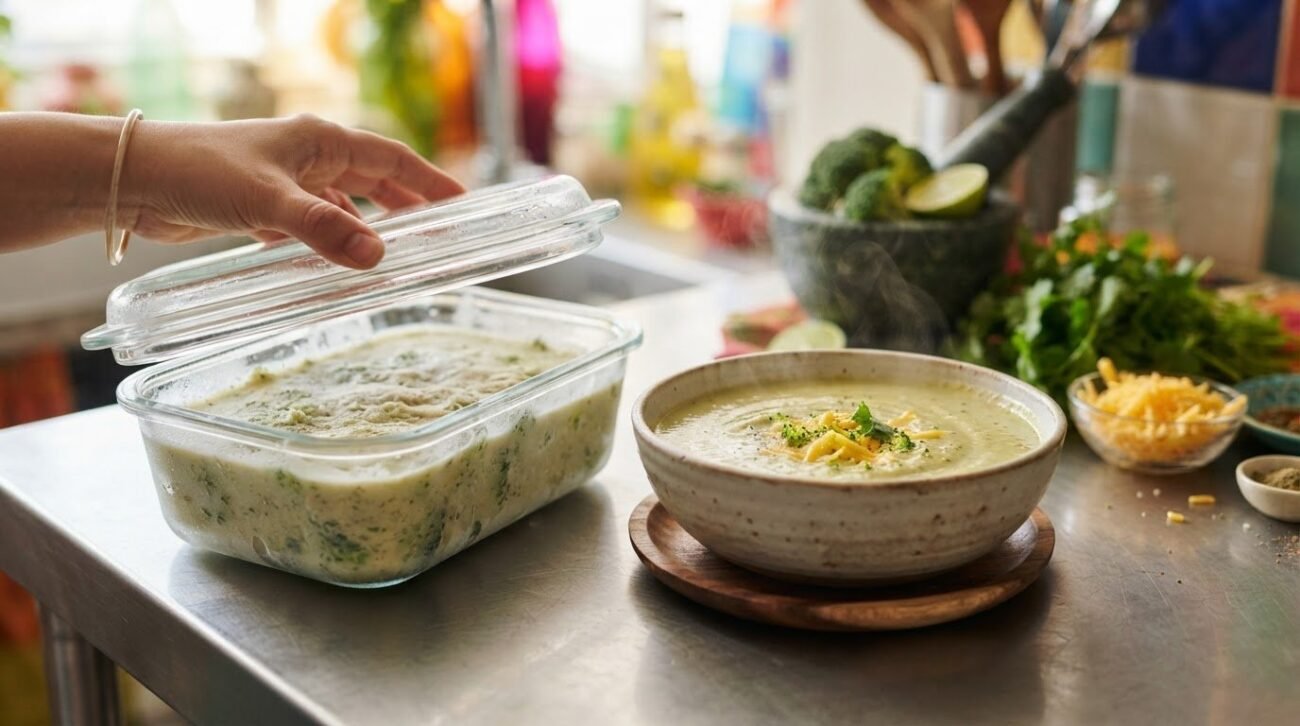
A creamy soup can be a make-ahead meal, not just dinner for tonight. Broccoli soup can be frozen in portions for up to three months and reheated when you’re ready to eat.
It makes sense to want a smooth, comforting bowl without leftovers that lose their appeal. The key is in the details: blend the broccoli soup while the vegetables are tender, freeze it carefully, and reheat it gently. For a richer twist, broccoli cheddar soup pairs tender vegetables with melted cheese.
Here, you’ll find practical steps for blending broccoli soup until silky, serving it with simple finishing touches, and storing and reheating leftovers. You’ll also find a broccoli cheddar recipe and tips for keeping each bowl delicious from the first serving to the last.
Key Takeaways
- Freeze soup in portions for up to three months, and reheat it gently to help preserve its creamy texture.
- Blend cooked vegetables carefully, adjusting the liquid gradually to create a smooth, spoonable consistency.
- Explore serving ideas that add freshness, crunch, or a savoury finish to each bowl.
- Make broccoli cheddar soup, plus two variations, with measured ingredients and clear cooking steps.
- Use Chef Meghna’s practical tips to troubleshoot texture and adapt ingredients to suit your kitchen.
Can You Freeze Cream of Broccoli Soup?
Yes. Cream of broccoli soup can be frozen for up to two to three months, though dairy may separate slightly after thawing. For a healthy broccoli soup without cream, simmer broccoli with potato and stock, then blend. Potato gives the soup body. For a vegan version, use vegetable stock and plant milk, and replace butter with oil. Leave out cheddar or use a dairy-free alternative.
- Choose a simple base. Combine 400 grams of broccoli, 1 large potato, and 1.2 litres of chicken or vegetable stock. Potato creates a creamy texture without cream. Cut it into evenly sized pieces so it cooks consistently.
- Gather ingredients for cheddar soup. Measure 5 tablespoons of butter, 1 onion, 1 celery stalk, 3 tablespoons of all-purpose flour, 3 cups of chicken broth, 8 cups of broccoli florets, 2 cups of milk, and 8 ounces of shredded cheddar. Together, they make a richer, cheese-forward version.
- Cook the vegetables first. Simmer the potato in stock for 10 minutes before adding broccoli. Cook until both vegetables soften, then blend. For the cheddar variation, stir in cheese after blending so it melts into the soup.
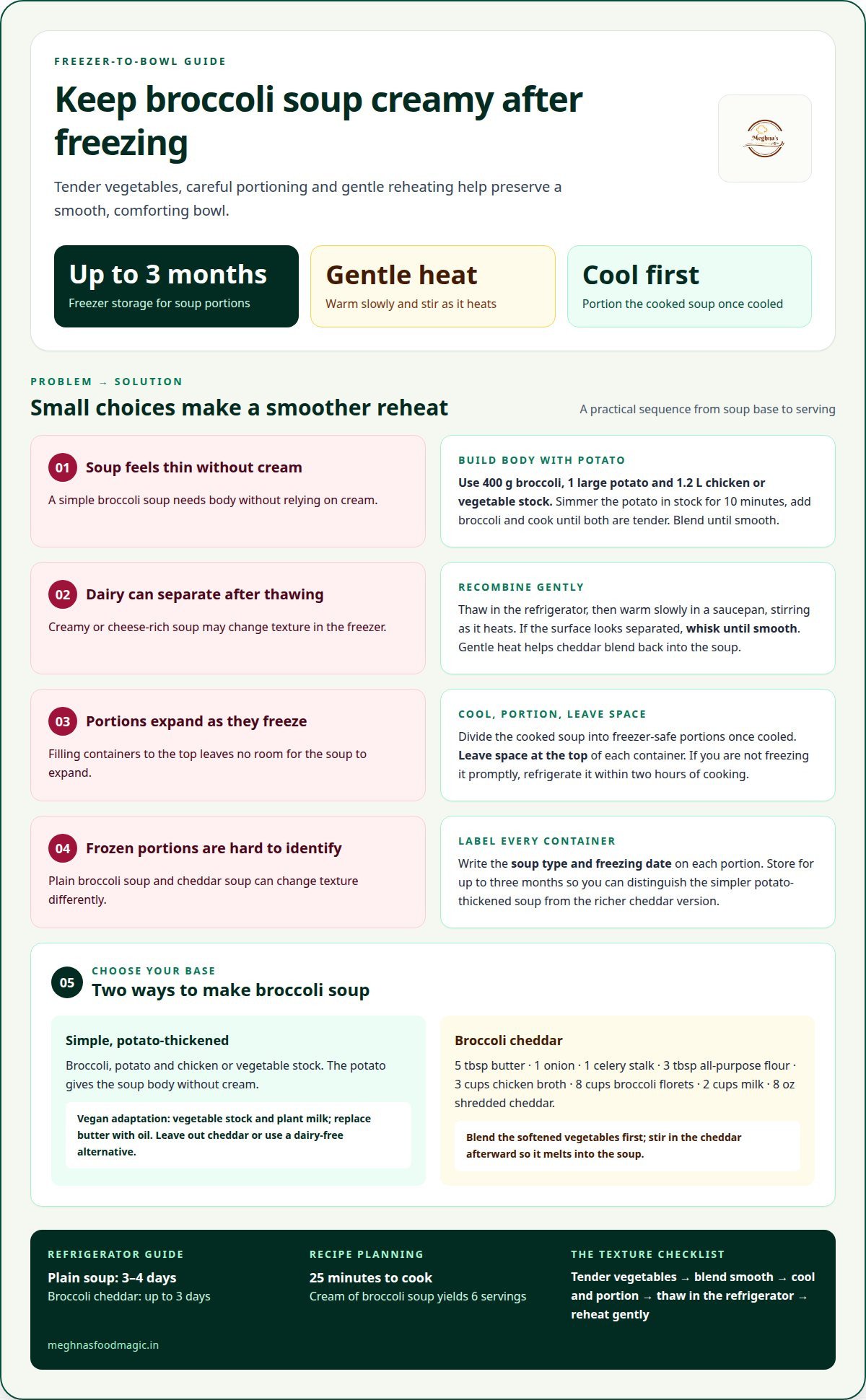
- Cool and portion. Divide the cooked soup into freezer-safe portions once cooled. Leave space at the top because liquid expands as it freezes. If you’re not freezing it promptly, refrigerate it within two hours of cooking.
- Label each container. Write the recipe type and freezing date on each portion. Store for up to three months. Plain broccoli soup and cheddar soup can change texture differently, so label them clearly for easy meal planning.
- Thaw and reheat gently. Thaw a portion in the refrigerator, then warm it slowly in a saucepan. Stir as it heats. If the surface looks separated, whisk the soup until smooth. Gentle heat helps cheddar blend back into the base.
Refrigerate leftovers for three to four days in an airtight container. Broccoli cheddar soup leftovers keep for up to 3 days. The simpler version gets its velvety texture from potato, while milk, butter, and cheese bring richness to the cheddar variation.
The recipe takes 25 minutes to cook, making it a relatively quick option when you want homemade soup without a long cooking process.
Serving suggestions
- Finish each bowl with texture. Ladle the smooth soup into warm bowls, then add freshly cracked black pepper or chopped herbs. For a richer finish, stir 175 grams of crumbled blue cheese into the blended soup until melted. Add it gradually, tasting as you go, so its bold, salty flavour complements the broccoli rather than overpowering it.
- Pair the soup with a crisp side. Serve it with whole-grain toast, a small salad, or a cheese toastie for contrasting crunch. To make toasties, use 175 grams of grated cheese and 7 slices of bread. Bake at 200°C, or 180°C for a fan oven, for 10 minutes, turning halfway through.
- Add a fresh Indian-inspired garnish. Scatter chopped coriander over each bowl, or add a little finely sliced spring onion for a lively finish. A squeeze of lemon can brighten the broccoli’s earthy flavour. Keep strong garnishes light, especially when serving the soup with blue cheese or a cheese toastie.
- Use the nutrition figures as a serving guide. Each serving contains 207 calories, 12 grams of fat, 17 grams of carbohydrates, 9 grams of protein, and 4 grams of dietary fibre. Pair the bowl with a side that suits your appetite, and remember that additions such as toast or extra cheese change the meal’s overall nutrition.
- Serve toppings separately for a shared meal. Set out coriander, black pepper, cheese, and lemon wedges in small bowls. Each person can customise their soup without changing the main pot. This also keeps garnishes crisp and lets the broccoli flavour remain clear in servings without cheese.
The cream of broccoli soup recipe yields 6 servings. That makes it easy to plan a shared meal: place the bowls and finishing ingredients within reach, then let guests choose how much garnish suits them. Keep the soup itself simply seasoned so its flavour works with different additions. A spoonful of cheese can make a bowl feel more substantial, while herbs or lemon offer a fresher contrast. If serving several toppings, arrange them separately rather than mixing everything together before the soup reaches the table.
For a relaxed presentation, bring the warm soup to the table in a serving dish and let everyone ladle their own portion. Offer toast or salad on the side rather than adding them directly to the bowls, so the soup stays smooth and diners can balance their meal as they like. Start with a small amount of each garnish; guests can add more after tasting. This also makes it easy to serve a plainer bowl while keeping optional flavours available for those who enjoy them.
Blending soup until smooth
Blend the soup after the potato and broccoli have softened in stock. Tenderness matters: firm pieces can leave a grainy finish, while blending gradually lets you control the thickness.
- Check the vegetables first. Test a potato piece and broccoli floret with a fork. Both should yield easily before blending. The recipe uses 400 grams of broccoli and 1 large potato, simmered in stock.
- Choose your blending tool. An immersion blender works directly in the cooking pot. A countertop blender can create an even, silky texture, but transfer the hot mixture carefully and work in manageable batches.
- Keep the blender head submerged. With an immersion blender, place the blade beneath the soup’s surface before switching it on. Move slowly through the pot to catch broccoli florets and potato pieces without splashing.
- Blend from low speed upward. Start gently, then increase the speed as the vegetables break down. Pause to scrape ingredients from the sides of a countertop blender, then blend again until no visible chunks remain.
- Adjust the consistency gradually. If the purée feels too thick, stir in a little reserved cooking stock. The recipe begins with 1.2 litres of chicken or vegetable stock, so add liquid carefully rather than thinning the whole pot at once.
- Check for a uniform finish. Stir the soup and look for unblended pieces near the bottom or edges. Blend those areas again. For a rustic bowl, stop while some small broccoli flecks remain.
- Finish the texture after blending. Return countertop-blended soup to the pot and stir until even. For broccoli cheddar soup, blend the vegetables first, then stir in shredded cheddar until melted. This keeps the cheese from catching around the blender blade.
A smooth result comes from tender vegetables, steady blending, and careful control of the liquid. Taste after blending, when the stock and vegetables are evenly combined. Serve the soup as it is, or offer toppings separately for added contrast.
Freezing and reheating
- Choose portions before freezing. Divide broccoli soup into meal-sized servings instead of freezing one large batch. Smaller portions are easier to thaw and warm evenly. Plain soup can be frozen for up to three months.
- Cool the soup before packing. Transfer it into smaller containers as it cools, rather than leaving a full pot out. Refrigerate cooked soup within two hours if you aren’t freezing it promptly. Avoid placing a hot, full pot directly in the freezer.
- Use freezer-safe containers. Choose airtight containers or freezer bags, and leave space at the top for expansion. A single-serving container suits a quick lunch; a larger portion works when you’re serving several people.
- Label each container. Mark the soup type and freezing date. This helps distinguish a dairy-free batch from broccoli cheddar soup and makes it easier to use each portion within its recommended storage period.
- Thaw gradually. Move a portion to the refrigerator to thaw. If you’re warming it from frozen, use a saucepan over gentle heat and stir often as the edges soften. Avoid heating the outside too quickly while the centre remains frozen.
- Reheat slowly on the stovetop. Stir thawed soup as it warms, and avoid bringing it to a hard boil, especially when it contains milk or cheddar. If it seems too thick, add a little stock and stir until the consistency is even.
- Warm single portions in a microwave. Transfer soup to a microwave-safe bowl and cover loosely. Heat in short intervals, stirring between them so the centre and edges warm evenly. Continue until the portion is hot throughout.
- Refresh the texture. If thawed broccoli soup looks separated, whisk it while warming or briefly blend it again. For cheddar soup, stir over low heat so the cheese can blend back into the vegetable base.
- Use refrigerated leftovers promptly. Refrigerate cream of broccoli soup within two hours of cooking and use it within three to four days. Keep broccoli cheddar leftovers in an airtight container and use them within 3 days.
Freeze only the portions you expect to use. Reheating one serving at a time makes it easier to enjoy the soup without warming the whole batch repeatedly.
Broccoli Soup Recipes: Broccoli Cheddar and Two Variations
Blend cooked vegetables for a creamy base, then choose milk, cheddar, or plant milk. The simple soup cooks for 30 minutes; the cheddar version takes 35 minutes total.
Make Creamy Soup with Milk or Cream
Stir milk into the blended soup over low heat, or use cream for extra richness. Add it gradually and avoid a vigorous boil, which can affect the soup’s smooth texture. For cheddar soup, blend the vegetables first, then stir in shredded cheese until melted. Taste before adding salt, since cheddar already adds savoury flavour.
Check the Broccoli Soup Cooking Time
Use tenderness, not just the clock, to decide when vegetables are ready for blending. The simple recipe takes 15 minutes to prepare and 30 minutes to cook. The cheddar recipe takes 35 minutes from start to finish. Cut vegetables evenly so they soften together, then test a broccoli floret and potato with a fork.
- Classic potato-thickened soup: Combine 400 grams broccoli, 1 large potato, and 1.2 litres chicken or vegetable stock. Simmer the potato in stock for 10 minutes, then add broccoli. Cook until tender, blend smooth, and season to taste. Potato gives this version body without cream.
- Broccoli cheddar soup: Melt 4 tablespoons unsalted butter; cook 1 medium yellow onion and 3 garlic cloves. Stir in ¼ cup all-purpose flour, then gradually add 2 cups vegetable broth and 2 cups milk. Add 3 cups chopped broccoli, 1 large carrot, and ½ teaspoon Dijon mustard. Simmer until tender, blend, then stir in 8 ounces shredded cheddar until melted.
- Broccoli almond-milk variation: Soften 1 medium yellow onion and 3 garlic cloves in a saucepan, stirring regularly. Add 3 cups chopped broccoli, 2 cups vegetable broth, and 2 cups unsweetened almond milk. Simmer until the broccoli softens, then blend until creamy. Vegetable broth and plant milk make this version dairy-free.
Chef Meghna’s Notes
A polished soup depends on tender vegetables, controlled blending, and balanced seasoning. These small choices help you adjust the pot without masking broccoli’s fresh, earthy flavour.
- Use potato for body. In the simple recipe, 1 large potato thickens the soup without cream. Cut it into even pieces so they soften together. If the finished soup feels too thick, stir in reserved stock a little at a time.
- Keep the broccoli flavour bright. Add the 400 grams of broccoli after the potato has simmered in stock for 10 minutes. This sequence gives the potato a head start while helping the broccoli cook without losing its fresh character.
- Choose stock thoughtfully. The recipe uses 1.2 litres of chicken or vegetable stock. Vegetable stock keeps the bowl vegetarian. Taste the soup before adding salt, since stock can already contribute seasoning.
- Rescue a grainy texture. If small pieces remain after blending, return the soup to the pot and blend again. Check that the potato and broccoli are tender first. Firm vegetables resist blending and can leave an uneven finish.
- Adjust a thin soup. Simmer it gently without a lid, stirring often, until some liquid evaporates. Avoid adding flour directly to the finished soup, which can leave dry lumps. The potato already provides natural thickness.
- Keep cheddar smooth. Blend the vegetables before adding shredded cheddar. Stir the cheese into the warm soup gradually, rather than blending it at high speed. If the soup becomes too hot, remove the pot from the heat before adding cheese.
- Balance a strong cheese flavour. Add cheddar in small handfuls and taste between additions. A little black pepper can complement the cheese, while a squeeze of lemon can brighten the finished bowl.
- Make a dairy-free adjustment. Use vegetable stock and unsweetened almond milk instead of dairy. Add the milk after the vegetables soften, then blend until the texture is even.
For the best result, change one element at a time. Adjust the thickness with stock, then season, and finally add any finishing ingredients. You may watch my Broccoli Cheese Soup Recipe on YouTube –
Meghna’s Food Magic
Meghna’s Food Magic helps home cooks bring healthy, flavourful ideas into everyday meals. After preparing this soup, you may want fresh inspiration for other dishes that suit your tastes and routine. The Free Digital Recipe Database offers recipes across a range of ingredients and cooking styles, making it a practical next step when you’re ready to try something new.
If you’re looking for meals with more protein, explore High Protein Recipes and Vegetarian High Protein Recipes. These collections offer ideas for adding variety to home cooking. For weight-conscious meal inspiration, Weight Loss Fitness Recipes provide another direction to explore. Choose dishes that fit your preferences and everyday habits, rather than expecting one recipe to meet every nutrition goal.
Millets Recipes bring grains into the mix and can help add variety to your menus. If you want inspiration across millet dishes, browse Meghna’s millet recipe collection. Each recipe offers its own approach, so you can choose ingredients and textures that appeal to you. The aim is enjoyable, practical cooking, not a strict plan or a promise of a particular result.
Explore the collections when planning meals around vegetables, protein, grains, or fitness-conscious choices. Choose recipes that suit your kitchen and preferences, while making room for flavour and variety. A few dependable ideas can make everyday cooking feel more creative and satisfying.
If you have a question or want to get in touch, contact Meghna’s Food Magic.
Frequently Asked Questions
What is broccoli soup and what are its main ingredients?
Broccoli soup is a blended vegetable soup, usually made with broccoli and stock. A simple version uses 400 grams of broccoli, 1 large potato, and 1.2 litres of chicken or vegetable stock. The potato lends body without cream. For a richer variation, milk and cheddar add a creamy, savoury finish. Onion, garlic, and carrot also feature in the cheddar recipe, giving its base extra depth.
How do you make easy broccoli soup at home?
For a straightforward homemade soup, simmer 1 large potato in 1.2 litres of stock for 10 minutes, then add 400 grams of broccoli. Cook until both vegetables are tender, then blend until smooth. Cut the potato into similarly sized pieces so it softens evenly. Taste the finished soup before adding salt, since the stock may already season it. Add chopped herbs at the table for a fresh finish.
What are the calories and nutrition in a serving of broccoli soup?
A serving contains 207 calories, 12 grams of fat, 17 grams of carbohydrates, 9 grams of protein, and 4 grams of dietary fibre. These figures describe the recipe serving, not a bowl with extra cheese, toast, or other additions. For a meal that includes a side, consider how toppings change the overall portion. The nutritional values of a different recipe or ingredient substitution will also differ.
What can you serve with broccoli soup?
Serve a bowl with a crisp salad, toast, or a cheese toastie for a contrast in texture. A fresh garnish, such as chopped coriander, spring onion, or a squeeze of lemon, can brighten the soup’s earthy flavour. For a flexible family meal, place toppings in small bowls so everyone can choose their preferred finish. If serving the soup as a main meal, choose one substantial side.
How should you store and reheat broccoli soup safely?
Refrigerate cooked soup within two hours, and keep it in an airtight container for three to four days. Broccoli cheddar leftovers keep for up to 3 days in the refrigerator. Freeze portions for up to three months. Thaw in the refrigerator, then warm gently in a saucepan, stirring as it heats. If the texture separates, whisk the soup or briefly blend it again before serving.
What are the best broccoli soup recipes available in India?
Try three styles: a potato-thickened version with broccoli and stock, a cheddar soup with milk and cheese, or a dairy-free variation with unsweetened almond milk and vegetable broth. Each offers a different texture and flavour, so the best choice depends on your meal. For a lighter-tasting bowl, choose the potato base; for a richer finish, make the cheddar version and serve it with a fresh salad.
Disclaimer
This is a recipe food blog page and not nutrition or doctor and hence do not claim to cure any illness. If you have specific health issues please consult a qualified doctor or certified nutritionist.
I do consult experts, research Internet and at times seek help from Gemini to collect relevant information to put together some of these blogs.

