
Viral Kitchen Hacks That Actually Save Cooking Time
A small kitchen shortcut can turn a fiddly step into a smooth start. The best viral kitchen hacks aren’t magic; they make everyday cooking easier with ingredients and tools you already have. Think of scraping ginger clean with a spoon, blooming spices in oil for fuller flavour, or softening butter with a little more care.
It’s natural to be curious about a trick you’ve seen online, but not every shortcut suits every dish. This guide focuses on practical ideas for Indian home cooking and explains why each method works, so you can use it confidently. Find simple ways to prep ingredients, season food, make baking easier, and clean cast iron with less fuss. Try the ideas that fit your routine, keep the ones that genuinely help, and let cooking feel lighter from the first chop to the final clean-up.
Key Takeaways
- Find out how chilling cling film and using a simple stick-and-band setup can make everyday prep less fiddly.
- Learn why blooming spices in oil helps build flavour, plus practical ways to handle common seasoning and cooking tasks.
- See how grating cold butter can make it easier to work into baking mixtures.
- Explore a gentle salt-based approach to lifting residue from cast iron, with care to protect the pan’s seasoning.
- Get three measured vegetarian recipes to try, along with Chef Meghna’s substitutions and troubleshooting tips.
1. Chilling cling film to make it easier to unwrap
Among viral kitchen hacks, chilling cling film is a simple fix for a frustrating roll. Place the roll in the refrigerator before using it. Cooler film may feel less clingy and easier to handle as you pull it from the box. This can help when covering a bowl of chopped vegetables or wrapping leftover dough. Keep the serrated cutter steady and tear only the length you need.
The refrigerator trick is a practical suggestion, not a claim based on controlled tests. Its usefulness depends on the film and dispenser you have. If the edge still sticks, press a small piece of tape onto the film’s end. Leave the tab visible before putting the roll away.
Try the method in sequence: chill the roll, find its loose edge, then slowly pull film across the container. Smooth the centre first, then press around the rim. For a steel bowl, make sure the surface is dry so the film can grip evenly. If the sheet wrinkles, lift a corner and reposition it instead of stretching harder.
Airtight containers are useful for cut vegetables, while cling film can cover a bowl without a matching lid. Lettuce and spinach can stay crisp in an airtight container lined with a paper or cloth towel to absorb excess moisture. Store potatoes in a cool, dark place to help reduce sprouting. Cling film covers food, but it doesn’t replace suitable storage.
Keep food and appliance safety in mind: follow the cling film package instructions, especially before using it with heat. Don’t assume every roll is microwave-safe. Keep film away from a hot pan or flame. Pulling too much at once is a common mistake: excess film tangles, tears, and wastes time. Chill the roll, use a clean container, and cover only what you’ll store.
2. Chopping small ingredients with an ice cream stick and rubber band
Chillies and baby potatoes can be awkward to handle because they roll or shift. This simple hack uses an ice cream stick and a rubber band as small kitchen aids. In India, the cost depends on whether you already have these items. No special ingredient is needed, and there’s no single rupee amount that applies to every kitchen.
Start with a clean, dry cutting board and a sharp knife. Rinse the chillies or baby potatoes, then dry them well so they don’t slide. Use the ice cream stick as a guide to gather or position the small ingredients on the board. The rubber band can keep the stick paired with the other tool between uses.
Work slowly, cutting one ingredient at a time. For a chilli, trim the stem before slicing; for a baby potato, halve it first if its shape makes it unstable. Keep your fingertips away from the blade, and don’t cut through the stick or rubber band. If either moves, stop and use a stable board instead.
The useful idea is control, not speed at any cost. A makeshift guide may help keep small pieces together, but it shouldn’t replace a firm grip or proper cutting technique. This matters especially with rounded baby potatoes, which can roll beneath a knife. Cut a flat side first, then place that side against the board.
Wash the stick after handling raw vegetables, and discard it if it splinters. Keep the rubber band away from the knife’s path and food once it’s dirty or damaged. Test the arrangement with one chilli before preparing a larger batch. If the guide feels awkward, skip it; a stable board and careful cuts are the safer choice.
3. Cooking and seasoning
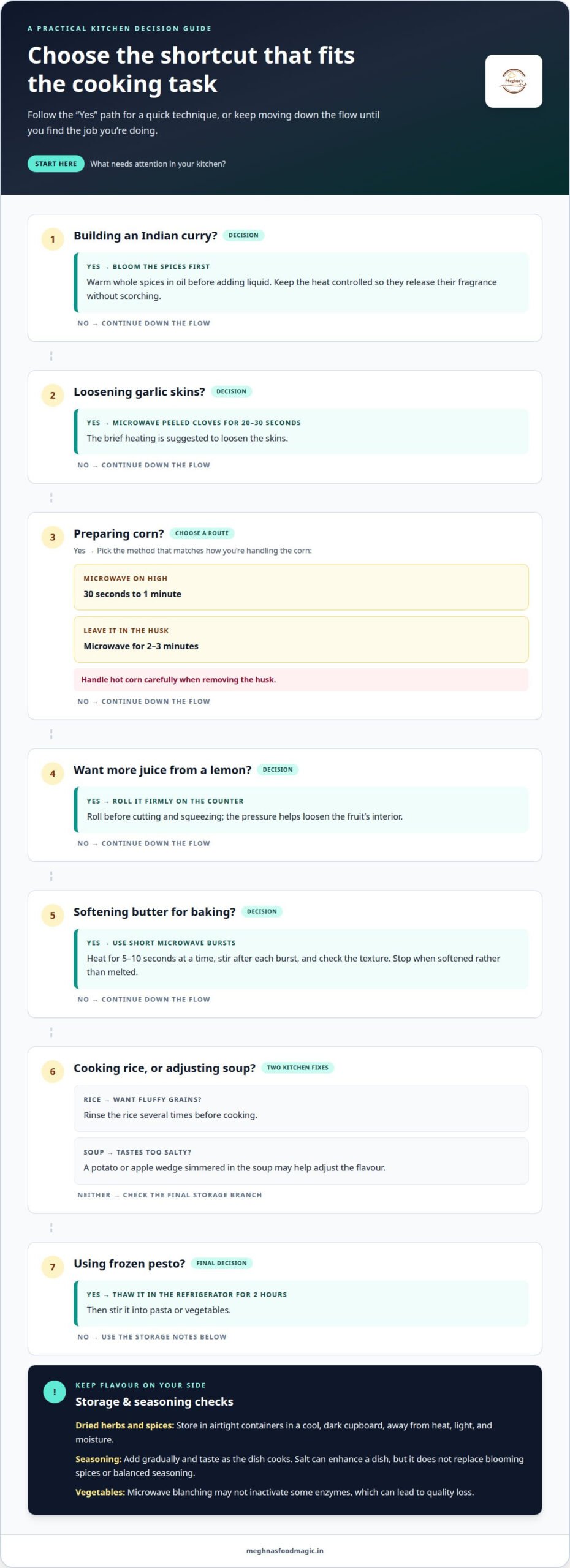
Small technique changes can bring out flavour without adding extra cooking steps. For garlic, microwave peeled cloves for 20-30 seconds to loosen their skins. For corn, microwave it on high heat for 30 seconds to a minute, or leave it in its husk for 2-3 minutes. Handle the hot corn carefully as you remove the husk.
For brighter citrus flavour, roll a lemon firmly on the counter before cutting and squeezing. The pressure helps loosen the fruit’s interior, making it easier to extract juice. To soften butter in a microwave, heat it briefly and check its texture as you go. Short bursts make it easier to stop before the butter melts.
Build the aroma of an Indian curry by blooming whole spices in oil before adding liquid. Keep the heat controlled so the spices release their fragrance without scorching. Store dried herbs and spices in airtight containers in a cool, dark cupboard, away from heat, light, and moisture. That helps preserve their flavour between uses.
Rinse rice several times before cooking if you want the grains to stay fluffy. If soup tastes too salty, adding a potato or apple wedge and simmering it may help adjust the flavour. Frozen pesto cubes can be thawed in the refrigerator for 2 hours, ready to stir into pasta or vegetables.
Some shortcuts need care. The National Center for Home Food Preservation notes that microwave blanching may not inactivate some enzymes, which can lead to quality loss in vegetables. For fuller flavour, add seasonings gradually and taste as the dish cooks. A pinch of salt can enhance a dish, but it won’t replace properly blooming spices or balanced seasoning.
Some kitchen habits are most useful when matched to a specific task. Blooming spices in oil before adding liquid is an Indian cooking technique suggested for releasing their flavours; keeping that order in mind can help make the seasoning step purposeful. Rinsing rice multiple times before cooking is suggested as a way to help keep it fluffy. These are straightforward preparations to consider before cooking gets underway. For butter that needs softening, microwave it in 5- to 10-second bursts, stirring after each burst, and check its texture as you go. The short intervals give you opportunities to stop when it has softened enough, rather than continuing to heat it without checking.
Sticky ingredients can be easier to measure and pour if the measuring cup has a thin coating of oil or nonstick cooking spray. This can help honey leave less residue behind, making it easier to transfer the measured amount. For water in a pot, the page suggests adding a pinch of salt to boiling water to enhance the heating process. It also suggests placing a wooden spoon over a pot to prevent it from spilling over. Keep these simple options in mind while preparing a meal: one helps handle a sticky ingredient, while the others relate to a pot on the stove. Choose the step that fits the task rather than adding unnecessary steps.
4. Grating cold butter for baking
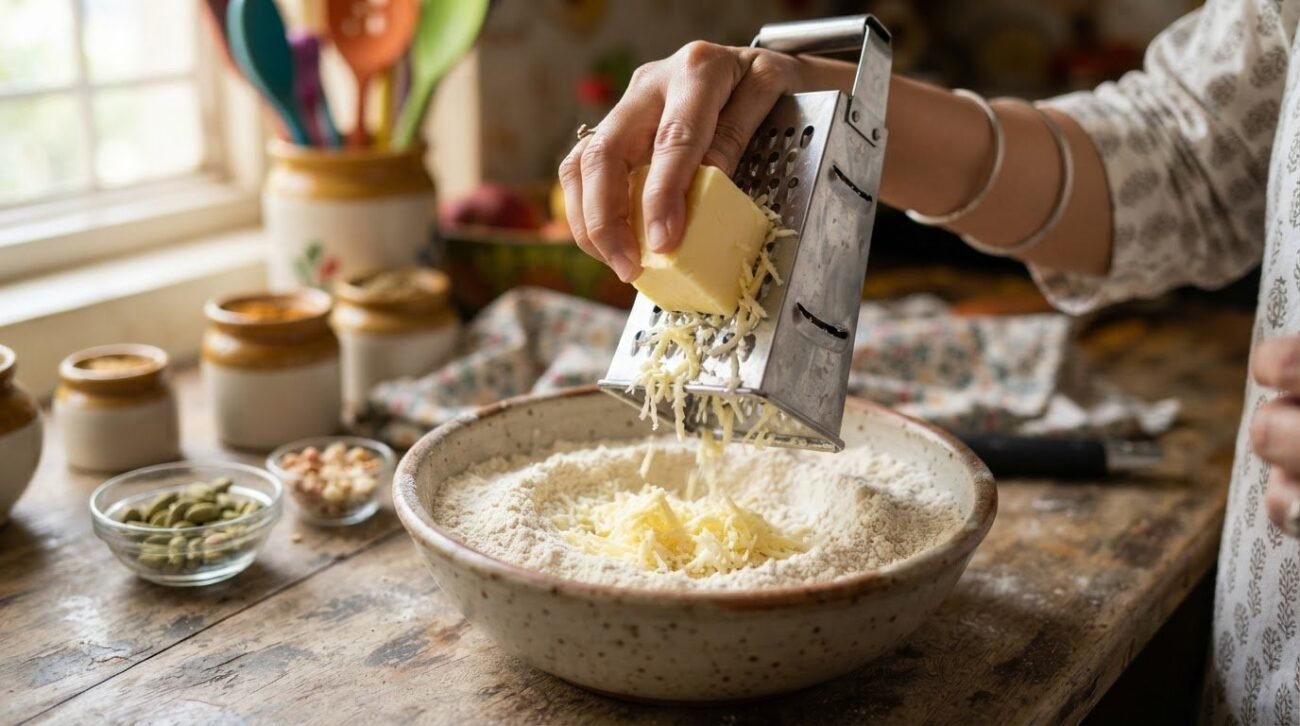
Cold butter is easier to grate than softened butter, which can smear across the grater. Use this shortcut when a recipe calls for butter worked into flour, such as pastry, scones, or a crumble topping. Small shreds spread through dry ingredients more readily than a firm block. This makes mixing easier while keeping the butter cool.
Take the butter straight from the refrigerator and unwrap one end. Hold the wrapped end to keep your fingers away from the grater’s sharp surface. Grate over a wide bowl using the large holes, then tap the shreds into the flour. If the butter softens while you work, pause and chill it again before continuing.
For a simple pastry mixture, measure the butter your recipe requires before grating. Add the shreds to the flour and salt, then toss lightly with a fork. Add cold water gradually, mixing only until the dough begins to hold together. Overworking can warm the butter and make the mixture greasy instead of crumbly.
This method is especially useful when a recipe needs butter distributed quickly. If you have time, cutting butter into cubes and leaving it on the counter for about 20 minutes can soften it. For microwave softening, heat in 5- to 10-second bursts, stirring after each burst. Grating is the better fit when the recipe needs cold pieces, not softened butter.
Keep the grater stable on a board or over a bowl, and stop before your fingers reach the teeth. If shreds cling to the grater, use a spatula to release them instead of scraping with your hand. Rinse the grater soon after use, before butter residue firms up. Then follow the recipe’s mixing cues, such as a coarse, uneven crumb, rather than blending until smooth.
5. Cleaning cast iron with salt
Coarse salt can help scrub stuck-on crumbs from a cast-iron pan. Its grains provide friction to loosen residue without a heavy soak. Use this method after cooking foods such as vegetables or toasted flatbread. Let the pan cool until it’s safe to handle, then remove loose crumbs with a spatula.
Sprinkle a layer of coarse salt over the residue. Use a folded kitchen towel or a clean, dry cloth to rub the salt across the pan. Work gently around browned patches, lifting the salt and crumbs as they loosen. Avoid scrubbing aggressively, especially if the pan has a delicate, uneven surface.
For stubborn bits, add a little warm water and keep rubbing with the cloth. Don’t leave the pan soaking in the sink. Once clean, rinse away the salt and food particles, then dry the pan thoroughly with a towel. Remaining moisture can encourage rust, so check the handle and edges too.
Finish by briefly warming the dry pan over low heat, then wipe on a very thin layer of cooking oil. This leaves the surface ready for its next use. Use only a little oil; excess can turn sticky during storage. If food residue remains, repeat the gentle salt scrub instead of scraping with a sharp knife.
Salt is a useful cleanup aid, not a solution for every cast-iron problem. Skip it if the pan has deep rust or damaged seasoning; those issues need separate care. Don’t handle a hot pan with a bare hand, and keep the cleaning cloth clear of the stove flame. After frying snacks or sautéing vegetables, this routine helps remove crumbs while keeping the pan dry and ready to cook.
Keep these kitchen suggestions separate from cleaning cast iron with salt. Wrapping the cut side of bottle gourd with aluminium foil is suggested as a way to preserve it. That’s a preservation tip for bottle gourd, not a method for treating residue on a pan. Use salt and a cloth to clean crumbs; the foil suggestion doesn’t replace rinsing, thorough drying, or briefly warming the pan over low heat after cleaning.
Coating a spoon with ghee is suggested as a way to stop honey sticking to it. This is a separate tip about a spoon and honey, not a step for scrubbing cast iron. Keep the suggestions distinct: salt and a cloth loosen food from the pan, while ghee is suggested to stop honey sticking to a spoon. The foil suggestion concerns preserving bottle gourd. Neither changes the steps above for drying and oiling a cleaned pan.
Three recipes to try
These vegetarian recipes put quick prep and balanced seasoning to work. Measurements are for a small home-kitchen batch.
Lemon masala corn
Ingredients: 1 cup corn kernels, 1 teaspoon oil, ¼ teaspoon cumin seeds, ¼ teaspoon red chilli powder, ¼ teaspoon salt, and 1 teaspoon lemon juice. Method: Heat oil in a pan; add cumin seeds. Stir in corn, chilli powder, and salt. Cook until hot, stirring so kernels season evenly. Switch off the heat, add lemon juice, and toss. Rolling the lemon before squeezing helps release its juice.
Garlic paneer bhurji
Ingredients: 150 g paneer, 1 teaspoon oil, 2 garlic cloves, finely chopped, ¼ teaspoon turmeric, ¼ teaspoon salt, and 1 tablespoon chopped coriander. Method: Crumble the paneer. Warm oil in a pan and cook garlic until fragrant. Add turmeric and paneer; stir gently until heated through. Season with salt, then finish with coriander. Keep the heat moderate so the paneer stays soft, not dry.
Spiced vegetable rice
Ingredients: 1 cup cooked rice, ½ cup diced vegetables, 1 teaspoon oil, ¼ teaspoon cumin seeds, ¼ teaspoon garam masala, and ¼ teaspoon salt. Method: Heat oil, add cumin, then vegetables. Stir until tender. Add rice, garam masala, and salt; fold gently until evenly seasoned and hot. Use chilled leftover rice, or spread freshly cooked rice briefly so excess steam escapes before tossing.
Taste each dish before serving. Add lemon to brighten the corn, or coriander to freshen the paneer and rice.
Chef Meghna’s Notes
Use a hack only when it suits the recipe’s goal. Grated cold butter works for flour-based mixtures that need small, cool pieces. If it clumps on the grater, return the butter to the refrigerator before continuing. For a softer cake batter, use softened butter instead; cold shreds won’t cream smoothly with sugar.
For the corn recipe, frozen kernels can replace fresh ones. Thaw and drain them first, or excess water may dilute the spices. If the lemon tastes too sharp, add the juice gradually and taste before adding more. For paneer bhurji, crumbled tofu can replace paneer. Press it first, then season gently, as its texture differs.
Season in stages. Add a little salt while the vegetables cook, then taste again near the end. If a curry’s spices smell scorched, lower the heat and add the remaining ingredients promptly. Don’t try to hide burnt flavours with extra salt. For rice, fold rather than stir vigorously to help preserve separate grains.
With cast iron, remove loose food before using salt, then rub gently with a cloth. If residue remains, add a little warm water and repeat instead of scraping with a knife. Dry the pan fully, including around the handle, and wipe on a thin coat of oil. If the surface feels sticky afterward, use less oil next time.
Use cling film only as its package directs, especially around heat. A loose cover over a bowl is different from wrapping food for cooking. With any knife-guiding trick, stop if a tool shifts. A stable cutting board and careful cuts matter more than saving a moment of prep.
Meghna’s Food Magic
Meghna’s Food Magic helps turn kitchen inspiration into practical vegetarian cooking. Shortcuts are useful, but a dependable recipe gives them direction, showing how ingredients, seasoning, and cooking steps come together. The Free Digital Recipe Database is a place to explore recipe ideas when you want something more dependable than an isolated online tip.
For everyday meals, High Protein Recipes can help you explore dishes built around ingredients such as paneer recipes, lentils, and moong. These options make it easier to plan satisfying vegetarian plates while keeping flavour at the centre. Choose a recipe that suits your ingredients, then adapt the seasoning thoughtfully rather than relying on a hack to fix an unbalanced dish.
Millets Recipes offer another way to bring variety to the table. Different grains create different textures, so recipe guidance can help you choose a preparation that suits the meal. If you’re learning to cook with millets, follow the recipe’s grain and liquid proportions closely; changing them casually can affect the finished texture.
Weight Loss Fitness Recipes can support readers looking for flavourful meal ideas that fit their cooking goals. They offer a useful starting point for planning without making every meal feel restrictive. Together, these recipe collections can help you move from quick prep tricks to complete dishes, whether you’re cooking a weekday meal or trying a new ingredient.
Explore the recipe options that match your routine, then use the kitchen techniques that genuinely make preparation easier. For questions or a conversation about the recipes, contact Meghna’s Food Magic.
Frequently Asked Questions
What kitchen hacks are currently viral in India?
Popular viral kitchen hacks for Indian home cooking include using a spoon to scrape ginger skin, loosening garlic skins in the microwave, and blooming spices in oil. Storage tricks also circulate, such as keeping lettuce or spinach in a towel-lined airtight container. These ideas suit everyday ingredients and familiar cooking routines. Their usefulness depends on the task: a prep shortcut may help immediately, while a storage method supports later meals.
Which viral hacks make cooking faster or easier?
Choose shortcuts that remove a small, repeated task. Blend warm water with a little dish soap in a blender for 30 seconds to help clean the jug, or pack parathas in a thermos to keep them warm for serving. A damp paper towel beneath a cutting board can help steady it. These tricks simplify cleanup, serving, or setup without changing the recipe’s core cooking method.
Disclaimer
This is a recipe food blog page and not nutrition or doctor and hence do not claim to cure any illness. If you have specific health issues please consult a qualified doctor or certified nutritionist.
I do consult experts, research Internet and at times seek help from Gemini to collect relevant information to put together some of these blogs.

