
Beat Insomnia: Best Foods and Habits for Better Sleep


A nightcap may make you feel sleepy, but alcohol can disrupt sleep as its effects wear off. If you’re looking for food to help with insomnia, along with what to eat and which habits to cultivate when sleeplessness sets in, start with two practical shifts: leave caffeine for at least six hours before bed, or eight hours if you’re sensitive to it, and don’t rely on alcohol to help you sleep.
It makes sense to look for comfort in a soothing snack or a calmer evening routine. This guide explores foods and balanced meals that may support better rest, explains why large or spicy late-night meals can get in the way, and outlines how caffeine and alcohol affect sleep. Treat it as a flavourful, flexible place to begin, not a promise that any single food will cure insomnia.
Key Takeaways
- Set a caffeine cut-off well before bedtime, and adjust it if you’re sensitive to its lingering effects.
- Choose a light, balanced evening meal with nourishing ingredients rather than relying on a single “sleep-promoting” food.
- Notice how alcohol affects your night: feeling drowsy at first doesn’t necessarily mean you’ll sleep soundly.
- Learn which comforting vegetarian snacks and simple recipes can fit into a sleep-supportive routine.
- Use practical cooking tips to adapt ingredients and make balanced meals satisfying without making them heavy.
1. Foods containing tryptophan and melatonin
For food to help people with insomnia, start with nourishing ingredients rather than expecting one snack to fix sleep. Tofu, edamame, peanuts, quinoa, and pumpkin seeds contain tryptophan, an amino acid the body uses to make serotonin. One cup of uncooked oats provides 130% of the reference daily intake for tryptophan and 66% of the daily value for magnesium. A small bowl of oatmeal can be a simple, satisfying choice.
Tart cherries are a natural source of melatonin, a hormone associated with sleep. Eggs, milk, pistachios, and almonds also naturally contain melatonin. For magnesium and potassium, consider spinach, bananas, avocados, or sweet potatoes. One cup of boiled spinach provides 37% of the daily value for magnesium and 26% of the reference daily intake for tryptophan. Pair it with a modest serving of rice or whole-grain toast.
If you’re deciding what to eat and which habits to cultivate when struggling with sleeplessness issues, keep evening food gentle. High-fat, spicy, sugary, acidic, and caffeinated foods or drinks may feel uncomfortable or disruptive before bed. A large serving of fried food, a chilli-heavy curry, citrus, or coffee may be less comfortable close to bedtime than a light snack. Hunger, portion size, and health needs all matter; someone managing blood sugar may be advised to have a small snack.
Pair food choices with a quiet wind-down ritual: dim the lights, breathe slowly, and relax your shoulders. Herbal sleep remedies and concentrated supplements can interact with medicines or carry risks, so ask a healthcare professional about them if you take medication.
To broaden the choices, turkey, chicken, fish, eggs, and cheese are also foods that contain tryptophan. A more specific comparison may be useful when choosing among options: one roasted chicken leg contains 697 milligrams of tryptophan, stated as 249% of the reference daily intake. One cup of firm tofu contains 593 milligrams of tryptophan, or 212% of the reference daily intake. Cottage cheese contains 59% of the reference daily intake for tryptophan. These figures offer several ways to include foods named here; they do not require making any one item the centerpiece of an evening meal. Edamame, peanuts, quinoa, and pumpkin seeds remain alternatives, so the choice can reflect appetite and what is available.
Milk also has a reported melatonin comparison: night-harvested milk was found in one study to contain nearly 10 times more melatonin than daytime milk. This is a finding from one study, and it can be treated as one detail when considering milk rather than a reason to rely on a particular product. For caffeine, timing can be part of the same evening plan. To limit caffeine’s effect on sleep, people are advised to avoid caffeinated foods and drinks for at least six hours before bed, or eight hours if they are caffeine-sensitive. That interval offers a clear point to consider when deciding whether coffee or another caffeinated choice belongs earlier in the day. The timing guidance can sit alongside the food options, with choices guided by appetite and preference.
2. How late can you have caffeine?
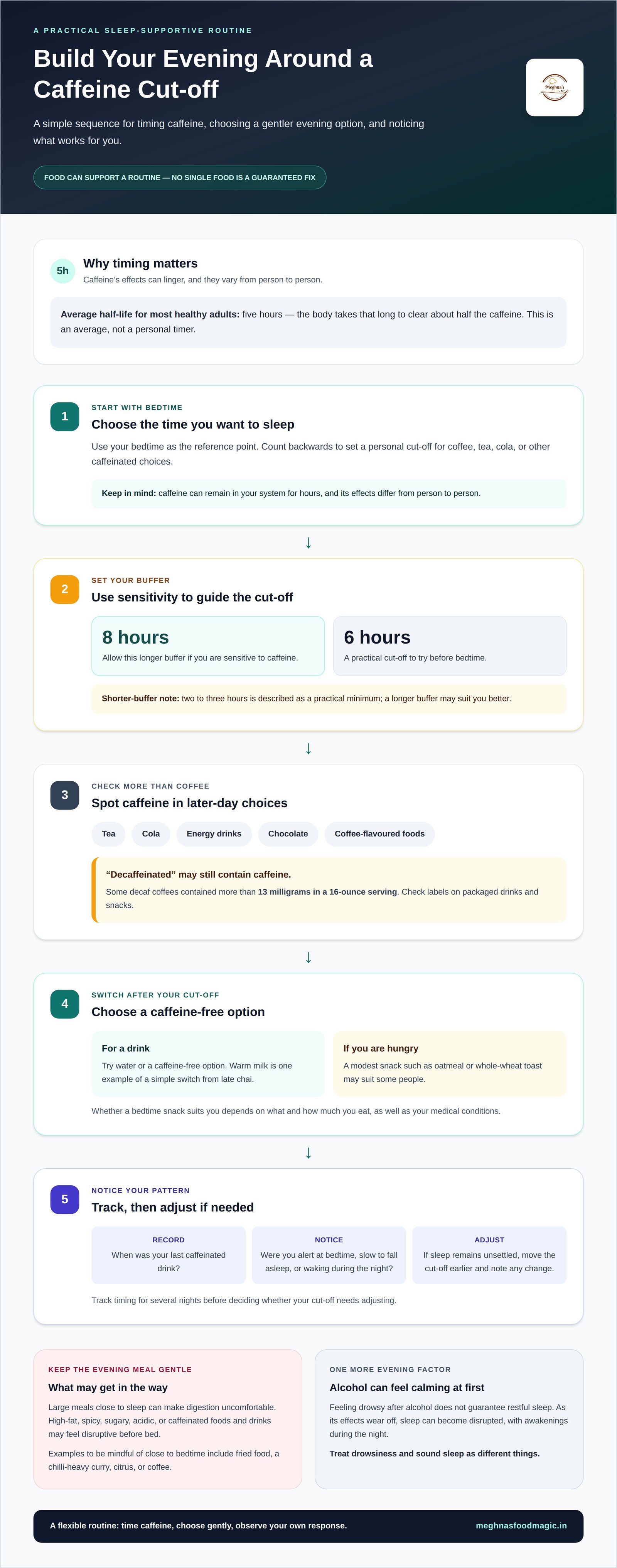
Start with your bedtime, then count backwards before reaching for coffee, tea, or cola. A practical minimum is to avoid caffeine for two to three hours before bed. A longer buffer may suit you better: caffeine can remain in your system for hours, and its effects vary from person to person. For most healthy adults, its average half-life is five hours, meaning the body takes that long to clear about half.
Try stopping caffeine at least six hours before bed; if you’re sensitive, allow eight hours. Signs of sensitivity can include feeling alert at bedtime, taking longer to fall asleep, or waking during the night. Keep a simple record of your last caffeinated drink and how the night goes. If sleep remains unsettled, move your cut-off earlier and note whether the pattern changes.
Look beyond your morning mug. Tea, cola, energy drinks, chocolate, and some coffee-flavoured foods can add caffeine later in the day. “Decaffeinated” doesn’t always mean caffeine-free: some decaf coffees contained more than 13 milligrams in a 16-ounce serving. Check labels on packaged drinks and snacks, especially when you’re choosing an evening treat.
Build a clear routine: have your final caffeinated drink before your personal cut-off, then switch to water or a caffeine-free option. If you order decaf at night, remember it may still contain some caffeine. A small change, such as replacing late chai with warm milk, can make your evening routine easier to follow. Track the timing for several nights before deciding whether your cut-off needs adjusting.
Alongside your caffeine cut-off, consider whether a bedtime snack suits you. A nutritious snack before bed may be beneficial, depending on what and how much a person eats and their medical conditions. A simple snack such as whole-wheat toast or oatmeal may suit some people before bed. Bananas, avocados, spinach and sweet potatoes are sources of both potassium and magnesium, nutrients that can promote muscle relaxation. These options can help you think about snack choices without treating food as a guaranteed fix for unsettled sleep.
Keep portion size and timing in mind, too. A large meal shortly before sleep can make digestion uncomfortable. A high-fat diet may be associated with fragmented night-time sleep and daytime sleepiness; the reasons can include weight gain and reduced sensitivity to orexin, which helps regulate the body’s sleep clock. People with gastroesophageal reflux disease (GERD) may find that eating before bed affects their sleep. If you have a medical condition, consider it when deciding whether to eat before bed and what to choose.
3. Alcohol and sleep disruption
Alcohol may make you feel sleepy at first, but that drowsiness doesn’t guarantee restful sleep. As its effects wear off, sleep can become disrupted, with awakenings during restorative stages. A nightcap can create a misleading sense of help while leaving the rest of the night less settled.
For example, someone who falls asleep quickly after a drink may still wake later. Alcohol can also worsen sleep apnoea symptoms. With regular use, it may increase the likelihood of sleepwalking, sleep talking, and memory problems. Notice whether evening drinking is followed by broken sleep or groggy mornings, and don’t treat alcohol as a sleep aid.
Build sleep-friendly habits around simple cues: keep a consistent bedtime, make the bedroom quiet and comfortable, and follow a calming wind-down routine. A book or a few minutes of slow breathing can replace late-evening scrolling. If you wake during the night, keep the lights low and return to a relaxing activity rather than checking the clock repeatedly.
A steady sleep schedule helps your body anticipate rest. Morning daylight and regular daytime movement, such as a walk outdoors, can anchor your day-night routine. Keep these habits consistent, including on weekends, instead of trying to make up for a difficult night by waking much later.
If sleeplessness persists or affects your daily life, arrange a medical assessment. Mention warning signs such as waking with gasping or choking, loud snoring, or marked daytime sleepiness. These details can help a doctor assess whether another sleep problem may be contributing, rather than treating every restless night as a food or alcohol issue.
4. Balanced meals and complex carbohydrates
Choosing food to help people with insomnia starts with balanced meals, not relying on one special ingredient. Pair a complex carbohydrate with protein and vegetables: brown rice, dal, and cooked vegetables make a familiar Indian example. Carbohydrates can help keep blood sugar stable, while protein supplies tryptophan, which the body uses to make serotonin.
If you’re deciding what to eat and which habits to cultivate when struggling with sleeplessness issues, consider the whole plate. Try whole-wheat roti with tofu and spinach, or oatmeal prepared with milk. These combinations bring carbohydrates and protein together. Complex options such as oats and whole-wheat toast are often suggested before bed, rather than sweets or sugary drinks.
Include a variety of fruit, vegetables, lean proteins, and complex carbohydrates across the day. For lunch, serve beans with brown rice; at dinner, add vegetables to dal and whole-wheat roti. These everyday pairings make balanced eating practical without turning supper into a rigid sleep remedy.
Meal timing and portion size depend on hunger, bedtime, and how comfortably you digest food. Have dinner early enough to avoid lying down immediately after a large meal. If you’re hungry later, choose a small snack, such as a little oatmeal or toast, rather than another full plate. A physician may recommend a bedtime snack for someone managing blood sugar.
Keep meals satisfying but not overly rich. Season dal and vegetables with herbs, then adjust portions to what feels comfortable. Balanced meals can support a healthy routine, while sensible evening timing helps you avoid going to bed uncomfortably full or hungry.
5. What foods, caffeine, alcohol, and late-night meals can worsen insomnia?
Meal size and timing matter alongside ingredients. A large dinner shortly before bed can leave digestion working as you lie down. Digestion slows by up to 50 percent during sleep, which can make high-protein foods harder to digest at bedtime. A heavy paneer-rich meal or a large bowl of dal may feel uncomfortable close to sleep. Shift a fuller dinner earlier, then keep any later snack small.
Chilli-heavy dishes can create another obstacle: spicy foods may trigger heartburn, and lying down can worsen acid reflux. Red pepper can also raise core body temperature, while the body naturally cools during sleep. If you have gastroesophageal reflux disease, eating before bed may disrupt rest. Try a milder dinner and allow time before lying down.
Very rich meals deserve attention, too. Simple carbohydrates and saturated fats may be difficult to digest before sleep and may reduce serotonin. In one study, rats fed a high-fat diet for eight weeks had more fragmented night-time sleep and excessive daytime sleepiness. That animal finding doesn’t establish the same effect in people, but it supports choosing a lighter, balanced dinner over greasy late-night food.
Some aged or processed foods may feel stimulating for other reasons. Aged cheese, salami, and pepperoni contain tyramine, which can trigger norepinephrine release and stimulate the brain. Keep these toppings for earlier meals if you notice a connection with restless nights. Late coffee, tea, cola, and alcohol can also interfere with sleep, as discussed above. For an evening bite, choose a modest portion of plain toast or oatmeal instead of a rich, spicy, heavily processed snack.
Recipes to Include in a Sleep-Supportive Eating Routine
These vegetarian ideas pair familiar ingredients with satisfying flavours. Keep portions comfortable and enjoy them as part of your usual meal routine, rather than treating any recipe as a cure for insomnia.
Banana Almond Oats
Ingredients: ½ cup rolled oats, 1 cup milk, ½ banana sliced, 1 tablespoon chopped almonds, and ¼ teaspoon cinnamon. Method: Simmer oats and milk in a small pan, stirring until creamy. Spoon into a bowl and top with banana, almonds, and cinnamon. The oats make a soft, warm breakfast or a modest evening snack.
Spinach Tofu Whole-Wheat Toast
Ingredients: 2 slices whole-wheat bread, 100 grams firm tofu, ½ cup chopped spinach, 1 teaspoon olive oil, and a pinch of black pepper. Method: Warm oil in a pan, crumble in tofu, and cook for 3 minutes. Stir in spinach until wilted. Spoon the mixture over toasted bread. Keep the pepper light if spicy food tends to bother you at night.
Peanut Butter Banana Toast
Ingredients: 1 slice whole-wheat bread, 1 tablespoon smooth peanut butter, ½ small banana, and 1 teaspoon pumpkin seeds. Method: Toast the bread until lightly crisp. Spread with peanut butter, layer on banana slices, and finish with pumpkin seeds. This quick combination brings whole-grain bread, fruit, and nuts together without requiring a late, elaborate cooking session.
For a lighter bite, make one serving and pause before adding more. If you’re preparing dinner instead, serve the tofu and spinach filling with brown rice for a fuller plate. Choose unsweetened milk and plain peanut butter to keep added sugar modest, and adjust the seasoning to suit your taste.
Chef Meghna’s Notes
For creamy oats, stir rolled oats into cool milk before heating. This helps separate clumps and gives the mixture an even texture. Simmer gently, stirring often, until the oats soften. If the bowl thickens too much, loosen it with a splash of milk or water. Add banana after cooking to keep its texture fresh.
Tofu can turn watery if it goes straight into the pan. Pat it dry first, then crumble or cube it and let the surface brown before adding spinach. This builds savoury flavour without extra spice. If using frozen spinach, thaw and squeeze out excess water; otherwise, the filling may make toast soggy.
Adapt the recipes to suit your pantry. Use unsweetened soy milk instead of dairy milk, or swap almonds for chopped pistachios. If peanut butter is too thick to spread, stir in a little warm water. Choose plain, unsweetened nut butter so the banana provides the main sweetness.
- For softer oats: Add liquid gradually and stir over low heat instead of turning up the flame.
- For crisp toast: Toast the bread before adding warm tofu, and serve straight away.
- For milder flavour: Season with cinnamon or a little black pepper, and skip chilli if it causes discomfort.
Keep the evening serving modest and prepare only what you plan to eat. If you’re making extra tofu filling, cool it promptly and refrigerate it in a covered container. Reheat it thoroughly before serving, then assemble fresh toast so it stays crisp. These small kitchen choices make simple meals more enjoyable and easier to adapt, without turning any ingredient into a guaranteed sleep remedy.
Meghna’s Food Magic: Recipes with lots of vegetables
Meghna’s Food Magic offers recipes with lots of vegetables for home cooks building balanced, enjoyable meals. If you want fresh ideas beyond the dishes already in your routine, its free digital recipe database is a practical place to explore. Look for colourful combinations that bring vegetables together with grains, pulses, tofu, or paneer dishes.
A satisfying meal doesn’t need to be complicated. Add spinach or mixed vegetables to dal, serve them with rice or whole-wheat roti, and season with herbs for flavour. For a lighter dinner, use cooked vegetables in soup or savoury oats. Pairing vegetables with a filling protein and a complex carbohydrate creates a more balanced plate than relying on a single ingredient.
Meghna’s Food Magic also offers high-protein recipes, giving you more ways to vary everyday meals. Choose recipes that fit your appetite, schedule, and pantry rather than forcing a strict menu. If you’re cooking late, keep the portion comfortable and the seasoning gentle, especially if rich or spicy food tends to cause discomfort.
Use recipe ideas as inspiration, not as a promise of better sleep. Foods can support a nourishing routine, while caffeine timing, alcohol, meal size, and consistent sleep habits also matter. If sleeplessness continues or affects daily life, food changes alone may not address its cause. A clinician can assess persistent symptoms and any warning signs.
Explore combinations you enjoy, then adapt ingredients to what’s fresh in your kitchen. For approachable inspiration from a free recipe database, explore Meghna’s Food Magic.
Frequently Asked Questions
How late can you have caffeine?
Use your planned bedtime to set a caffeine cut-off, counting backwards at least six hours, or eight if you’re caffeine-sensitive. For a 10 p.m. bedtime, that means finishing caffeinated drinks by 4 p.m., or 2 p.m. if you’re sensitive. Include Indian chai, coffee, cola, energy drinks, and chocolate in your tally. If sleep still feels disrupted, try moving your cut-off earlier.
Which foods and drinks may support better sleep, and what evidence supports them?
Oats, tofu, pumpkin seeds, spinach, bananas, and milk offer nutrients associated with sleep, including tryptophan, magnesium, or potassium. Tart cherries, eggs, pistachios, and almonds naturally contain melatonin. These foods provide nutrients involved in normal body processes; they don’t establish that a particular meal treats insomnia. Try combining a modest portion of oats with milk, or tofu with whole-grain bread, as part of a balanced eating routine.
Do tart cherries, kiwi, warm milk, nuts, or herbal tea improve sleep?
Tart cherries naturally contain melatonin, as do almonds and pistachios. Warm milk may feel soothing, and chamomile or mint tea are commonly considered sleep-inducing. Kiwi can be enjoyed as fruit, but don’t rely on it as a proven sleep remedy. Choose a small serving that sits comfortably, and check with a health professional before using concentrated herbal products or supplements alongside medicines.
Disclaimer
This is a recipe food blog page and not nutrition or doctor and hence do not claim to cure any illness. If you have specific health issues please consult a qualified doctor or certified nutritionist.
I do consult experts, research Internet and at times seek help from Gemini to collect relevant information to put together some of these blogs.

