
Aamras: A Complete Guide to Choosing Mangoes, Getting the Texture Right, and Enjoying Every Spoonful
What if the secret to smooth, flavourful aamras isn’t adding more sugar, but choosing a mango that’s ripe, juicy, and full of flavour? This Indian favourite should taste unmistakably of mango, with a silky, spoonable texture that feels rich without becoming heavy. One batch can turn out fibrous, another too runny, and a naturally sweet mango may need no added sugar at all.
The fruit makes the difference: mangoes vary in sweetness, fibre, and juiciness, and those qualities shape the final bowl. This guide explains how to choose ripe mangoes, keep the fruit’s flavour at the centre, and adjust texture and seasoning without masking it. You’ll also find three measured versions, from a classic preparation to dairy-free and gently spiced options. Use the simple cues to decide when to blend, when to loosen thick pulp, and when to leave the sugar out. The aim is a smooth, balanced bowl worth savouring spoon by spoon.
Key Takeaways
- Choose mangoes that feel ripe and fragrant. Alphonso and Kesar are useful options, but other ripe varieties can work too.
- Keep the mango’s natural flavour at the centre by adjusting sweetness and consistency gradually.
- Compare three measured recipes: classic, dairy-free, and gently spiced.
- Use simple fixes to improve aamras that is too thin, thick, fibrous, or sweet.
- Note which mango variety and adjustments work well in your kitchen so you can repeat the result.
What Is Aamras? A Ripe-Mango Dessert with a Beautifully Simple Character
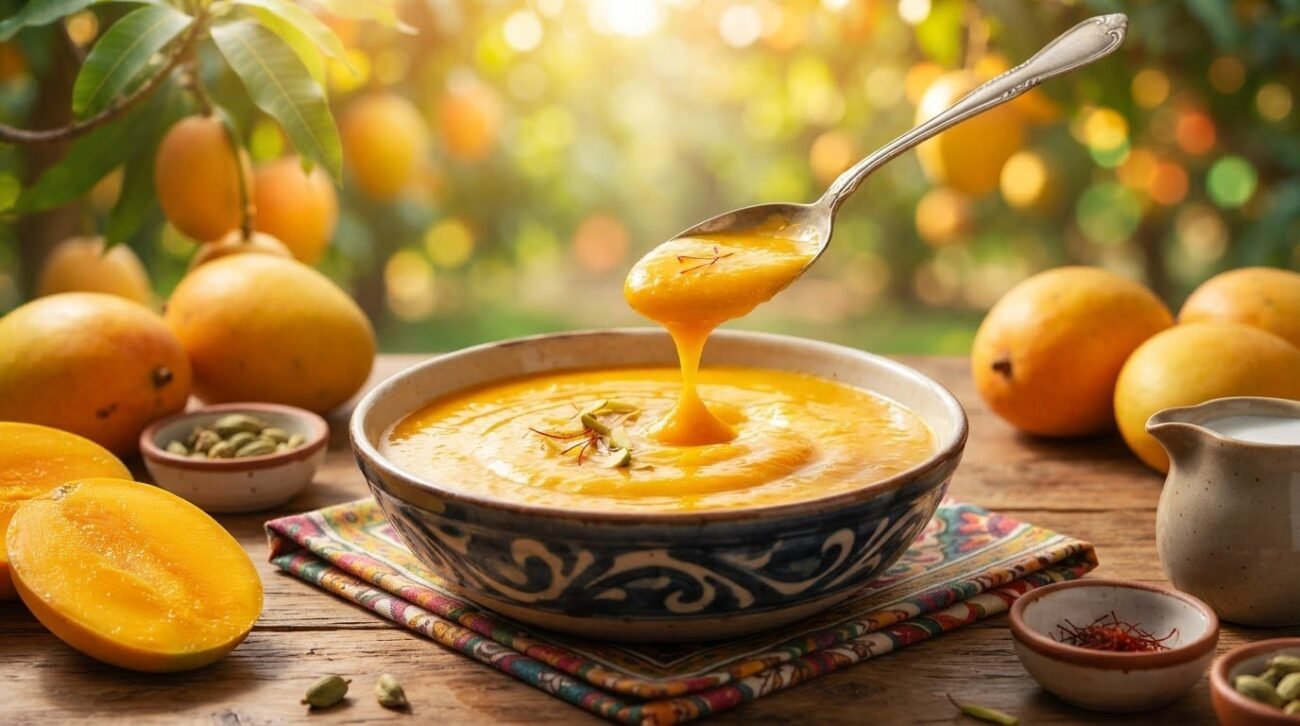
Aamras is a smooth preparation made from ripe mango pulp, served as a dessert or alongside a meal. Its appeal is the fruit itself: a fragrant, velvety spoonful with mellow sweetness and the aroma of ripe mango. The preparation is simple, but small choices in texture and seasoning make a noticeable difference.
Aamras is ripe mango pulp blended or mashed into a smooth, spoonable preparation, sometimes gently seasoned or loosened without taking the mango out of the spotlight.
There isn’t one formula followed in every Indian home. Some cooks leave the pulp as it is; others add a little cardamom or saffron, or use a small amount of liquid to adjust its consistency. These are options, not requirements. The guiding idea is to complement ripe mango, not cover its aroma with strong spices or make it taste like something else.
How aamras differs from a general mango purée
Mango purée simply describes fruit that has been crushed or blended. It might be used in a sauce, filling, drink, or dessert. Aamras has a more specific place at the table: served in a bowl, it can be enjoyed by itself as a sweet finish or spooned alongside a home-cooked meal. In some households, it accompanies puri, where its fruitiness contrasts with the savoury bread.
Texture also distinguishes aamras from a mango beverage. A spoonful should flow softly but remain substantial enough to sit in a bowl. Add enough milk or water to make it easy to sip, and the result shifts towards a drink. Households vary in how thick they like it and what they serve it with, so no single family’s version needs to define everyone else’s.
What makes the flavour feel balanced?
Balance starts with ripe mango. Its sweetness and perfume provide the main flavour, while a gentle tang can keep each mouthful from seeming flat. The exact balance depends on the fruit: some mangoes taste round and honeyed, while others have a brighter edge. Taste the pulp before deciding whether it needs anything. Extra sweetener or seasoning isn’t automatically necessary.
Cardamom brings a warm, floral note, while saffron lends a delicate aroma. Either can be lovely in a restrained amount, but both can overwhelm the fruit if used too freely. A splash of milk or another liquid may soften the texture, though it also mellows the mango’s intensity. Add ingredients with intention and taste as you go. The mango should remain the first flavour you notice.
Choose Ripe Mangoes and Control Aamras Texture Before You Blend
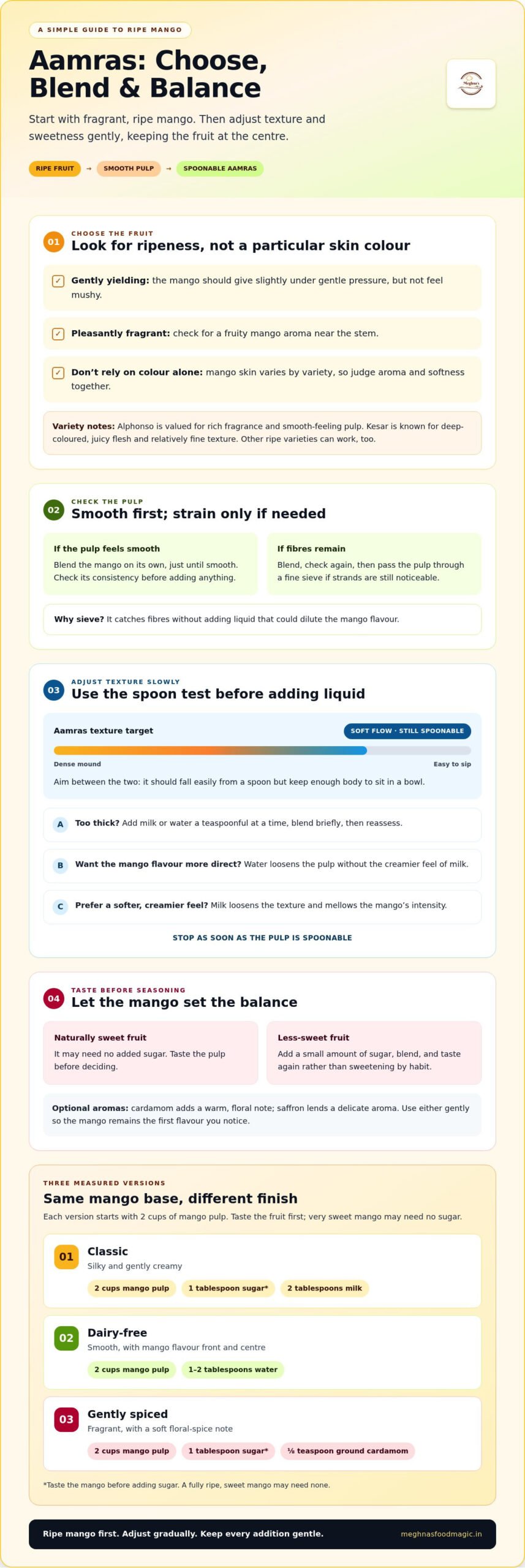
A blender can smooth mango pulp, but it can’t make underripe fruit fragrant or naturally sweet. Choose mangoes that yield slightly under gentle pressure and smell fruity near the stem. Ripe flesh is softer and easier to blend, giving you a smooth base without needing much added liquid or sweetener.
Ripe mango quality shapes both the flavour and texture of aamras. Fragrant, yielding fruit makes a naturally sweet, smooth starting point. Skin colour alone isn’t a dependable ripeness test. Mangoes can look different depending on variety, so judge aroma and gentle softness together rather than waiting for every fruit to turn the same shade.
How to judge mango ripeness and pulp quality
Choose fruit that feels yielding, not mushy, and has a pleasant mango aroma. Alphonso is often valued for its rich fragrance and smooth-feeling pulp; Kesar is known for its deep-coloured, juicy flesh and relatively fine texture. Both work well, but they aren’t the only options. A ripe mango from another variety can make a lovely batch, too.
After peeling and removing the stone, inspect the pulp. If it has noticeable fibres, blend it and check the texture. If strands remain, pass the pulp through a fine sieve. This catches fibres without requiring extra liquid, which could dilute the fruit’s flavour.
Why blending and liquid additions change the result
Start by blending the mango pulp on its own, just until smooth. Pause and check whether it falls easily from a spoon or sits in a dense mound. Blending longer won’t fix a mixture that’s too thick, and adding liquid before checking can make a naturally juicy mango unnecessarily thin.
If the purée needs loosening, add milk or water a teaspoonful at a time, blend briefly, and reassess. Water keeps the mango flavour more direct; milk softens it and gives the result a creamier feel. Stop as soon as the pulp is spoonable. A bowl preparation should have more body than a beverage, so don’t add liquid until it becomes easy to sip.
Taste before adding sugar. A fully ripe, sweet mango may need none, while a less-sweet fruit might benefit from a little. Add a small amount, blend, and taste again rather than sweetening by habit. You can also combine mangoes with different levels of sweetness, but sample the pulp first so one fruit doesn’t make the mixture unexpectedly tart.
For more ideas on blending and building flavour in home cooking, explore the recipe demonstrations on Meghna’s Food Magic’s YouTube channel.
Three Aamras Recipes: Classic, Dairy-Free, and Gently Spiced
These three versions start with the same amount of mango pulp, making it easy to compare how milk, water, or cardamom changes the result. Use ripe pulp and taste it before adding sugar. Very sweet mangoes may need none, while less-sweet fruit may benefit from the measured amount. Each recipe makes a small bowl to serve as a dessert or meal accompaniment.
| Version | Ingredients | Texture and flavour |
|---|---|---|
| Classic | 2 cups mango pulp, 1 tablespoon sugar, 2 tablespoons milk | Silky and gently creamy |
| Dairy-free | 2 cups mango pulp, 1-2 tablespoons water | Smooth, with the mango flavour front and centre |
| Gently spiced | 2 cups mango pulp, 1 tablespoon sugar, ⅛ teaspoon ground cardamom | Fragrant, with a soft floral-spice note |
Classic aamras
Ingredients: 2 cups ripe mango pulp, 1 tablespoon sugar, and 2 tablespoons milk.
Method:
1. Put the mango pulp and sugar in a blender. Blend just until smooth, then taste. If the mango is naturally sweet, omit the sugar or use less.
2. Add 1 tablespoon milk and blend briefly. Check the consistency, then add the remaining tablespoon if you want a silkier or slightly looser result. Stop while it is still spoonable.
Dairy-free aamras
Ingredients: 2 cups ripe mango pulp and 1-2 tablespoons water.
Method:
1. Blend the pulp on its own until smooth. Taste before adjusting the texture. This version has no added sugar, so the fruit’s own sweetness leads.
2. Add 1 tablespoon water and blend briefly. If the pulp still feels too thick, add the second tablespoon and blend again. Gradual addition keeps the mango flavour concentrated rather than watery.
Gently spiced aamras
Ingredients: 2 cups ripe mango pulp, 1 tablespoon sugar, and ⅛ teaspoon ground cardamom.
Method:
1. Blend the pulp with the sugar until smooth. Taste it and omit or reduce the sugar if the mango is already sweet enough.
2. Add the cardamom and pulse briefly to distribute it. This measured amount adds fragrance without dominating the fruit. Avoid prolonged blending after adding it.
For all three versions, adjust in small steps and taste between additions. This makes it easier to keep the mango’s aroma clear and the consistency to your liking. For more practical recipe demonstrations, explore Meghna’s Food Magic on YouTube.
Serve Aamras with Confidence: Pairings, Fixes, and Chef Meghna’s Notes
A bowl of aamras can add a sweet note to a meal without taking over the plate. Serve it on its own as a dessert, or alongside puri for a traditional-style sweet-and-savoury pairing. Homes have their own customs, so treat these as ideas rather than rules. Keep the portion modest when the rest of the meal is rich, and let the mango’s aroma lead.
What to serve with aamras and when to add accents
Before serving, taste a spoonful and check the sweetness and consistency. If it feels too thick, loosen it a little at a time. If it already flows easily from the spoon, leave it as it is. Add cardamom or saffron sparingly after tasting the mango. These accents should be a quiet fragrance in the background, not the first flavour you notice.
If preparing aamras ahead, transfer it to a covered container and keep it refrigerated until serving. Stir gently and taste again before bringing it to the table. Chilling can make the texture feel firmer and the flavour less pronounced, so adjust only if needed.
Chef Meghna’s Notes: substitutions and troubleshooting
Texture is easiest to correct in small steps. Avoid adding a large splash of liquid or more sugar straight away. Each changes the balance, and it’s simpler to add a little more than to undo an adjustment.
- Too thick: Stir in milk or water a teaspoon at a time, mixing and checking after each addition. Choose water for a more direct mango flavour, or milk for a softer, creamier finish.
- Too thin: Fold in a tablespoon of thick mango pulp at a time, if you have some set aside. This restores body without adding liquid or introducing another flavour.
- Fibrous: Pass the pulp through a fine sieve to catch stringy pieces. If fibres remain after blending, straining is more effective than adding liquid to hide them.
- Overly sweet: Don’t add more sugar. If you have less-sweet mango pulp, mix it in a tablespoon at a time and taste. Otherwise, serve a smaller portion alongside savoury food for contrast.
Chef Meghna’s tip: Make final adjustments just before serving. A cold bowl may seem thicker than it did at first, and extra spice can become more noticeable as it sits. Taste again before adding anything. Sometimes the best fix is no fix at all.
For more ideas beyond this dessert, browse the free recipe database for inspiration across the kitchen.
Make Aamras Your Own, Then Keep Discovering Recipes with Meghna
A satisfying bowl comes from paying attention to the fruit and making small, considered choices. The same variety can taste different from one mango to the next, so let your senses guide the final adjustments. Once you find a balance you enjoy, a few kitchen notes can help you recreate it.
A simple sequence for a reliable aamras bowl
Think of the process as choose, peel, blend, taste, and adjust. Start with ripe fruit and blend the pulp just until smooth. Then decide whether it needs a little liquid, sweetness, or seasoning. The amount of liquid depends on how thick or juicy the pulp is, so follow its texture rather than adding a fixed amount by habit.
Make your notes practical and specific. Record the mango variety, whether the pulp seemed especially juicy or dense, and what you changed after tasting. Note the result too: perhaps a small splash of water made it spoonable, or a particular batch needed no added sugar. These observations give you useful guidance for the next bowl.
- Fruit: Write down the variety and whether the mangoes felt very ripe, fragrant, or firm.
- Texture: Describe the finished bowl as thick, spoonable, or loose, and note any liquid you added.
- Flavour: Record whether you used sugar or a light spice accent, and whether you would change it next time.
Change one thing at a time when experimenting. If you add liquid and sugar together, it’s harder to tell which adjustment improved the result. Tasting before and after each change gives you a clearer sense of how the mango responds. Over time, you’ll develop a simple method that suits the fruit you can find and the consistency your household enjoys.
Continue cooking with Meghna’s video recipes
If visual, step-by-step cooking guidance helps you feel more confident in the kitchen, explore the Meghna’s Food Magic recipe videos. Follow along with a recipe that catches your eye and notice how each stage is handled. Use the same attentive approach here: taste, observe, and adjust with care.
Keep the essential rhythm in mind: choose ripe fruit, blend gently, and make thoughtful adjustments. Your best version doesn’t need to match another kitchen’s exactly. The pleasure is in finding the balance that lets ripe mango shine, then remembering what made that bowl work for you.
Let Your Next Kitchen Discovery Begin
Let this bowl be a starting point, not a recipe you have to follow by rote. Aamras invites you to notice how fruit, flavour, and your own preferences come together. That same curiosity can make everyday cooking more rewarding: choose something new, pay attention as you prepare it, and enjoy the discoveries along the way.
When you’re ready to try another idea, Meghna’s free digital recipe database offers home cooks more inspiration to explore. Choose a dish that sounds inviting, bring your own taste to it, and let the process be part of the pleasure.
May your next kitchen adventure be full of flavour, confidence, and joyful experimentation.
Frequently Asked Questions
Can aamras be made with frozen mango?
Yes. Let frozen mango soften enough to blend, or blend it while still partly frozen for a colder, thicker result. If the pieces are large, break them into smaller chunks first so the blender can process them evenly. Frozen fruit can release liquid as it softens, so check the blended consistency before adding any other liquid.
Can I make aamras ahead of time?
Yes. For easier assembly, prepare the mango pulp separately and measure any optional additions in advance. Combine them closer to serving so you can judge the final balance once everything is mixed. This also lets you keep different portions simple or season them differently without preparing separate batches from scratch.
How can I make aamras smoother if the mango pulp is fibrous?
Before blending, inspect the flesh and cut away any especially stringy tissue close to the stone. Then blend smaller batches so the blades can process the pulp more evenly. If strands still stand out, use a fine-mesh sieve for a smoother finish. A naturally fibrous mango may retain some texture, so aim for a pleasant consistency rather than trying to remove every strand.
Is aamras the same as mango lassi?
No. Mango lassi includes yoghurt as a defining ingredient, which gives it a tangy, creamy character. Aamras centres on mango pulp, so its flavour is more directly fruity. Lassi is generally served as a drink, while aamras is often presented in a bowl. The two share mango as a star ingredient, but they’re distinct preparations.
Can I make aamras without adding sugar?
Yes. Leave sugar out completely if you prefer the mango’s flavour without added sweetness. If you’re serving a group, keep the main batch unsweetened and offer sugar separately for anyone who wants to adjust their own portion. This suits different preferences without changing the flavour of the whole bowl.
What can I serve with aamras besides puri?
For another savoury contrast, serve a small portion beside a mild meal such as khichdi or dal with rice. You can also offer it as a simple dessert after a spicy or savoury menu. Keep the accompanying dishes gently seasoned so their flavours don’t compete with the mango. These are flexible serving ideas, not rules; choose what suits your table.
Disclaimer
This is a recipe food blog page and not nutrition or doctor and hence do not claim to cure any illness. If you have specific health issues please consult a qualified doctor or certified nutritionist.
I do consult experts, research Internet and at times seek help from Gemini to collect relevant information to put together some of these blogs.

