
Amla Health Benefits: Popular Recipes & Daily Tips
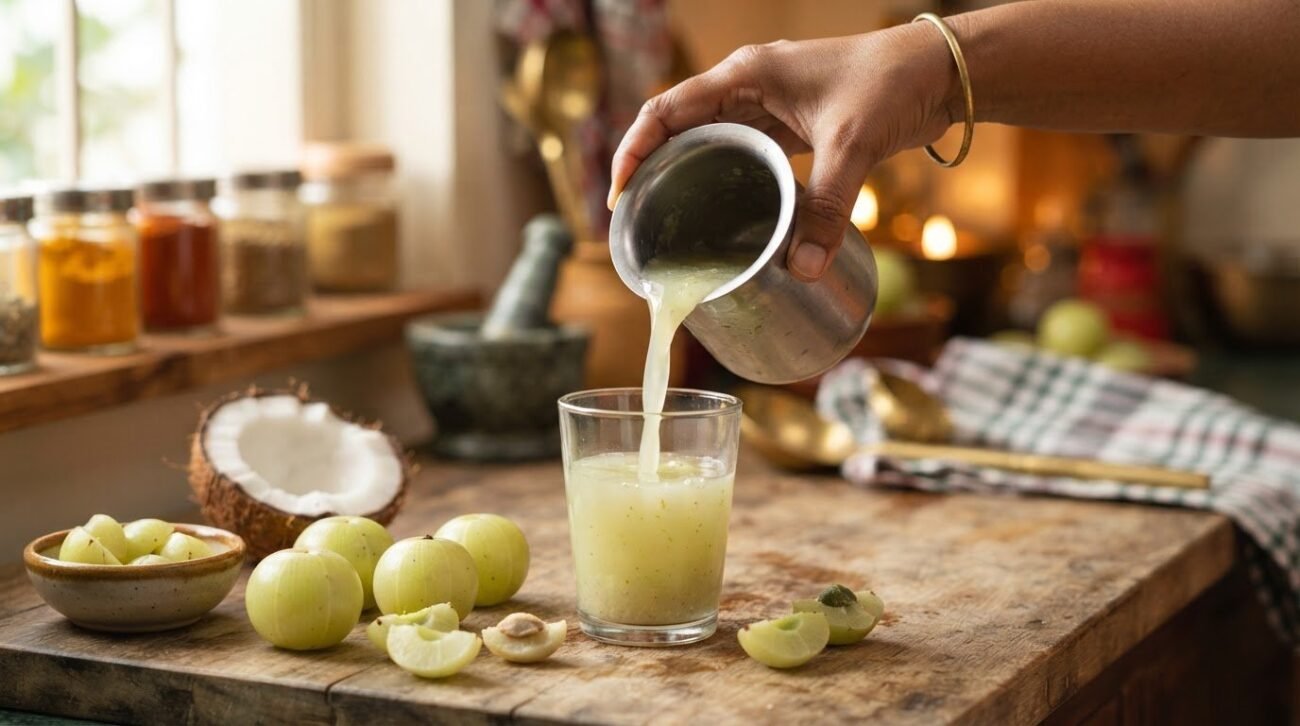

Amla’s best kitchen secret isn’t just its sharp, refreshing taste; it’s how easily fresh fruit can move from chopping board to juice, chutney or pickle. A 100-gram serving provides 300 milligrams of vitamin C, and this guide brings together amla benefits, recipes and popular tips for enjoying it in everyday Indian cooking.
Amla’s tart, astringent bite can be intense on its own, so choosing firm, fresh fruit and preparing it well makes a real difference. Here’s how to wash, cut and store amla, then balance its flavour in simple recipes.
Look forward to a practical juice guide with measured ingredients, including 5 to 6 chopped amlas and 1½ cups of water, tender coconut water or another juice, alongside ideas for chutneys, pickles and curries. From the first slice to the last sip, these tips make amla easier and more delightful to bring into your kitchen.
Key Takeaways
- Learn how to wash, cut and store fresh amla so it’s ready for recipes and easier to enjoy.
- Use measured ingredients to balance amla’s tart flavour in juice, and make the most of the leftover pulp.
- Explore ways to bring amla into chutneys, pickles and curries, not just drinks.
- Discover what amla’s vitamin C and antioxidants contribute, along with sensible considerations around medicines and side effects.
- Find practical substitutions and troubleshooting tips to help your amla recipes turn out well.
Amla juice ingredients and quantities
Popular amla recipes in India include juice, fruit salad, chutney, pickle and curry. For a fruit salad, combine chopped amla with sweeter fruit to balance its sharp, astringent taste. For a quick drink, blend it with water or tender coconut water. These amla benefits, popular recipes and practical tips make this distinctive fruit easier to enjoy in everyday cooking.
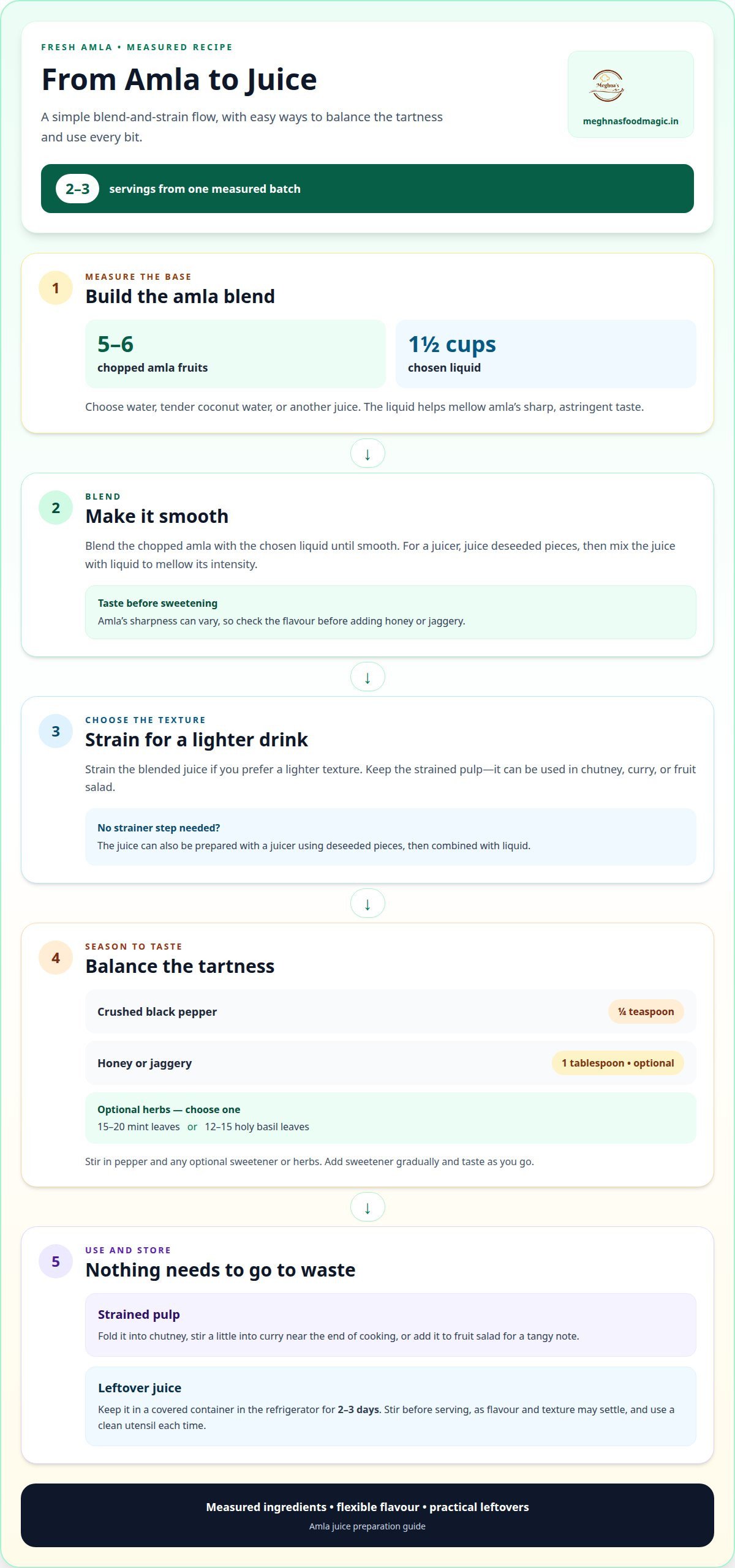
To make amla juice at home, blend 5 to 6 chopped amla fruits with 1½ cups of water, tender coconut water or another juice. This makes 2 to 3 servings. The National Health Portal of India suggests 10-20 ml of fresh amla juice as a general health guideline for daily intake. You can have it in the morning or with a meal, according to your preference. For practical tips on amla benefits and recipes, adjust the liquid to suit the fruit’s tartness.
Measured amla juice recipe
- 5 to 6 chopped amla fruits
- 1½ cups water, tender coconut water or another juice
- ¼ teaspoon crushed black pepper
- 1 tablespoon honey or jaggery, optional
- 15 to 20 mint leaves or 12 to 15 holy basil leaves, optional
Blend the amla with your chosen liquid until smooth, then strain it for a lighter drink. Stir in pepper and, if you like, sweetener and herbs. You can also use a juicer: add deseeded pieces, then mix the juice with liquid to mellow its intensity. Taste before adding honey or jaggery, as the fruit’s sharpness can vary.
Don’t discard the strained pulp. Fold it into chutney, stir it into curry near the end of cooking, or add a little to fruit salad for a tangy note. You can also mash amla, soak it in water overnight, then drain the mixture to separate the pulp and seeds before making juice.
Pour leftover strained juice into a covered container and refrigerate it for 2 to 3 days. Stir before serving, as the flavour and texture may settle. For a fresher taste, prepare only the amount you plan to drink soon and use a clean utensil each time you serve it.
Amla pickles, chutneys and curries
Indian gooseberry brings a bold, sour and astringent flavour to savoury dishes. Salt and chillies make a lively pairing, while simmering softens the fruit and blends its flavour into curry. Amla can also be preserved as pickle, candy or murabba, making it at home in both savoury and sweet preparations.
To soften amla’s sourness, pair it with sweeter ingredients or add a little jaggery. In curry, simmer the fruit with the other ingredients so its sharpness blends into the sauce. Add sweetener gradually and taste as you go, so it doesn’t hide the fruit’s flavour.
Measured amla chutney
- ¾ cup chopped amla
- 1 small green chilli, roughly chopped
- ¼ teaspoon salt
- 1 teaspoon jaggery, optional
- 1 tablespoon water, as needed for blending
Crush or blend the amla with chilli and salt. Add water gradually for a smoother texture, or use less for a coarse relish. Mix in jaggery if you prefer a gentler tang. Taste before serving, then adjust with a little more jaggery or chilli.
For a quick pickle-style side, cut amla into segments and toss them with salt and chillies. Its sourness cuts through parathas, dal or rice dishes. For curry, add chopped amla while the gravy simmers, then cook until the pieces soften but still hold their shape. This lets the fruit’s tang carry through the dish.
Chutney is a quick, flexible way to use fresh amla, while pickle and murabba are preserved accompaniments. Candy offers a sweeter option. Each preparation shifts the balance: salt and chilli bring out savouriness, while jaggery rounds off the sour edge. Serve a small spoonful beside a main dish, or stir chutney through a meal for a tangy accent. Keep amla’s distinctive flavour noticeable, then adjust the other ingredients to suit your taste.
Amla, also known as Indian gooseberry, has a sour, astringent flavour and is commonly eaten with salt and chillies. Its pronounced taste can make it the star of a dish rather than a mild background note. Start with a small amount, then add more if you want the tang to stand out. Adjust the salt and chilli to suit the fruit, and use jaggery sparingly to soften its sharpness without masking its flavour.
The same balance can guide how you serve amla. Salt and chilli give it a direct savoury character, while a little jaggery makes the tang gentler. For chutney, keep the texture coarse for a more substantial bite or blend it smooth to spread its flavour through a meal. In curry, taste as it cooks and adjust the other ingredients to complement the amla rather than mask it. These small choices keep its sour, astringent character central while helping each preparation suit the meal.
Amla’s vitamin C and antioxidant content
Indian gooseberry is notable for its vitamin C content and measured antioxidant capacity. These features help explain why amla is valued as a nutrient-rich fruit, without presenting it as a cure-all.
Amla’s Vitamin C Content
Vitamin C is a nutrient found in amla, with 300 milligrams in a 100-gram serving. That amount is more than twice the daily recommended value for adults, making the fruit a concentrated source in food terms.
Amla’s vitamin C concentration is described as nearly 20 times that of orange juice. This comparison makes the fruit’s distinctive nutritional profile easier to picture, but it doesn’t mean every serving of juice delivers the same amount. The quantity of fruit, dilution and preparation all affect what ends up in a glass. Fresh fruit also offers a way to enjoy its tart flavour directly, rather than relying only on juice.
Amla’s Antioxidant Content
Antioxidants are compounds that can help protect cells from damage caused by free radicals. Amla is reported to have an ORAC value of 261,500 μmol TE/100g, a measure used to describe antioxidant capacity.
That value offers a point of comparison, not a prediction of a specific health outcome from eating amla. ORAC figures describe a food’s capacity in a test setting; they don’t show how much the body absorbs or what an individual will experience. Treat the number as context for the fruit’s composition, alongside its vitamin C content.
These figures describe the fruit, not every amla preparation. A 100-gram serving of fresh berries and a diluted drink are different portions, so their nutrient amounts aren’t interchangeable. Amla’s sharp taste also shapes how people use it: chopped fruit, juice and cooked dishes each offer a different way to include it in meals.
For a practical comparison, consider the serving and preparation. Pairing amla with varied ingredients makes its tangy flavour easier to enjoy as part of everyday eating, rather than treating one nutrient figure as the whole story.
Choosing and preparing fresh amla
Fresh amla is useful when you want the whole fruit’s tart taste and firm texture in meals. Powder, juice and supplements come in different forms, but they aren’t automatically better or interchangeable with fresh fruit.
In Indian markets, fresh amla availability and prices vary with season, region and local supply. Compare the fruit’s freshness and condition as well as its price, since bruising or soft spots can affect how well it keeps and how it cooks.
Choose firm berries with intact skin and no visible bruises or soft patches. Fresh amla can keep in the refrigerator for about two weeks, so set damaged fruit aside before storing the rest. Amla also freezes well, making it practical to save for later recipes.
Before cutting, soak the berries in salted water for 5 to 10 minutes, then scrub them clean. Rinse away the salt and pat the fruit dry. This short wash-and-scrub sequence helps remove surface dirt before the fruit is sliced or cooked.
To chop an amla, follow its vertical lines with a knife, prise it open, then remove the hard core. The segments stay intact when you cut along those natural divisions instead of chopping straight through the centre. Six amlas make about ¾ to 1 cup of chopped pieces for two servings.
Use the segments in chutney, curry or fruit salad, or freeze them for later cooking. To freeze, spread the prepared pieces in a single layer first, then transfer them to a container once firm. This makes it easier to separate pieces when you need only a portion.
Fresh fruit gives you control over texture and preparation, while powder and bottled juice are convenient formats. Supplements are different again, so compare the form and intended use instead of assuming one is universally superior. For everyday cooking, whole amla lets you choose whether to slice, blend or simmer it.
Can amla cause side effects or interact with medicines?
Amla’s sharp, sour taste may not suit everyone. A concentrated extract is also different from fresh fruit in chutney or juice, so don’t assume food portions and supplements have the same effects. Pay attention to how your body responds when trying a new preparation.
For some people, a strongly tart drink may feel uncomfortable on an empty stomach. If that happens, stop drinking it and try amla with food another time. Don’t keep consuming a preparation that causes discomfort. The amount of fruit, its concentration and other ingredients, such as chilli or black pepper, can all affect how intense a serving feels.
Medicine questions deserve particular care with concentrated amla products. A clinical study in people with type 2 diabetes reported that 500 mg of amla extract taken twice daily reduced LDL cholesterol and triglycerides and increased HDL cholesterol. Those results describe cholesterol markers in that study; they don’t establish how amla affects diabetes medicines or other prescriptions.
That distinction matters. A study of an extract does not test every amla food, supplement or medicine combination. Don’t use amla juice or an extract instead of prescribed treatment, including diabetes medicine. If you take regular medication, share the exact product label and serving instructions with your healthcare professional before adding a concentrated supplement.
Keep a simple record when introducing an amla product: note its form, amount, timing and any symptoms. For example, record whether you ate fresh fruit, drank juice or took an extract, and whether you had it with a meal. This can help you spot patterns without confusing a food preparation with a supplement.
Choose familiar culinary portions when enjoying amla as food, and treat extracts as a separate category. The study dose of 500 mg twice daily applies to that clinical study, not as a general serving recommendation. Amla’s place in meals can be enjoyable, but it doesn’t replace medication guidance or individual care.
Chef Meghna’s Notes
Amla rewards careful balancing. Its sour, astringent taste can dominate a dish if you add too much before tasting. Start with a small amount, then adjust the other flavours. This approach works for juice, chutney and curry, as each preparation brings out amla’s sharpness differently.
For a gentler flavour, pair chopped amla with sweeter fruit, tender coconut water or a little jaggery. Each brings a different balance: fruit adds freshness, coconut water softens a drink, and jaggery rounds off the sour edge in cooked dishes. Add sweet ingredients gradually so the finished recipe stays bright rather than sugary.
Texture matters, too. If chutney feels fibrous, blend it longer or add liquid a little at a time. For a coarser relish, pulse briefly and leave small pieces visible. In curry, cut the fruit into even segments so they soften at a similar pace. Add them while the gravy simmers, then taste before adding more salt or chilli.
If juice tastes harsh, dilute it with water or tender coconut water rather than masking it with extra sweetener. Straining removes much of the pulp for a smoother drink; keeping the pulp makes the texture fuller. Save strained pulp for a cooked dish, where heat and spices can blend its tang into the sauce.
Fresh amla can be firm and awkward to cut. Follow its natural vertical grooves, prise the sections apart and remove the hard centre. A stable chopping board and sharp knife help keep the segments neat. If the fruit is too hard to handle, cut it into smaller sections before removing the core.
Think in contrasts. Salt and chilli make a lively savoury pairing, while sweeter fruit softens amla’s bite in a salad. Taste after each adjustment, because a change that works in juice may overwhelm a delicate chutney. The best result keeps the fruit recognisable and balances its distinctive flavour to your taste.
Meghna’s Food Magic
Meghna’s Food Magic is a natural next step when you want to turn amla ideas into a varied home-cooking routine. Its free digital recipe database offers health-conscious cooks recipes and food-related ideas to explore. Amla benefits, recipe inspiration and popular tips can spark a meal, while a broader range of dishes keeps everyday cooking interesting.
Use the recipe database when you want ideas beyond one fruit or preparation. Amla’s distinctive flavour can complement different meals, and exploring varied recipes helps you build menus around ingredients and tastes you enjoy. Think of these amla benefits, recipes and popular tips as inspiration for varied cooking, not a promise that one ingredient will transform your health.
For more meal ideas with protein, explore High Protein Recipes. They offer another way to plan meals alongside fruit-based dishes. For more ways to enjoy amla, explore ideas for chutneys, drinks and other preparations, and bring its distinctive flavour into your kitchen.
Readers looking for recipe ideas connected with fitness or weight management can browse Weight Loss Fitness Recipes. These are recipe ideas, not an individual diet plan or a promise of a particular result. Choose dishes that fit your preferences and routine, and keep enjoyment at the centre of your food choices.
Treat these collections as starting points for your own kitchen decisions. You might explore a quick recipe on a busy day, choose a more filling meal when it suits you, or try a different preparation for a change of flavour. This flexible approach lets you enjoy amla alongside other foods you already like.
Whether you’re looking for fresh recipe inspiration or ideas for balanced home cooking, Meghna’s Food Magic offers a place to keep exploring. Contact Meghna’s Food Magic to continue the conversation.
Frequently Asked Questions
What are the evidence-based health benefits of amla?
Amla is a source of vitamin C, and one clinical study reported changes in blood lipids among people with type 2 diabetes. Participants took 500 mg of amla extract twice daily; the study reported lower LDL cholesterol and triglycerides, and higher HDL cholesterol. Those findings concern a specific extract and study group. They don’t establish that eating fresh amla treats diabetes or prevents disease.
What nutrients and antioxidants are in amla per 100 g?
A 100-gram serving of amla provides 300 milligrams of vitamin C. Amla is also reported to have an ORAC value of 261,500 μmol TE/100g, a measure of antioxidant capacity. These figures describe vitamin C and antioxidant capacity, not a complete nutrient profile. They also apply to the stated serving and measure, so they shouldn’t be assumed to describe diluted juice or every amla preparation.
How much amla is safe to eat daily?
The National Health Portal of India suggests 10-20 ml of fresh amla juice as a general daily health guideline. That amount refers to juice, not a fixed serving of whole fruit, pickle or extract. Amla products differ in concentration and ingredients. If you take medicine, especially for diabetes, discuss concentrated amla extracts with a healthcare professional rather than using them in place of prescribed treatment.
How to make amla pickle, chutney, candy, or murabba?
For a quick chutney, crush chopped amla with salt and chillies, then adjust the texture with a little water. For a simple pickle-style side, toss cut fruit with salt and chillies. Candy and murabba take a sweeter approach, preserving amla with sugar or jaggery. These are distinct preparations, so choose based on whether you want a sharp, savoury accompaniment or a sweet preserve.
How to choose, wash, and store fresh amla?
Choose firm fruit with unbroken skin, then separate any bruised pieces before storage. Soak the berries in salted water for 5 to 10 minutes, scrub them, and rinse. Refrigerated fresh amla can stay fresh for about two weeks, and the fruit freezes well. For convenient cooking, remove the cores and freeze prepared segments in a container, ready to add to a later dish.
Disclaimer
This is a recipe food blog page and not nutrition or doctor and hence do not claim to cure any illness. If you have specific health issues please consult a qualified doctor or certified nutritionist.
I do consult experts, research Internet and at times seek help from Gemini to collect relevant information to put together some of these blogs.

