
Atta Cake Recipe with Jaggery: Moist, Whole-Wheat Baking Made Simple
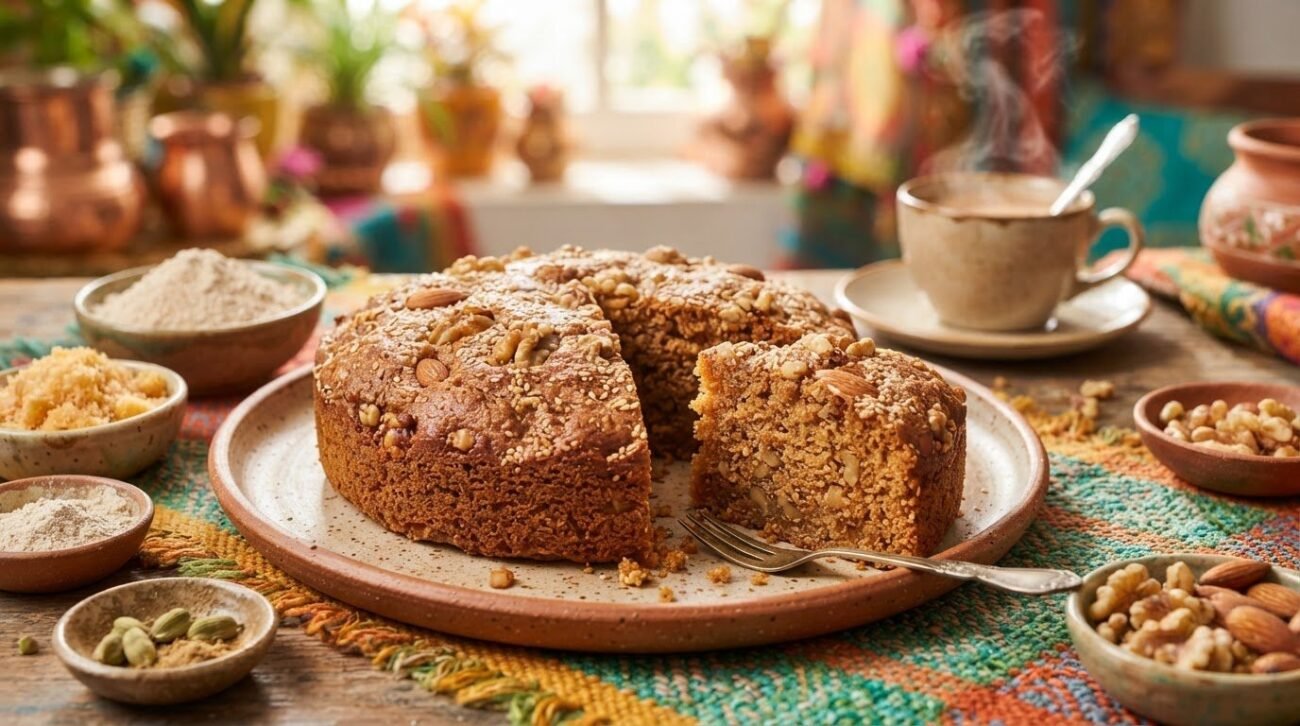
What makes an atta cake tender and moist instead of dense or dry? The answer is not simply adding more liquid. In an atta cake recipe with jaggery, success comes from balancing whole-wheat flour’s absorption with the sweetness, moisture, and deep caramel-like flavour of jaggery.
Jaggery can make the batter behave differently from one made with white sugar, but a few clear measurements and practical cues make the process manageable. The result is a warmly flavoured cake that pairs well with chai.
This guide explains what each ingredient contributes and how to mix the batter without overworking it. You’ll find two measured recipe options, guidance for oven-free baking, and troubleshooting tips for a heavy crumb, dryness, or a sunken centre. You’ll also learn how to store and serve the cake while keeping its crumb pleasant.
Key Takeaways
- Choose the atta cake recipe with jaggery that suits the form of jaggery and baking method you plan to use.
- Understand how flour, jaggery, fat, liquid, and leavening contribute to the batter and finished cake.
- Prepare jaggery for even mixing, and follow measured quantities instead of adjusting ingredients by guesswork.
- Match issues such as a dense crumb, dryness, sinking, or uneven baking with practical adjustments.
- Use the serving, storage, and substitution tips to enjoy and adapt the cake with confidence.
What Makes an Atta Cake with Jaggery Soft, Moist, and Flavourful?
A slice of atta cake with jaggery brings together the earthy taste of whole-wheat flour and jaggery’s rounded, caramel-like sweetness. It’s a comforting bake for chai time, but a tender crumb depends on more than these two ingredients. Flour absorption, available moisture, mixing, and baking time all shape the result.
An atta cake with jaggery is a cake made with whole-wheat flour and jaggery as its sweetener, balanced for a soft, moist crumb. Jaggery changes the cake’s flavour and sweetness; using it doesn’t make the cake sugar-free or automatically establish a health benefit. The What is Jaggery? overview explains its background and culinary uses.
How whole-wheat flour changes cake texture
Atta contains the whole grain, including bran, so it absorbs liquid differently from more refined flour. The batter can also thicken as it stands. Too little moisture may leave the baked cake firm or dry, while adding extra liquid without a tested reason can upset the recipe’s balance.
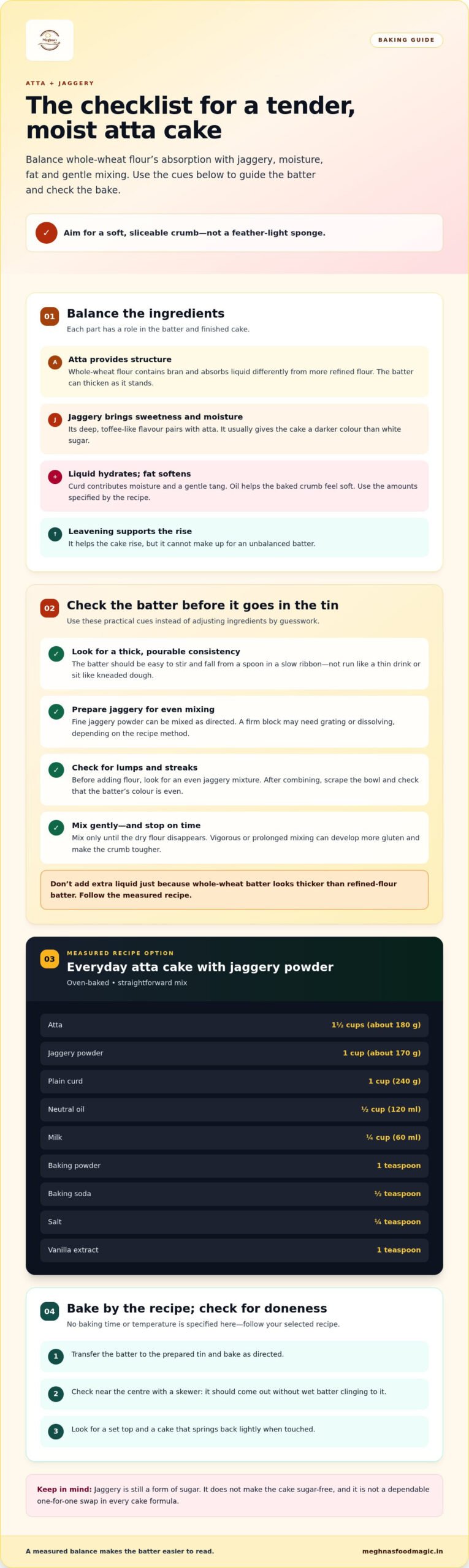
Look for a batter that is thick but easy to stir and pour. It should fall from a spoon in a slow ribbon, not sit like kneaded dough or run like a thin drink. Mix only until the dry flour disappears. Vigorous or prolonged mixing can develop more gluten, making the crumb tougher rather than tender.
What jaggery contributes to flavour and sweetness
Jaggery lends a deep, toffee-like note that pairs naturally with atta, and its colour usually makes the cake darker than one sweetened with white sugar. Its form matters, too. Fine jaggery powder disperses differently from a firm block, which may need grating or dissolving for an even batter. Follow the selected recipe’s preparation method so the sweetener doesn’t remain in lumps.
Jaggery is still a form of sugar, and its sweetness and moisture can vary. It isn’t a dependable one-for-one swap in every cake formula. Use the recipe’s measured quantity rather than adjusting by guesswork. Changing the sweetener can also change the batter’s moisture and the cake’s final texture.
In a reliable atta cake recipe with jaggery, each ingredient has a job: flour provides structure, liquid hydrates it, fat helps create tenderness, and leavening supports the rise. Gentle mixing and attentive baking bring those parts together. The aim isn’t a feather-light sponge, but a soft, sliceable cake with a moist crumb and the warm flavour of jaggery.
How Do Jaggery and Atta Work Together in Cake Batter?
Think of the batter as a balance: atta needs enough liquid to hydrate, jaggery brings sweetness and moisture, fat softens the crumb, and leavening helps the cake rise. Each ingredient affects the others, so changing the measured liquid or sweetener can alter the batter’s thickness and how the cake bakes. For more on atta’s baking properties, see Understanding Atta Flour in Baking.
In an atta cake recipe with jaggery, curd and oil often play complementary roles when the recipe includes them. Curd contributes moisture and a gentle tang, while oil helps the baked crumb feel soft. The balance depends on the formula, so don’t add extra liquid just because whole-wheat batter looks thicker than refined-flour batter.
Should jaggery be grated, melted, or dissolved first?
Follow the preparation method specified in your recipe. Fine jaggery powder can be measured and mixed directly if instructed; a firm block is easier to distribute when finely grated. If the method calls for dissolving jaggery in liquid, stir until the liquid looks even and strain it if the jaggery contains visible grit. The liquid used to dissolve it also counts toward the batter’s moisture, so avoid switching methods casually.
Before adding flour, check that the jaggery mixture has no obvious lumps or dense syrupy streaks. After combining, scrape the bowl and check that the colour is even throughout. Undissolved pieces can leave pockets of concentrated sweetness, while uneven distribution can make some bites noticeably sweeter than others.
Why do curd, oil, or other liquids matter?
Use only the liquids and fats listed in your chosen recipe. Curd moistens the batter, and oil contributes richness and tenderness. If milk is included, it helps bring the mixture to a pourable consistency. Too much liquid can leave the batter runny, while too little can make it stiff and difficult to spread. Aim for a thick batter that drops from a spoon in a slow ribbon, rather than flowing like a drink or holding its shape like dough.
Leavening, when included, creates lift, but it can’t compensate for an unbalanced batter. Mix just until the flour is incorporated, then transfer the batter to the prepared tin and bake as directed. Check near the centre with a skewer: it should come out without wet batter clinging to it. The top should look set, and the cake should spring back lightly when touched.
Balanced moisture gives atta time to hydrate and helps the cake bake into a tender, even crumb. A cake made with dates has its own flavour and moisture balance, so treat it as a separate recipe rather than a direct swap. You can also watch Meghna’s recipe videos on YouTube for visual cues as batter comes together.
Which Atta Jaggery Cake Method Should You Choose?
Both options use familiar ingredients but prepare the jaggery differently. Choose the first for a straightforward mix with jaggery powder. Choose the second if you have block jaggery and want to dissolve it before mixing. These are oven-baked versions. Match the method to your ingredients, and use the batter and doneness cues rather than changing quantities mid-bake.
Recipe option one: a simple everyday atta jaggery cake
Ingredients: 1½ cups (about 180 g) atta; 1 cup (about 170 g) jaggery powder; 1 cup (240 g) plain curd; ½ cup (120 ml) neutral oil; ¼ cup (60 ml) milk; 1 teaspoon baking powder; ½ teaspoon baking soda; ¼ teaspoon salt; and 1 teaspoon vanilla extract.
Method: Heat the oven to 180°C and grease and line a 7-inch round cake tin. Whisk the atta, baking powder, baking soda, and salt in one bowl. In another bowl, whisk the curd, oil, jaggery powder, and vanilla until evenly combined. Fold the dry mixture into the wet mixture just until no dry flour remains, then stir in the milk. The batter should be thick but pourable. Transfer it to the tin and bake until the centre is set and a skewer comes out without wet batter. Cool before slicing so the crumb can settle.
This method is convenient for everyday baking. The curd and milk add moisture, while the measured leavening helps the cake rise.
Recipe option two: cake with dissolved jaggery
Ingredients: 1½ cups (about 180 g) atta; 1 cup (about 170 g) finely grated jaggery; ½ cup (120 ml) neutral oil; 1 cup (240 g) plain curd; ¼ cup (60 ml) milk; 1 teaspoon baking powder; ½ teaspoon baking soda; ¼ teaspoon salt; and 1 teaspoon vanilla extract.
Method: Heat the oven to 180°C and prepare a 7-inch round tin. Warm the milk until just warm, not boiling, then stir in the grated jaggery until dissolved. Let the mixture cool until lukewarm. Whisk in the curd, oil, and vanilla. Sift the atta, baking powder, baking soda, and salt together, then fold them into the wet mixture just until combined. Pour the batter into the tin and bake until the centre is set and a skewer comes out without wet batter. Cool before cutting.
Dissolving the jaggery helps distribute it through the liquid, while careful folding avoids overworking the atta. For more inspiration beyond cake, explore Indian dessert recipes.
Why Is My Jaggery Atta Cake Dense, Dry, or Sunken?
A change in texture is useful information. Before adjusting an atta cake recipe with jaggery, identify what you see: a tight crumb, dry slices, a dip in the centre, or uneven browning. Correcting the likely cause is usually more helpful than adding extra liquid or leavening without measuring.
What causes a dense or dry atta cake?
Dense crumb: Too much atta can make the batter stiff, and vigorous mixing after adding flour can make the crumb tougher. Measure flour by weight where the recipe gives a gram amount. If using cups, spoon flour into the cup and level it rather than packing it down. Fold only until the dry patches disappear.
Dry slices: The batter may have had too little moisture, or the cake may have baked beyond doneness. Keep the recipe’s curd, milk, and oil quantities as written; don’t compensate for thick batter by pouring in extra liquid. Start checking when the cake looks set, then test near the centre with a skewer. A few moist crumbs are different from wet batter clinging to it.
Why does a jaggery cake sink in the middle?
A sunken centre can point to a cake removed before its middle has set, too much leavening, or a disturbance while the structure is still fragile. Measure baking powder and baking soda accurately, preheat the oven, and avoid opening the door early in baking. Check the centre with a skewer before taking the cake out. If it shows wet batter, return the tin to the oven and check again after a short interval.
Once baked, let the cake rest in its tin until it is firm enough to handle, then turn it out carefully to cool. Cutting while it’s hot can make a properly baked crumb seem gummy.
How can I prevent uneven baking?
Uneven colour or texture may come from a tin placed off-centre, a crowded oven, or heat that doesn’t circulate well. Use the tin size and oven arrangement specified in the recipe, and place the tin on the centre rack. If one side consistently browns faster, check the cake near the end of baking and rotate the tin only if its structure is already set. Keep the measurements and method steady before changing the recipe.
For another celebration-ready bake, browse healthy birthday cake recipe ideas.
Chef Meghna’s Notes: Serve, Store, and Enjoy Atta Cake with Jaggery
A good cake doesn’t need elaborate finishing. Let jaggery’s warm, caramel-like flavour lead, and make small adjustments only when you understand how they affect the batter. These notes will help you serve the cake at its best and avoid turning a simple bake into a guessing game.
Substitutions and finishing touches
For either atta cake recipe with jaggery, use the form of jaggery specified in that method. Powder and grated jaggery can behave differently in the batter, so changing the form may affect how evenly the sweetener mixes. Keep the measured amount the same, and don’t replace jaggery with another sweetener unless you’re following a recipe designed for that swap.
Keep the curd, oil, and milk quantities as written, too. Replacing curd with a thinner liquid or reducing the oil can change both batter thickness and crumb tenderness. For a simple finish, serve slices plain or add a light dusting of cinnamon, a few chopped nuts, or a spoonful of whipped cream. These are optional accents, not ingredients the cake needs.
For more ideas beyond this bake, explore more Indian dessert recipes.
How to store and serve the cake
After baking, let the cake rest in its tin until it’s firm enough to handle, then transfer it to a rack and cool completely before covering. Trapping steam while it’s warm can create condensation on the cake’s surface. Once cool, store it in an airtight container. If you’re serving it gradually, keep the cake whole for as long as possible to limit exposed crumb.
If you refrigerate the cake, keep it covered so it doesn’t pick up other food aromas. Chilling can make the crumb feel firmer, so let a slice lose its chill before serving. For the softest texture, cut with a clean, sharp knife and avoid pressing down on the cake as you slice.
Every oven and kitchen behaves a little differently, so note the tin, oven setting, and doneness cues that worked for you. That small record makes the next bake easier to adjust with confidence. Meghna’s channel also has recipe videos to help you follow the process.
Bring a Tender Jaggery Cake to Your Table
A soft atta cake is within reach when you balance the flour’s need for moisture with jaggery’s sweetness, measure ingredients carefully, and mix the batter gently. Choose the method that suits your ingredients and equipment, then use the cake’s texture and doneness cues to guide you. If the crumb turns out dense, dry, or sunken, identify the likely cause before changing the recipe next time.
This atta cake recipe with jaggery is an invitation to enjoy whole-wheat baking without treating it as a compromise. Jaggery brings its own deep flavour, while the right balance of liquid and fat helps create a tender slice. Meghna’s free recipe database also includes a dedicated Cake Therapy baking collection.
Gather your ingredients, take your time with the mixing, and enjoy the ritual of baking. Explore Meghna’s free recipe database and Cake Therapy collection for your next baking idea.
Frequently Asked Questions
Can I make atta cake with jaggery instead of sugar?
Yes, you can bake with jaggery, but don’t assume it will work as a direct one-to-one swap for sugar. Jaggery brings its own sweetness, moisture, flavour, and colour, so changing the amount may affect the batter and crumb. Use a recipe written for jaggery, measure the quantity carefully, and prepare it as directed, such as using fine powder or dissolving grated jaggery in the recipe’s liquid. Jaggery is still a form of sugar.
How do I make an atta cake with jaggery soft instead of dense?
Measure the atta accurately and mix gently once the flour goes in. Too much flour can make the batter stiff, while prolonged mixing can create a tougher crumb. Keep the recipe’s curd, milk, and oil quantities unchanged, and aim for a thick but pourable batter. Fold only until no dry flour remains, then bake in the specified tin size. Check the centre for doneness rather than relying only on the cake’s colour.
Why is my jaggery atta cake dry?
A dry cake may have had too much flour, too little liquid, or more time in the oven than it needed. Spoon flour into a measuring cup and level it instead of packing it down, or weigh it if the recipe gives a weight. Keep the listed curd, milk, and oil measurements intact. Near the end of baking, test the centre with a skewer and remove the cake when it comes out without wet batter.
Why did my jaggery cake sink in the middle?
A sunken centre can happen if the cake is underbaked, the leavening is overmeasured, or the oven door is opened before the centre sets. Measure baking powder and baking soda carefully, preheat the oven, and wait until the cake looks set before checking. If a skewer shows wet batter, continue baking and check again shortly. After baking, let the cake firm up in its tin before turning it out or slicing.
Can I make atta jaggery cake without an oven?
Yes, but use a recipe and method designed for oven-free baking rather than transferring an oven recipe unchanged. A heavy-bottomed covered cooker or a covered kadai with a trivet can provide indirect heat, with the cake tin kept above the base. Follow the equipment-specific instructions for safe use and gentle heat. Check doneness at the centre with a skewer; baking time can vary with the pan, flame, and equipment.
How should I store atta cake made with jaggery?
Cool the cake completely before covering it in an airtight container. Covering it while warm can trap steam and leave moisture on the surface. Keep the cake whole until you’re ready to serve, since cut sides dry out more quickly. If you refrigerate it, keep it covered to protect its flavour and texture, then let a slice lose its chill before serving. Follow the recipe’s storage guidance if it gives specific instructions.
Disclaimer
This is a recipe food blog page and not nutrition or doctor and hence do not claim to cure any illness. If you have specific health issues please consult a qualified doctor or certified nutritionist.
I do consult experts, research Internet and at times seek help from Gemini to collect relevant information to put together some of these blogs.

