
Barnyard Millet Recipes for Dinner: 3 Nutritious & Delicious Chef-Approved Ideas
What if the secret to a high-protein, gourmet dinner wasn’t found in an expensive meat cut, but in a tiny, ancient grain often tucked away on the back of your pantry shelf? You’ve likely tried cooking millets before only to end up with a sticky, mushy mess or a bowl that feels like eating flavorless sand. It’s deeply frustrating when you’re trying to prioritize wellness but the texture simply doesn’t deliver that comforting, rice-like satisfaction your family craves at the end of a long day.
We believe that healthy eating should be a celebration, not a compromise. In this guide, I’ll show you how to transform these humble grains into “Food Magic” with three expert barnyard millet recipes for dinner that balance nutrition with incredible flavor. You’ll learn the essential “why” behind proper soaking times for better digestion and the precise water ratios needed for a fluffy, professional finish. We’re moving beyond basic porridge to create vibrant, chef-approved meals that make fitness feel like an absolute treat. From troubleshooting common texture issues to mastering bold seasoning, you’re about to discover how simple it is to bring harmony and excitement back to your kitchen table.
Key Takeaways
- Master the essential 2-4 hour soaking technique to ensure your millet is perfectly digestible and achieves a light, fluffy texture every time.
- Discover three gourmet barnyard millet recipes for dinner that transform simple, high-protein ingredients into flavorful meals the whole family will love.
- Learn why Barnyard millet (Sanwa) is the ultimate low-GI rice alternative to help you avoid post-dinner lethargy and maintain your energy levels.
- Unlock practical meal prep strategies for batch cooking and storing millet, making healthy, stress-free weeknight dinners a reality for busy schedules.
- Access professional troubleshooting tips in Chef Meghna’s Notes to solve common issues like stickiness and find the best grain substitutions for your pantry.
Why Barnyard Millet is the Perfect Dinner Replacement for Rice
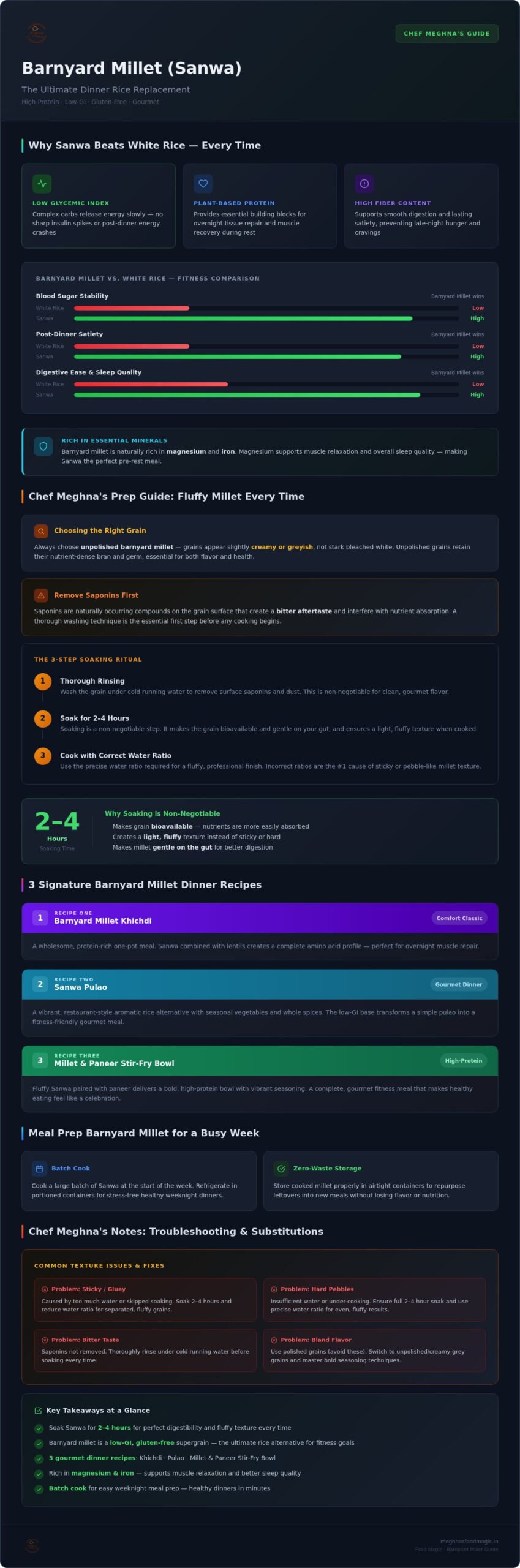
Barnyard millet, or Sanwa, isn’t just a grain for fasting days; it’s a nutritional powerhouse waiting to revitalize your evening meals. When you think about barnyard millet recipes for dinner, you’re looking at a gluten-free supergrain that boasts a remarkably low glycemic index. This means you won’t experience those sharp energy crashes that often follow a heavy rice-based meal. Instead, you get a steady, clean source of energy that respects your body’s natural rhythms and fitness goals.
The true beauty of this grain lies in what I call the “Lightness Factor.” Traditional dinners can often leave you feeling weighed down and lethargic, making it hard to enjoy your evening or wake up refreshed. Sanwa changes that narrative completely. It’s packed with high fiber and protein, which are essential for overnight muscle repair while you sleep. This is where my “Food Magic” philosophy comes to life. We’re choosing ingredients that nourish the body from the inside out without ever sacrificing the joy of a delicious, gourmet meal. It’s about turning a simple grain into something extraordinary that makes your body feel as good as your taste buds do.
- High Fiber Content: Supports smooth digestion and keeps you feeling satisfied for hours, preventing late-night hunger.
- Plant-Based Protein: Provides the essential building blocks your body needs for tissue repair during your rest phase.
- Low Glycemic Index: Helps maintain stable blood sugar levels, preventing the insulin spikes that lead to restless nights.
Barnyard Millet vs. White Rice: A Fitness Perspective
Choosing Sanwa over white rice is a game-changer for anyone focusing on their health. While white rice can cause rapid insulin spikes due to its simple starch structure, the complex carbohydrates in barnyard millet release energy slowly. This steady release provides lasting satiety, helping you feel full throughout the night and effectively curbing those late-night cravings for sugary snacks. It’s a strategic choice for weight management that doesn’t feel like a restriction. If you’re looking for more ways to stay on track without losing the excitement of cooking, exploring diet recipes can provide additional context for your weight loss journey.
Digestive Ease for Better Sleep
Sleep quality is deeply connected to what we eat before bed. Because barnyard millet is incredibly gentle on the digestive system, it allows your body to focus on rest and recovery rather than heavy processing during the night. It’s naturally rich in essential minerals like magnesium and iron. Magnesium is particularly known for its ability to support muscle relaxation and overall sleep quality. Integrating this grain is a simple way to follow a high protein guide for Indian vegetarians while ensuring your digestive health remains a priority. Transitioning to barnyard millet recipes for dinner isn’t just a dietary change; it’s a step toward waking up feeling vibrant, light, and ready to conquer the day.
The Secret to Fluffy Barnyard Millet: Chef Meghna’s Prep Guide
Achieving that restaurant-style, separated texture in your barnyard millet recipes for dinner isn’t a matter of luck; it’s a science. If you’ve ever been disappointed by millet that turned out like hard pebbles or a gluey mass, the culprit was likely skipped soaking or an incorrect water ratio. To start, you must choose the right raw material. Always look for high-quality, unpolished barnyard millet. These grains appear slightly creamy or greyish rather than stark, bleached white. Unpolished grains retain their nutrient-dense bran and germ, which is essential for both flavor and health.
Before the grains even touch the cooking pot, you must address the saponins. These are naturally occurring compounds on the surface of the grain that can create a bitter aftertaste and interfere with nutrient absorption. A thorough washing technique is the first step in my “Food Magic” process. It ensures your dinner is not only nutritious but also gourmet in its flavor profile. By mastering these prep steps, you’ll find that millet can be just as versatile and satisfying as your favorite basmati rice.
The 3-Step Soaking Ritual
Soaking is a non-negotiable step for anyone serious about millet nutrition and texture. It’s the secret to making the grain bioavailable and gentle on your gut.
- Step 1: Thorough Rinsing. Wash the grains in a deep bowl, rubbing them gently between your fingers. Repeat this 3 to 4 times until the water runs completely clear.
- Step 2: The 2-4 Hour Soak. Submerge the cleaned grains in fresh water for at least 2 to 4 hours. This crucial window neutralizes phytic acid, an anti-nutrient that can block the absorption of minerals. When you neutralize these compounds, you unlock the full nutritional benefits of millets, ensuring your body actually absorbs the iron and magnesium they provide.
- Step 3: Draining and Air-Drying. Use a fine-mesh strainer to drain the water. Let the grains sit in the strainer for about 10 minutes to air-dry. This tiny detail prevents the grains from sticking together during the initial cooking phase.
Stovetop vs. Pressure Cooker: Which is Better?
The method you choose depends entirely on the “vibe” of your dinner. For a vibrant pulao where you want “khila-khila” (perfectly separated) grains, the stovetop is king. Use the golden ratio of 1:2 (one cup of millet to two cups of water). Bring it to a boil, then simmer on the lowest heat setting with a tight lid until the water is fully absorbed. If you’re craving a soft, soul-warming khichdi, the pressure cooker is much faster; use a slightly higher water ratio and cook for 2 whistles on medium heat. The perfect grain is one that is soft to the touch but holds its individual shape. If you want to see my favorite “khila-khila” technique in action, check out the demonstrations on my YouTube channel for more expert tips.
3 Signature Barnyard Millet Dinner Recipes
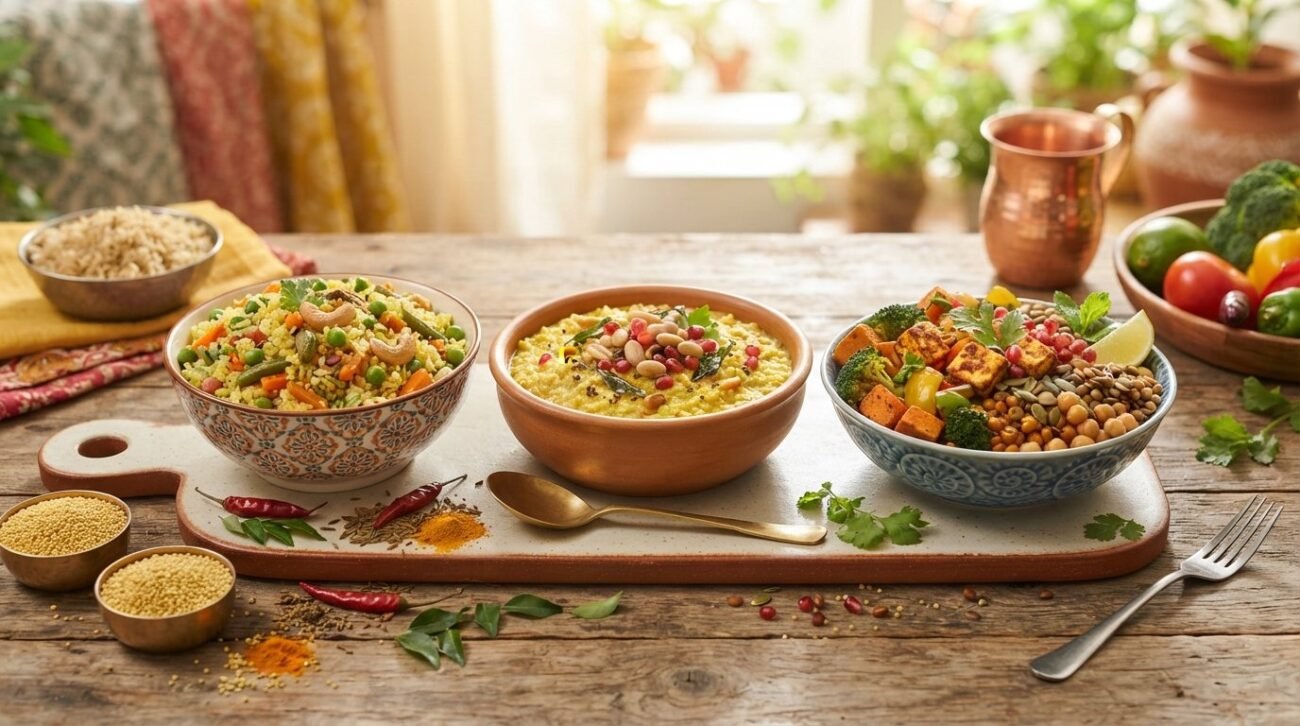
Forget the outdated notion that Sanwa is only meant for religious fasting days. It’s time to reclaim this grain as a vibrant, daily staple that brings both health and excitement to your evening table. These barnyard millet recipes for dinner focus on high-quality plant-based proteins and a rainbow of fresh vegetables to ensure every bite is a celebration. By embracing these whole grain health benefits, you’re not just eating dinner; you’re fueling your body with complex carbohydrates that sustain you through the night. If you’re a visual learner, I’ve curated a 30+ Millet Recipes By Meghna playlist to help you master the “Food Magic” techniques in your own kitchen.
Recipe 1: One-Pot Vegetable Barnyard Millet Khichdi
This is the ultimate comfort meal when you want something soul-warming yet incredibly light on the stomach. The combination of millet and moong dal creates a complete protein profile, making it a fantastic recovery meal after a long day.
- Ingredients: 1/2 cup Barnyard Millet (soaked for 2-4 hours), 1/4 cup Moong Dal, 1 cup mixed veggies (carrots, beans, peas), 2.5 cups water, 1 tsp ghee, cumin seeds, and turmeric.
- Instructions: Heat ghee in a pressure cooker and splutter the cumin. Sauté your veggies with a pinch of turmeric until they’re slightly softened. Add the soaked millet, dal, and water. Pressure cook for 3 whistles on medium heat.
- Serving Suggestion: Let the steam release naturally. Serve this creamy khichdi with a bowl of fresh curd or a punchy garlic chutney for a traditional touch.
Recipe 2: Fragrant Sanwa Pulao with Roasted Nuts
When you’re craving a gourmet experience, this pulao delivers “khila-khila” grains with a delightful crunch. It’s proof that barnyard millet recipes for dinner can be sophisticated enough for guests while remaining fitness-friendly.
- Ingredients: 1 cup Barnyard Millet (soaked and drained), 1.5 cups water, 1/4 cup roasted cashews or peanuts, 1 bay leaf, 2 cloves, 1 chopped onion, and 1 tsp ginger-garlic paste.
- Instructions: Sauté the whole spices in a little oil or ghee, followed by the onions and ginger-garlic paste until fragrant. Add the millet and gently toss to coat the grains. Add water and cook on a low flame with a tight lid until all liquid is absorbed.
- Chef’s Touch: Once cooked, fluff the grains with a fork. Garnish with the roasted nuts, fresh coriander, and a generous squeeze of lemon to brighten the earthy flavors.
Recipe 3: High-Protein Millet & Paneer Stir-Fry
This recipe is a modern fusion that brings a “Cake Therapy” style aesthetic to your dinner plate. It’s fast, punchy, and perfect for those who enjoy a bit of texture and spice in their meals.
- Ingredients: 1 cup cooked Barnyard Millet, 100g Paneer cubes, 1 bell pepper (sliced), 1 tbsp soy sauce (optional), green chilies, and freshly cracked black pepper.
- Instructions: In a wide pan, toss the paneer cubes until they turn golden. Add the bell peppers and chilies, stir-frying on high heat to keep them crunchy. Fold in the pre-cooked millet and soy sauce. Season heavily with black pepper and toss until everything is well combined.
- Why it works: The soft paneer contrasts beautifully with the grainy millet, providing a high-protein punch that keeps you full without any post-dinner heaviness.
How to Meal Prep Barnyard Millet for a Busy Week
Life moves fast, but your health goals don’t have to take a backseat. Meal prepping is the ultimate secret weapon for anyone looking to enjoy barnyard millet recipes for dinner without the daily grind of starting from scratch. By spending just 20 minutes on a Sunday, you can set yourself up for a week of vibrant, high-protein meals. If you’re curious about how this grain fits into a larger fitness plan, exploring the Best Millets for Weight Loss in India can give you a broader perspective on why this specific grain is such a winner for your evening routine.
Batch cooking is about working smarter, not harder. Cook about two cups of dry millet and store it properly to create a blank canvas for your culinary therapy. One night it’s a quick stir-fry with paneer, and the next it’s a base for a hearty dal. Don’t forget the morning after; leftover dinner millet makes a fantastic savory upma or a creamy breakfast porridge topped with fresh fruit and nuts.
Storage Secrets for Freshness
Texture is everything. How you store your millet determines if it stays fluffy or turns into a dry, unappealing mass. I always recommend using airtight glass containers because they don’t leach chemicals and they keep the moisture locked in. Cooked millet stays perfectly fresh for up to 3 days in the refrigerator. When you’re ready to eat, don’t just zap it in the microwave. Use the steam method: sprinkle a few drops of water over the grains, cover the bowl with a lid, and heat it gently on the stove or in a microwave. This revives the moisture without making the grains rubbery. Repurposing leftovers is the first step toward a zero-waste, high-health kitchen.
The Ultimate Side Dish Pairings
To keep your barnyard millet recipes for dinner exciting, you need the right companions to balance the textures. This grain has a delicate, nutty profile that pairs beautifully with protein-rich sides like a thick yellow moong dal or a spicy soya chunks stir-fry. If you want something refreshing, a vegetable-loaded raita with pomegranate seeds adds a burst of sweetness and gut-friendly probiotics to your plate. For those looking to build a complete lifestyle around these choices, the Get Fit With Meghna playlist offers holistic meal planning tips to keep you inspired and on track.
Chef Meghna’s Notes: Substitutions and Troubleshooting
Mastering barnyard millet recipes for dinner is like learning a new language; once you understand the basic grammar of soaking and water ratios, you can express yourself with total creative freedom. My “Food Magic” approach isn’t about following rigid rules, but about giving you the tools to adjust on the fly. Whether you’re dealing with a texture mishap or a missing ingredient, there’s always a delicious solution waiting in your pantry. Remember, your kitchen is a sacred space for culinary therapy, where simple grains transform into nourishing experiences that bring harmony to your daily life.
Chef Meghna’s Troubleshooting Guide
If your millet turns out too dry, don’t panic. Simply sprinkle a splash of warm water over the grains, cover with a tight lid, and steam on low heat for exactly 2 minutes. This creates a mini-sauna that rehydrates the core without making the outside mushy. On the flip side, if the flavor feels a bit bland, you likely didn’t push your aromatics far enough. Next time, try doubling the amount of ginger, garlic, and green chilies during the tempering phase to build a deeper, more robust flavor foundation. For those with picky eaters at home, try my favorite kid-friendly hack: blend cooked millet with a little warm milk or vegetable broth until it reaches a “mashed potato” consistency. It’s a stealthy way to introduce whole grains while keeping the texture familiar and comforting for the little ones.
If you’ve accidentally overcooked the grain and it feels sticky or mushy, spread it out on a large, flat plate immediately. Let it air dry under a fan for about 10 minutes. This stops the residual cooking process and helps the individual grains firm up. You can then sauté the grains briefly in a pan with a teaspoon of ghee to help them separate before serving.
Substitutions for Variety
You can easily swap white rice for barnyard millet in almost any traditional recipe by using a 1:1.5 ratio of millet to water. While you can certainly use Jowar or Bajra as alternatives in these dinner ideas, keep in mind that these grains are much denser. They require longer soaking times and a higher water-to-grain ratio to achieve a soft bite. For a unique dinner twist, try using barnyard millet flour to thicken stews or create a silky, soup-like consistency that feels indulgent yet light. For more specialized ideas on how to pivot your pantry staples, visit meghnasfoodmagic.in to explore our full database of nutritious transformations.
Ready to Transform Your Evenings with Food Magic?
You’ve unlocked the secrets to turning a humble ancient grain into a gourmet experience. By mastering the 2-4 hour soaking ritual and understanding the golden water ratios, you’re now equipped to create perfectly fluffy barnyard millet recipes for dinner that your whole family will love. This isn’t just about counting nutrients; it’s about reclaiming the joy of cooking and feeling light and vibrant every single morning. We’ve explored how Sanwa acts as the ultimate rice replacement, providing low-GI energy that supports your fitness goals while you sleep.
Whether you’re batch cooking for a hectic work week or experimenting with a fragrant pulao for a special evening, you’re taking a massive step toward your wellness goals. Join thousands of fitness enthusiasts on the Get Fit With Meghna journey and see how effortless healthy living can truly be. Your kitchen is a sacred space for creativity and nourishment, so don’t be afraid to add your own personal touch to these dishes.
Keep exploring, keep tasting, and most importantly, keep celebrating the magic of real food. I can’t wait to see the beautiful, high-protein meals you create!
Frequently Asked Questions
Is barnyard millet good for weight loss when eaten at dinner?
Yes, barnyard millet is an excellent choice for weight loss because of its high fiber content and low glycemic index. It provides sustained satiety, which prevents you from overeating or reaching for late-night snacks. Replacing refined grains with barnyard millet recipes for dinner helps maintain stable blood sugar levels, making it easier for your body to burn fat during its rest phase.
How long should I soak barnyard millet before cooking for dinner?
You should soak barnyard millet for at least 2-4 hours before cooking. This duration is essential to neutralize phytic acid, an anti-nutrient that can interfere with mineral absorption. Proper soaking also softens the outer bran layer, ensuring the grain cooks evenly and is much gentler on your digestive system during the night, leading to better sleep and recovery.
Can I eat barnyard millet every day instead of rice?
You can safely eat barnyard millet every day as a direct, more nutritious replacement for white rice. It offers significantly more protein and fiber than polished rice, helping you stay fit and energetic. While daily consumption is healthy, I recommend a millet rotation where you also include Jowar or Bajra throughout the week to ensure a diverse intake of different micronutrients.
What is the water-to-millet ratio for a fluffy barnyard millet pulao?
The golden ratio for a fluffy, “khila-khila” pulao is 1 cup of soaked millet to 2 cups of water. Using this precise measurement on a low stovetop flame ensures the grains absorb all the liquid without becoming mushy. Always let the cooked millet rest covered for 5 minutes after turning off the heat to allow the steam to finish the job perfectly.
Is barnyard millet (Sanwa) gluten-free and safe for Celiac diets?
Barnyard millet is naturally 100% gluten-free, making it a safe and highly nutritious choice for those with Celiac disease or gluten sensitivity. It’s a much more nutrient-dense alternative to many processed gluten-free products found in stores. Since it’s a whole grain, it provides essential B-vitamins and minerals that are often missing in restricted diets, supporting overall gut health.
Can kids eat barnyard millet for dinner? Any tips for picky eaters?
Kids can absolutely enjoy barnyard millet, and it’s a great way to sneak in extra nutrition. For picky eaters, try blending cooked millet into a “mashed potato” texture or mixing it into colorful vegetable-rich dishes. Its mild, nutty flavor is less intimidating than other grains, making it easier to incorporate into familiar family favorites like cutlets or savory porridges without any fuss.
What happens if I don’t soak barnyard millet before cooking?
If you skip the soaking step, the millet may remain hard and grainy even after a long cooking time. More importantly, unsoaked millet contains higher levels of phytic acid, which can cause bloating or digestive discomfort. Soaking for the recommended 2-4 hours ensures that the nutrients are bioavailable, meaning your body can actually absorb the vital iron and magnesium the grain offers.
Can barnyard millet be cooked in an air fryer for dinner recipes?
While you can’t boil raw millet in an air fryer, you can use it to create crispy dinner components. Use pre-cooked barnyard millet to make high-protein cutlets or tikkis, then air fry them until golden brown. This method uses significantly less oil than deep-frying, perfectly aligning with the “Get Fit With Meghna” philosophy of healthy, celebratory eating that doesn’t compromise on taste.
Disclaimer
This is a recipe food blog page and not nutrition or doctor and hence do not claim to cure any illness. If you have specific health issues please consult a qualified doctor or certified nutritionist.
I do consult experts, research Internet and at times seek help from Gemini to collect relevant information to put together some of these blogs.

