
Bisi Bele Bhath – ultimate definition of holistic comfort food.
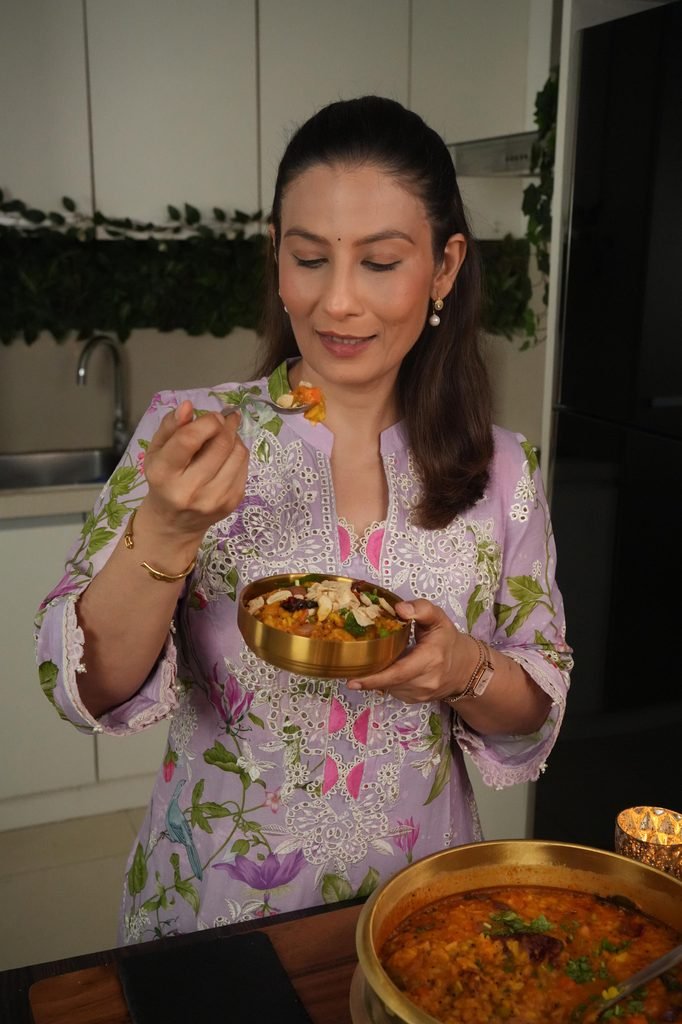
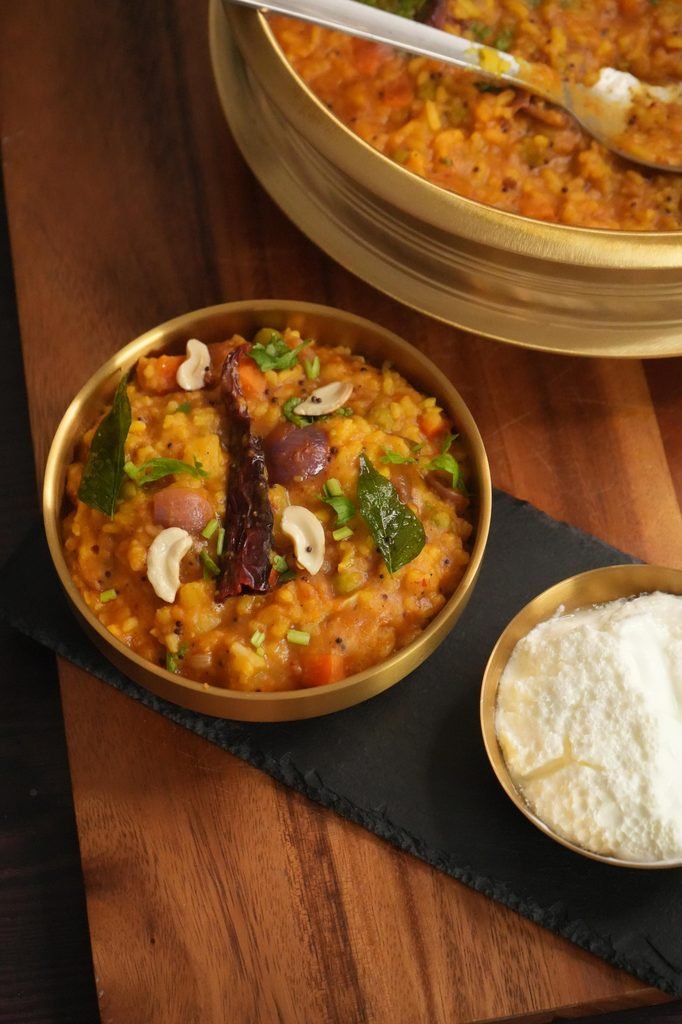
If you think you know comfort food, wait until you experience a warm, bubbling bowl of authentic Karnataka-style Bisi Bele Bhath! This classic South Indian one-pot meal translates literally to “hot lentil rice,” and once you smell the freshly roasted spice blend wafting through your kitchen, you will understand why it is legendary. When Kangna captured these rich, earthy tones and vibrant colors (#ShotByKangna), I knew this recipe had to be shared with all of you.
In this comprehensive guide, I will take you through the secret to crafting an authentic homemade Bisibille masala from scratch, combining it with wholesome vegetables, and achieving that melt-in-your-mouth texture that makes this dish a true masterpiece of Indian cuisine.
Time & Servings:
- Active Prep Time: 25 minutes
- Cook Time: 30 minutes
- Passive Time: 2 hours (for soaking dal and rice)
- Total Time: 2 hours 55 minutes
- Servings: 4-6 people
Why You Will Love This Recipe
Bisi Bele Bhath is the ultimate definition of holistic comfort food. By cooking the rice, protein-packed lentils, and fiber-rich vegetables together in a single pot, the flavors meld into a deeply satisfying, cohesive harmony. Unlike standard rice dishes, the magic here lies in the freshly ground spice powder—featuring roasted lentils, aromatic whole spices, and dry coconut—which gives the dish its signature depth and warmth. It is naturally vegetarian, deeply nourishing, and completely fills the house with an incredible aroma that instantly brings the family to the dining table.
Ingredients List
Here is everything you need to create this classic Karnataka delicacy:
For the Rice & Dal Mixture:
1 cup tuvar dal, soaked for 2 hours
1 cup rice, soaked for 2 hours
1.5 cups chopped mixed vegetables (carrot, beans, green peas, and potatoes)
Salt to taste
1.5 tsp turmeric powder (I am using Bhoj Masala)
For the Bisibille Masala:
2 tbsp oil
1 tbsp chana dal
1 tbsp urad dal
1 tsp whole fenugreek seeds
2 tsp whole coriander seeds
4 dried red chillies
4 cloves
1 small piece of cinnamon stick
1/4 cup shredded dry coconut
1 tsp poppy seeds (optional)
1 tsp Bhoj Magic Masala
For Making the Bisi Bele Bhath:
2 tbsp oil
1.5 tsp mustard seeds
1 tsp urad dal
1/2 tsp whole fenugreek seeds
1 dry red chili
A few fresh curry leaves
1/2 tsp hing (asafoetida)
A handful of cashews
10-12 small onions (sambar shallots)
Salt to taste
2 tbsp prepared bisibille masala
1/4 cup tamarind water
A small piece of jaggery
Warm water (as needed for adjusting consistency)
Fresh coriander, finely chopped (for garnish)
Creative Ingredient Substitutes & Zero-Waste Kitchen Ideas
I always love finding ways to minimise waste and adapt recipes to what is currently in your pantry:
Vegetable Scrapes: If you have vegetable ends or peels (like clean carrot ends or washed potato skins), do not throw them away! Boil them separately with water to create a rich, nutrient-dense vegetable stock that you can use instead of plain warm water to adjust the consistency of your Bisi Bele Bhath.
Lentil Variations: If you don’t have tuvar dal on hand, you can substitute it with a half-and-half mix of tuvar dal and moong dal for an even softer, smoother consistency.
Coconut Alternatives: If you are missing dry shredded coconut for the spice blend, you can use a small handful of unsweetened desiccated coconut or skip it and add an extra tablespoon of roasted peanuts for that rich, nutty texture.
Step-by-Step Recipe Instructions
Step 1: Prep the Rice and Dal Mixture
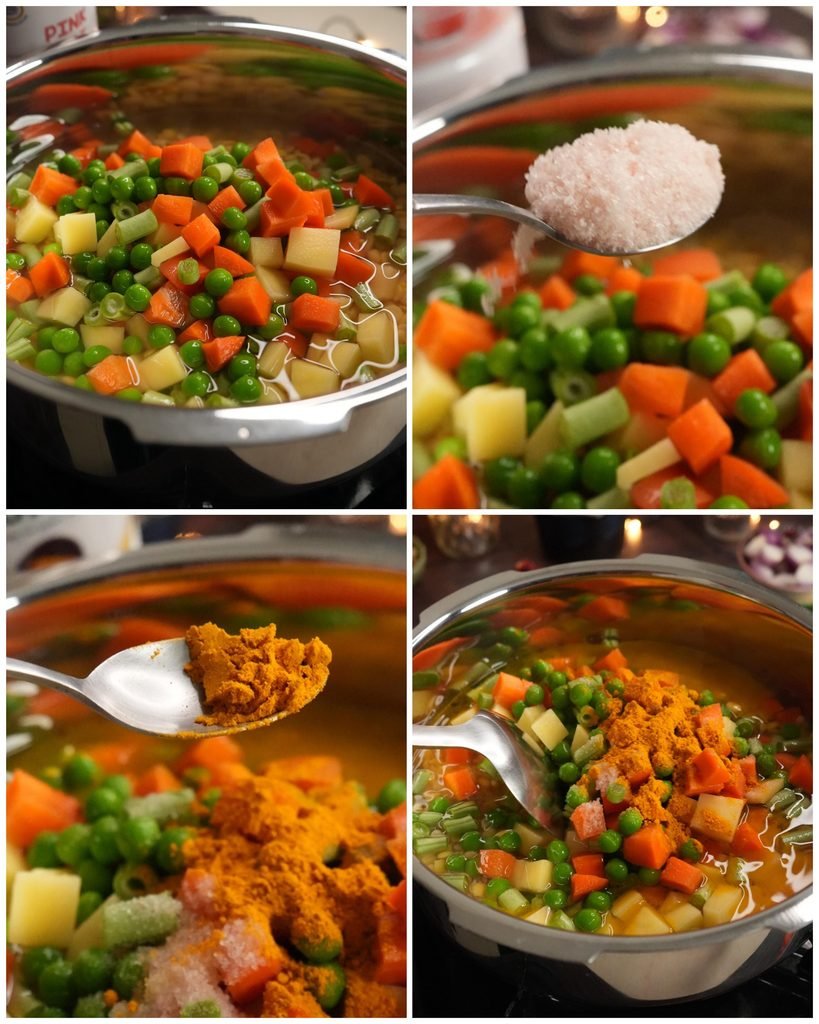
In a pressure cooker, take 1 cup of soaked tuvar dal and 1 cup of soaked rice (soaked for 2 hours each). Add 1.5 cups of chopped mixed vegetables (carrots, beans, green peas, and potatoes), salt to taste, and 1.5 tsp of turmeric powder. Mix everything well. Pressure cook on a medium flame for 3 to 4 whistles until everything is completely soft and cooked down.
Step 2: Roast the Whole Spices for the Masala
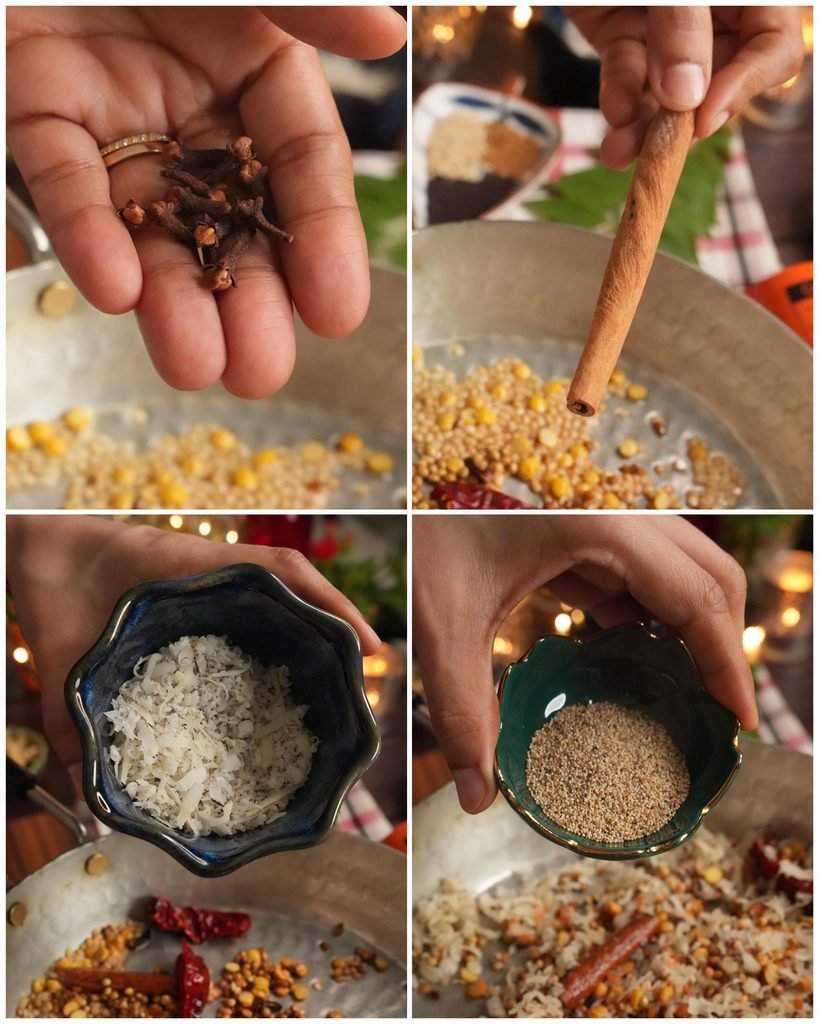
In a pan, take 2 tbsp of oil. Add 1 tbsp chana dal and 1 tbsp urad dal. Once the dals turn a light pink color, add 1 tsp whole fenugreek seeds, 2 tsp whole coriander seeds, 4 dried red chillies, 4 cloves, and a small piece of cinnamon stick. Fry everything on a medium flame for about 5 minutes until fragrant.
Step 3: Add Coconut and Grind
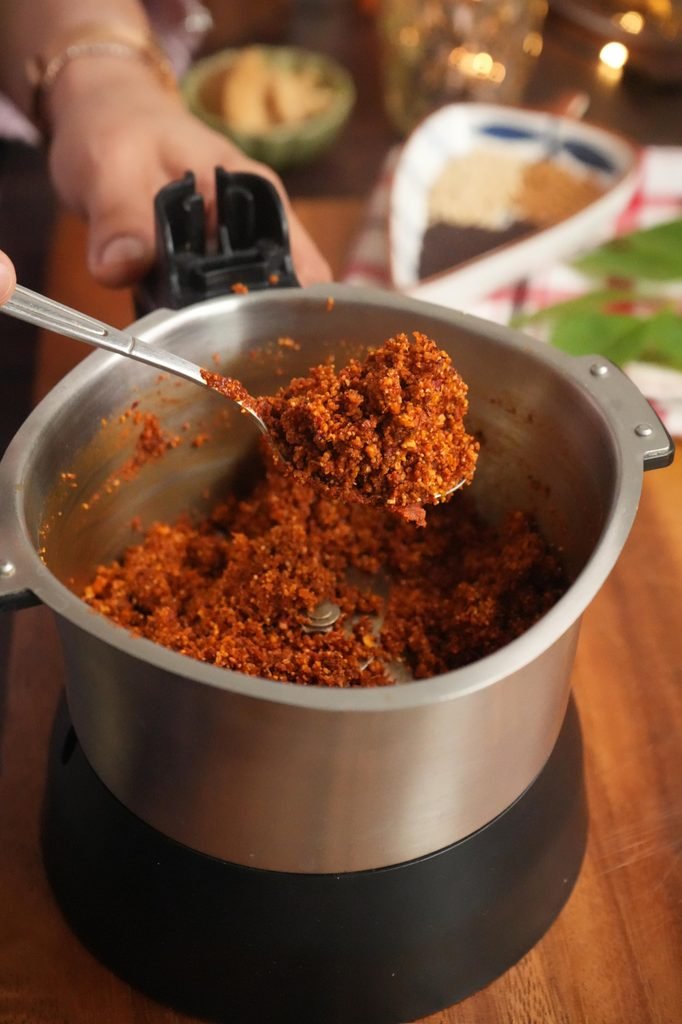
Turn the heat down to a slow flame and add 1/4 cup of shredded dry coconut and 1 tsp poppy seeds. Fry on a slow flame until you see a lovely golden color on the coconut. Turn off the heat and let the mixture cool down completely. Transfer it to a blender jar, add 1 tsp of Bhoj Magic Masala, and grind everything into a fine, aromatic powder.
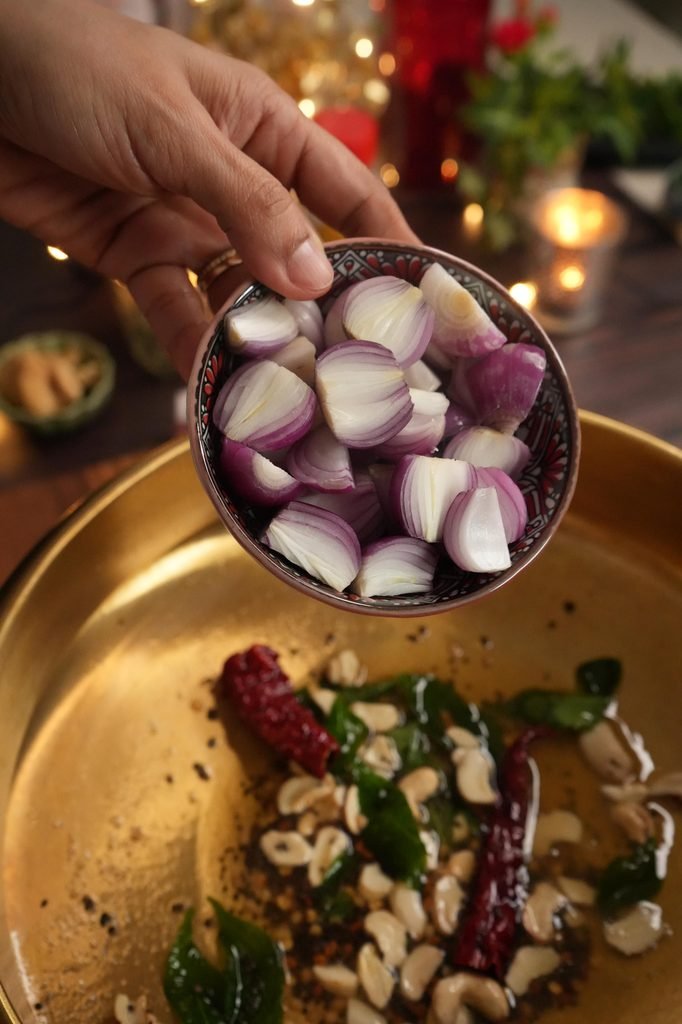
Step 4: Temper the Base
In a large kadai, add 2 tbsp of oil. Add 1.5 tsp mustard seeds, 1 tsp urad dal, 1/2 tsp whole fenugreek seeds, 1 dry red chili, and a few fresh curry leaves. Once you hear that satisfying crackling sound, add 1/2 tsp hing, some cashews, 10-12 small onions, and salt to taste. Fry everything for 7-8 minutes until the onions are soft and golden.
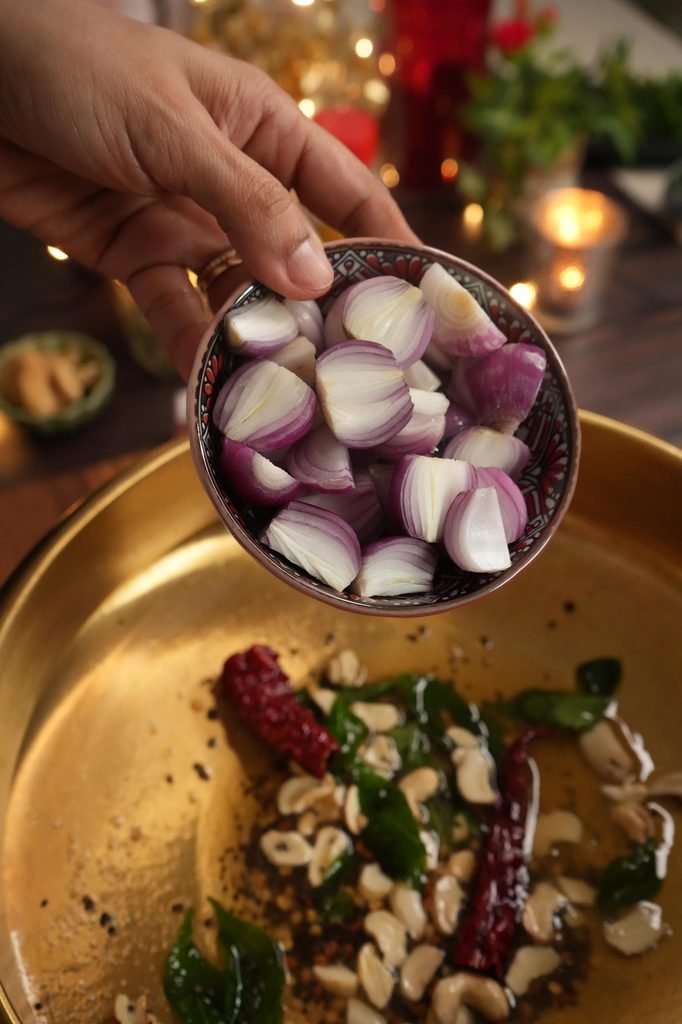
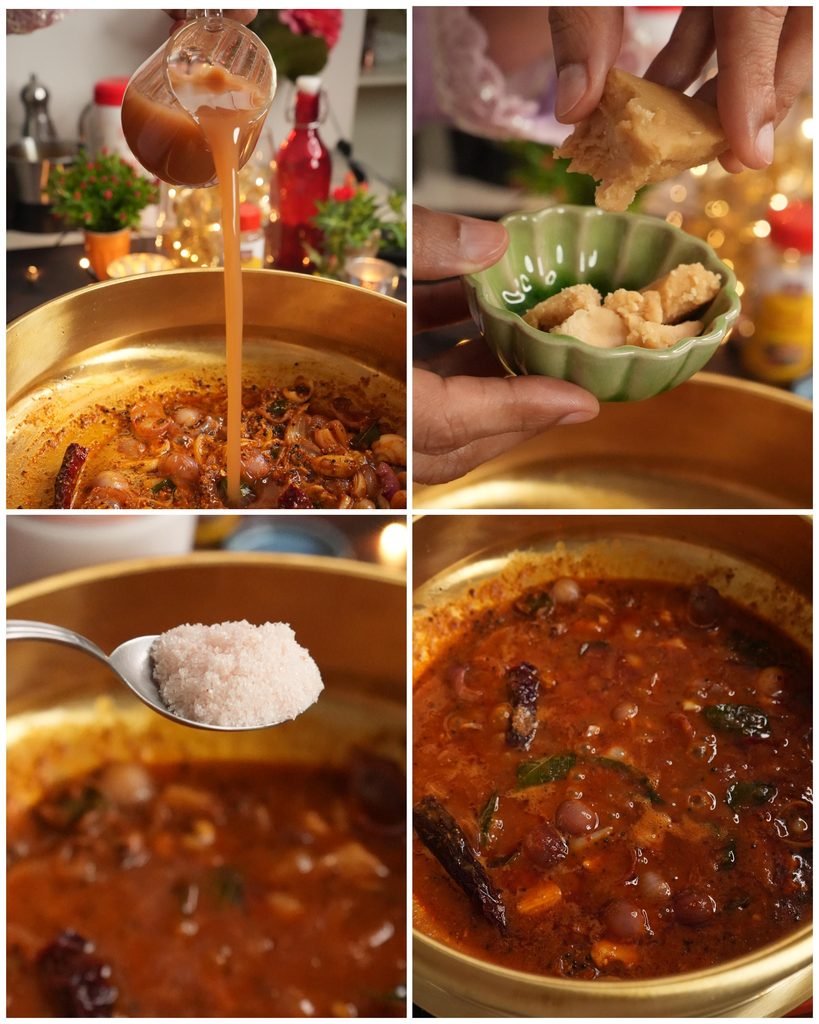
Step 5: Build the Gravy
To the onion mixture, add 2 tbsp of your freshly prepared bisibille masala, 1/4 cup of tamarind water, and a small piece of jaggery. Let the mixture come to a rolling boil so the raw flavours of the tamarind and spices meld together.
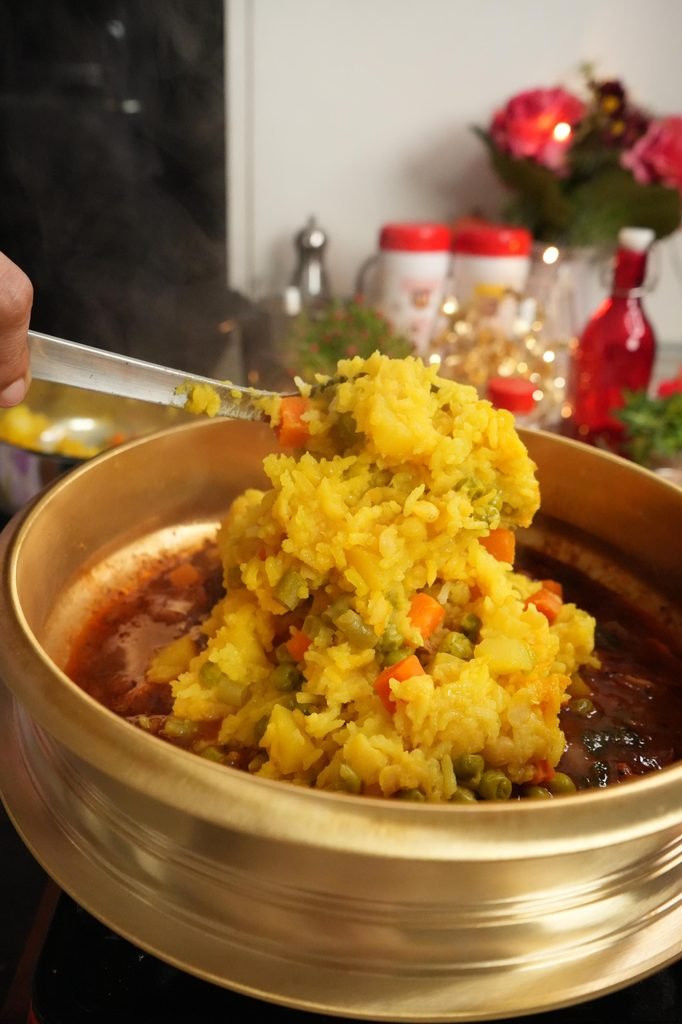
Step 6: Combine Rice, Dal, and Masala
Add the boiled rice, dal, and vegetable mixture into the kadai. Mix everything thoroughly with the masalas, ensuring no lumps remain. At this stage, you may add warm water to adjust the consistency—Bisi Bele Bhath should be rich, moist, and slightly loose, not dry.
Step 7: Garnish and Serve
Turn off the heat. Garnish these delicious Bisi Bele Bhath with plenty of fresh chopped coriander. Serve piping hot with a spoonful of ghee and roasted papad on the side!
Deep Dive: Nutritional Value of Each Ingredient
Every single component in this traditional recipe brings functional health benefits to your bowl:
Tuvar Dal (Yellow Pigeon Peas)
Nutrition: Approx. 80 calories, 2g protein, 18g carbs, 4g fiber.
Benefits: An exceptional source of plant-based protein and dietary fiber. It helps manage blood sugar levels and supports sustained energy throughout the day.
Nutrition (per 1/2 cup dry equivalent): Approx. 170 calories, 11g protein, 30g carbs, 8g fiber.
Rice
Benefits: Provides easily digestible carbohydrates that replenish glycogen stores and fuel your body efficiently.
Mixed Vegetables (Carrot, Beans, Peas, Potatoes)
Benefits: Packed with vitamins A, C, and K, as well as essential minerals and antioxidants. They boost immune function, protect eye health, and provide dietary roughage.
Spices & Dals in the Masala Blend
Fat: 6g
Benefits: Fenugreek aids in digestion and blood sugar regulation, turmeric provides powerful anti-inflammatory curcumin, and dry coconut supplies medium-chain triglycerides (MCTs) for healthy energy.
Total Nutritional Profile: The Final Calculation
This recipe yields a generous batch, perfect for feeding a family of 4 to 6 people.
Total Nutritional Value of the Entire Dish:
Calories: 1,450 kcal
Protein: 48g
Carbohydrates: 250g
Dietary Fiber: 32g
Fat: 30g
Nutritional Value Per Serving (Assuming 5 Servings):
Calories: 290 kcal
Protein: 9.6g
Carbohydrates: 50g
Dietary Fiber: 6.4g
Enjoy this wholesome, soul-warming bowl of South Indian tradition!
Chef Meghna

