
Gujarati Food Culture: Exploring a Deep Love for Recipes
What if the cuisine you’ve always considered indulgent is actually one of the most nutritionally intelligent food traditions in the world? Gujaratis love for food and recipes runs far deeper than the sweet-savory balance on your plate; it’s a living philosophy, passed down through generations, that instinctively understood the power of fermentation, plant protein, and whole grains long before wellness became a trend.
You already know this food is extraordinary. The spongy lift of a perfect Dhokla, the comforting warmth of a freshly rolled Thepla, the satisfying crunch of homemade farsan — these aren’t just recipes, they’re emotional landmarks. And if you’ve ever worried that the oil, the sugar, or the complex tadka techniques put truly healthy versions out of reach, that worry ends here.
This article pulls back the curtain on the vibrant philosophy behind Gujarati cuisine, showing you exactly how to recreate authentic favorites in ways that are lighter, smarter, and deeply nourishing. From mastering spice tempering without the guesswork to discovering millet-based twists on beloved classics, consider this your warm, expert invitation into a kitchen where tradition and wellness finally cook together.
Key Takeaways
- Gujaratis love for food and recipes is rooted in a living philosophy called “Aahar,” where every meal is an act of social, spiritual, and nutritional intention — not just sustenance.
- The traditional Gujarati Thali is a masterclass in balance, with each component — from Shaak and Kathol to Rotli and Mithai — serving a precise nutritional purpose that modern dietitians are only now beginning to fully appreciate.
- Beloved Farsan snacks like Dhokla and Muthiya can be reimagined using steaming and air-frying techniques that preserve every bit of authentic flavor while dramatically reducing unnecessary calories.
- Ancient grains like Bajra and Jowar have always been at the heart of Gujarati cooking, and understanding how to use them correctly — including proper preparation methods — unlocks powerful benefits for weight management and hormonal health.
- Chef Meghna’s approach bridges the gap between cherished culinary tradition and modern wellness, giving you a practical, joyful roadmap to cooking Gujarati favorites that nourish as beautifully as they taste.
The Heart of the Kitchen: Understanding Gujaratis Love for Food and Recipes
Food in Gujarat has never been just about eating. It’s an act of devotion, a thread of community, and a daily ritual woven into the spiritual fabric of everyday life. The Sanskrit concept of “Aahar” goes far beyond the English word “food” — it encompasses the idea that what you eat, how you prepare it, and with whom you share it directly shapes your body, your mind, and your relationships. In Gujarati homes, this philosophy isn’t quoted from ancient texts; it’s simply lived, meal after meal, generation after generation.
This is precisely what makes Gujarati cuisine so extraordinary to study and so deeply personal to experience. The tradition of seasonal eating, for instance, isn’t a modern wellness trend borrowed from a nutritionist’s handbook. Gujarati cooks have long understood that winter calls for warming sesame and jaggery, that the monsoon season demands lighter, easily digestible meals, and that summer invites cooling kokum and buttermilk. The “Vibrant Gujarat” food culture is a living, breathing calendar where the kitchen responds to the world outside it.
Gujaratis love for food and recipes is also inseparable from the social act of feeding others. A meal prepared without generosity is considered incomplete. Whether it’s the elaborate spread of a wedding thali or the simple warmth of a weekday Rotli and Shaak, the intention behind the cooking matters as much as the technique itself.
The Philosophy of Flavor: Why Sweet and Savory Coexist
The famous “Khatta-Meetha” balance — that signature dance of sour and sweet — isn’t a quirk of Gujarati taste. It’s an intelligent design. A small addition of jaggery in a savory dal or a vegetable dish neutralizes excess acidity, aids digestive enzyme activity, and rounds out sharp spice notes without overwhelming the palate. The result is a meal where every taste receptor is gently satisfied, which is one reason Gujarati food feels so complete and deeply comforting rather than one-dimensional.
- Jaggery adds mineral-rich sweetness without the blood sugar spike of refined sugar
- Tamarind and kokum provide the sour counterpoint that brightens heavier lentil dishes
- Green chilies and ginger deliver the heat that keeps the palate engaged
- Together, these elements create a meal that satisfies without needing excessive quantity
Chef Meghna’s Notes: The Cultural Spark
Pro Tip: Always choose dark, unrefined jaggery over refined sugar or even light jaggery powder. The deeper the color, the richer the molasses content, and the more authentic your Khatta-Meetha balance will taste.
Troubleshooting: If your dish has tipped too sweet, a small squeeze of fresh lemon or a pinch of amchur (dry mango powder) will pull it back beautifully. Too spicy? A teaspoon of jaggery and a splash of thin buttermilk can rescue the dish without masking its character.
Substitution: When fresh lemon isn’t available, amchur delivers a more concentrated, shelf-stable tang that works brilliantly in dry sabzis and stuffed snacks like Muthiya.
At Meghna’s Food Magic, this philosophy sits at the heart of everything: honoring the cultural wisdom embedded in these recipes while making them accessible, lighter, and genuinely nourishing for the way we cook and live today.
Decoding the Gujarati Thali: A Masterclass in Balanced Flavors
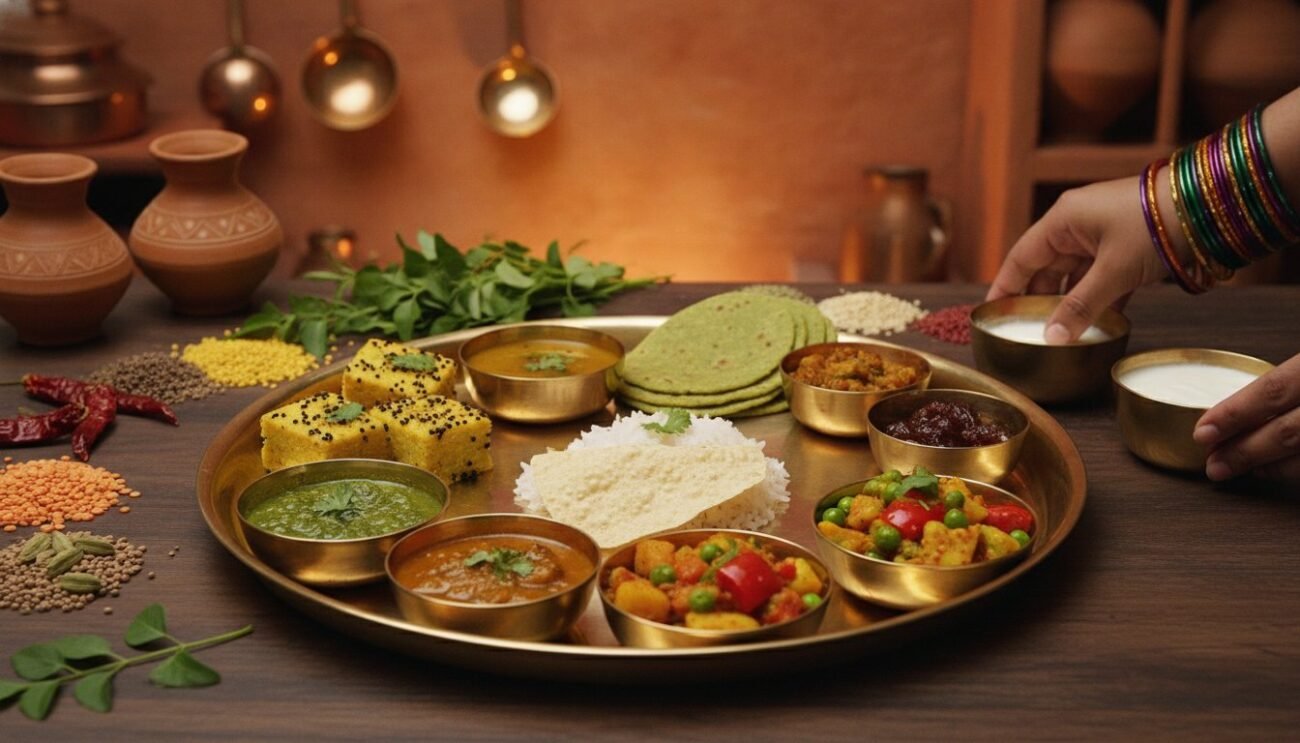
Picture a traditional Gujarati Thali in front of you. It’s abundant, colorful, and almost architectural in its arrangement. But here’s what most people miss entirely: that carefully arranged spread isn’t just generous hospitality. It’s a nutritional blueprint, designed with an intelligence that aligns remarkably well with what modern dietitians now recognize as the gold standard for balanced eating. The dietary guidelines and nutritional balance in Indian food have long validated the logic embedded in traditional meal structures like this one, and the Gujarati Thali is perhaps the most elegant expression of that logic.
Every component earns its place. Shaak (seasonal vegetables, dry or lightly curried) delivers fiber, micronutrients, and phytonutrients. Kathol (whole cooked pulses) provides the protein and sustained energy that keeps you full without heaviness. Rotli (thin, soft whole wheat flatbread) contributes complex carbohydrates and iron. Mithai, that small portion of sweetness at the end, isn’t indulgence for its own sake; it signals the meal’s completion to the digestive system and provides a gentle glucose lift that prevents the post-meal energy crash many people experience after heavy savory meals.
The serving order matters, too. Lighter, digestive elements like chaas (spiced buttermilk) and raw salad appear early. Heavier proteins and grains follow. Sweets close. This sequence mirrors the body’s digestive rhythm in a way that’s genuinely sophisticated, and it’s one reason Gujaratis love for food and recipes extends so naturally into an intuitive understanding of wellbeing.
Kathol and Protein: The Vegetarian Powerhouse
Moong, Chana, and Tuvar Dal are the quiet heroes of the Gujarati kitchen, and their nutritional contribution is anything but quiet. Together, they deliver a broad spectrum of essential amino acids that, when paired with the complementary proteins in Rotli, form a complete protein profile without a single gram of meat. The key to unlocking this is soaking. Eight to twelve hours of soaking in fresh water isn’t a suggestion; it’s a biological necessity. Soaking activates enzymes that break down phytic acid, the compound that blocks mineral absorption and causes the bloating that puts people off pulses entirely. Drain and rinse thoroughly after soaking, and you’ve already transformed the dish.
Want to build a genuinely high-protein Gujarati meal without leaning on paneer or heavy dairy? Combine a sprouted Moong Kathol with a lightly spiced Chana Shaak and a small portion of Tuvar Dal. That single thali can deliver substantial plant protein per serving, entirely from traditional ingredients. Explore Meghna’s Food Magic for high-protein pulse recipes that keep every bit of that authentic Gujarati character intact.
Chef Meghna’s Notes: The Perfect Thali Balance
Pro Tip: A pinch of hing (asafoetida) added to your dal’s tadka isn’t just flavor. Hing contains compounds that actively reduce gas-producing fermentation in the gut, making it a non-negotiable addition when cooking any pulse-heavy dish.
Technique: Soft, non-sticky Rotli comes down to one thing: resting the dough. After kneading, cover it and let it rest for at least twenty minutes. This allows the gluten to relax fully, making the dough pliable enough to roll thin without tearing. Don’t skip this step, even when you’re short on time.
Substitution: Swap white rice in your Khichdi for brown top millet or little millet (Kutki). Both cook in a similar timeframe to rice, absorb the same spice profiles beautifully, and bring a significantly higher fiber content that transforms Khichdi from a comfort food into a genuinely nourishing, weight-conscious meal. This single swap is one of the simplest ways Gujaratis love for food and recipes can evolve without losing an ounce of soul.
Ready to see how these thali principles translate into everyday cooking? Explore Chef Meghna’s recipe channel for practical, step-by-step guidance on building balanced Gujarati meals that work beautifully for modern kitchens and modern schedules.
Health-First Farsan: Reimagining Traditional Snacks for Modern Fitness
Ask any Gujarati about Farsan and watch their eyes light up. These savory snacks aren’t an afterthought in Gujarati food culture; they’re a category unto themselves, a daily ritual, a love language expressed through crispy, spiced, endlessly inventive bites. The Farsan counter at a Gujarati household is as serious as any main course. And for generations, this snacking tradition has been mischaracterized as indulgent or nutritionally hollow, particularly when it comes to deep-fried staples like Gathiya and Fafda. That characterization misses the full picture entirely.
The truth is that Gujaratis love for food and recipes has always included a sophisticated instinct for adapting technique without sacrificing soul. Today, that instinct finds its most exciting expression in steamed, baked, and air-fried Farsan that delivers every bit of the flavor and satisfaction of the original, with a dramatically lighter nutritional profile. The Air Fryer Recipe Collection at Meghna’s Food Magic is built on exactly this principle: that the best version of a beloved snack is the one you can enjoy without a second thought.
For parents navigating the daily challenge of fussy eaters, Farsan is also a brilliant vehicle for hidden nutrition. Muthiya, those dense, steamed or shallow-fried dumplings made from a spiced dough, can carry grated bottle gourd, spinach, fenugreek leaves, or even carrot without any visible trace. The spicing does the heavy lifting, and the texture keeps even the most vegetable-averse child completely satisfied. It’s clever cooking, and it’s deeply traditional.
The Art of Steaming: Dhokla, Khaman, and Patra
Steaming is where Gujarati snack-making becomes genuinely scientific. The spongy, cloud-like lift of a perfect Dhokla isn’t magic; it’s fermentation at work. When a batter of soaked and ground chana dal (or semolina, in the case of Khaman) ferments for six to eight hours, naturally occurring bacteria produce carbon dioxide that aerates the batter from within. The result is a texture no chemical leavener can fully replicate, and a gut-health bonus that comes built in. Fermentation partially breaks down the starches and proteins in the batter, making the final snack significantly easier to digest than its deep-fried counterparts.
The common mistake that produces dense, flat Dhokla? Too much fruit salt, added too early, or stirred too aggressively after mixing. The correct technique is to add your fruit salt or baking soda to a well-fermented batter at the very last moment, fold it in gently with a light hand, and pour immediately into a greased, preheated steamer. Overworking the batter at this stage collapses the bubbles you’ve spent hours developing.
Steaming also preserves water-soluble vitamins that boiling destroys and that frying degrades through oxidative heat. The B vitamins and folate naturally present in chana dal survive the steaming process far better than they would in a kadhai of hot oil. This is one reason the traditional Gujarati snack spread, when prepared with steaming as the primary technique, is genuinely nourishing rather than merely satisfying.
- Dhokla: Fermented chana dal batter, steamed to a spongy lift; a probiotic-rich snack with complete plant protein
- Khaman: A quicker, semolina-based version that uses less fermentation time but benefits enormously from a well-seasoned tempering of mustard seeds, curry leaves, and green chili
- Patra: Colocasia leaves spread with a tangy, spiced besan paste, rolled tightly, and steamed before a light shallow-fry finish; a masterclass in using a humble leaf as a nutritional wrapper
Chef Meghna’s Notes: Farsan Mastery
Pro Tip: Always use lukewarm water, not cold, when mixing your Dhokla or Khaman batter. Warm water activates fermentation significantly faster, cutting your waiting time and producing a more consistently aerated batter. In cooler climates or during winter months, place your covered batter bowl near a warm oven or in a slightly heated (then switched off) oven to maintain the ideal fermentation temperature.
Troubleshooting: If your Dhokla comes out dense or doesn’t rise, the batter likely didn’t ferment long enough, or the steamer wasn’t hot enough when you poured it in. Always ensure the water in your steamer is at a rolling boil before the batter goes in. A cold steamer will set the surface before the interior has a chance to expand. If the Dhokla sticks to the tray, your pan wasn’t greased generously enough; don’t be shy with that thin layer of oil on the base and sides.
Substitution: Replacing a portion of the besan (chickpea flour) in your Muthiya or Dhokla batter with oat flour or ragi (finger millet) flour is one of the simplest upgrades you can make. Oat flour adds soluble fiber that supports cholesterol management, while ragi brings a calcium density that’s genuinely impressive for a grain. Start with a ratio of seventy percent besan to thirty percent oat or ragi flour so the texture remains cohesive. This single swap is a quiet, powerful way that Gujaratis love for food and recipes continues to evolve, honoring tradition while embracing what we now know about nutrition.
Millet Magic: Bringing Ancient Grains Back to the Gujarati Table
Long before global health trends spotlighted ancient grains, the arid landscapes of Gujarat had already perfected them. Bajra (pearl millet) and Jowar (sorghum) aren’t new arrivals; they’re ancestral staples that have sustained the region for centuries. Gujaratis love for food and recipes has always prioritized resilience and deep nutrition, and millets embody both. These grains are naturally gluten-free, packed with complex carbohydrates, and offer a mineral density that refined wheat simply cannot match. They’re the original superfoods of the Indian kitchen.
For anyone navigating weight loss or managing conditions like PCOS, millets are a nutritional powerhouse. Their high fiber content ensures a slow release of energy, preventing the sharp insulin spikes that can disrupt hormonal balance. However, to truly unlock these benefits, you must understand the “why” behind traditional preparation. Soaking millets for at least 6 to 8 hours is essential. This step isn’t just about softening the grain; it’s about reducing phytic acid. This anti-nutrient binds to minerals like zinc and iron, making them harder for your body to absorb. Proper soaking makes the grain easier to digest and significantly more bioavailable. It’s a simple step with a massive health payoff.
You can explore over 30 innovative ways to use these grains in the Millets Recipe Database, where tradition meets modern health-conscious cooking. From breakfast to dinner, these recipes prove that healthy eating never has to be bland.
Bajra and Jowar: The New Superfoods
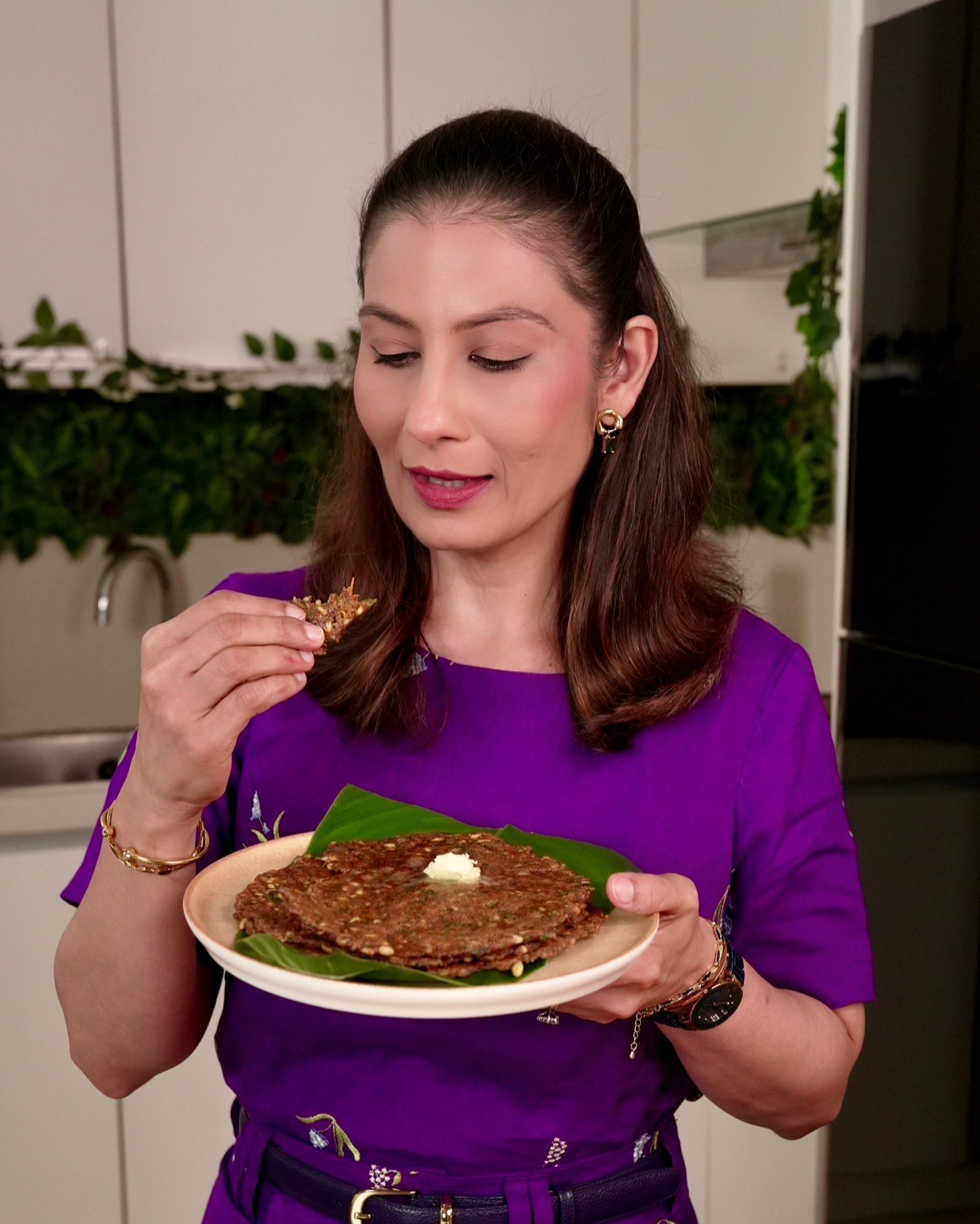
In the heart of a Gujarati winter, Bajra takes center stage. It’s prized for its thermogenic properties, providing essential internal warmth and a steady stream of energy during colder months. While many home cooks find millet flours intimidating because they lack gluten, the hot water method changes everything. By using boiling water to partially gelatinize the starches, you create a dough that’s actually pliable. This allows you to roll out beautiful Bajra rotis that don’t crack or crumble. For a more comprehensive meal, a Millet Handvo — loaded with vegetables and fermented overnight — offers a protein-rich, one-pot solution that honors the soul of Gujarati snacking while upgrading the nutrition. It works every time.
Chef Meghna’s Notes: Millet Success
Pro-tip: Always knead your millet dough with boiling hot water rather than room temperature water. The heat activates the natural starches in the grain, which act as a binding agent in the absence of gluten. This is the secret to getting that perfect, flexible texture that makes rolling easy.
Technique: If you’re struggling with dry or brittle Bajra rotis, try adding a cup of finely grated bottle gourd (lauki) to your flour before kneading. The moisture from the vegetable keeps the roti soft for hours and adds a subtle sweetness that pairs perfectly with spicy garlic chutney. It’s a great way to sneak more vegetables into your family’s diet too.
Substitution: For a calcium-rich twist on traditional desserts, use Ragi (finger millet) flour to make your sheera. Ragi has nearly ten times the calcium of rice or wheat, making it an excellent choice for growing children and bone health. The deep, chocolatey color of Ragi sheera makes it feel like an indulgent treat, even though it’s packed with nutrients.
Chef Meghna’s Guide to Authentic Gujarati Cooking at Home
The journey through Gujarati culinary traditions reveals a beautiful truth: the most authentic recipes are those that evolve without losing their soul. We’ve traveled from the spiritual roots of “Aahar” to the scientific brilliance of fermented Farsan and the ancient power of millets. This evolution isn’t about moving away from tradition, but rather moving toward a version of it that serves our modern health needs. Gujaratis love for food and recipes is a living, breathing thing that finds its greatest expression in your own home kitchen.
To truly master this balance of flavor and fitness, I encourage you to explore my comprehensive guide on Food Magic: Redefining Healthy Indian Cooking. It’s the ultimate resource for anyone ready to transform their daily meals into acts of self-care. Setting up your kitchen for success is the first step, so here’s my essential 5-step checklist for a healthy Gujarati pantry:
- Swap the Grains: Stock whole Bajra, Jowar, and Ragi alongside your wheat to ensure every meal has a high-fiber, mineral-rich base.
- Choose Natural Sweeteners: Replace refined white sugar with dark, unrefined jaggery or small amounts of dates for that signature sweet-savory balance.
- Prioritize Plant Protein: Keep a variety of Kathol (pulses) like green moong, black-eyed peas, and chana ready for quick, high-protein thalis.
- The Tang Factor: Always have dried kokum or tamarind on hand to add acidity without the need for excessive salt.
- Smart Fats: Use cold-pressed groundnut or sesame oil for your tempering to preserve the healthy fatty acids and authentic aroma.
The Essential Gujarati Spice Box (Vaghaar)
The heart of Gujarati cooking lies in the Vaghaar (tempering). It’s the moment where oil, heat, and spices create a chemical reaction that unlocks deep aromatics. The order of adding spices is critical because they have different burning points. Always start with mustard seeds; they need the most heat to “pop” and release their nutty flavor. Cumin follows quickly, then sesame seeds, which are delicate and can burn in seconds. Finally, add your curry leaves and green chilies to infuse the oil with a fresh, herbal finish.
For a professional touch, try the “Double Tempering” method. Add half your spices at the beginning to build a flavor base, and the remaining half as a fresh tadka right before serving. This ensures the dish has both an infused depth and a bright, aromatic top note that hits the senses the moment it reaches the table.
Chef Meghna’s Notes: Final Kitchen Secrets
Pro-tip: Volatile oils are what give spices their power. Store your spice box (masala dabba) in a cool, dark cupboard rather than on the counter next to the stove. Heat and light are the enemies of flavor; keeping them tucked away ensures your Vaghaar always packs a punch.
Troubleshooting: If you’ve accidentally burnt your tempering, don’t try to save it. The bitterness will permeate the entire dish. Discard the burnt oil and spices, wipe the pan, and start fresh. It takes two minutes but saves your entire meal from a burnt aftertaste.
Substitution: If you’re on a strict weight loss journey but can’t live without the “Meetha” in your dal, try using a tiny pinch of stevia or a teaspoon of coconut sugar. Coconut sugar has a lower glycemic index than white sugar and carries a caramel-like depth that mimics jaggery beautifully.
Gujaratis love for food and recipes is best shared in a community that values both taste and wellness. I invite you to join our “Get Fit With Meghna” community on YouTube and Instagram for daily inspiration, troubleshooting, and a celebration of what it means to eat well. Let’s keep the magic alive in our kitchens, one healthy recipe at a time.
Your Gujarati Kitchen Journey Starts Now
Every insight in this article points to the same beautiful truth: Gujaratis love for food and recipes isn’t nostalgia dressed up as nutrition. It’s a genuinely intelligent food tradition that understood fermentation, plant protein, and whole grains long before the wellness world caught up. The Thali’s architectural balance, the science behind a perfectly risen Dhokla, the quiet power of soaked millets — these aren’t coincidences. They’re centuries of accumulated wisdom, waiting for you to put them to work in your own kitchen.
The most important step you can take right now is a simple one: start cooking. Swap one grain, try one steamed Farsan, build one balanced Thali. Small, intentional changes compound into a genuinely nourishing way of eating that never asks you to sacrifice the flavors you love.
With over 30 millet-based recipes, a dedicated “Get Fit With Meghna” health series, and expert troubleshooting built into every recipe, there’s a whole community ready to cook alongside you.
Your healthiest, most delicious meals are still ahead of you.
Frequently Asked Questions About Gujarati Food Culture
Why is Gujarati food often described as being sweet?
Gujarati food tastes sweet because small amounts of jaggery are added to savory dishes like dal and vegetable curries as a deliberate culinary choice, not a regional quirk. This practice neutralizes excess acidity, supports digestive enzyme activity, and creates a rounded flavor that satisfies the palate completely. It’s a form of edible intelligence, not indulgence.
The key distinction is that traditional recipes use unrefined jaggery in restrained quantities, which contributes mineral-rich sweetness without dominating the dish. The result is that characteristic Khatta-Meetha harmony that makes Gujarati food feel so deeply comforting and complete rather than one-note.
How can I make traditional Gujarati snacks like Dhokla healthier?
The most effective upgrade is swapping a portion of besan (chickpea flour) with oat flour or ragi flour at a ratio of roughly 70:30. This simple substitution adds soluble fiber and calcium without disrupting the texture. Prioritizing steaming over frying is equally powerful, since steaming preserves B vitamins and folate that high-heat oil cooking degrades.
For everyday snacking, the Air Fryer Recipe Collection at Meghna’s Food Magic offers a practical library of Farsan recipes that deliver authentic crunch and flavor with a dramatically lighter nutritional profile. Small technique changes genuinely transform these snacks without touching their soul.
What are the best millets to use in Gujarati recipes?
Bajra (pearl millet) and Jowar (sorghum) are the most naturally suited to Gujarati cooking because they’ve been cultivated in the region for centuries and integrate seamlessly into traditional recipes like rotis, Handvo, and khichdi. Bajra is particularly valued in winter cooking for its warming, energy-sustaining properties, while Jowar works beautifully in lighter, everyday preparations.
Ragi (finger millet) is an excellent choice for desserts and breakfast dishes because its deep, earthy flavor pairs well with jaggery and its calcium content is genuinely impressive. You can explore over 30 practical millet-based recipes across all these grains in the Millets Recipe Database at Meghna’s Food Magic.
Is Gujarati food suitable for a weight loss diet?
Yes, and Gujaratis love for food and recipes actually makes this tradition one of the most naturally weight-conscious cuisines in India when prepared thoughtfully. The traditional Thali structure, with its emphasis on plant proteins from Kathol, fiber-rich vegetables in Shaak, and fermented snacks, supports satiety without caloric excess. The built-in portion awareness of a Thali format also prevents overeating naturally.
The most impactful changes for weight management are swapping refined grains for millets, choosing steamed Farsan over fried, and using dark jaggery in small quantities instead of refined sugar. The Weight Loss Fitness Recipes collection and the dedicated “Get Fit With Meghna” series offer a complete roadmap for eating Gujarati food in a way that actively supports your health goals.
How do I prevent my millet rotis from breaking?
Millet rotis crack because the dough lacks gluten, which means the binding has to come from somewhere else entirely. The solution is to always knead millet flour with boiling hot water, not room temperature water. The heat gelatinizes the natural starches in the grain, creating a pliable dough that holds together during rolling without crumbling at the edges.
A second reliable fix is adding finely grated bottle gourd (lauki) directly to the flour before kneading. The vegetable’s natural moisture keeps the roti soft and flexible for hours after cooking, and it adds a subtle sweetness that pairs beautifully with spicy chutneys. Start with roughly half a cup of grated lauki per cup of millet flour and adjust from there.
What is the secret to a perfect Gujarati tempering (Vaghaar)?
The secret is sequence and heat control. Mustard seeds go into hot oil first because they need the most heat to pop and release their nutty depth. Cumin follows immediately, then sesame seeds, which are delicate and can burn within seconds. Curry leaves and green chilies come last, infusing the oil with a bright, fresh herbal finish that would be lost if added too early.
One professional technique worth adopting is double tempering: add half your spices at the beginning to build a deep flavor base into the dish, then finish with a fresh tadka poured over just before serving. This gives your food both an infused, layered depth and a vibrant aromatic top note that hits the senses the moment it reaches the table.
Can I make Gujarati farsan in an air fryer?
Absolutely, and the results are genuinely impressive. Snacks like Muthiya, Baked Gathiya, and spiced Chana dal crisps adapt beautifully to air frying because the circulating hot air creates the same exterior crunch that deep frying achieves, without submerging the food in oil. The key is lightly brushing or spraying the surface with a small amount of cold-pressed groundnut or sesame oil before air frying to get that authentic golden finish.
Temperature and batch size matter more in an air fryer than most people realize. Don’t overcrowd the basket; a single layer ensures even heat circulation and a properly crisp result. The Air Fryer Recipe Collection at Meghna’s Food Magic includes specific timing and temperature guides for popular Farsan so you don’t have to guess your way through the first batch.
Disclaimer
This is a recipe food blog page and not nutrition or doctor and hence do not claim to cure any illness. If you have specific health issues please consult a qualified doctor or certified nutritionist.
I do consult experts, research Internet and at times seek help from Gemini to collect relevant information to put together some of these blogs.

