
Healthy Meal Prep Guide: How to Eat Well All Week
What if the secret to a stress-free kitchen isn’t cooking more, but cooking smarter so you can Eat All Week without ever touching a frozen meal? Most of us feel the crushing weight of decision fatigue by 7 PM, especially when the thought of chopping onions and soaking dals feels like a second job. You want to hit those high-protein goals on a vegetarian diet, but the time-consuming nature of Indian staples often leads to ordering in or settling for bland, repetitive bowls.
It’s a common struggle to keep leftovers from becoming soggy or tasteless, but healthy Indian cooking doesn’t have to be a chore. I promise to help you transform your routine with a flavor-first meal prepping system designed specifically for our vibrant palate. You’ll discover how to create a library of 15-minute healthy meals that actually taste better as the days go by while keeping your kitchen clutter-free and zero-waste.
In this guide, we’ll dive into the science of grain preparation for better digestion, practical storage secrets to save you money, and the exact steps to build a high-protein foundation that keeps you energized. Let’s turn your kitchen into a space of joy and effortless wellness.
Key Takeaways
- Learn how to transition from repetitive batch cooking to a flexible component-based system that keeps your flavors vibrant and fresh.
- Discover the professional techniques for prepping grains and millets to ensure optimal digestion and the perfect texture for every meal.
- Master the “Eat All Week” system to assemble high-protein, 15-minute Indian fusion meals that eliminate daily kitchen decision fatigue.
- Access expert “Chef Meghna’s Notes” to troubleshoot common cooking mishaps and implement zero-waste secrets that save money and time.
- Build a sustainable, health-focused pantry that supports long-term weight loss goals without sacrificing the joy of traditional Indian cooking.
The Eat All Week Philosophy: Why Component Prepping Beats Batch Cooking
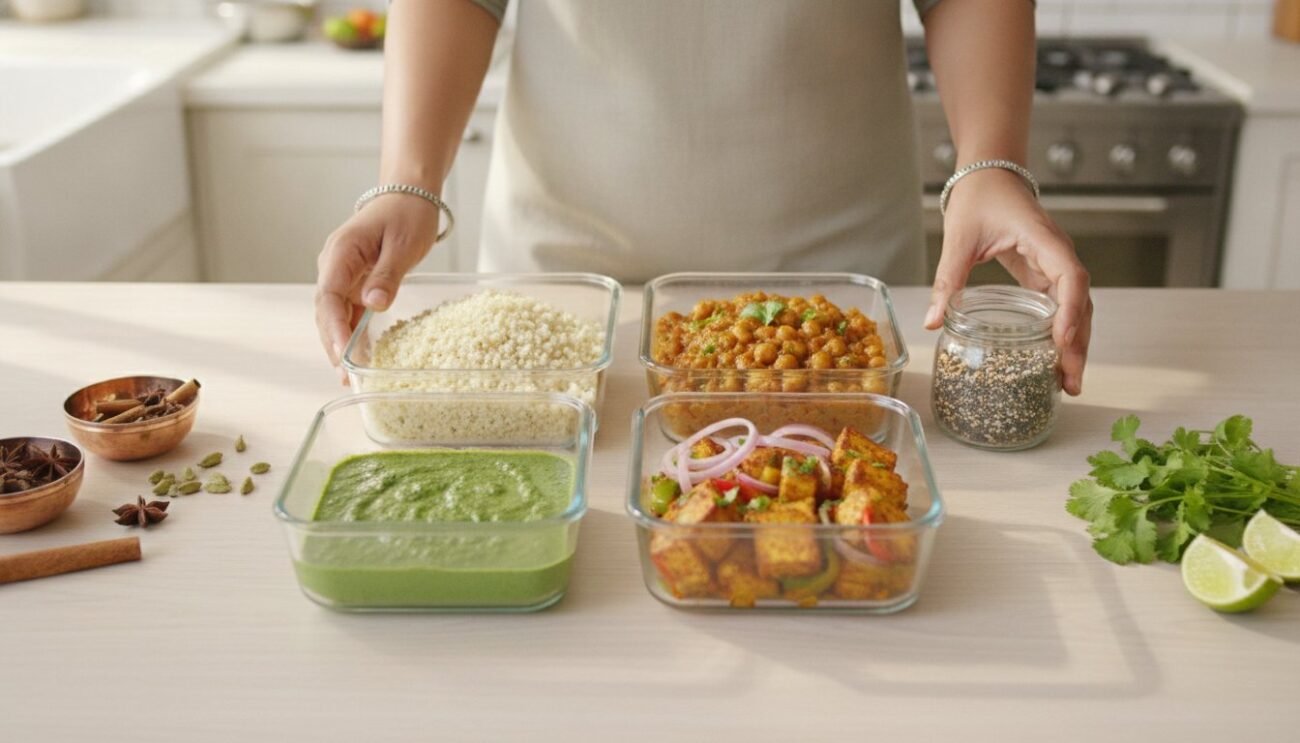
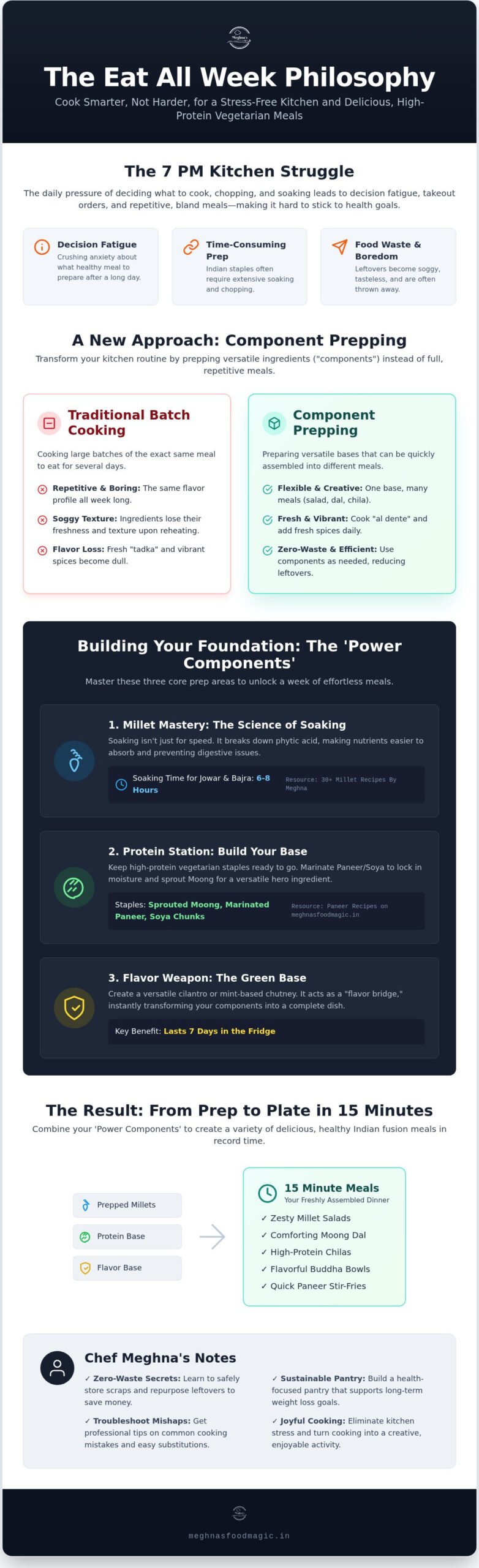
Traditional Meal preparation often feels like a chore, especially when it involves eating the same cold pasta or soggy salad for five days straight. For the Indian palate, which thrives on fresh "tadka" and varied textures, this rigid batch cooking approach usually ends in disappointment and food waste. The Eat All Week system is different. It’s a flexible, component-based philosophy that treats your kitchen like a high-end restaurant pantry. Instead of pre-assembling identical boxes, you prepare "Power Components" like soaked millets, sprouted moong, and versatile green bases that can be transformed into completely different meals in minutes.
The Emotional Benefits of a Prepped Kitchen
Think about the 6 PM panic. That "what should I cook" anxiety vanishes when you open your fridge to see colorful, ready-to-use ingredients. This isn’t just about efficiency; it’s culinary therapy. When the heavy lifting of chopping and soaking is done, cooking becomes an act of joy rather than a race against time. This sense of organization is often the missing link in weight loss success. When healthy choices are the easiest choices, you don’t reach for the delivery app or settle for a packet of noodles. Having ready-to-use ingredients inspires creative fusion cooking, allowing you to experiment with flavors without the mess.
Component Prepping vs. Batch Cooking
Batch cooking asks you to commit to one flavor profile for the whole week. Component prepping, however, allows for 15-minute variety every single night. By prepping bases rather than finished dishes, you keep spices fresh and vibrant. You can use Meghna’s Food Magic as your digital recipe database to find inspiration for these components. One day your prepped moong becomes a zesty salad; the next, it’s a comforting dal or a high-protein chila. This method ensures you actually enjoy your food, making it easy to Eat All Week without ever feeling restricted. It’s about abundance, not limitation. You’re building a library of flavors that work for you, ensuring every meal feels like a special occasion rather than a leftover chore.
Building the Foundation: Smart Prepping for Grains, Millets, and Proteins
A successful kitchen routine isn’t built on luck; it’s built on a solid foundation of prepped staples. When you want to Eat All Week with minimal effort, your fridge needs to work for you. The professional secret to great Indian meal prep lies in understanding the "why" behind grain preparation. Soaking isn’t just about reducing cooking time; it’s essential for breaking down phytic acid, which ensures optimal digestion and nutrient absorption. Following safe meal prep guidelines during this phase ensures your components stay fresh and healthy for days.
The Millet Mastery: Soaking and Texturing
Millets are nutritional powerhouses, but they demand respect. For grains like Jowar and Bajra, a 6-8 hour soaking period is non-negotiable. This softens the outer husk and makes the nutrients more bioavailable. Choosing the right grain depends on your desired outcome. Use Foxtail millet when you want a fluffy, rice-like texture for pulavs. Opt for Kodo millet if you prefer a slightly firmer bite for salads and Buddha bowls. Always cook your millets to "al dente" perfection. This prevents them from becoming mushy when reheated later in the week. For a visual guide on mastering these textures, check out these 30+ Millet Recipes By Meghna.
High-Protein Vegetarian Staples
Hitting protein goals on a vegetarian diet becomes effortless when your "Protein Station" is ready. Sprouted moong is a versatile hero; use it for high-protein chilla batter or steam it for a crunchy salad topper. Paneer and soya chunks require a bit more love. Marinating them in a yogurt or lemon-based mix keeps them juicy and prevents that rubbery texture often found in leftovers. If you need creative ways to use these, explore these delicious Paneer recipes for instant inspiration. Don’t forget to prepare a "Green Base," a vibrant cilantro or mint-based chutney that acts as a flavor bridge for various dishes. It’s the ultimate secret weapon that lasts 7 days in the fridge. To see how these components come together in real-time, you can explore my latest cooking tutorials on YouTube.
Signature Eat All Week Recipes: From Prep to Plate in 15 Minutes
The transition from prepped ingredients to a steaming, flavorful plate is where the "Eat All Week" system truly shines. You aren’t just reheating leftovers; you’re assembling fresh, vibrant meals that respect your time and your health. By focusing on Weight loss recipes that prioritize satiety and flavor, you can stay on track without ever feeling like you’re on a restrictive diet. For those who need a visual kickstart to their fitness journey, the Get Fit With Meghna playlist offers a roadmap for these high-protein transformations.
Recipe 1: The High-Protein Rainbow Moong Bowl
This bowl is a celebration of texture and nutrition. Start with your prepped sprouted moong as the base. Toss in a handful of roasted fox nuts (makhana) for a satisfying crunch that mimics croutons but with far more minerals. Add finely chopped seasonal vegetables like cucumbers, carrots, and bell peppers. The star of the show is the dressing you would have prepared earlier and kept in fridge; just thin it out with a little lemon juice and drizzle it over. This meal is packed with high fiber and plant-based protein, providing sustained energy that prevents the mid-afternoon slump.
Recipe 2: Zesty Bajra and Pomegranate Tiffin Salad
Lunch on the go doesn’t have to be boring or soggy. Take your pre-soaked and boiled Bajra, which has a wonderful nutty chew, and fold in bright pomegranate pearls. The sweetness of the fruit balances the earthy grain perfectly. Whisk together a quick mint-lemon vinaigrette and toss everything together. This salad is incredibly travel-friendly because the Bajra holds its structure without getting mushy. It’s a fantastic option for office goers or school lunches. For more ideas that stay fresh in a box, explore these Tiffin Recipes designed for busy families.
Recipe 3: Air Fryer Paneer Tikka Salad with Jowar
When you crave something warm and charred, this 10-minute salad is the answer. Take your marinated paneer cubes and bell peppers and pop them into the air fryer until the edges are golden and crisp. Bed these over a portion of prepped Jowar grains. The combination of the warm, juicy paneer and the fluffy Jowar grain creates a meal that feels indulgent yet remains incredibly healthy. You can follow the Airfryer recipes guide to get the timing just right. It’s a high-protein masterpiece that proves healthy cooking can be as exciting as any restaurant meal.
Chef Meghna’s Notes: Troubleshooting, Substitutions, and Zero-Waste Secrets
Cooking is an art, but maintaining a kitchen is a science. To truly Eat All Week, you need to know how to pivot when things don’t go as planned. Even professional chefs have days when the millet is too mushy or the paneer feels a bit dry. The secret isn’t starting over; it’s knowing how to rescue the ingredients you’ve already worked hard to prep. This mindset reduces stress and ensures you always have a delicious, healthy option waiting in the fridge.
If your millets ended up overcooked, don’t toss them. Mash the softened grains with some boiled potato, finely chopped chilies, and ginger to create nutritious tikkis or a base for a high-protein chilla. For dry proteins like soya or paneer, a quick "tadka" of cumin and a splash of warm water or yogurt can restore the moisture in seconds. Proper storage is equally vital. Use airtight glass or high-quality stainless steel containers, and always let your food reach room temperature before sealing. This prevents condensation, which is the primary cause of premature spoilage. For more creative ways to use every bit of your prep, explore these Leftover Food Recipes.
The Zero-Waste Kitchen: Repurposing with Purpose
A zero-waste kitchen is both economical and environmentally friendly. You can turn your prep scraps into culinary gold with a few simple steps:
- Nutrient-Dense Broths: Collect clean peels of carrots, bottle gourd (lauki), and stalks of coriander in a freezer-safe bag. Once the bag is full, boil the contents with whole spices to create a mineral-rich base for soups and dals.
- Roti Transformation: Don’t let leftover rotis go stale. Cut them into thin strips and toss them with veggies and soy sauce for "desi noodles," or crisp them in the air fryer to use as healthy taco shells.
- Refreshing Grains: To refresh prepped grains without making them mushy, sprinkle a teaspoon of water over them and cover with a damp paper towel before microwave heating. This creates steam that restores their original fluffiness.
Substitutions for Fussy Eaters
Hiding vegetables is my favorite "Meghna Magic" trick for families. If you have picky eaters at home, blend steamed spinach or pumpkin directly into your paratha dough or pasta sauces. They’ll get all the vitamins without even noticing the change in flavor. You can also substitute dairy in your marinades with cashew paste or thick coconut milk if you’re looking for plant-based alternatives. This flexibility ensures everyone stays happy and healthy. For more specialized ideas, check out the Fussy eaters/Kids who don’t like vegetables playlist.
Your 7-Day Meal Transformation: Integrating the Eat All Week System
Transforming your kitchen from a source of stress into a hub of culinary therapy doesn’t happen by accident. It requires a simple shift in how you view your time and your ingredients. Integrating the Eat All Week system into your life is about making health the path of least resistance. When your pantry is stocked with what I call "Meghna Magic" staples, you’re never more than a few minutes away from a meal that fuels your body and delights your soul. This isn’t about rigid rules; it’s about building a sustainable rhythm that fits your busy Indian lifestyle.
The Sunday Setup: 90 Minutes to Success
You don’t need to spend your entire weekend in the kitchen to win the week. A focused 90-minute session on Sunday afternoon is the engine that drives this entire system. Follow these three essential steps to set yourself up for victory:
- Step 1: The Soaking Cycle: Start by getting your millets and pulses into water. As we’ve discussed, this is vital for digestion. Set a timer for your Jowar or Bajra to ensure they get that non-negotiable 6 to 8 hour soak before you boil them.
- Step 2: The Big Chop: Organize your vegetables by texture. Harder vegetables like carrots and beans can be chopped and stored together, while delicate greens should be washed, dried, and tucked into containers with a paper towel to stay crisp.
- Step 3: The Base Creation: Prepare your foundational chutneys and spice mixes. Having a jar of fresh ginger-garlic paste and your "Green Base" ready means you can add instant depth to any dish without picking up a knife during the week.
Daily Assembly: The 15-Minute Rule
The beauty of component prepping is that you never have to eat the same meal twice. By rotating your prepped grains, proteins, and bases, you can create endless variety. One night you might toss Jowar with roasted veggies and a lemon-tahini dressing; the next, those same veggies go into a quick moong dal chilla. To keep things exciting, always use "Fresh Finishers." A handful of fresh coriander, a sprinkle of toasted sunflower seeds, or a bright squeeze of lime can instantly wake up prepped components and make them feel like they were made from scratch. This method is a lifesaver for anyone balancing a demanding fitness schedule with a career. It ensures you hit your protein goals without the 7 PM decision fatigue. I love seeing how you bring these ideas to life, so come join our vibrant community on Instagram to share your meal prep wins.
Ready to see these steps in action? Head over to my YouTube channel for full video tutorials that make mastering the Eat All Week system feel like a breeze. Let’s make healthy eating the most joyful part of your day!
Start Your Journey to Effortless Healthy Cooking
Embracing the Eat All Week system is more than just a kitchen hack; it’s a lifestyle shift that brings harmony to your daily routine. By mastering the art of component prepping, you’ve unlocked the ability to assemble fresh, high-protein Indian meals in just 15 minutes. No more soggy leftovers or decision fatigue. You now have the professional tools to soak millets for better digestion and repurpose scraps for a zero-waste kitchen.
Join over 1 million home cooks who are already redefining their relationship with food under my expert guidance. With access to 500+ free high-protein and millet recipes, your path to wellness is simpler and more delicious than ever before. It’s time to treat your cooking as an act of joy and self-care.
Subscribe to Meghna’s Food Magic on YouTube for weekly "Eat All Week" inspiration!
You have everything you need to turn your kitchen into a space of joy and creativity. I can’t wait to see the magic you create in your own home. Let’s make every meal a celebration of health and flavor together!
Frequently Asked Questions
Is it safe to eat prepped millets for an entire week?
Prepped millets are generally safe to consume for three to five days when stored in a refrigerator kept at or below 4°C. If you want to Eat All Week, it’s best to freeze half of your prepped grains immediately after they cool. This prevents bacterial growth and preserves the fluffy texture. Always follow the two-hour rule: never leave cooked millets at room temperature for more than two hours before refrigerating.
How do I ensure my prepped moong dal doesn’t lose its protein value?
Moong dal retains its protein value well during storage, but you must avoid over-cooking it to preserve its structural integrity. Sprouting your moong before prepping is the professional secret to maximizing nutrition. It activates enzymes that make the protein easier for your body to absorb. Store your sprouts or cooked dal in the coldest part of your fridge and avoid reheating the entire batch multiple times, which can degrade delicate micronutrients.
What are the best containers for storing prepped Indian components?
Glass containers and high-quality stainless steel are the gold standard for storing Indian meal prep components. Unlike plastic, these materials won’t absorb the strong aromas of garlic or the vibrant stains of turmeric. Glass is particularly helpful because it allows you to see your colorful "Green Base" or prepped veggies at a glance. This visibility reduces the chance of food being forgotten at the back of the shelf and ultimately becoming waste.
Can I use the Eat All Week method if I have a small refrigerator?
You can definitely use this system in a compact kitchen because component prepping is far more space-efficient than storing bulky, pre-assembled meal boxes. By prepping concentrated bases like chutneys and spice mixes, you save significant shelf space. Use square, stackable containers to maximize every inch of your fridge. This organized approach ensures you can Eat All Week without feeling like your refrigerator is overflowing with cluttered bowls and half-used vegetable packets.
How do I stop my prepped vegetables from becoming soggy in the fridge?
Moisture is the enemy of crisp vegetables, so the key is ensuring they’re bone-dry before they go into storage. After the "Big Chop," let your veggies air dry or use a salad spinner. Place a clean paper towel at the bottom of your airtight containers to absorb any residual condensation. For delicate greens, change the paper towel every two days. This simple habit keeps your produce vibrant and crunchy for much longer.
What is the best way to reheat prepped grains without losing their texture?
The best way to reheat grains like Jowar or Bajra is by creating a gentle steam environment. Sprinkle a teaspoon of water over the grains and cover the bowl with a damp paper towel or a lid before microwaving. If you’re using a stovetop, heat them in a pan with a tiny splash of water on low flame. This process restores the "al dente" texture we aim for without making the grains mushy or dry.
How can I adapt the Eat All Week method for a vegan diet?
Adapting this system for a vegan diet is incredibly simple because traditional Indian cooking already centers on plant-based proteins. Replace paneer with firm tofu or tempeh in your marinades, and use thick coconut yogurt or cashew cream instead of dairy. Your prepped millets and dals are already vegan powerhouses. This flexibility allows you to enjoy a variety of textures while hitting your protein goals using only wholesome, plant-derived ingredients every single day.
Does meal prepping really help with weight loss in an Indian context?
Meal prepping is a game-changer for weight loss because it eliminates the impulsive decisions that lead to ordering oily restaurant food. When you have high-protein components ready, you can control exactly how much oil and salt goes into your "tadka." Having a prepped "Protein Station" ensures you stay satiated, which prevents mindless snacking. It’s a practical way to manage portions while still enjoying the rich, celebratory flavors of home-cooked Indian meals.
Disclaimer
This is a recipe food blog page and not nutrition or doctor and hence do not claim to cure any illness. If you have specific health issues please consult a qualified doctor or certified nutritionist.
I do consult experts, research Internet and at times seek help from Gemini to collect relevant information to put together some of these blogs.

