
Healthy Moong Dal Chilla Recipe: A Flavorful, Protein-Rich Breakfast
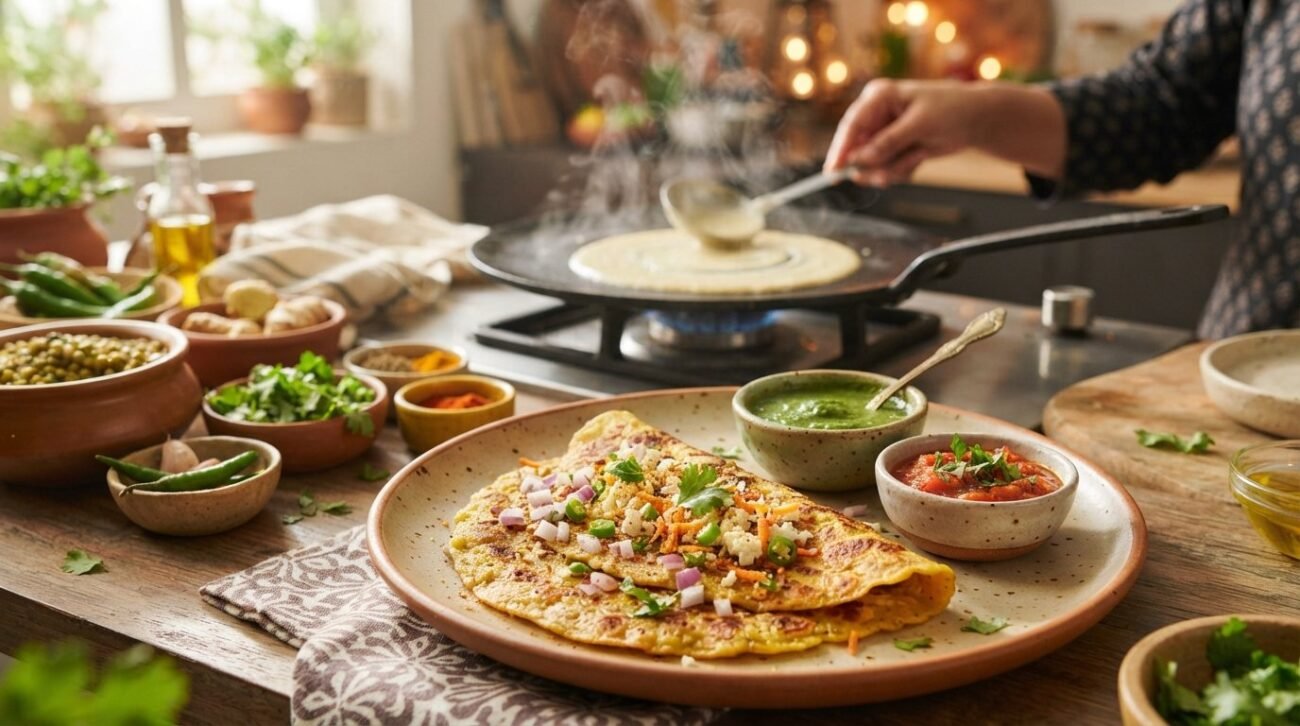
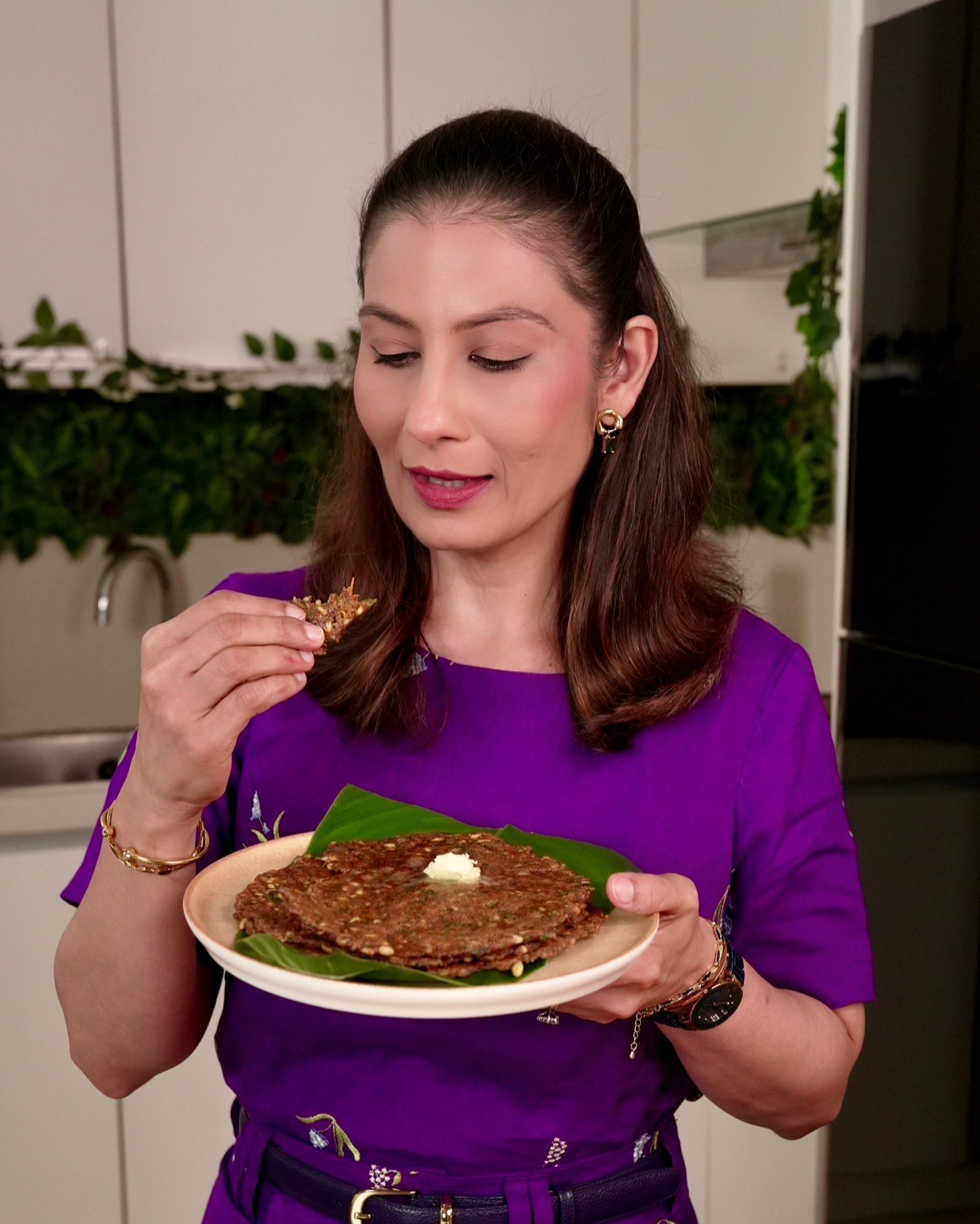
What makes a tender moong dal chilla? Often, it comes down to batter consistency and pan heat, not a special ingredient. If your chilla sticks, tears when you flip it, or cooks unevenly, this healthy moong dal chilla recipe walks you through each step, from soaking and grinding the dal to checking when the pan is ready.
Moong dal gives this savory breakfast its base, while familiar herbs and spices add flavour. The batter should spread smoothly without running, and the pan should be warm enough to set it gently. Get those details right, and you can make chillas that are tender, lightly browned, and easy to serve.
Below, you’ll find measured instructions for a classic chilla, a vegetable variation, and a paneer variation. You’ll also find practical fixes for sticking, tearing, and uneven cooking, plus ideas for serving your chillas with chutney or a filling. Use the first chilla to check the heat, then adjust the rest of the batch with confidence.
Key Takeaways
- Use the healthy moong dal chilla recipe as a reliable base, then choose the classic, vegetable, or paneer version to suit your breakfast.
- Check the batter before cooking and adjust its thickness gradually so each chilla spreads and sets evenly.
- Use visual cues to judge pan heat and doneness. Treat the first chilla as a practical guide for the next one.
- Adjust the herbs and spices to your taste, then serve with chutney or a simple filling.
Why Make Healthy Moong Dal Chilla for a Flavorful Everyday Breakfast?
Breakfast can be savory as well as sweet. Moong dal chilla is a gently spiced pancake with a lightly browned surface and a tender centre. You can adjust the herbs, seasoning, and additions to suit your taste without relying on complicated ingredients or techniques.
What makes moong dal chilla different from other breakfast pancakes?
Moong dal chilla is a savory pancake made from ground lentils. Rather than using a flour-based batter, you soak the dal, blend it with water, and season it with ingredients such as ginger, chilli, cumin, or fresh herbs. Those additions shape the flavour, while the batter’s thickness affects how easily it spreads and how tender it is after cooking.
It belongs to a wider family of Indian lentil-based griddle dishes. For example, Pesarattu is a dosa made with green gram batter. The dishes are related, though recipes and regional methods can differ. This guide focuses on a manageable home method for making chilla batter and cooking it evenly.
What should a well-cooked chilla look and feel like?
A well-cooked moong dal chilla should be cooked through, flexible enough to fold, and lightly browned where it meets the pan. The batter should spread into a thin, even layer without running like water.
That texture starts before the pan heats. Soaking softens the dal, helping it blend smoothly. Draining it before grinding also gives you better control over the water you add. If the batter is too thick, it may resist spreading and cook unevenly. If it is too thin, it can run across the pan and be difficult to turn. Add water in small amounts so you can stop as soon as the texture is right.
Pan heat matters too. A properly heated pan helps the batter begin to set as you spread it. If the pan is too hot, the underside may brown before the centre cooks. The recipe below covers soaking and grinding first, then shows you how to read the pan as you cook.
You’ll find three variations: classic, vegetable, and paneer. Each changes the flavour and texture, while the troubleshooting tips help you respond if a chilla sticks, tears, or cooks unevenly. Start with the classic version to get a feel for the batter before trying the additions.
How Soaking and Grinding Create Smooth, Spreadable Moong Dal Batter
Begin with softened dal and add the blending water gradually. For the base batch, gather:
- 1 cup split yellow moong dal
- ½ cup water to start blending, plus up to ¼ cup more as needed
- 1 teaspoon grated ginger
- 1 green chilli, roughly chopped
- ½ teaspoon cumin seeds
- ½ teaspoon salt, or to taste
- 2 tablespoons chopped coriander leaves
How long should you soak moong dal before blending?
Rinse the dal until the water runs mostly clear, then soak it in plenty of fresh water for 4 hours. To check that it has softened, press a grain between your fingers. It should yield easily rather than feel hard at the centre. Drain the soaking water thoroughly through a sieve. Water clinging to the dal makes it harder to control the batter. The nutritional profile of lentils is one reason they’re a valued ingredient, but at this stage, focus on softness and batter texture.
How do you know the batter is the right consistency?
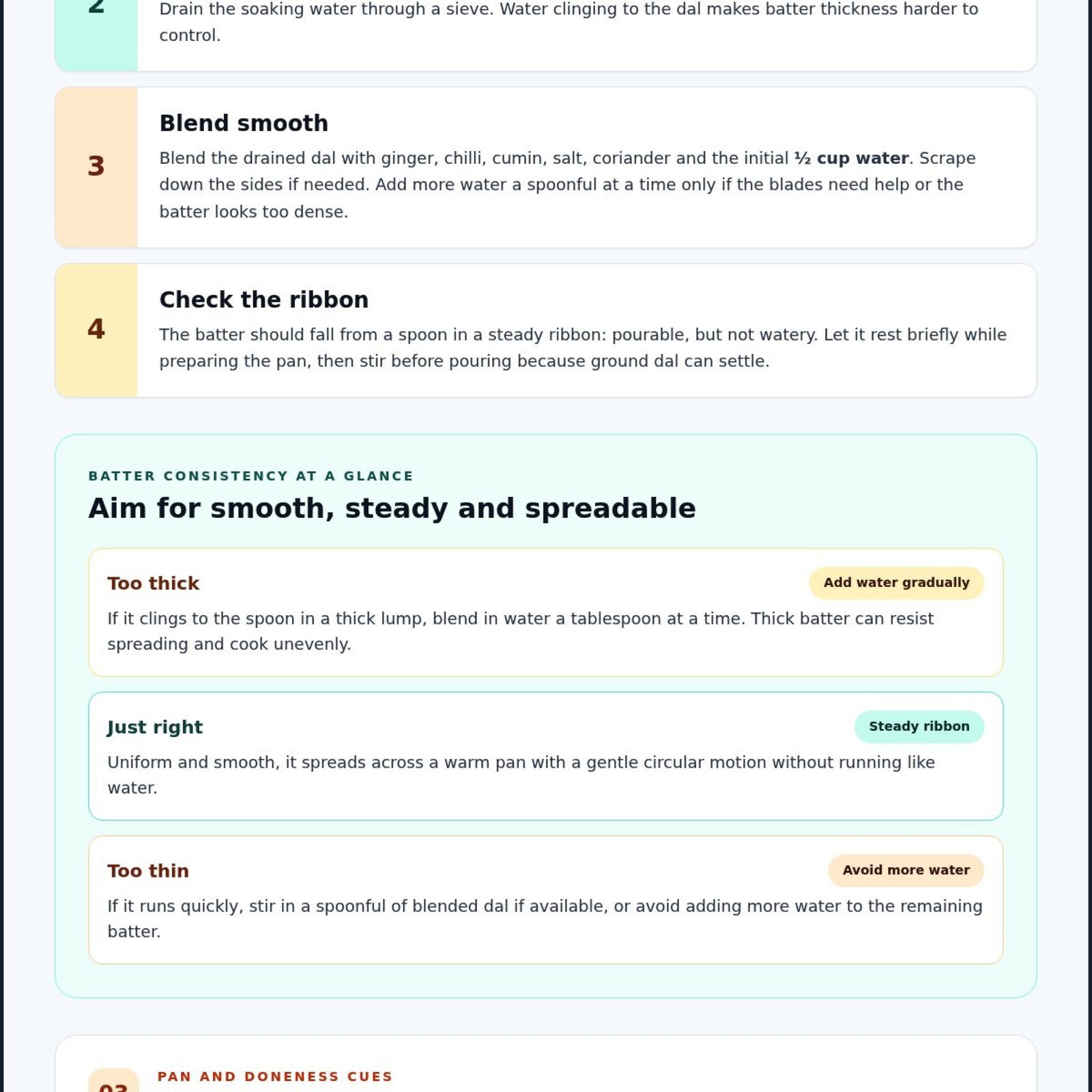
Put the drained dal in a blender with the ginger, chilli, cumin, salt, coriander, and the initial ½ cup of fresh water. Blend until smooth, scraping down the sides if needed. Add the remaining water a spoonful at a time only if the blades need help or the batter looks too dense.
The finished batter should be uniform, without hard pieces of dal, and fall from a spoon in a steady ribbon. It should spread across a warm pan with a gentle circular motion, but should not pour like water. If it clings to the spoon in a thick lump, blend in water a tablespoon at a time. A batter that is too thick can form a heavy layer that cooks unevenly. If it runs quickly, stir in a spoonful of blended dal if available, or avoid adding more water to the remaining batter.
Smooth grinding and a pourable but not watery batter help the chilla spread evenly, so it cooks through without thin, fragile patches. Let the batter rest briefly while you prepare the pan, then stir it before pouring because ground dal can settle. For a visual guide to chilla preparation, explore the Meghna’s Food Magic recipe channel.
Three Healthy Moong Dal Chilla Recipes: Classic, Vegetable, and Paneer
This healthy moong dal chilla recipe uses one measured batter base for three options. Each variation makes about 4 medium chillas. Try the classic first, then add vegetables or use a paneer filling. Add water gradually, since soaked dal can vary slightly in how much it needs.
| Variation | Flavour and additions | Serving idea |
|---|---|---|
| Classic | Ginger, chilli, cumin, coriander | Serve with chutney |
| Vegetable | Carrot, onion, coriander | Pair with plain curd |
| Paneer | Spiced paneer filling | Serve folded and warm |
Classic healthy moong dal chilla with herbs and spices
Ingredients: 1 cup split yellow moong dal, soaked for 4 hours and drained; ½ cup water to blend, plus up to ¼ cup as needed; 1 teaspoon grated ginger; 1 green chilli; ½ teaspoon cumin seeds; ½ teaspoon salt; 2 tablespoons chopped coriander; 1 teaspoon oil for cooking.
Method: Blend the dal with ½ cup water, ginger, chilli, cumin, and salt until smooth. If needed, add more water a tablespoon at a time. Stir in the coriander and rest the batter for 5 minutes. Spread about ¼ cup of batter into a thin round on a preheated, lightly oiled pan. Flip when the edges look dry and the underside is lightly browned. Cook the other side until set with golden spots. Use the measured oil across the batch.
Vegetable moong dal chilla with a tender, savory bite
Ingredients: 1 cup soaked, drained moong dal; ½ cup water, plus up to ¼ cup as needed; 1 teaspoon grated ginger; 1 green chilli; ½ teaspoon cumin seeds; ½ teaspoon salt; 2 tablespoons chopped coriander; 2 tablespoons grated carrot; 2 tablespoons finely chopped onion; 1 teaspoon oil.
Method: Blend the dal, water, ginger, chilli, cumin, and salt until smooth. Stir in the coriander, carrot, and onion. Spread and cook as for the classic version, allowing the vegetables to soften as the chilla cooks. Finely cut vegetables distribute well. Since they can release moisture, mix them in and check the batter before adding any extra water.
Paneer-stuffed moong dal chilla for a heartier variation
Ingredients: 1 cup soaked, drained moong dal; ½ cup water, plus up to ¼ cup as needed; 1 teaspoon grated ginger; 1 green chilli; ½ teaspoon cumin seeds; ½ teaspoon salt; 2 tablespoons chopped coriander; ½ cup crumbled paneer; 1 tablespoon chopped coriander for filling; ¼ teaspoon ground cumin; 1 teaspoon oil.
Method: Blend and season the dal batter as for the classic chilla. Mix the paneer with the filling coriander and ground cumin. Spread batter in the pan and cook until the top is mostly set and the underside is lightly browned. Add a thin layer of filling over one half, fold carefully, then cook both sides until the centre is hot. A modest amount of filling helps the chilla stay intact. For context on the nutritional value of cooked mung beans, consult the University of Rochester Medical Center. For consistent results, keep the batter at a spreadable consistency.
How to Cook Moong Dal Chilla Without Sticking or Tearing
A smooth batter is only part of the process. A steadily heated, lightly greased pan gives the chilla time to set, making it easier to spread and flip without breaking. Use these visual cues for each one rather than relying on a fixed cooking time.
What pan heat and spreading technique help chilla cook evenly?
- Preheat the pan. Set a flat tawa or non-stick pan over medium heat. Test it with a small drop of batter. It should begin to set gently, not stay wet or darken immediately. If it browns too fast, lower the heat. If it barely sets, let the pan warm a little longer.
- Grease lightly. Wipe a little oil across the surface to leave a thin sheen, not pools of oil. Stir the batter before each pour, especially if it has been sitting.
- Pour and spread. Add a small ladleful to the centre. Use the back of the ladle to move the batter outward in gentle circles. Apply light, even pressure. Pressing hard can create thin spots that tear when lifted.
- Let the first side set. Look for a drier surface, edges that begin to lift, and light browning underneath. These cues suggest the chilla is ready to loosen. If it resists, give it more time instead of forcing the spatula underneath.
- Flip and finish. Slide a thin spatula under the edges, then turn the chilla in one confident motion. Cook the second side until set with a few golden spots. Transfer it to a plate and serve warm.
The first chilla is a heat check, not a test you have to get perfect. If it sticks or colours too quickly, adjust the heat or the oil coating before making the next one.
Chef Meghna’s Notes: Fixing thick batter, sticking, and breaks
If the batter is too thick: Stir in water a tablespoon at a time until it falls from a spoon in a steady ribbon and spreads with gentle ladle strokes. Add it gradually. Batter that is too loose can run across the pan and make a fragile chilla.
If it sticks: Check that the pan is clean, evenly heated, and lightly greased. Batter poured onto a cool surface may cling before it sets. Excessive heat can brown the base while the top is still wet. Let the edges dry and lift naturally before turning.
If it tears: The chilla may be too thin, not fully set, or flipped too early. Spread with a lighter hand, wait until the surface and edges look set, and loosen the full circumference with a spatula before flipping.
For flavour swaps: Reduce or omit green chilli for a gentler taste, or use chopped mint in place of some coriander for a brighter herbal note. Keep additions finely chopped so they don’t interrupt spreading.
Serving Moong Dal Chilla and How to Customize It
Moong dal chilla is best straight from the pan, when the edges are lightly crisp and the centre is still tender. Serve it on its own or add an accompaniment for contrast. Coriander chutney brings a fresh, herby note, mint chutney adds a cooling edge, and tomato chutney offers a tangy, gently sweet counterpoint. Plain curd is another easy option, especially with a chilli-spiced chilla.
Which chutneys and accompaniments pair well with chilla?
Let the chilla’s seasoning guide the pairing. The classic version with ginger and cumin goes well with bright coriander or mint chutney. Try plain curd or tomato-based chutney with the vegetable version. Serve paneer-stuffed chilla with a small bowl of chutney on the side, so the filling remains the focus.
Chilla is best fresh and warm, while the surface is lightly browned and the inside remains flexible. For homemade dip ideas, browse the chutney and pickle recipe playlist.
How can you adapt the recipe for your preferred flavor?
Make small seasoning changes while keeping the base batter proportions steady. Add chilli gradually for a milder breakfast, or a little more if your household enjoys extra heat. Coriander gives the batter a fresh, familiar flavour; mint offers a different herbal note. Taste the batter before cooking and adjust the salt or spices in modest increments.
Vegetables and fillings affect texture as well as flavour. Finely grated carrot or chopped onion adds savoury texture, but vegetables can release moisture and loosen the batter. Mix them in before deciding whether to add water. Paneer makes the filling more substantial in texture; use a light, even layer so the chilla folds without splitting. For another morning-meal idea, explore breakfast recipes from Meghna’s Food Magic.
Start by getting the batter consistency right: a smooth batter that falls from a spoon in a steady ribbon spreads in an even layer. Moderate pan heat and a patient flip help it cook without tearing. Once you’ve found your preferred seasoning and accompaniment, this healthy moong dal chilla recipe is easy to adapt.
For more visual breakfast inspiration, explore the Breakfast Chila recipe playlist.
Bring a Better Chilla to Your Breakfast Table
A dependable moong dal chilla comes down to a few practical cues: soak the dal until it softens, blend it smooth, and add water gradually until the batter spreads without running. Then let the chilla set before flipping. With those steps in hand, this healthy moong dal chilla recipe is easy to tailor, whether you choose the classic version, add vegetables, or fold in a paneer filling.
Serve the chillas warm with chutney or another accompaniment you enjoy. Start with the classic batter to learn its texture, then adjust the herbs and seasoning to suit your household. Meghna’s Food Magic also offers a free digital recipe database with ideas for high-protein, millet-based, and other meals.
Keep the batter smooth, trust the visual cues, and enjoy making breakfast your own.
Frequently Asked Questions
Can I make healthy moong dal chilla without soaking the dal?
For this recipe, follow the soaking step to help the dal blend into the intended smooth batter. Skipping it may change how easily the dal grinds and how the batter spreads, so an unsoaked shortcut may not give the same result. If you’re short on time, choose a recipe specifically developed for unsoaked dal rather than changing this recipe’s preparation method.
How do I stop moong dal chilla from sticking to the pan?
Check the pan’s surface and heat, use the measured cooking oil, and wait until the underside sets before flipping. The batter should spread into an even layer, and the edges should begin to release with light browning underneath. If it sticks, adjust one thing at a time: let the pan heat more evenly, check that it’s lightly greased, or give the chilla more time to set before lifting.
Can I add vegetables to moong dal chilla batter?
Yes. Use the measured vegetable variation as a starting point. Grated carrot and finely chopped onion add savoury flavour and texture, but vegetables can release moisture and make the batter looser or harder to spread. Follow the recipe quantities, then check the batter after mixing. Don’t add extra water automatically. Make small adjustments only if the mixture looks too thick to spread smoothly.
How do I know when moong dal chilla is cooked and ready to flip?
Look for a surface that appears mostly set, edges that begin to lift, and light browning underneath. Gently slide a spatula around the edge and then under the centre before turning. If the chilla resists or the top still looks wet, give it more time. Follow the recipe’s heat guidance, but don’t rely on a universal cooking time, since pan material, heat, and batter thickness can vary.
Can I prepare moong dal chilla batter ahead of time?
You can explore making the batter ahead, but the result depends on the recipe and how it’s stored. Don’t assume a particular storage duration without tested instructions. Before cooking, stir it well and check that it still spreads smoothly; the texture may need a gradual adjustment. Follow recipe-specific storage guidance, and discard the batter if its condition or safety is uncertain.
Is moong dal chilla suitable for a high-protein vegetarian breakfast?
Moong dal is the main lentil ingredient in this vegetarian dish, but the protein content of a serving depends on the quantities used and the finished recipe. No nutrition figure is provided here, so don’t treat it as a calculated high-protein serving. The paneer variation adds another ingredient and changes the dish. For broader meal-planning context, see this Indian vegetarian protein guide.
What can I serve with healthy moong dal chilla?
Coriander or mint chutney brings a fresh herbal note, while tomato chutney adds tang and sweetness. Plain curd is another simple option alongside a spicier chilla. Choose a pairing that suits the seasoning and the kind of meal you want. For more ideas, browse the chutney and pickle recipe playlist. For more breakfast ideas, explore Meghna’s Food Magic’s free digital recipe database.
Disclaimer
This is a recipe food blog page and not nutrition or doctor and hence do not claim to cure any illness. If you have specific health issues please consult a qualified doctor or certified nutritionist.
I do consult experts, research Internet and at times seek help from Gemini to collect relevant information to put together some of these blogs.

