
Healthy Prune Recipes: 3 Flavorful Ideas for Everyday Cooking
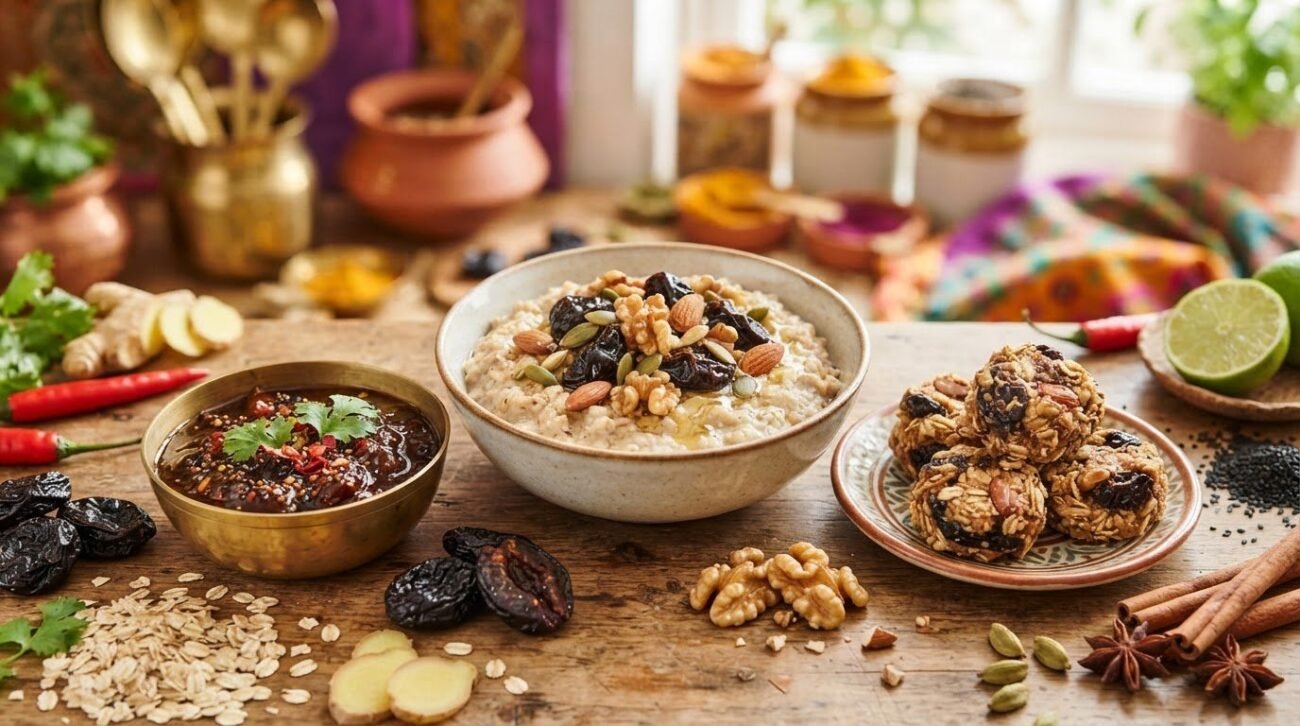
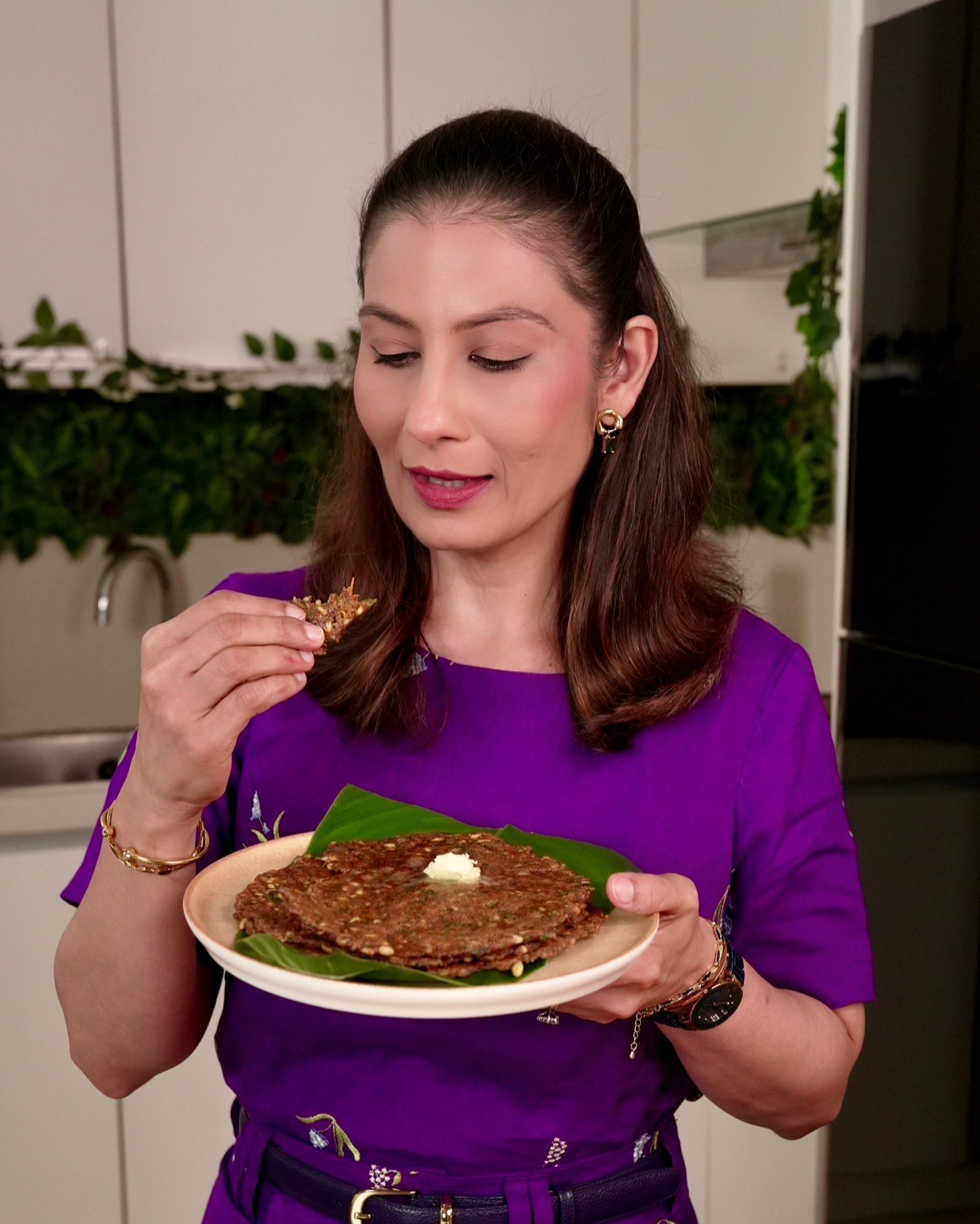
Prunes can do more than sweeten dessert. Their deep, fruity flavour adds richness to savoury dishes too, especially when balanced with bright acidity, warming spices, and savoury ingredients. If you worry healthy prune recipes will taste too sweet or turn sticky and dense, a few thoughtful choices can make all the difference.
These three measured recipes use prunes in different ways: stirred into breakfast oats, simmered into chutney, and mashed into no-bake bites. You’ll also find practical guidance on choosing how to prepare the fruit, balancing sweetness, and fixing texture. Chef Meghna’s cooking notes explain why the methods and ingredient pairings matter, so you can adjust each recipe with confidence.
Key Takeaways
- See how chopped, softened, and blended prunes create different textures, from chewy pieces to smooth sauces.
- Balance prune sweetness with acidity, spices, and savoury ingredients.
- Make three healthy prune recipes with measured ingredients: a breakfast bowl, a savoury chutney, and no-bake oat bites.
- Use Chef Meghna’s practical fixes for mixtures that turn out too dry, sticky, sweet, or loose.
- Choose a recipe to suit your meal, then adjust one flavour or texture at a time on your next attempt.
Healthy Prune Recipes: Why Prunes Are Useful in the Kitchen
Prunes are dried plums. Removing moisture concentrates their mellow sweetness and leaves them soft and chewy. That makes them useful beyond desserts: chopped prunes add little pockets of fruitiness, while mashed or blended prunes can thicken sauces and help batters hold together. For a general overview of what prunes are and how they’re used, see Wikipedia.
“Healthy” describes the whole dish, not a single ingredient. The other ingredients, cooking method, and portion all matter. Prunes add sweetness and body, but including them does not automatically make a dish nutritious or suitable for every eating plan. Treat these healthy prune recipes as ideas for enjoyable home cooking, not as a promise of weight loss or a medical benefit.
What flavour and texture do prunes bring to a recipe?
Prunes have a rounded, fruity sweetness rather than a sharp sugary taste. Their dense, tender texture holds up when chopped, and their natural stickiness helps snack mixtures cling together. In a sauce, finely chopped prunes soften as they cook. Mashing leaves a little texture, while blending gives a smoother finish and spreads the flavour through the dish.
Balance keeps the sweetness from taking over. Pair prunes with tart ingredients such as lemon juice or vinegar, savoury flavours such as onion, or warm spices such as cinnamon and ginger. Nuts contribute crunch and a toasty note. These combinations work in both sweet and savoury cooking.
How should you prepare prunes before cooking?
Check each prune for a pit, then chop the fruit evenly if you want small pieces in oats, batter, or chutney. Evenly sized pieces soften at a similar rate, reducing the chance of a mixture with both firm chunks and overly soft spots.
If the prunes feel firm and you need to mash or blend them, soak them briefly in warm water until they soften. Drain them well before using. A little soaking water can loosen a puree, but too much may make batter, sauce, or snack mixture runny and dilute the prune flavour. Add liquid gradually, using the texture as your guide.
How to Balance Prune Sweetness, Texture, and Other Ingredients
The right balance depends on what else is in the bowl. Acidity brightens prunes’ mellow flavour, while spices and savoury ingredients add depth. Texture matters too: pieces give a dish contrast, but smooth puree distributes sweetness through every bite. In healthy prune recipes, adjust gradually and taste as you go, especially if the other ingredients are already sweet or tangy.
Which ingredients pair well with prunes?
Citrus juice or a spoonful of yoghurt gives prunes a tart lift in breakfast bowls and snacks. Oats provide a mild, hearty base, and nuts add crunch. Cinnamon, ginger, and cardamom bring warmth. For savoury dishes, onion, a pinch of salt, and a splash of vinegar can temper the fruit’s sweetness. These pairings are flexible: add a little at a time so the prune flavour remains clear.
When should you chop, soak, or blend prunes?
Choose the preparation according to the texture you want. Chop prunes for visible fruit pieces in breakfast bowls and snack mixtures. If they feel firm, soak them briefly before blending, then drain well to avoid a watery mixture. Blending creates a smooth base for a sauce or batter, while mashing keeps some texture. Add extra liquid slowly because prunes already contribute moisture.
Moisture behaves differently in each recipe. For batter, keep puree thick and adjust other liquids cautiously to avoid a heavier or softer result. For chutney, simmering brings the flavours together; if the consistency is loose, cook it longer rather than adding more fruit. In no-bake mixtures, prunes help oats and nuts hold together. If the mixture is too wet, add dry ingredients a little at a time until it is easy to shape.
Quick texture guide: Chop for distinct pieces, soak and mash for a soft, rustic texture, or blend for a smooth, even finish.
For more practical cooking inspiration, explore Meghna’s recipe videos and notice how ingredient texture shapes a dish.
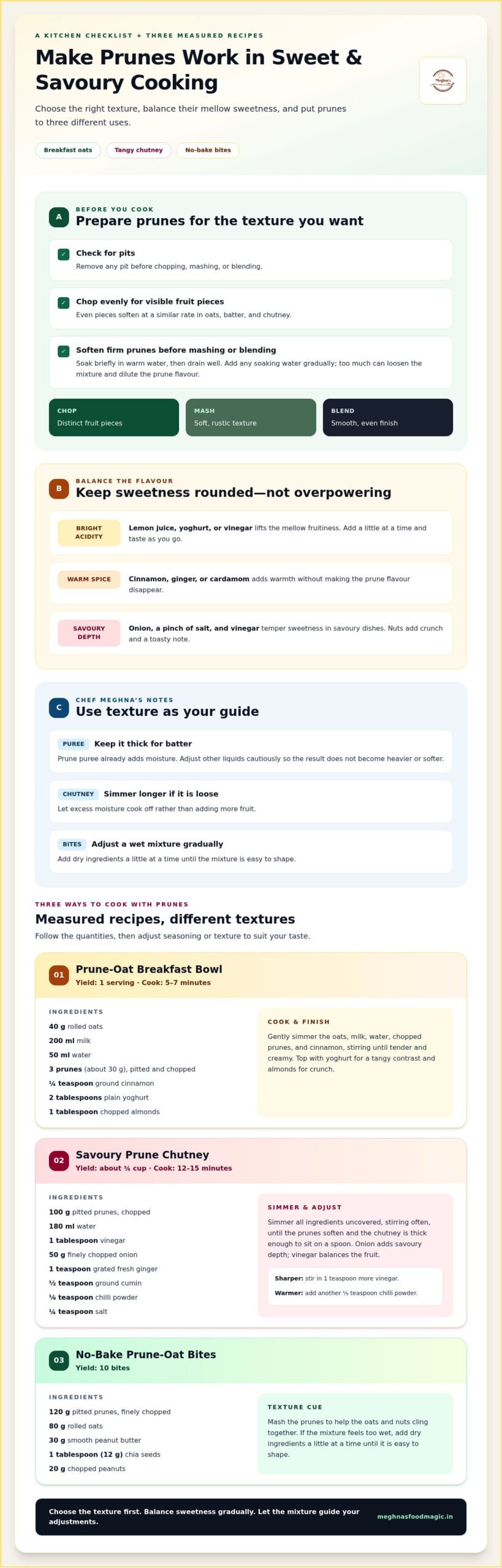
Make These 3 Healthy Prune Recipes with Measured Ingredients
These recipes put prunes to three different uses: simmered into breakfast oats, cooked into tangy chutney, and mashed into chewy snack bites. Follow the measured ingredients, then adjust the seasoning or texture to suit your taste.
Prune-Oat Breakfast Bowl
Yield: 1 serving
- 40 g rolled oats
- 200 ml milk
- 50 ml water
- 3 pitted prunes, chopped (about 30 g)
- ¼ teaspoon ground cinnamon
- 2 tablespoons plain yoghurt
- 1 tablespoon chopped almonds
Method: Combine the oats, milk, water, prunes, and cinnamon in a small saucepan. Bring to a gentle simmer, stirring, then cook for 5-7 minutes until the oats are tender and creamy. The prunes soften and sweeten the porridge as it cooks. Spoon into a bowl and top with yoghurt and almonds for a cool, tangy contrast and a little crunch.
Savoury Prune Chutney
Yield: About ¾ cup
- 100 g pitted prunes, chopped
- 180 ml water
- 1 tablespoon vinegar
- 50 g finely chopped onion
- 1 teaspoon grated fresh ginger
- ½ teaspoon ground cumin
- ⅛ teaspoon chilli powder
- ¼ teaspoon salt
Method: Put all the ingredients in a small saucepan and bring to a gentle simmer. Cook uncovered for 12-15 minutes, stirring often, until the prunes are soft and the chutney is thick enough to sit on a spoon. Onion adds savoury depth, while vinegar balances the fruit’s sweetness. For a sharper finish, stir in 1 teaspoon more vinegar. For extra warmth, add another ⅛ teaspoon chilli powder.
No-Bake Prune-Oat Bites
Yield: 10 bites
- 120 g pitted prunes, finely chopped
- 80 g rolled oats
- 30 g smooth peanut butter
- 1 tablespoon chia seeds (12 g)
- 20 g chopped peanuts
Method: Mash the prunes with a fork to form a sticky paste. Mix in the peanut butter, then stir through the oats, chia seeds, and peanuts. Leave the mixture to rest for 10 minutes so the oats and chia seeds absorb some moisture. Roll into 10 even bites. If it feels dry or will not hold together, mix in warm water 1 teaspoon at a time. If it is too sticky to shape, add oats 1 tablespoon at a time.
For more everyday inspiration, browse the recipe collection and explore flavour combinations that suit your table.
Chef Meghna’s Notes: Fix Texture, Make Substitutions, and Store Prunes
Prunes vary in softness, so judge the mixture before adding liquid or dry ingredients. Make a small adjustment, mix well, and give the mixture a short rest before deciding whether it needs more. This is easier to control than trying to correct an over-adjusted mixture. Use these tips to adapt healthy prune recipes while keeping the flavour balanced.
How can you rescue a prune mixture that is too dry or sticky?
If a mixture is dry or crumbly, add liquid in measured increments. For no-bake bites, start with 1 teaspoon warm water; for oats, add a small splash of milk. Mix thoroughly, wait a few minutes, then check whether it holds together. That pause gives the oats and seeds time to absorb moisture.
If the bite mixture is sticky, stir in 1 tablespoon oats, let it rest briefly, and test it before adding more. If chutney is too loose, simmer it uncovered, stirring often, so excess water evaporates. If it tastes too sweet, add acidity gradually, starting with 1 teaspoon vinegar or lemon juice. Taste before adding more. A small pinch of salt or a little extra spice can also round out the flavour without masking the fruit.
What substitutions keep the recipe balanced?
In the breakfast bowl, replace the almonds with 1 tablespoon chopped walnuts or pumpkin seeds for a crunchy topping. In the bites, use 20 g chopped walnuts instead of peanuts. Keep the oats as written, then add another tablespoon only if the mixture is still too sticky after resting.
Replacing prunes changes both sweetness and moisture. Dried apricots can work in cooked recipes; try the same weight as the prunes, then add water to chutney in 1 tablespoon increments if it needs loosening. Dried figs can suit a sweet snack mixture, but their texture may differ. Assess the mixture before adding liquid or oats. These are optional adaptations, not exact flavour matches.
Storage tip: Keep unopened prunes in a cool, dry place. After opening, transfer them to a sealed, airtight container and store in the refrigerator or freezer. For prepared chutney, breakfast oats, or snack bites, follow the recipe’s specific handling and storage instructions rather than assuming the dried-fruit guidance applies to the finished dish.
For more practical cooking inspiration, explore Meghna’s recipe videos.
Bring More Healthy Prune Recipes into Your Everyday Cooking
Prunes play a different role in each of these recipes. The breakfast bowl combines oats and milk for a gently sweet start to the day. Chutney brings a tangy, spiced note to a savoury plate. No-bake prune-oat bites are easy to shape, with crunch from nuts or seeds. Each one is a simple way to enjoy healthy prune recipes without expecting one ingredient to do all the work.
Which prune recipe should you try first?
Choose the breakfast bowl if you want a straightforward option to prepare ahead: cook the oats and prunes, then add yoghurt and nuts when you serve it. For fruit in a savoury setting, make the chutney and taste how vinegar, spices, and onion balance the prunes. The bites are a handy option to pack as a snack; shape them evenly and follow the recipe’s handling guidance for storage.
Start with one recipe. Follow the measurements, then note what you might change next time: perhaps more acidity in the chutney, extra cinnamon in the oats, or added seeds for a crunchier bite. Adjust one flavour or texture at a time to see what made the difference.
Find more joyful, practical recipe inspiration
For another sweet kitchen project, explore healthy dessert ideas and look for recipes where fruit, spices, and texture work together. Browse the recipe collection for more everyday inspiration. You can also explore Get Fit With Meghna recipe videos for approachable cooking ideas.
Cooking is a chance to experiment without making it complicated. Keep your first attempt simple, taste as you go, and let your preferences guide the next batch.
For more cooking demonstrations and fresh ideas, explore Meghna’s recipe videos.
Bring a Little Prune-Inspired Creativity to Your Kitchen
Prunes can do more than sweeten a treat. Their soft texture adds body to breakfast oats and no-bake bites, while acidity, spice, or savoury flavours help balance a dish. These three healthy prune recipes are an easy place to start: choose the bowl for breakfast, the chutney for a savoury twist, or the bites for a simple snack.
Follow the measurements the first time, then adjust one detail at a time to suit your taste. A small change to the spice, acidity, or texture can make the next batch feel distinctly yours. Chef Meghna’s practical recipes and cooking guidance are part of a free digital recipe database, with demonstrations available on her YouTube channel.
Choose one recipe from Meghna’s free digital recipe collection, gather the ingredients, and try it in your kitchen.
Frequently Asked Questions
Are prunes healthy to eat every day?
Prunes can fit into a varied diet, but whether eating them every day suits you depends on your needs, portion, and overall eating pattern. They contain natural sugars and fibre, so a large amount may not suit everyone. Start with a modest serving and notice how you feel. If you have a health condition or specific dietary requirements, ask a qualified health professional for personal advice rather than relying on a recipe as treatment.
How do you use prunes in healthy recipes?
Chop prunes when you want distinct chewy pieces, or mash or blend them to spread their sweetness through a mixture. They work in oats, snack bites, sauces, and chutneys. In healthy prune recipes, balance their mellow sweetness with lemon juice, vinegar, ginger, cinnamon, or a pinch of salt. Add liquid gradually because prunes contribute moisture and affect consistency.
Can prunes be used instead of sugar in baking?
Prune puree can replace some sugar in certain baking recipes, but it does not behave exactly like granulated sugar. It adds moisture and fruit flavour and can make the texture denser, while sugar also affects structure and browning. Start with a recipe designed for prune puree or make a small test batch before changing a favourite recipe. A direct swap may make the result too wet, dense, or less sweet than expected.
Do you need to soak prunes before cooking?
No. If prunes are soft enough to chop, add them directly to porridge, chutney, or a snack mixture. For firm prunes that need to blend smoothly, soak them briefly in warm water until soft, then drain well. Too much soaking liquid can thin batter, chutney, or bite mixture, so add only a little if the puree needs loosening.
How can you make prune recipes less sweet?
Balance prune sweetness with acidity, spice, or savoury flavours. Try lemon juice or vinegar in chutney, plain yoghurt with oats, or ginger and cinnamon in a sweet dish. Add changes gradually and taste as you go; a small pinch of salt can also bring flavours into focus. If the dish still tastes too sweet, reduce the prunes next time and adjust the moisture as needed.
How should prunes be stored after opening?
After opening, transfer prunes to a sealed, airtight container and store them in the refrigerator or freezer. Keep the container closed between uses to limit exposure to air and moisture. Check the package for storage directions and use your judgement about freshness. These tips apply to dried fruit; once prunes are mixed into oats, chutney, or another prepared dish, follow that recipe’s specific handling guidance.
Can you use prunes in savoury recipes?
Yes. Prunes add mellow, fruity sweetness to savoury cooking. Try them chopped into a gently spiced chutney with onion, vinegar, ginger, and cumin, or add small pieces to a savoury salad. Pair them with tart or savoury ingredients to keep the flavour balanced. Add prunes in measured amounts and taste before adding more, since their sweetness becomes more noticeable as they soften during cooking.
What can I make with prunes besides dessert?
Try a prune-oat breakfast bowl, savoury chutney, or no-bake prune-oat bites. Chopped prunes add chewy pieces to oats, while softened or mashed fruit helps bind snack mixtures. Chutney is a savoury way to use prunes with spices and acidity. Start with the recipe measurements, then adjust seasoning or texture gradually. Choose according to whether you want breakfast, a condiment, or a snack.
Disclaimer
This is a recipe food blog page and not nutrition or doctor and hence do not claim to cure any illness. If you have specific health issues please consult a qualified doctor or certified nutritionist.
I do consult experts, research Internet and at times seek help from Gemini to collect relevant information to put together some of these blogs.

