
High Fiber Indian Diet Plan for Better Digestion
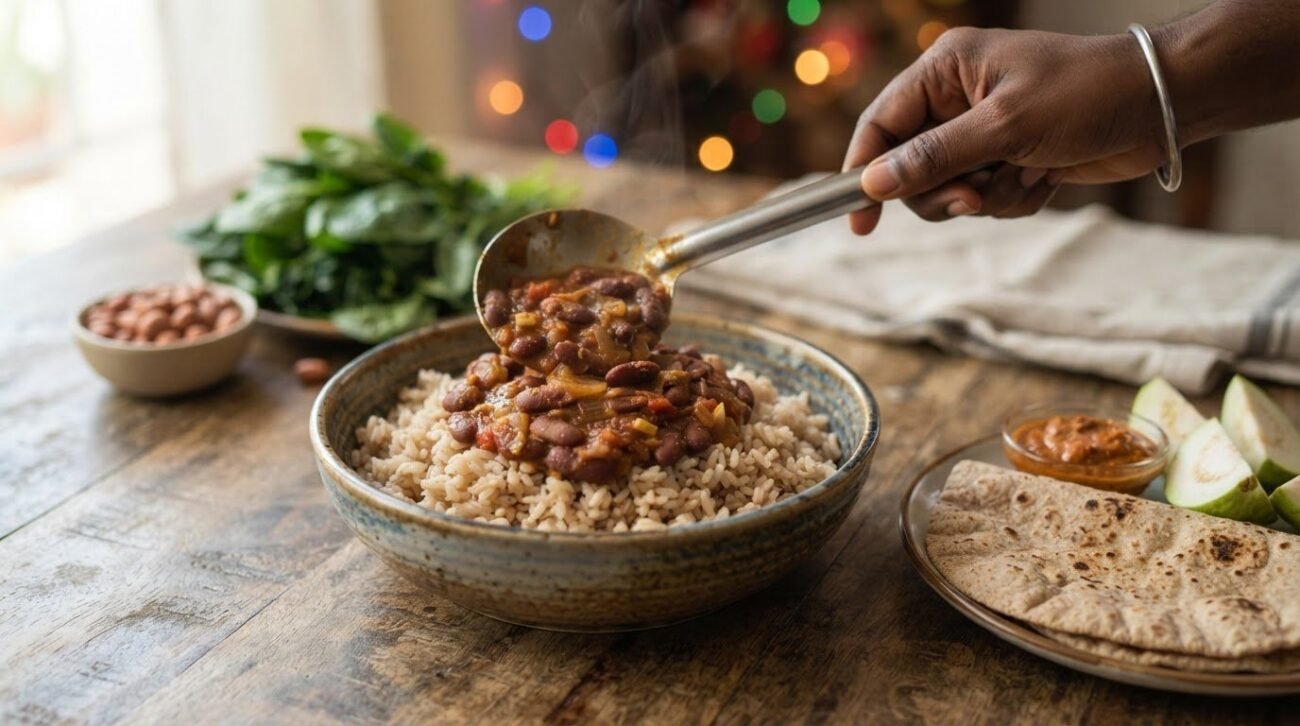
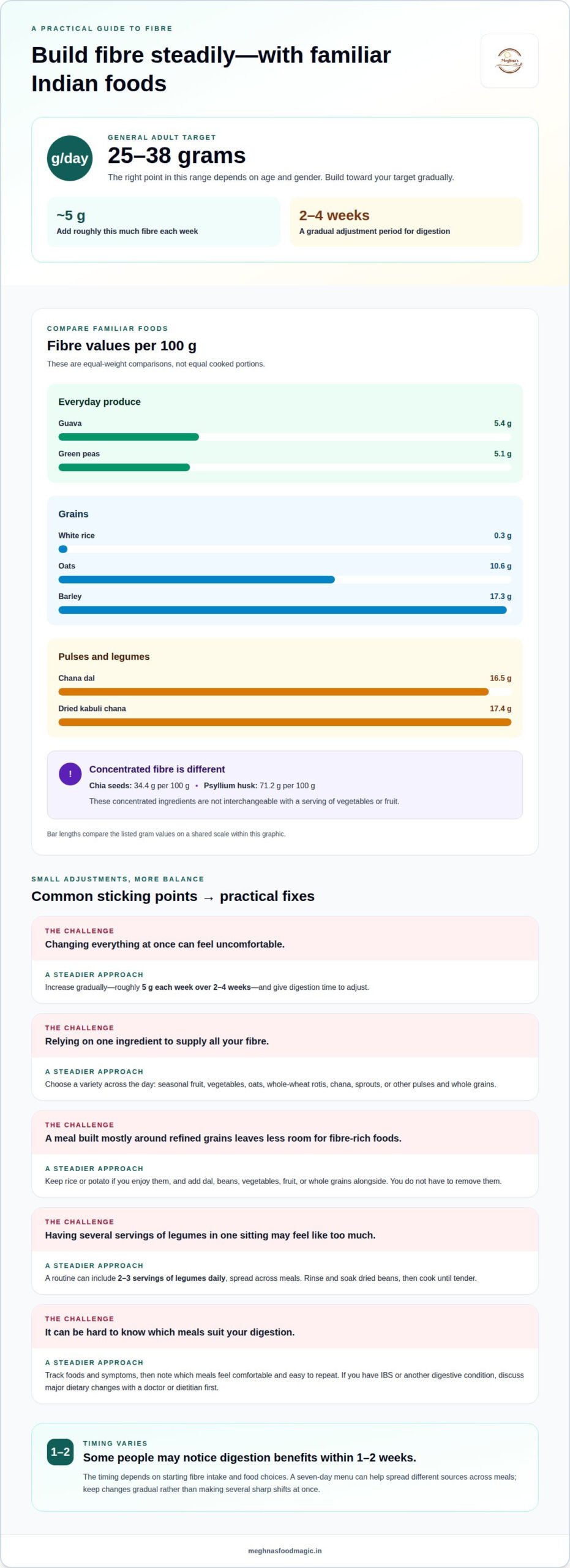
More fibre isn’t the whole answer; balance matters too. Adults can aim for 25-38 grams of fibre per day, depending on age and gender. A high fiber Indian diet plan can help you work towards that range with familiar foods, while pairing fibre-rich choices with protein and healthy fats.
If you’ve been adding dal, vegetables or fruit to your meals and still feel unsure whether you’re getting enough, you’re not alone in wondering how to make it all add up. Increasing fibre gradually, rather than changing everything at once, can help your digestion adjust; some people may notice benefits within 1-2 weeks.
Here, you’ll learn how much fibre to aim for, which everyday Indian foods can help you reach that goal, and how to build satisfying, balanced meals. We’ll also cover how to increase your intake gradually and what can affect how quickly you notice a difference, so you can make changes that feel practical and enjoyable.
Key Takeaways
- Find a practical daily fibre target that suits your age and gender, then build towards it gradually.
- Use familiar Indian foods such as guava, vegetables, pulses and whole grains to add variety and fibre to meals.
- See how a seven-day meal plan can spread fibre-rich choices across breakfast, lunch, dinner and snacks.
- Pair fibre sources with protein and healthy fats to make meals more balanced and satisfying.
- Learn which foods to limit and how to choose satisfying alternatives without making meals feel restrictive.
1. How quickly will I see benefits from a High-Fibre Diet?
Some people may notice digestion benefits within 1-2 weeks, though the timing depends on starting intake and food choices. Adults can use 25-38 grams daily as a general target, depending on age and gender. Increase fibre gradually: adding roughly 5 grams each week over 2-4 weeks can give digestion time to adjust. A seven-day menu can help you spread different sources across meals.
Use this as a flexible menu, adjusting portions to your appetite and usual meals:
- Day 1: Vegetable oats upma, dal with roti and spinach, then vegetable khichdi.
- Day 2: Moong dal chilla, rajma with brown rice, and fruit.
- Day 3: Vegetable daliya, chole with roti, and pumpkin with moong dal.
- Day 4: Oats with fruit, vegetable sambar with idli, and mixed-bean salad.
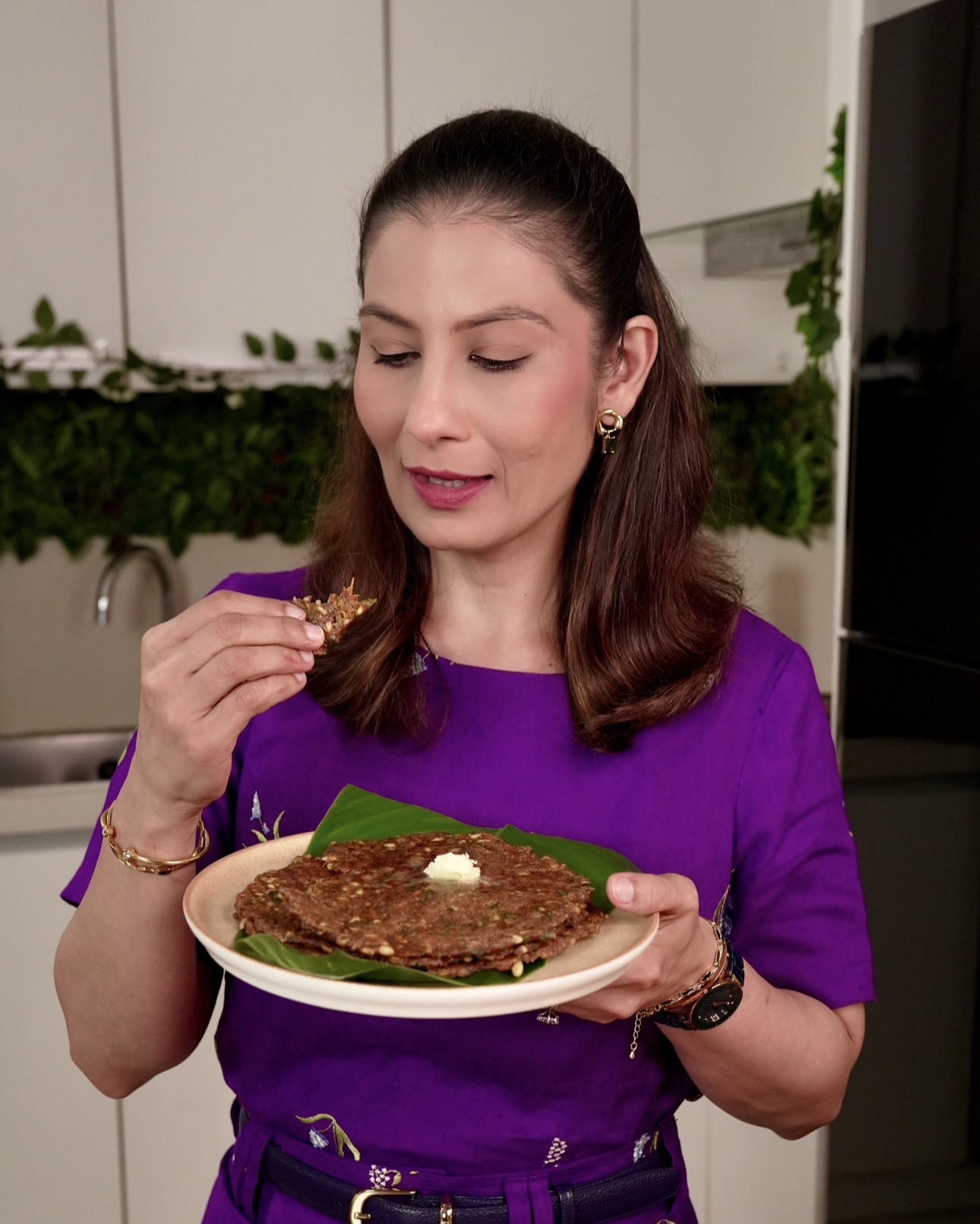
- Day 5: Methi paratha, masoor dal with brown rice, and lauki with roti.
- Day 6: Sprouts with vegetables, chana with roti, and vegetable khichdi.
- Day 7: Vegetable upma, rajma with vegetables, and dal with sweet potato.
Two measured recipes make the plan easier to put into practice. For vegetable oats upma, use ½ cup rolled oats, ¼ cup diced carrot, ¼ cup green peas, ¼ cup chopped beans, ½ teaspoon oil, ¼ teaspoon mustard seeds, 1 cup water and a pinch of salt. Heat oil, crackle mustard seeds, add vegetables and water, then simmer until tender. Stir in oats and cook until soft.
For moong dal chilla, use ½ cup split yellow moong dal, soaked until soft, ¼ cup grated carrot, 2 tablespoons chopped coriander, ¼ teaspoon cumin and a pinch of salt. Blend the drained dal with a little water into a pourable batter. Stir in the vegetables and spices. Spread into two thin pancakes and cook on a lightly oiled pan until set on both sides.
Carrots, peas, beans, pumpkin, bottle gourd and beetroot can add fibre to Indian meals, while guava is another fruit option. Pair them with pulses or whole grains for more variety. If you have IBS or another digestive condition, discuss major dietary changes with your doctor or dietitian first. Track foods and symptoms, since individual tolerance varies.
After the first week, note which meals feel comfortable and easy to repeat. Keep increasing fibre gradually rather than making several sharp changes at once.
2. What Are Fiber Rich Foods?
Build meals around whole foods rather than asking one ingredient to supply all your fibre. In India, everyday choices include seasonal fruits, vegetables, oats, whole-wheat rotis, chana and sprouts. Guava provides 5.4 grams of fibre per 100 grams, while green peas contain 5.1 grams per 100 grams. Add them in ways that suit your meals, such as peas in pulao or sliced guava as a snack.
Refined grains can fit into meals, but they generally provide less fibre than whole-grain alternatives. White rice contains 0.3 grams per 100 grams, compared with 10.6 grams in oats and 17.3 grams in barley per 100 grams. These values are based on equal weights, not equal cooked portions. You don’t have to remove rice or potato; serve them with dal, beans or vegetables to bring more fibre into the meal.
Low-fibre meals made mostly from refined grains leave less room for fibre-rich foods. Rather than blaming one ingredient for constipation, consider the overall pattern. Replace some refined choices with pulses, vegetables, fruit or whole grains. Keep potato skin when it suits the dish, and choose whole fruit instead of juice when you want its fibre. A vegetable side can also add contrast and colour; vegetable ideas for fussy eaters may help inspire new combinations.
Kerala cooking offers familiar options beyond rice. Red Matta rice, jackfruit, Nendran bananas, vegetable thoran and drumstick can all add variety to meals. Tapioca is another traditional ingredient, best served with pulses or vegetables rather than as the meal’s only plant food. Carrot, beans, pumpkin, bottle gourd and beetroot also work well in curries, salads and mixed dishes.
Whole foods provide fibre as part of the food itself, while added-fibre ingredients are more concentrated. Chia seeds contain 34.4 grams per 100 grams, and psyllium husk contains 71.2 grams per 100 grams. These concentrated ingredients aren’t interchangeable with a serving of vegetables or fruit. Start with foods you enjoy, such as oats, seasonal fruit or roasted chana. For a crisp vegetable side, air fryer recipe ideas can offer another preparation style.
For a simple meal, combine a grain or potato with pulses and vegetables. Red Matta rice with dal and vegetable thoran, for example, brings familiar ingredients together. Choose whole fruits when practical, and aim for variety across the day rather than relying on a single fibre source.
3. Legumes, pulses, nuts and seeds
Indian pulses make fibre-rich meals easy to build around familiar flavours. Masoor dal, moong dal, chana dal, whole chana, rajma and kabuli chana all bring useful variety. Their fibre content varies by ingredient and how it is measured. Use these figures to compare foods, not to estimate a cooked bowl without accounting for its serving size.
Chickpeas and beans work in more than curry. Add boiled kabuli chana to salads, mash chickpeas into chaat, or serve rajma with vegetables. Dried kabuli chana contains 17.4 grams of fibre per 100 grams; chana dal contains 16.5 grams per 100 grams. Cooked pulses can contribute fibre to a meal, though the amount varies with the ingredient and serving. A high-fibre routine can include 2-3 servings of legumes daily, spread across meals rather than crowded into one sitting.
Preparation affects texture and comfort. Rinse dried beans, soak them before cooking, then cook until tender so they blend smoothly into dal or curry. If whole rajma feels too firm, cook it until easily mashed and serve a smaller portion with rice and vegetables. For a lighter start, try moong dal chilla or a modest serving of masoor dal.
Nuts and seeds add a crisp finish, but a small sprinkle is enough to contribute fibre. A 28-gram serving of nuts and seeds, such as almonds, flaxseeds or chia, provides approximately 2-4 grams. Flaxseeds contain 27.3 grams per 100 grams, while almonds contain 12.5 grams per 100 grams. One tablespoon of flaxseeds, weighing 10 grams, provides 2.7 grams. Grind flax before adding it to porridge or curd for an even texture.
For an easy daily rhythm, rotate these sources instead of repeating one pulse. For example:
- Breakfast: Add ground flaxseeds to oats, or make moong dal chilla.
- Lunch: Pair masoor dal or rajma with vegetables and a whole-grain roti.
- Snack: Choose roasted chickpeas, sprouts, or a small handful of almonds.
- Dinner: Serve chana dal with vegetables, or add lentils to a millet dish.
Lentils and beans contain soluble fibre and can contribute to a varied fibre intake. Nuts and seeds add texture and can make simple meals more satisfying. If you’re tracking weight or portions, measure ingredients consistently and remember that dry weights differ from cooked servings. Rotate dal, whole chana, rajma, almonds and flax for flexibility, and round out the plate with vegetables and whole grains.
4. Whole grains including millets and brown rice
Whole grains bring fibre into everyday meals through roti, rice, porridge and dosa. Jowar contains 6.3 grams of dietary fibre per 100 grams, while ragi contains 3.6 grams per 100 grams. Brown rice provides 1.8 grams per 100 grams, and one cup cooked contains 3.5 grams. These figures use different measures, so compare like with like rather than treating a grain’s dry weight as a cooked serving.
Jowar, bajra, ragi, whole wheat and brown rice can each add a different taste and texture. A cup of cooked whole grains or millets provides approximately 3-7 grams of fibre. Whole-wheat roti contributes about 2 grams per serving. Choose grain by dish: jowar flour makes sturdy rotis, while brown rice stays pleasantly chewy in a bowl with dal. Ragi works well in dosa batter or porridge.
Cooking technique affects the final texture. Rinse grains to remove surface dust, then soak whole millet grains before cooking if you want softer, more evenly cooked kernels. For porridge, cook until tender and creamy; for a salad or grain bowl, stop when the kernels hold their shape. Ground millet flour behaves differently, so use it directly in batters rather than soaking it like whole grains.
Pair grains with legumes for a more varied plate. Serve brown rice with rajma, or have jowar roti with dal and cooked vegetables. Grains provide a base, while pulses add another fibre source and plant protein. For a one-pot meal, simmer rice or millet with lentils and chopped vegetables, adding liquid gradually to control whether the result is fluffy or soft.
Fibre-rich whole grains can support regular bowel habits and may help prevent constipation when they replace some refined grains. Their fibre also slows digestion, helping meals feel more sustaining and supporting steadier blood sugar responses. The overall meal matters: combine grains with vegetables and legumes instead of serving a large portion of grain alone.
Start with a grain you already cook. Replace part of a refined-grain serving with brown rice, whole-wheat roti or millet, then adjust the portion to suit the meal. If texture is a concern, choose soft-cooked ragi porridge; if you prefer separate grains, try brown rice or jowar. With kidney-related dietary restrictions, grain choices and portions should fit your individual eating plan rather than a general menu.
Use a variety of grains across the week instead of relying on one every day. A breakfast of ragi dosa, lunch with brown rice and dal, and dinner with jowar roti offer different textures and flavours. This simple rotation can make whole grains easier to enjoy while adding fibre through familiar Indian meals.
5. Nutritional balance with protein and healthy fats
A balanced meal combines fibre with protein and healthy fats instead of relying on one ingredient to do everything. For example, serve dal with vegetables and roti, then add a modest seed topping. Dal contributes protein, while vegetables and whole grains add fibre and texture. Together, they make a more complete plate than relying on a single nutrient source.
Soluble fibre in foods such as oats, lentils and beans can support cholesterol management. Whole grains and vegetables provide insoluble fibre, another part of your overall intake. Spread both across meals: try oats with nuts at breakfast, then rajma with vegetables at lunch. Mixing food sources keeps meals varied without requiring every plate to contain every ingredient.
Build protein into meals with dal, chickpeas, rajma, paneer or sprouts. Nuts and seeds can contribute healthy fats as well as flavour and crunch. Add almonds to fruit, ground flaxseeds to porridge, or sesame seeds to vegetables. For a breakfast built around a protein-rich batter, chila recipe ideas can offer inspiration.
Use this simple sequence to put a meal together:
- Choose a base: Add a grain such as whole-wheat roti, oats or brown rice.
- Include protein: Serve it with dal, chana, rajma, paneer or sprouts.
- Add vegetables: Choose cooked options such as spinach, beans or pumpkin.
- Finish with a small extra: Sprinkle nuts or seeds, or enjoy fruit separately.
Snacks can follow the same idea. Pair roasted chana with fruit, or choose sprouts with chopped vegetables. For lunch, dal with roti and vegetables brings several food groups together without complicated preparation. You can also explore fitness-focused recipe ideas for more meal inspiration.
Keep the balance flexible. If rajma and grains are already on the plate, add vegetables rather than several concentrated fibre sources at once. If nuts or seeds don’t suit you, choose beans, lentils or vegetables instead. The key is to build meals around a fibre source, a protein choice and a little healthy fat, using combinations you enjoy and can prepare regularly.
Meghna’s Food Magic
Meghna’s Food Magic makes it easier to turn fibre goals into enjoyable meals with its free digital recipe database. Explore recipes featuring vegetables, pulses, whole grains and fruit, then pair them with protein-rich choices to create balanced plates. The collection offers fresh ideas for everyday cooking and ways to include more nourishing ingredients in familiar Indian dishes.
For more ideas, browse High Protein Recipes, Vegetarian High Protein Recipes, Millets Recipes and Weight Loss Fitness Recipes. Choose recipes that suit your preferences and make changes gradually instead of trying to overhaul every meal at once. A varied recipe collection can help keep meals interesting as you work towards your fibre target.
Contact Meghna’s Food Magic if you’d like to get in touch about recipe inspiration.
Make Your Next Meal the Starting Point
Turn a high fiber Indian diet plan into a routine by choosing one meal to adjust first. Keep the change small enough to repeat: add a vegetable to a familiar dish, pair a grain with a pulse, or finish breakfast with whole fruit. Notice which combinations suit your schedule, taste and digestion. A simple meal note can help you spot patterns and keep useful ideas in rotation, without making every plate feel like a calculation.
Next, choose ingredients you enjoy and keep them ready for meals you already cook. A cooked pulse, washed fruit or portioned nuts can make a balanced choice easier on a busy day. Build on what works, then introduce another idea when your routine feels settled. Consistency comes from food that tastes good and fits real life, not from chasing perfection.
Every thoughtful meal is a fresh beginning. Keep cooking with curiosity, and let small choices grow into a nourishing routine.
Frequently Asked Questions
How Much Fibre Do You Need Per Day?
For adults, a useful daily range is 25-38 grams, depending on age and gender. A practical starting point is to notice where fibre already appears in your meals, then add a source to meals that lack one. For example, include fruit with breakfast or vegetables beside lunch. Keep an eye on your overall pattern rather than expecting one food to supply the day’s entire requirement.
What Are Fiber Rich Foods?
Fibre-rich foods include pulses, whole grains, fruits, vegetables, nuts and seeds. Among concentrated options, psyllium husk contains 71.2 grams per 100 grams, chia seeds contain 34.4 grams, and flaxseeds contain 27.3 grams. Those figures describe ingredients by weight, not typical portions. For everyday eating, use whole foods such as lentils, oats, beans and fruit; concentrated additions are not substitutes for varied meals.
How quickly will I see benefits from a High-Fibre Diet?
Some digestion benefits can appear within 1-2 weeks, but the change depends on how you increase fibre and what your usual meals contain. Keep a simple meal-and-symptom note during that period. It can help you notice whether adding oats at breakfast or lentils at lunch feels comfortable. Increase intake gradually, and avoid changing several meals sharply on the same day.
What Otherwise Can You Do To Control Constipation?
Alongside fibre, drink fluids regularly; one practical guide suggests 8 glasses a day when eating more high-fibre foods. A consistent bathroom routine and regular movement can also support bowel habits. Give yourself time rather than ignoring the urge to go. If constipation is persistent, painful or accompanied by concerning symptoms, seek medical advice instead of relying only on food changes.
What is the final word on High-Fibre Diet?
Make variety and consistency central to your approach. Rotate food sources across meals and build each plate around ingredients you genuinely enjoy. Dal one day and a whole-grain breakfast another can make a routine easier to sustain. Keep changes gradual, drink fluids regularly, and adapt your choices to your digestion and personal dietary needs.
How much fiber should adults in India eat daily?
Adults in India can use 25-38 grams of fibre per day as a practical range, with age and gender influencing individual needs. Treat it as a daily direction, not a score every meal must hit. If your current meals rely heavily on refined grains, make one gradual swap, such as adding a pulse or choosing a whole-grain option alongside vegetables.
Which Indian foods are highest in dietary fiber?
Indian meals can draw fibre from whole chana, rajma, lentils, peas, whole-wheat roti, oats and vegetables. A cooked cup of pulses such as dal, chana or rajma provides approximately 5-9 grams. Guava, seasonal fruit and leafy vegetables add further variety. Compare serving sizes carefully: values for dry ingredients per 100 grams do not directly equal fibre in a cooked portion.
What does a high-fiber Indian meal plan for one day look like?
A sample day could begin with porridge, followed by a lunch of rajma, grain and vegetables. Choose fruit or roasted chana between meals, then serve dal with cooked vegetables at dinner. Keep the portions comfortable and spread fibre sources across the day. A sample Indian day can provide approximately 38-43 grams, so adjust the combination to suit your needs and usual intake.
Disclaimer
This is a recipe food blog page and not nutrition or doctor and hence do not claim to cure any illness. If you have specific health issues please consult a qualified doctor or certified nutritionist.
I do consult experts, research Internet and at times seek help from Gemini to collect relevant information to put together some of these blogs.

