
High-Protein, Low-Carb Indian Vegetarian Recipes: 3 Flavorful Ideas
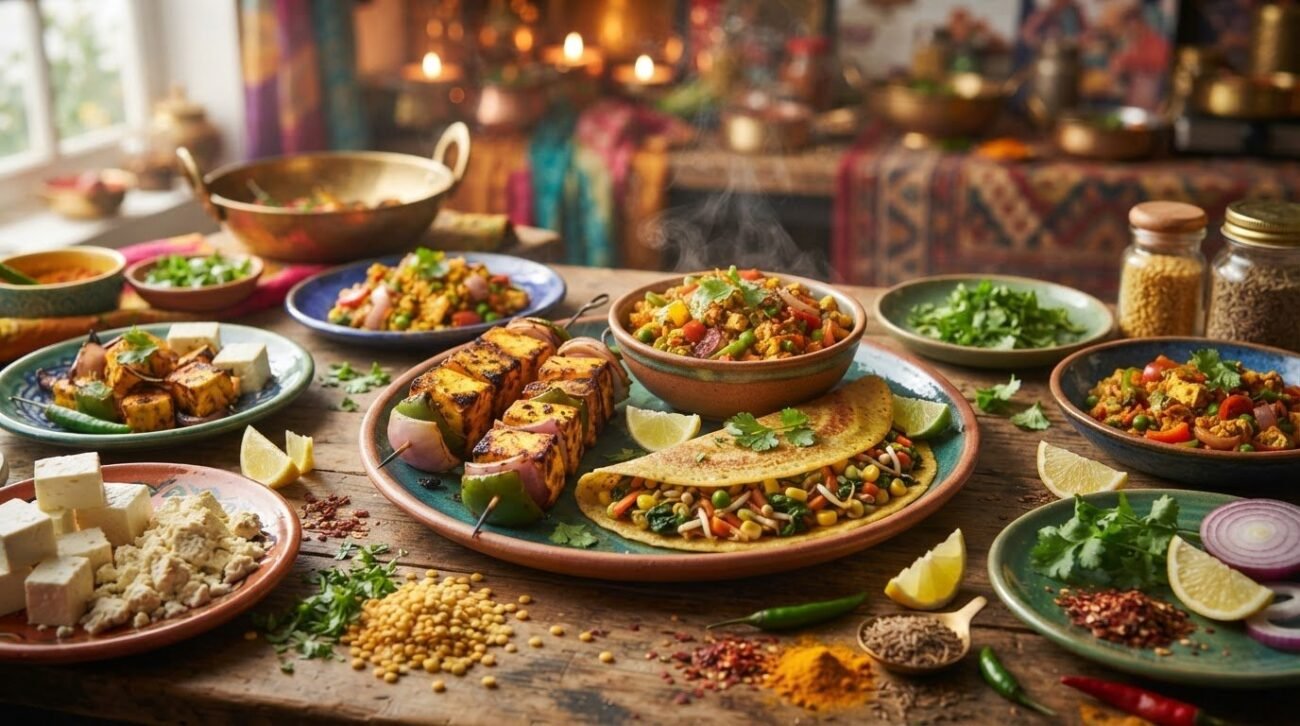
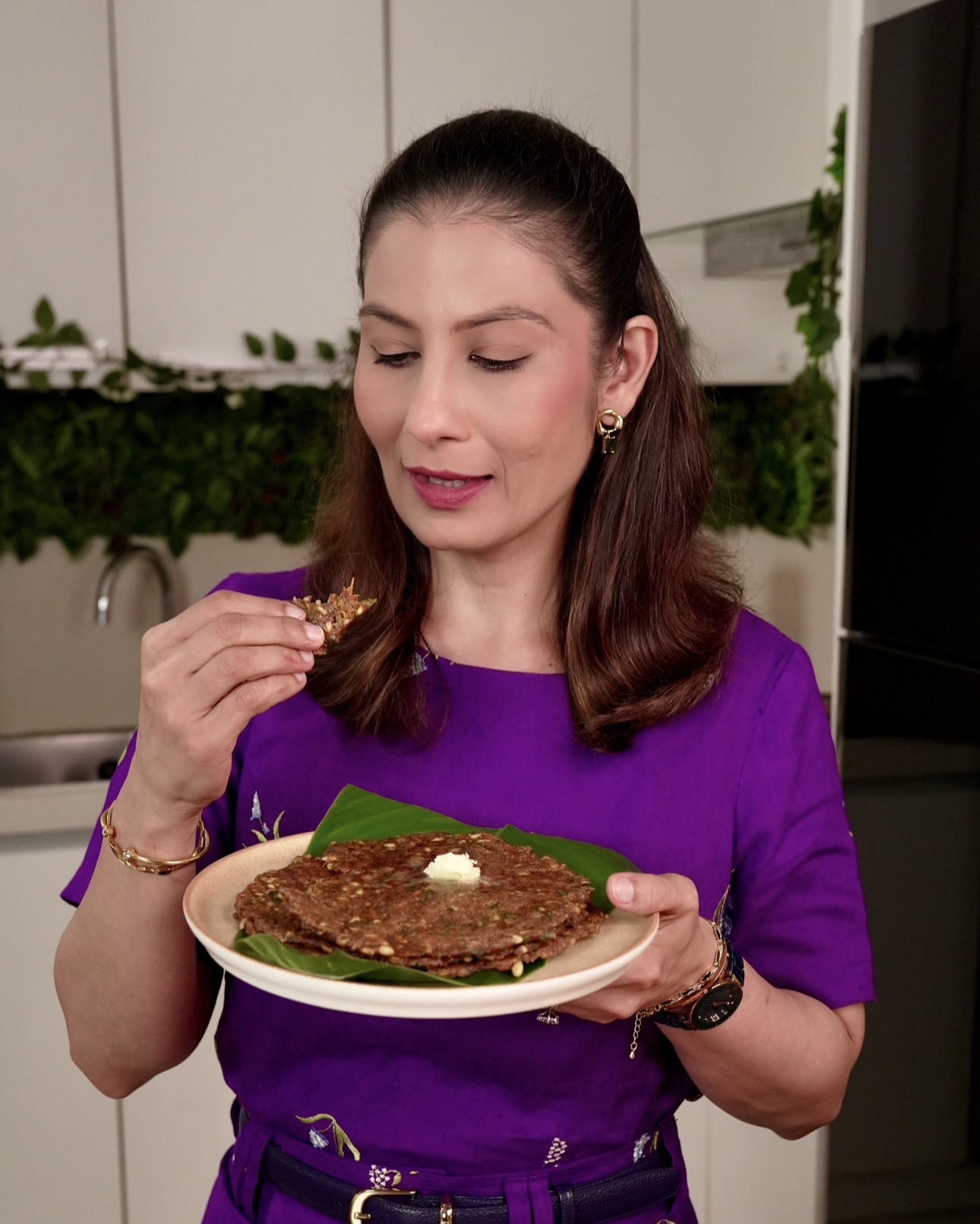
What if familiar Indian flavours could stay on the menu while grains take a smaller role? It’s a welcome idea when everyday vegetarian meals lean on rice, roti or other starches, and low-carb cooking can sound more restrictive than satisfying. The key is to build the plate around protein-rich ingredients, then use spices, vegetables and thoughtful cooking techniques to bring plenty of flavour and texture.
These high protein low carb indian vegetarian recipes offer three practical ways to do just that: paneer tikka, tofu bhurji and moong dal chila with a protein-rich filling. You’ll get precise measurements and clear steps, along with a better sense of how choices such as paneer, tofu, moong and vegetables affect a dish’s protein and carbohydrate balance. We’ll also explore why pressing tofu improves its texture, how to keep paneer tender, and how to portion moong for a satisfying chila. No unfamiliar ingredients or joyless plates required, just approachable Indian cooking with a thoughtful balance in every bite.
Key Takeaways
- Build satisfying meals around a protein-rich ingredient, then add vegetables and spices for texture and flavour.
- See how paneer, tofu, moong and non-starchy vegetables each play a different role in the kitchen.
- Explore three high protein low carb indian vegetarian recipes with measured ingredients and clear serving quantities.
- Learn practical ways to improve tofu’s texture, adjust ingredients and troubleshoot your cooking in Chef Meghna’s Notes.
- Use a flexible meal-rotation approach to decide when to serve these dishes on their own or alongside grains.
What Makes an Indian Vegetarian Meal High-Protein and Low-Carb?
A satisfying Indian vegetarian meal can be full of familiar spice, colour and texture without making rice or roti its centrepiece. The idea behind high protein low carb indian vegetarian recipes is to feature ingredients that contribute protein while being thoughtful about carbohydrate-rich components and serving sizes. These are useful descriptions of a recipe’s balance, not fixed labels with one definition that applies to every person or meal.
“Low-carb” also doesn’t automatically mean ketogenic. A recipe can simply use fewer carbohydrate-rich ingredients than a grain-centred version, without being designed to follow a ketogenic diet. Nor does a label promise a particular health or weight-loss result. Ingredients, quantities, preparation and what else you serve alongside a dish all shape its final nutrition profile. A paneer bhurji served on its own, for example, differs from the same bhurji paired with several rotis.
How to think about protein and carbohydrates in vegetarian cooking
Paneer, tofu and dals can all bring protein to a vegetarian plate, but they behave differently in a recipe. Paneer holds its shape in a tikka or stir-fry; tofu can be crumbled, seared or folded into a spiced scramble; and dals soften into batters, soups and curries. Their cooking roles matter, but no single ingredient determines whether the complete serving is high in protein or low in carbohydrates.
Grains, legumes, vegetables and dairy each contribute a different mix of nutrients and carbohydrates. Dals offer protein, but they also contain carbohydrates, so the amount used and the rest of the plate count. Vegetables add colour, flavour and texture, while dairy ingredients such as paneer contribute protein and fat. For a broader look at the ingredients and traditions that shape Indian Vegetarian Cuisine, consider how widely pulses, legumes and dairy feature across vegetarian cooking.
Assess the whole serving rather than calling an ingredient universally suitable or unsuitable. Ask what the main protein source is, how much of it goes into each portion, and whether grains or other carbohydrate-rich ingredients are part of the meal. That simple check gives you a more useful picture than an ingredient label alone.
Why familiar Indian flavours still belong on the plate
There’s no need to trade lively seasoning for a restrained plate. Ginger brings warmth and freshness; cumin adds an earthy aroma; turmeric gives depth and colour; chilli contributes heat; and coriander lends a bright, herbal finish. Used to build a fragrant masala or marinade, these familiar ingredients help make protein and vegetables the heart of a dish rather than relying on a grain base for character.
Texture matters just as much. Let paneer brown lightly for a savoury edge, crumble tofu finely for a soft bhurji, or cook vegetables until tender with a little bite. Layer seasoning as you cook, tasting as you go, so the flavours settle into the ingredients instead of sitting on top. Adjusting the grain portion, changing the vegetables or choosing a different protein is flexible cooking, not a rule everyone must follow. Keep the flavours you love, then shape the rest of the plate to suit the meal.
Which Indian Vegetarian Ingredients Help Balance Protein and Carbs?
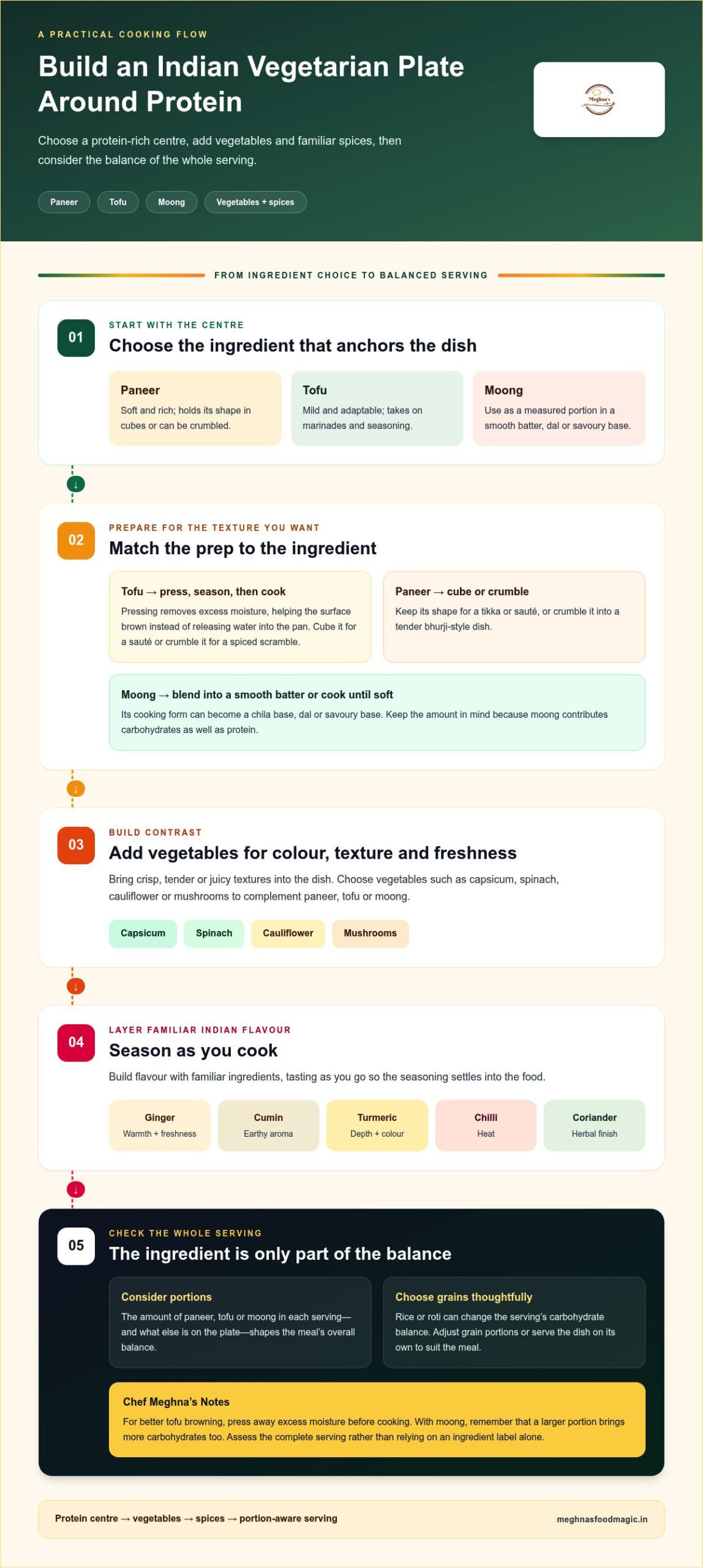
Choosing ingredients is less about finding one perfect food and more about knowing what each one brings to the pan. Paneer and tofu can anchor a dish, moong can add substance and protein, and non-starchy vegetables contribute colour, crunch and volume. Combine them with care and you can shift a meal’s balance while keeping its Indian flavours generous and familiar.
| Ingredient | Cooking role and texture | Practical use |
|---|---|---|
| Paneer | Soft, rich and able to hold its shape | Crumble for bhurji, or cube for a sauté or stuffed vegetable |
| Tofu | Mild and adaptable; takes on marinades and seasoning | Press, marinate and sauté, or crumble into a spiced scramble |
| Moong | Soft when cooked, or blendable into a smooth batter | Use in a measured portion for chila, dal or a savoury base |
| Non-starchy vegetables | Bring crisp, tender or juicy textures | Add to stir-fries, bhurji and paneer dishes for colour and contrast |
Paneer and tofu: two versatile protein-centered choices
Paneer’s mellow richness pairs naturally with cumin, ginger and chilli. Crumbled paneer becomes tender bhurji, while its shape makes it easy to tuck into a stuffed capsicum or sauté with vegetables. For ideas on seasoning and preparing paneer in different ways, browse a paneer recipe collection.
Tofu starts mild, so it welcomes a punchy marinade of spices, ginger and lemon. Pressing away excess moisture helps the surface brown instead of releasing water into the pan. Cut it into cubes for a sauté or crumble it for a soft, spiced scramble. In either case, season before cooking so flavour reaches beyond the outside.
Moong, vegetables, and portion-aware combinations
Moong is a useful source of protein, but it isn’t carbohydrate-free. A larger portion of dal or moong batter adds more carbohydrates to the meal too, so consider how much you use and what accompanies it. For a different balance, pair a smaller amount of moong with paneer or tofu and vegetables such as capsicum, spinach, cauliflower or mushrooms.
That combination keeps moong’s earthy character in the dish without asking it to do all the work. For instance, a thin moong chila can hold a spiced paneer-and-vegetable filling; a bowl of dal can sit alongside a vegetable sauté rather than becoming the entire meal. The best proportions depend on your recipe and serving, not a universal rule. This ingredient-first approach can help you make more deliberate choices across high protein low carb indian vegetarian recipes.
Let the texture guide your seasoning: crisp vegetables lift soft paneer, while a tangy marinade gives tofu more presence. For more practical cooking inspiration, explore Chef Meghna’s vegetarian recipe videos.
3 High-Protein, Low-Carb Indian Vegetarian Recipes to Try
These three grain-free recipes put paneer or tofu at the centre and use vegetables and Indian spices for colour, aroma and contrast. Each makes two servings, with clear measurements so you can repeat the results. The ingredient balance may suit a lower-carbohydrate style of eating, but no nutrition totals are given: values depend on the exact ingredients used and how the finished dish is divided into servings.
Paneer Bhurji Lettuce Cups
Soft, crumbled paneer takes on the flavour of cumin and chilli, while tomato and capsicum bring moisture and a gentle sweetness. Lettuce leaves add a cool, crisp wrap in place of a grain base.
- 200 g paneer, crumbled
- 30 g onion, finely chopped
- 50 g tomato, finely chopped
- 50 g capsicum, finely chopped
- 1 teaspoon oil
- ¼ teaspoon cumin
- ⅛ teaspoon turmeric
- ¼ teaspoon chilli powder
- ¼ teaspoon salt
- 4 to 6 washed lettuce leaves
Heat the oil in a pan over medium heat. Add cumin and let it sizzle briefly, then stir in the onion and cook until softened. Add tomato, capsicum, turmeric, chilli powder and salt. Cook until the vegetables soften and the tomato turns pulpy. Fold in the crumbled paneer and warm through, stirring gently so it stays tender rather than becoming dry. Spoon into lettuce leaves and serve straight away.
Spiced Tofu with Spinach
Tofu becomes savoury and lightly golden when it has room to sear; spinach softens quickly and coats the crumbles with earthy flavour. This simple stovetop dish makes two servings.
- 200 g firm tofu, drained and crumbled
- 100 g spinach, washed and chopped
- 40 g onion, finely chopped
- 1 teaspoon oil
- ¼ teaspoon cumin
- ⅛ teaspoon turmeric
- ¼ teaspoon salt
Heat the oil in a pan and add cumin. Stir in the onion and cook until softened. Add tofu, turmeric and salt, then sauté until the tofu is hot and lightly coloured. Fold in the spinach and cook just until wilted. Adding spinach near the end preserves its fresh green colour and keeps the mixture from becoming watery.
Cumin Paneer-Stuffed Capsicums
Capsicum halves become tender around a rich, spiced paneer filling. Keeping the filling simple lets the cumin’s warm aroma shine through.
- 2 medium capsicums, halved lengthwise and deseeded
- 150 g paneer, crumbled
- 50 g spinach, washed and finely chopped
- ¼ teaspoon cumin
- 1 teaspoon oil
- ¼ teaspoon salt
Mix paneer, spinach, cumin and salt, then divide the filling between the four capsicum halves. Warm the oil in a covered pan, arrange the halves cut-side up, and cook over low heat until the capsicum is tender and the filling is hot. The lid traps steam, helping the capsicum soften without requiring a grain-based filling.
Chef Meghna’s Notes: Make These Recipes Taste Their Best
A few small technique choices can make these dishes taste brighter and feel just right on the plate. The aim isn’t to follow rigid rules; it’s to give each ingredient the conditions it needs to brown, soften or hold its shape. That’s especially helpful in high protein low carb indian vegetarian recipes, where a short ingredient list leaves less room to hide excess moisture or uneven seasoning.
Simple swaps that preserve flavour and texture
For a dairy-free variation, replace paneer with firm tofu in the bhurji or capsicum filling. The texture will be lighter and less rich, so season the tofu well and give it a chance to brown before mixing in vegetables. If you’re serving the bhurji without a grain base, spoon it into washed lettuce leaves or serve it with extra sautéed vegetables for a fresh, substantial contrast.
Season in stages. Start with a little chilli and salt, cook the mixture, then taste and adjust. This lets the spices bloom without overwhelming the paneer or tofu, and makes it easier to suit different household preferences. For stuffed capsicums, chop any leftover filling ingredients finely and fold them into the mixture rather than adding extra liquid.
Common texture problems and how to fix them
Tofu can seem soft or watery if it goes straight from its pack into the pan. Drain it, pat it dry, then crumble or cut it and season before cooking. Drying the surface helps it brown; seasoning ahead gives the mild tofu time to take on flavour. Sauté it in a properly heated pan, without crowding, and add spinach only after the tofu has begun to colour.
Paneer turns rubbery when it’s cooked hard for too long. Brown the onion and vegetables first, then fold in paneer near the end and heat it gently until warmed through. If a spinach or capsicum filling releases liquid, cook the vegetables in stages so moisture can evaporate before adding paneer. A crowded pan traps steam, so use a wider pan or cook in batches. These small adjustments protect the soft, tender texture you want.
For the lettuce cups, choose leaves sturdy enough to hold the filling, and keep them dry so they stay crisp. If you prefer a warm accompaniment, briefly sauté extra capsicum or spinach with cumin instead. These swaps keep the meal vegetarian while letting you adjust the serving style to what’s already in your kitchen.
Try one technique at a time: dry the tofu well, cook vegetables before adding paneer, or season gradually. You’ll quickly notice how each step changes the finished dish. Keep the spices familiar, taste as you cook, and let texture guide the final adjustments.
How to Build a Flexible Indian Vegetarian Low-Carb Meal Rotation
A meal rotation should make cooking easier, not turn dinner into a timetable you have to obey. Start with a protein-centred dish, choose vegetables that suit it, then decide whether grains belong on the plate for that particular meal. This order helps you shape the balance around what you have, what you feel like eating and how substantial you want the serving to be.
A practical way to plan meals around the recipes
Choose one of the three recipes by ingredient and texture: paneer bhurji for a soft, warmly spiced filling; tofu with spinach for a savoury sauté; or paneer-stuffed capsicum for a tender vegetable with a rich centre. Then add a vegetable or accompaniment that brings a different quality, such as crisp cucumber, sautéed greens or a tangy chutney. Fresh herbs, lemon and a little extra seasoning can brighten the plate without making the meal feel repetitive.
Rotate the dishes according to your week rather than assigning them fixed days. Make bhurji when you have lettuce leaves ready, cook tofu when spinach needs using, and choose stuffed capsicums when you want a meal with a little more hands-on preparation. You can also change the seasoning while keeping the core method familiar: add ginger for warmth, coriander for freshness or adjust chilli to your preference.
Before adding rice or roti, consider the full meal and your own appetite. Some days you may enjoy the dish with extra vegetables; on others, a grain portion may suit you. Adjust servings to your needs and any established dietary guidance you follow. If you’re looking for weight-loss recipe ideas, treat them as cooking inspiration, not a promise of a particular result.
Keep the cooking joyful and keep learning
“Low-carb” doesn’t automatically mean keto, and it needn’t become a one-size-fits-all diet. A flexible rotation simply gives you more ways to make familiar flavours work with the ingredients and portions you choose. If a recipe uses moong or another legume, account for it as part of the whole meal rather than assuming it contributes protein alone.
Keep a few small notes as you cook: whether you preferred the tofu browned more deeply, which vegetables stayed pleasantly crisp, and how much chilli suited your table. These observations make the next round easier to tailor. For more practical ideas, explore Get Fit With Meghna cooking videos, then adapt what appeals to your own kitchen and taste.
Choose one recipe to try next, and let the spices, vegetables and serving style make it your own.
Make Your Next Meal a Fresh Start
Let your next meal be a chance to experiment, not a test of willpower. Choose a flavour you love, try a different vegetable pairing, or adjust the seasoning until the dish feels right for your table. The best high protein low carb indian vegetarian recipes are the ones you can enjoy making and adapt with confidence.
Chef Meghna’s platform offers free recipe content and food-related articles, with high-protein, paneer, tofu and fitness-focused categories to inspire more ideas. Keep exploring at your own pace, and let each recipe spark a new way to bring flavour and balance to everyday cooking.
Pick one idea that excites you, step into the kitchen, and make it your own.
Frequently Asked Questions
Are low-carb Indian vegetarian recipes the same as keto recipes?
No. A recipe described as low-carb doesn’t necessarily follow the stricter targets associated with a ketogenic diet. If you’re checking whether a dish fits a particular approach, estimate the full recipe and the portion you’ll eat, including sauces and sides, rather than relying on its name. The recipes here aren’t presented as keto meal plans. If you’ve been prescribed a specific diet, use your clinician’s guidance to assess ingredients and portions.
Which Indian vegetarian foods are high in protein and low in carbohydrates?
There isn’t one ingredient that automatically makes a complete meal fit those two descriptions. To assess a dish, write down the main ingredients and the amount you’ll serve, including accompaniments such as chutney or a side. That gives you a more useful basis for comparing meals than a simple “good” or “bad” food list. The balance of a recipe can change with its proportions and serving size.
Can I make Indian vegetarian meals high in protein without lentils?
Yes. You can leave lentils out of an individual meal and choose a different vegetarian main ingredient that suits your preferences. For variety, change the preparation style across the week rather than relying on one dish: serve ingredients crumbled, cubed or tucked into a vegetable. Check the full recipe and portion, especially if you’re following particular dietary guidance. Lentils remain an option for other meals if they suit your routine.
Is paneer suitable for a low-carb vegetarian recipe?
It can be used in a recipe designed with fewer grain-based ingredients, but the paneer alone doesn’t determine the finished meal’s profile. Consider what else goes into the dish, how much you serve, and whether you add a side. For a clearer comparison, use the same portion size when reviewing different versions of a recipe. A lower-carbohydrate-style preparation isn’t automatically suitable for a medical or weight-loss plan.
Can tofu be used in Indian vegetarian recipes instead of paneer?
Yes, though the finished dish will have a different taste and feel. Think about the role paneer plays before swapping: a recipe that depends on firm pieces may need tofu kept in larger chunks, while a bhurji-style preparation can use crumbles. Try the substitution in a small batch first, then adjust the spices to complement tofu’s milder flavour. Follow the measurements in the recipe as a starting point.
How can I calculate the carbohydrates and protein in a homemade recipe?
Keep a simple ingredient record as you cook: note each quantity, the nutrition information source and the final number of portions. Use consistent units, such as grams, when comparing ingredient entries, and include cooking additions like oil or packaged sauces in your record. Divide the estimated recipe totals by the portions actually served. Results are estimates, so follow qualified professional guidance for any prescribed nutrition target.
Disclaimer
This is a recipe food blog page and not nutrition or doctor and hence do not claim to cure any illness. If you have specific health issues please consult a qualified doctor or certified nutritionist.
I do consult experts, research Internet and at times seek help from Gemini to collect relevant information to put together some of these blogs.

