
How to Choose Between Jowar and Other Millets
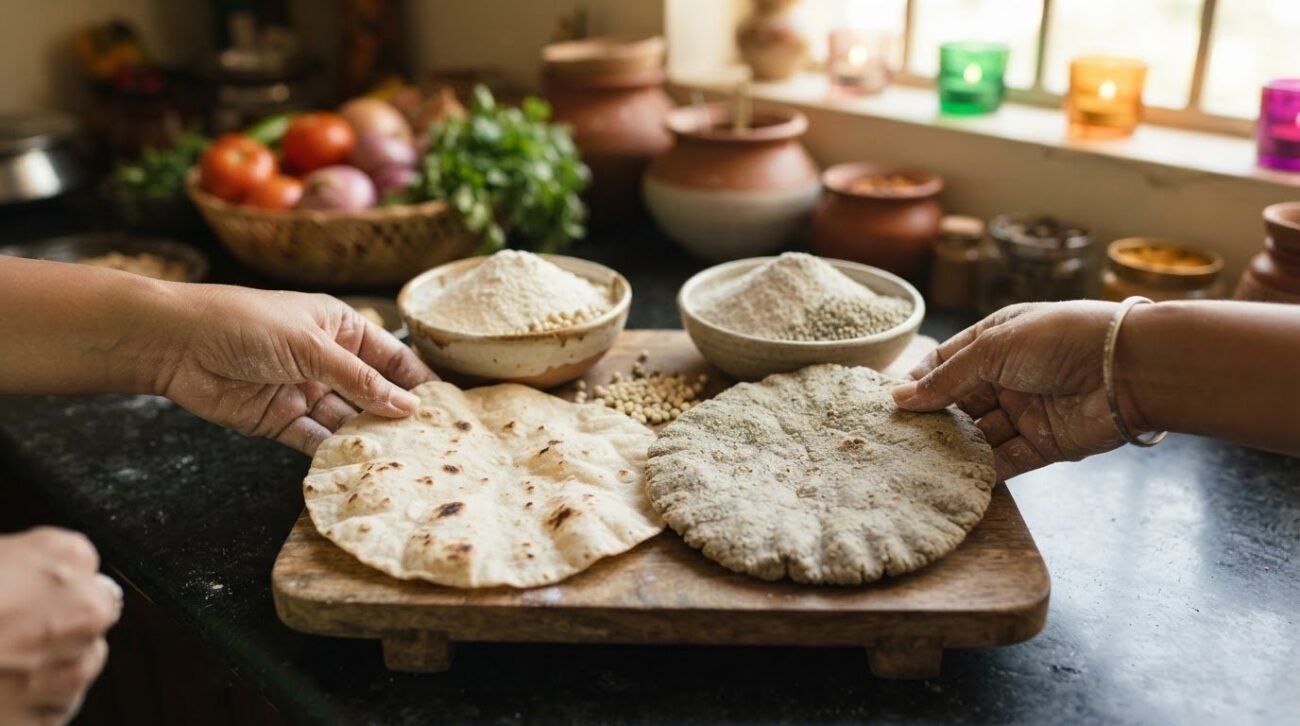
Jowar roti doesn’t need wheat flour, but its dough calls for a different touch. If you’re wondering how to choose between jowar and bajra, start with the meal you want to make and the texture you prefer: jowar dough is shaped with warm water, while each flour brings its own flavour and cooking qualities.
A simple jowar roti starts with 1 cup of jowar flour and ½ cup of warm water, with a little more added if needed. The key is to work with the dough gently and enjoy the roti fresh, when it’s at its softest.
This guide compares jowar and bajra by flavour, nutrition and cooking use, then helps you choose flour for rotis, bhakris and other everyday meals. You’ll also find practical tips for soaking grains, handling jowar dough and matching your choice to your dietary needs, so your next millet meal feels both nourishing and genuinely satisfying.
Key Takeaways
- Choose jowar or bajra by the flavour, texture, and dishes you want to bring to the table.
- Learn how flour blends can improve the texture and binding of breads and other bakes.
- Store jowar and bajra flour thoughtfully, and see why grinding at home may suit some cooks.
- Use warm water and gentle handling to make jowar rotis and bhakris with a tender texture.
- Explore practical recipe ideas and cooking tips to make millet meals easier to adapt.
Choosing flour for meals and dietary needs
Match the flour to your dish, preferred texture and dietary needs. Use these steps to choose and store jowar, bajra or jau flour.
Compare jowar varieties and flour characteristics
Start by choosing grain or flour for the recipe. In India, hybrid jowar varieties include early-maturing types described as ready in 90-100 days and medium- to late-maturing types taking 110-120 days. These are crop maturity categories, not cooking grades. Jau is barley and contains gluten; jowar is sorghum and is naturally gluten-free. Jau atta can make dense, slightly crumbly rotis alone, so a starting blend is 1 part jau atta to 2 parts wheat atta.
Assess downsides of regular jowar consumption
Consider dietary restrictions and variety in your meals. Jowar is naturally gluten-free, but that doesn’t guarantee packaged flour is free from wheat traces, as milling and storage can introduce them. If you need to follow a medically required gluten-free diet, check the package and speak with your doctor. Avoid relying on a single flour for every meal; choose grains to suit the dish and your dietary needs.
- Compare cost by product type, pack size, and local market: whole jowar grain and milled flour can be priced differently, so there is no single cost per kilogram to compare with other grains.
- For packaged jowar flour, read the ingredient list and check the packed and best-before dates. Look for a sealed pack without moisture or damage.
- For breads and cakes, combine sorghum flour with other gluten-free flours to improve texture and binding. Grinding millet at home lets you mill smaller batches close to cooking time.
- Store jowar and bajra flour airtight in a cool, dry, dark place. Jowar flour generally keeps for a few weeks; homemade bajra flour is best used within a few days to about a week, especially in warm weather.
Differences in flavour and common uses of jowar and bajra
How do I choose between jowar and bajra? Start with the flavour and texture you want, then consider what you plan to serve. Both grains are used for traditional flatbreads in Maharashtra, and each has its own character.
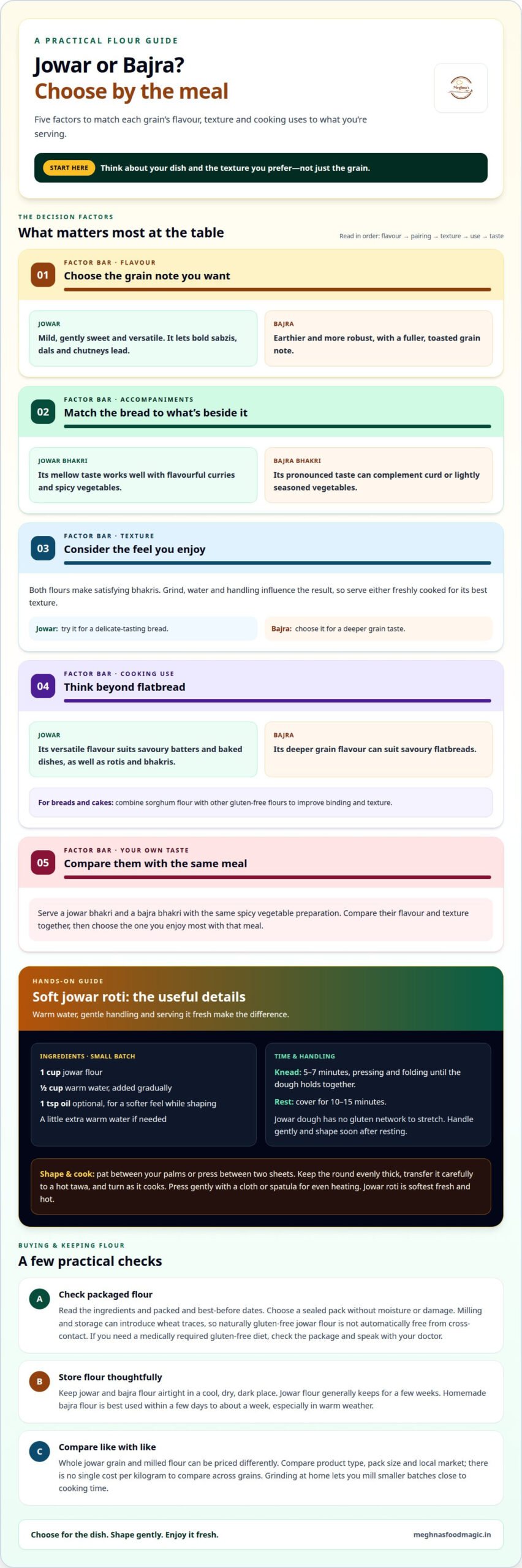
- Compare their flavours. Jowar has a comparatively mild, gently sweet grain flavour, so it pairs easily with bold sabzis, dals, and chutneys. Bajra tastes earthier and more robust. Choose it when you want the bhakri to bring a fuller, toasted note to the meal.
- Match the flour to its accompaniments. Jowar bhakri works well beside flavourful curries because its mellow taste lets vegetables and spices lead. Bajra bhakri has a more pronounced flavour, which can complement simple accompaniments such as curd or lightly seasoned vegetables.
- Think about the texture you prefer. Both flours make satisfying bhakris, but grind, water, and handling influence the result. For a delicate-tasting bread, try jowar; for a deeper grain taste, choose bajra. Serve either freshly cooked to enjoy its best texture.
- Choose jowar for a versatile flavour. Its relatively gentle taste suits more than flatbread. Try it in savoury batters or baked dishes. For breads and cakes, combine sorghum flour with other gluten-free flours to improve binding and texture.
- Use a tasting to make your choice. Jowar is widely grown in Maharashtra and Karnataka, as well as other drier parts of India. If you’re wondering how do I choose between jowar and bajra for dinner, serve each as bhakri with the same spicy vegetable preparation. Compare the flavour and texture together, then choose the one you most enjoy with that meal.
Roti, bhakri and other cooking uses
- Measure the jowar flour. For a small batch of rotis, place 1 cup sorghum flour in a bowl. Add ½ cup warm water gradually, keeping a little extra nearby. Warm water helps the flour come together into a pliable dough. Add optional 1 tsp oil if you want a softer feel while shaping.
- Knead, then rest the dough. Work it for 5-7 minutes, pressing and folding until it holds together. Cover and rest for 10-15 minutes. Unlike wheat dough, jowar dough has no gluten network to stretch, so handle it gently and shape each portion soon after resting.
- Shape the roti or bhakri. Pat a portion between your palms, or press it between two sheets to prevent sticking. Keep the surface lightly dusted with jowar flour. Make the round evenly thick, then transfer it carefully to a hot tawa. Small cracks at the edges are easier to manage than an overly thin centre.
- Cook and serve promptly. Turn the roti as it cooks, pressing gently with a cloth or spatula so the surface heats evenly. Jowar roti is softest fresh and hot. For a bajra bhakri, use the same gentle shaping approach, but adjust water gradually because flour texture varies by grind.
- Adapt the flour to other dishes. Stir jowar flour into savoury batters for pancakes or steamed snacks, adding liquid gradually to control thickness. For breads or cakes, combine sorghum with other gluten-free flours to improve binding and texture. Bajra’s deeper grain flavour can suit savoury flatbreads; pair either millet with dal, vegetables, or chutney for a complete meal.
Keep warm water nearby as you work: the jowar roti recipe starts with ½ cup, with a little more if needed. Add extra water sparingly, checking whether the flour comes together into manageable dough. This gradual approach lets you adjust to the flour’s feel instead of adding all the liquid at once. Bring the jowar dough together gently with warm water rather than trying to make it stretchy. A soft, even dough is easier to portion and shape without rough handling.
Let jowar atta rest for a few minutes before shaping and cooking. While it rests, prepare your work surface and keep the dough covered. Pat it out by hand, or gently roll it between two sheets; either method forms a round without forceful rolling. If the dough sticks, dust it lightly with flour. Carefully transfer the shaped round to the cooking surface, and serve it warm for the best texture.
Nutrients and flavour of sorghum
- Start with the grain’s role in your meal. Jowar contains starch and protein, so consider both when choosing grain for cooking. Pair a jowar roti with dal or vegetables to build a meal with different ingredients, rather than expecting one flour to define the whole plate.
- Choose the flavour you want to highlight. Sorghum’s grain taste can be more noticeable when cooked as a plain flatbread than in a spiced batter. Try it alongside a lightly seasoned sabzi first. This makes it easier to judge whether its flavour complements your usual meals.
- Think about texture as well as nutrition. A fine flour suits smooth batters, while a coarser grind gives a more rustic feel to flatbreads. For a jowar roti, handle the dough gently; its texture depends on the flour and added water, not wheat-style elasticity.
- Balance bold accompaniments with the grain. Serve jowar with dal, vegetables, or chutney, and let their seasoning shape the meal. A strongly spiced curry can make the grain taste subtler; a simple accompaniment lets sorghum’s own aroma come forward.
- Compare grain choices by your cooking plan. For hybrid jowar selection, consider the grain’s starch and protein content alongside its intended use. At home, choose flour suited to the dish, then vary your sides and grains across meals. This keeps flavour and meal composition from becoming repetitive.
How does jowar compare with wheat, rice, and bajra nutritionally?
- Compare similar forms of each grain. How do I choose between jowar and other grains for my meals? Start by comparing like with like: whole grains with whole grains, or flours with flours. Processing affects what remains in the grain, so whole jowar flour and polished rice aren’t identical comparisons. Also consider how each grain is cooked and served.
- Build the plate around more than grain. Jowar contains starch and protein, and wheat also contributes protein. Rice often takes the role of a starchy staple. For any of these choices, pair the grain with dal, beans, curd, or another protein-containing food. The accompaniments help shape the meal’s overall nutritional balance.
- Account for gluten needs. Wheat contains gluten, while jowar is naturally gluten-free. Rice and bajra are also naturally gluten-free grains, but packaged flour can pick up wheat traces during milling or storage. If gluten avoidance is medically necessary, consider both the grain and how its flour was handled.
- Choose according to the meal you’re making. Jowar and bajra can both become flatbreads, while rice is commonly cooked as whole grains. Wheat dough stretches differently from jowar dough, which needs gentler shaping. How do I choose between jowar and wheat for dinner? Consider the recipe’s texture, your dietary needs, and the accompaniments you plan to serve.
- Keep your choices varied. Rotate jowar bhakri, wheat roti, rice, and bajra dishes according to preference and the rest of the plate. Jowar’s starch and protein content can inform grain selection, but no single grain determines a meal’s overall nutritional value. Compare foods in similar forms and include different accompaniments across meals.
Jowar and Bajra Recipes
Try jowar in a flatbread and a steamed snack to see how the flour works in different dishes. These recipes provide measured ingredients and clear cooking cues.
Jowar Roti
Ingredients: 1 cup sorghum flour, ½ cup warm water, with a little extra if needed, and 1 tsp optional oil.
Method: Add warm water gradually to the flour, then knead until the dough holds together. Work gently, since jowar dough doesn’t stretch like wheat dough. Cover and rest for 10-15 minutes. Pat a portion into a round by hand, or shape it between two sheets. Cook on a hot tawa, turning carefully. Serve fresh, while the roti is soft.
Jowar Dhokla
Ingredients: 1 cup jowar flour, ½ cup plain yogurt, ¼ cup water, 1 tsp ginger-green chilli paste, and 1 tsp fruit salt. You can use a baking soda and lemon juice mixture instead of fruit salt.
Method: Stir the yogurt, water, and ginger-green chilli paste into the jowar flour until smooth. Rest the batter for 15-20 minutes. Add fruit salt just before steaming, then fold gently to keep the batter airy. Steam for 12-15 minutes, until set. If using baking soda and lemon juice, stir them in just before steaming.
Roti gives you practice with pliable dough, while dhokla lets the flour take on a soft, steamed texture. To make bajra bhakri, use bajra flour and add water gradually until the dough holds together. Serve it warm with vegetables or chutney for a satisfying meal.
Chef Meghna’s Notes
Millet dough responds to touch, moisture and flour texture. These kitchen adjustments can help you troubleshoot without expecting jowar or bajra to behave like wheat.
- Correct crumbly dough gradually. If jowar dough cracks while shaping, add warm water a little at a time and knead again. Pouring in too much at once can make it sticky and difficult to pat into a round.
- Manage stickiness with a light dusting. If dough clings to your palms or rolling surface, dust with a little of the same flour. Use only what you need; excess flour can make the cooked flatbread dry and dusty.
- Choose flour by the finish you want. A finer grind gives batters a smoother feel, while coarser flour brings a more rustic texture to bhakri. For baked breads or cakes, combine sorghum flour with other gluten-free flours to help improve binding.
- Adjust substitutions to the dish. Jowar and bajra can both suit flatbreads, but their flavours differ. For a milder taste, use jowar; for a more earthy grain note, choose bajra. Avoid swapping flours blindly in a recipe where structure matters, such as a cake.
- Soak whole grains only when cooking them whole. Soaking jowar or bajra grains until softened can help prepare them for cooking. Use flour directly for rotis; soaking flour changes its consistency rather than softening whole kernels.
- Serve flatbreads freshly cooked. Jowar roti is softest hot, so cook portions close to serving. If a cooked roti feels firm, pair it with moist dal or vegetables rather than expecting reheating to restore its original texture.
Let the flour guide your hands. Small adjustments to water, grind and shaping make millet cooking more predictable while preserving each grain’s distinctive character.
Meghna’s Food Magic: Jowar Bajra Ragi Nachni recipes
Meghna’s Food Magic is a natural next step when you’re ready to turn flour comparisons into meals. Its Jowar Bajra Ragi Nachni recipes and Millets Recipes offer ideas for cooking with these grains, from familiar flatbreads to different ways of serving millet. Choose a recipe based on the flour you have, the dish you’re planning, and the texture you enjoy. The jowar recipe collection can help you explore options centred on sorghum.
Meghna’s Food Magic brings recipe ideas together in a free digital recipe database for home cooks. Explore High Protein Recipes for dishes suited to meals where protein is a priority, and use the collection for inspiration rather than as a prescribed diet. Consider your ingredients, cooking routine and preferences as you browse. If you’re still choosing between jowar and bajra, comparing recipes made with each grain can help you decide which suits the dishes you want to cook.
As you explore, check each recipe’s ingredients and method before choosing. A recipe developed for one flour may have a different texture when made with another, so follow its proportions and cooking cues. Pair the finished dish with familiar accompaniments, such as vegetables or dal, and note which combinations you enjoy. This practical approach helps you turn a flour choice into meals that feel manageable and appealing.
For help finding a suitable recipe, contact Meghna’s Food Magic.
Frequently Asked Questions
Can I make roti with only jowar atta?
Yes, you can make jowar roti with jowar atta alone. The dough won’t stretch like wheat dough, so shape it gently by patting rather than expecting it to roll easily. If it cracks, work in a little warm water; if it feels sticky, lightly dust your hands with flour. Serve the freshly cooked roti with dal or a moist vegetable curry.
How do you cook with jau vs jowar?
Use jau, or barley, in porridge, parathas or multigrain flour blends; use jowar flour for bhakri, roti or savoury batters. Jau flour can make a flatbread dense and crumbly when used alone, so blending it with wheat flour can help. For jowar, add water gradually and handle the dough gently. Choose the grain to suit the texture you want in the recipe.
What is the difference between jau and jowar?
Jau is barley, while jowar is sorghum, a millet. They are different grains, so their flours behave differently in cooking. Jau is often blended with wheat flour for flatbreads and also works well in porridge. Jowar is commonly used for bhakri and roti. Their dietary properties differ too: jau contains gluten, while jowar is naturally gluten-free, though flour handling can result in cross-contact.
Which one has gluten?
Jau contains gluten; jowar is naturally gluten-free. That distinction matters if you avoid gluten, but the grain name alone doesn’t guarantee that packaged flour is free from wheat traces. Milling and storage can lead to cross-contact. If you need to follow a medically required gluten-free diet, read the package carefully and discuss suitable choices with your doctor. Jau and jowar are not interchangeable for this dietary need.
Which should you choose?
Choose jau for barley dishes such as porridge, parathas or blends with wheat flour. Choose jowar for a naturally gluten-free grain option and dishes such as bhakri or roti. Then consider your preferred flavour and texture, along with any dietary restrictions. If you need to avoid gluten for medical reasons, packaged flour handling matters as well as the grain itself.
What is jowar and what are its nutritional benefits?
Jowar is sorghum, a millet used in Indian cooking as a grain or flour. Its starch and protein content are among the factors people consider when choosing jowar grain, but nutrition varies by product and preparation. Serve it as roti or bhakri alongside dal and vegetables. Think of it as one part of a varied plate, not a complete nutrition plan on its own.
Is jowar suitable for people with diabetes or gluten intolerance?
Jowar is naturally gluten-free, but wheat traces can enter flour during milling or storage. If you need to follow a medically required gluten-free diet, check the packaging and speak with your doctor. For diabetes, don’t assume jowar has a particular effect on blood glucose simply because it is a millet. Discuss portions and meal composition with your healthcare professional, who can take your individual needs into account.
Disclaimer
This is a recipe food blog page and not nutrition or doctor and hence do not claim to cure any illness. If you have specific health issues please consult a qualified doctor or certified nutritionist.
I do consult experts, research Internet and at times seek help from Gemini to collect relevant information to put together some of these blogs.

