
How to Improve Gut Health Naturally: A Complete Guide
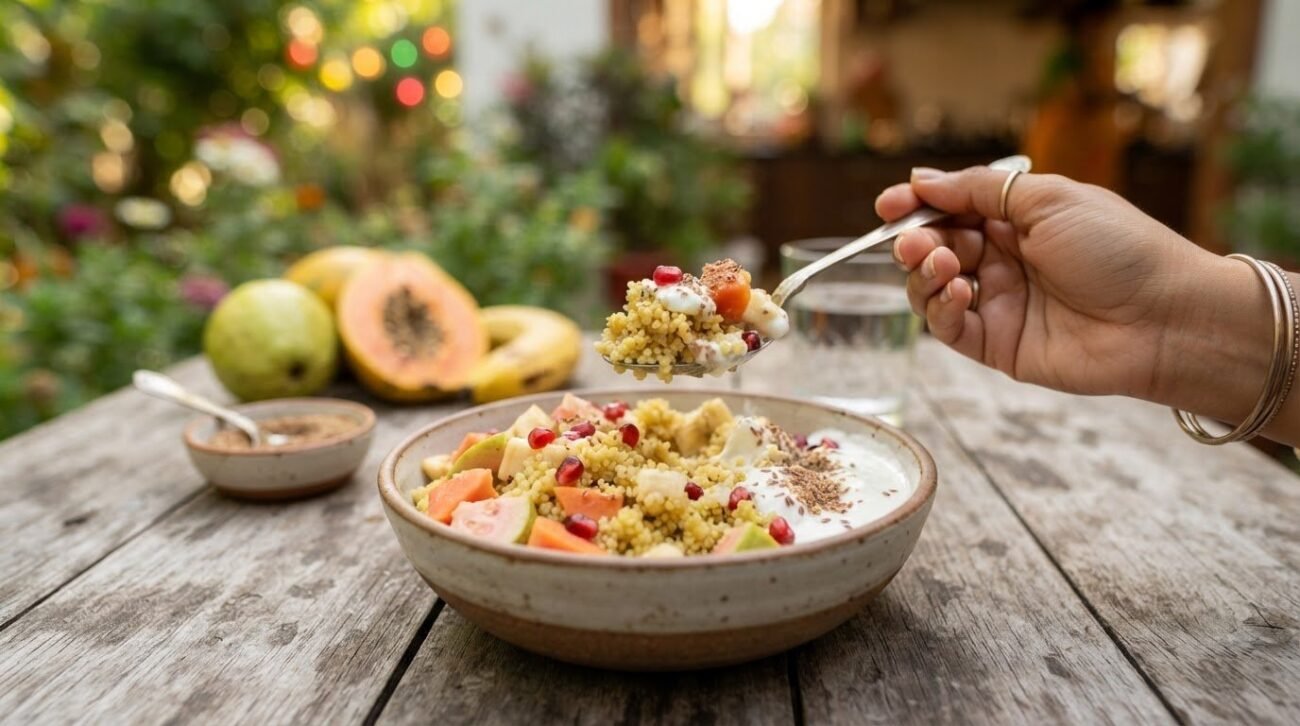

A healthier gut isn’t built around one “superfood”; it starts with variety. To understand how to improve gut health naturally, include a mix of fruits, vegetables, pulses, whole grains and other fibre-rich foods in your meals, along with fermented foods if you enjoy and tolerate them. The gut microbiome is the community of microbes living in your digestive system, and the foods you eat help shape the environment they live in.
It’s easy to focus on probiotics or a single ingredient, but everyday choices work together. This guide explains how fibre and prebiotic foods support digestion, where probiotics fit, and why adding variety to your plate is a practical place to begin. You’ll also find simple habits, from eating at a comfortable pace to moving regularly, that can support digestive health. No rigid menu is needed: aim for colourful, satisfying meals and small changes you can maintain.
Key Takeaways
- Build fibre into meals with a mix of pulses, oats, seeds, fruits and vegetables, increasing variety gradually.
- Choose probiotic foods or supplements with a clear purpose; different strains can have different effects.
- Think of the gut microbiome as a community shaped by everyday food choices, not a problem one ingredient can solve.
- Support digestion with steady routines, including eating slowly, drinking water, moving regularly and managing stress.
- Bring more colour and variety to your plate by rotating fruits and vegetables through the week.
1. Prebiotic foods and dietary fibre
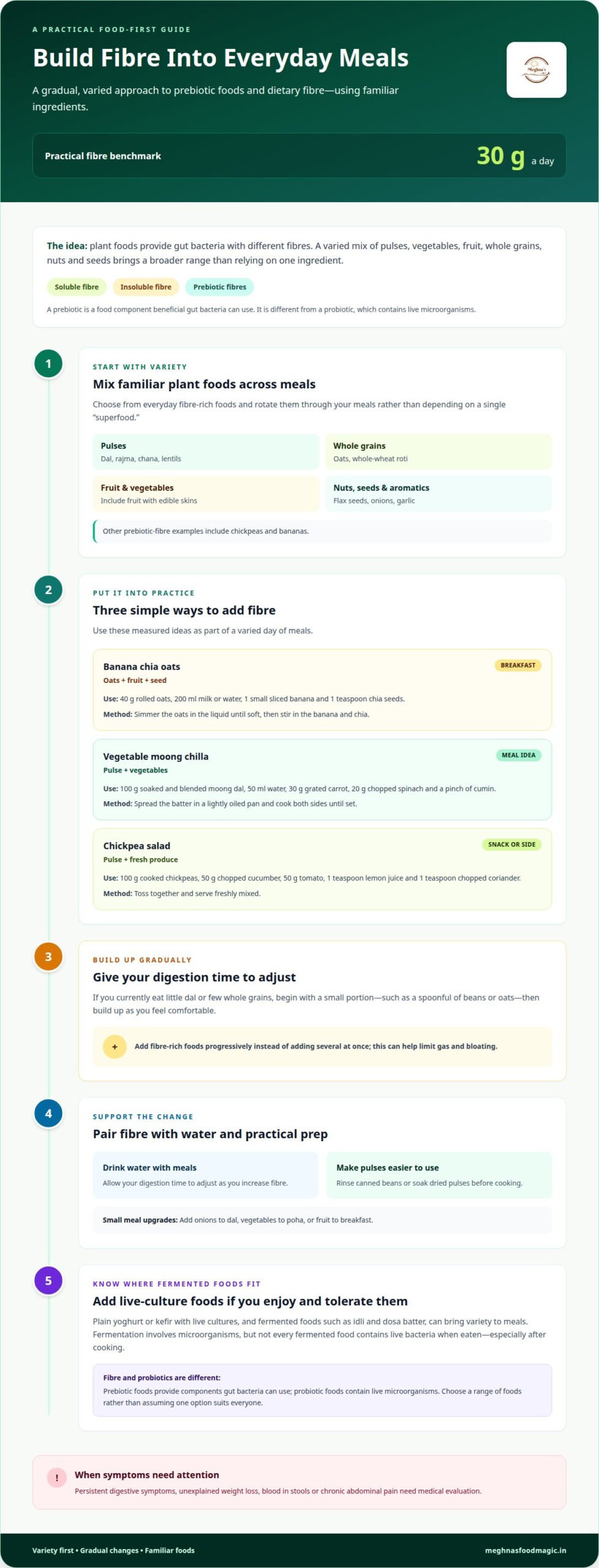
Beans, vegetables, fruit, whole grains, nuts and seeds provide gut bacteria with different fibres. Foods such as oats, lentils, chickpeas, onions, garlic, flax seeds and bananas can contribute prebiotic fibres. A prebiotic is a food component that beneficial gut bacteria can use; it differs from a probiotic, which contains live microorganisms. Eating a variety of plant foods gives the microbiome a broader mix of fibres instead of relying on one ingredient.
A practical fibre benchmark is 30 g a day. In Indian meals, fibre-rich choices include dals, rajma, chana, whole-wheat roti, oats, vegetables and fruits eaten with their edible skins. Fibre comes in two types, soluble and insoluble, and a varied diet can provide both. Here are three simple ways to work familiar ingredients into meals:
- Banana chia oats: Combine 40 g rolled oats, 200 ml milk or water, 1 small sliced banana and 1 teaspoon chia seeds. Simmer the oats in the liquid until soft, then stir in the banana and chia.
- Vegetable moong chilla: Mix 100 g soaked and blended moong dal with 50 ml water, 30 g grated carrot, 20 g chopped spinach and a pinch of cumin. Spread the batter in a lightly oiled pan and cook both sides until set.
- Chickpea salad: Toss 100 g cooked chickpeas with 50 g chopped cucumber, 50 g tomato, 1 teaspoon lemon juice and 1 teaspoon chopped coriander. Serve freshly mixed as a snack or meal side.
Increase fibre gradually to help limit gas and bloating. If you currently eat little dal or few whole grains, start with a small portion, such as a spoonful of beans or oats, then build up as you feel comfortable. Drink water with meals and give your digestion time to adjust before adding several high-fibre foods at once. Rinsing canned beans or soaking dried pulses before cooking can make them easier to use in everyday meals.
For live cultures, try plain yoghurt or kefir with live cultures, or fermented foods such as idli and dosa batter. Fermentation involves microorganisms, but not every fermented food contains live bacteria when eaten, especially after cooking. Choose a range of foods rather than assuming one probiotic food will suit everyone. If a particular food seems to trigger digestive symptoms, note the portion and preparation method; a food diary can help reveal patterns.
Keep added sugars and highly processed snacks from crowding out fibre-rich meals. Swap a sweetened packaged snack for fruit, roasted chana or plain yoghurt, and choose whole grains more often than refined options. Antibiotics can affect gut bacteria, so use them only as prescribed. Don’t share antibiotics or save leftovers for another illness; follow the prescriber’s directions and complete the course as prescribed.
Make variety practical: add onions to dal, vegetables to poha, and fruit to breakfast. These small changes support fibre intake and bring different plant foods into your day. Persistent digestive symptoms, unexplained weight loss, blood in stools or chronic abdominal pain need medical evaluation.
2. Choosing probiotics for a specific purpose
Probiotics aren’t interchangeable. Each product contains specific microorganisms, identified by genus, species and strain, and those details matter when choosing one for a particular purpose. Evidence for the condition being addressed matters too: findings about one strain or symptom don’t show that every probiotic has the same effect. A product considered for constipation, for example, shouldn’t be treated as a general solution for every stomach complaint.
Start with the reason you’re considering a supplement. Probiotics may be considered after antibiotics, during prolonged digestive discomfort, with a restricted diet, or on a healthcare professional’s recommendation. For people in good health, taking a probiotic specifically for gut health is generally unnecessary. If stress or a change in routine affects your digestion, note when symptoms occur and what else has changed. A supplement doesn’t replace attention to those patterns.
Read the label for the full organism name, including genus, species and strain, rather than relying on a broad “probiotic blend” description. Then consider whether the evidence relates to your particular concern, such as digestive discomfort after antibiotics. Check serving directions and storage instructions, which can differ between products. Don’t assume that a larger number of organisms means a better match. The intended use and evidence for the named strain matter more than a bold label claim.
Food can provide live cultures too. Plain yoghurt with live and active cultures is one option, while fermented foods can add variety to meals. These foods aren’t automatically equivalent to a studied supplement strain, so match the choice to your goal. If you try a probiotic, assess it consistently for at least 4 weeks, as the NHS page recommends. Keep track of symptoms, meals and routine changes during that period.
Home remedies and probiotic supplements can carry risks if they delay care, conflict with a health condition or aren’t suitable for someone with a weakened immune system. Anyone with an existing health condition or weakened immune system should speak with a doctor before taking probiotic supplements. Colon cleansing has no scientific evidence of health benefit, so it isn’t a substitute for investigating persistent symptoms.
If a clinician recommends probiotics alongside antibiotics, follow the physician’s or pharmacist’s instructions. Taking them 2-3 hours apart can reduce the chance that the antibiotic affects the probiotic. Don’t change or stop prescribed antibiotics to accommodate a supplement. The right approach depends on the strain, reason for use, medicines and personal health history, so keep the product label available when discussing it with a healthcare professional.
3. Gut microbiome and overall health
Your gut microbiome is the community of microorganisms living in your digestive tract. It includes bacteria, viruses and fungi, with trillions of microbial cells in the human gut. More than 1,000 species of bacteria, viruses and fungi live in the large intestine. Together, these organisms form a changing ecosystem, not a single kind of bacteria that can be labelled “good” or “bad” by itself.
Gut health describes how digestion and the wider gut environment function. Digestion breaks food down, absorbs nutrients and moves waste through the body. Bloating, constipation or changes in bowel habits can offer clues, but one symptom alone doesn’t identify its cause. For example, bloating after a meal may relate to the ingredients, portion, eating pace or another digestive issue. Patterns over time are more informative than one uncomfortable afternoon.
The microbiome is also connected with processes beyond digestion. Gut microbes interact with the body’s immune and nervous systems, while the gut-brain connection helps explain why stress can coincide with changes in appetite or bowel habits. That connection doesn’t mean every mental or physical symptom starts in the gut. Overall health reflects several interacting influences, including food, sleep, movement, stress and medical conditions.
Antibiotics treat bacterial infections, but they can also affect gut bacteria. After illness or antibiotic use, the microbial balance may change; probiotics may help restore balance after illness, antibiotic use or prolonged digestive upset. They aren’t a replacement for prescribed treatment, and a probiotic isn’t necessary for every healthy person. Follow your physician’s or pharmacist’s instructions when taking antibiotics, and complete the course as prescribed, even if you feel better.
Support recovery with ordinary meals rather than a dramatic cleanse. For example, return to familiar foods such as cooked vegetables, rice, dal and yoghurt if they suit your digestion. A varied eating pattern gives gut microbes different materials to use; the right mix depends on what you tolerate and regularly eat. Colon cleansing has no scientific evidence of health benefit, so it shouldn’t be treated as a way to reset the microbiome.
Track changes with a simple note: record meals, bloating, bowel habits, stress and any recent medicines. If symptoms start after a particular meal, note its ingredients and preparation instead of immediately removing whole food groups. Persistent digestive symptoms, unexplained weight loss, blood in stools or chronic abdominal pain need medical evaluation. Everyday habits can support digestive health, but continuing or severe symptoms deserve assessment rather than self-treatment.
Think of the microbiome as one part of a larger picture. A meal of lentils, rice and cooked vegetables, followed by a relaxed walk, combines food variety with movement. Such routines support general wellbeing without promising to cure disease or prevent every digestive problem. Paying attention to recurring changes, medication history and daily habits gives you a clearer starting point for discussing gut health with a healthcare professional.
4. Daily habits for digestive health
A steady routine gives your digestive system regular cues for eating, moving and resting. Start with one practical habit: drink a glass of water with each meal. Water helps soften stools and can support regular bowel movements, especially alongside fibre-rich foods. Include water with breakfast, lunch and dinner, and keep a bottle nearby during the day. Needs vary with activity, weather and individual circumstances, so use thirst and daily routines as reminders.
Eating slowly can make meals more comfortable. Put down your spoon between bites, chew thoroughly and allow time to notice fullness. For example, pause halfway through a meal of rice, dal and vegetables. Rushing or eating while distracted can make it harder to notice how a meal affects you. If a food repeatedly precedes bloating or discomfort, record the food, portion and timing in a diary instead of removing several foods at once.
Digestive health also has patterns you can observe. Regular bowel movements commonly range from three times daily to three times weekly. Pay attention to what’s usual for you, along with stool consistency, straining and changes in frequency. One day outside your routine doesn’t define your overall digestive health. A brief daily note about meals, fluids and bowel habits can help you describe recurring changes clearly.
Sleep and movement belong in the same routine. Adults aged 18 to 64 are recommended to get 7 to 9 hours of good-quality sleep each night; adults aged 65 and older are recommended to get 7 to 8 hours. Keep a consistent bedtime and wake time, even when work or family schedules shift. A short walk after eating, gentle yoga or cycling adds movement without turning digestion into a demanding workout. Regular physical activity supports bowel regularity and overall wellbeing.
Stress can affect the gut-brain connection, so make room for a calming practice. Try a few minutes of deep breathing before a meal, or take a relaxed walk after work. Research on digestive health considers how daily routines interact, including sleep, movement and stress. These habits also support general wellbeing and the immune system; they don’t replace medical care for ongoing symptoms.
Seek medical attention for recurring indigestion, severe pain, unexplained weight loss, difficulty swallowing, repeated vomiting, iron deficiency anaemia, a stomach lump, or blood in vomit or stool. The NHS advises seeing a GP for these symptoms. Persistent digestive changes deserve attention rather than prolonged self-care. If symptoms disrupt eating or sleep, note when they started and what changed, then share those details during your medical assessment.
5. Variety of fruits and vegetables
A colourful plate is a practical way to widen the range of plants you eat. If you’re wondering how to improve gut health naturally, start by rotating fruits and vegetables through familiar meals. Try berries with breakfast, cabbage in a lunch wrap, and pumpkin in dinner curry. Different plants offer different combinations of fibre and nutrients, so variety across the week matters more than finding one perfect ingredient. Treat each meal as a chance to add a different flavour, colour or texture.
Use familiar Indian ingredients as your starting point. Combine leafy greens such as spinach or amaranth with gourds, carrots, beans, cabbage, okra and cauliflower. Rotate fruits too, choosing from banana, papaya, citrus, apple and seasonal options. Each swap changes the flavours and textures on your plate, making variety easier to enjoy than repeating the same salad or fruit every day.
Build diversity into dishes you already cook. Add grated carrot and peas to poha, chopped vegetables to an omelette, or greens to savoury pancake batter. A mixed vegetable sabzi can bring several plants into one meal; vary the combination instead of relying on the same mix. For fruit, try chopped papaya with plain yoghurt or sliced apple alongside nuts. Changing one ingredient at a time keeps a familiar dish recognisable while broadening its mix.
Colour can help you plan, but it isn’t a strict nutrition rule. Pair orange pumpkin or carrots with green beans, then use red tomato or purple brinjal another day. Serve grains such as rice, whole-wheat roti or oats alongside vegetables, pulses and fruit. This balanced combination adds variety and substance without turning each plate into a complicated recipe.
Fresh, frozen and cooked vegetables can all help diversify meals. Stir frozen peas into pulao when fresh produce isn’t convenient, or add cooked greens to khichdi. Cooking changes texture and flavour, which can make vegetables easier to include if you dislike raw salads. Choose preparations you enjoy, such as roasted cauliflower, lightly sautéed beans or smooth pumpkin soup. For roasting, cut vegetables into similar-sized pieces so they cook evenly.
Chef Meghna’s Notes
If you’re out of spinach, substitute chopped amaranth or fenugreek leaves in dal; add delicate greens near the end so they don’t overcook. If a sabzi turns watery, cook it uncovered to let excess moisture evaporate, and add tender vegetables later than firm ones. For a deeper roasted flavour, spread vegetables in a single layer rather than crowding the tray. These small adjustments keep the texture appealing and make everyday variety easier.
Highly processed foods can crowd out fruits, vegetables and whole grains when they become the default snack or meal. Replace one packaged snack with fruit, or add a vegetable side to a ready meal. No single food guarantees immune system health or prevents digestive symptoms; a varied, balanced pattern is a more useful everyday goal. If you’re exploring how to improve gut health naturally, keep a simple list of the plants you eat and choose a different ingredient next time.
Meghna’s Food Magic: fruit based healthy recipes
Meghna’s Food Magic offers fruit based healthy recipes to help turn everyday produce into enjoyable meal ideas. When you want inspiration for using seasonal fruit in breakfasts, snacks or desserts, these recipes can make variety feel practical rather than prescriptive. Pair fruit with other foods you enjoy and choose options that fit your usual routine.
The Free Digital Recipe Database also includes ideas across different cooking styles, so you can explore recipes that suit your kitchen and preferences. Use it as inspiration, not as a treatment for digestive symptoms or a substitute for medical advice. Small, appealing food choices are easier to keep in rotation when they taste good and work for your day.
Make your next meal a fresh starting point
If you’re considering how to improve gut health naturally, let curiosity guide your next choice rather than aiming for a perfect routine. Notice which meals feel satisfying, which ingredients you enjoy and what you’d like to try again. This attention can make everyday food choices feel more personal and sustainable.
There’s no need to transform your kitchen overnight. Choose one new ingredient, adapt a familiar dish or find a fresh way to serve fruit. Small experiments can help you discover flavours that fit your household and make cooking feel inviting, not like another rule to follow.
Keep going at your own pace. A little creativity at the table can make your next nourishing choice one you genuinely look forward to.
Frequently Asked Questions
What Is the Microbiome?
The microbiome is the community of microorganisms living in a particular environment, such as the human digestive tract. It includes bacteria, viruses and fungi, and its makeup can vary from person to person. Food choices, medicines and everyday routines can influence this community. Rather than trying to identify or “fix” individual microbes at home, focus on varied meals and discuss persistent digestive concerns with a healthcare professional.
What Are the Effects of Gut Inflammation?
The effects depend on the cause and location, and symptoms alone can’t confirm inflammation. Ongoing digestive changes deserve attention, especially severe pain, repeated vomiting, unexplained weight loss, difficulty swallowing, or blood in vomit or stool. The NHS advises seeing a GP for these warning signs, as well as recurring indigestion and iron deficiency anaemia. Don’t rely on a cleanse or supplement to diagnose or treat a suspected problem.
What Does Gut Health Really Mean?
Gut health describes how the digestive tract functions and how it affects daily wellbeing, not simply whether you take probiotics. Consider practical signs such as comfort after meals, appetite and bowel habits, along with changes that persist or interfere with eating. For instance, occasional bloating after a large meal differs from a recurring pattern. A food-and-symptom diary can help you explain that pattern clearly during a medical appointment.
When Should You Consult a Nutritionist for Help With Your Gut Biome?
Consult a qualified nutrition professional if digestive symptoms keep shaping what you eat, or if you’re considering a restrictive diet or supplements. An accredited practising dietitian can help assess food patterns and nutritional adequacy; a general practitioner can evaluate symptoms and medical concerns. Persistent pain, unexplained weight loss, blood in stools or repeated vomiting call for medical evaluation rather than nutrition advice alone. Bring notes on symptoms, meals and medicines.
Which Probiotic Foods Are Commonly Available in India, Such as Curd, Buttermilk, and Fermented Foods?
Plain curd, some buttermilk, and fermented foods such as idli or dosa batter are familiar options in India. Whether a food contains live cultures when eaten depends on how it was prepared and whether it was cooked. For example, steaming idli changes the live microorganisms present, so it shouldn’t be assumed to work like a probiotic supplement. Choose foods you enjoy and tolerate, and aim for variety across meals.
Do Probiotics or Prebiotic Supplements Improve Gut Health, and What Evidence Supports Them?
Probiotic effects depend on the specific genus, species and strain, and evidence should match the condition being addressed. A result for one strain doesn’t establish benefits for every product. For people in good health, probiotic supplements are generally unnecessary. Prebiotic fibres can come from foods such as oats, legumes and onions; speak with a healthcare professional before starting supplements, particularly if you have a health condition or weakened immune system.
How Does Drinking Enough Water Affect Digestion and Gut Health?
Water helps soften stools, which can support easier bowel movements. A practical cue is to have a glass with meals, then drink according to thirst, activity and the day’s conditions. Water needs differ, so one fixed amount doesn’t suit everyone. If constipation continues despite regular fluids and food changes, or comes with ongoing pain or other concerning symptoms, seek medical advice rather than repeatedly increasing water alone.
How Do Sleep, Exercise, and Stress Management Influence the Gut Microbiome?
Sleep, movement and stress can affect digestive comfort and the gut-brain connection. A disrupted routine may coincide with changes in appetite or bowel habits, though that doesn’t identify a specific cause. Try a calming breathing practice before meals, a regular bedtime or a walk that fits your day. Notice whether these routines coincide with changes in symptoms, and seek care for persistent or severe digestive problems.
Disclaimer
This is a recipe food blog page and not nutrition or doctor and hence do not claim to cure any illness. If you have specific health issues please consult a qualified doctor or certified nutritionist.
I do consult experts, research Internet and at times seek help from Gemini to collect relevant information to put together some of these blogs.

