
Innovative Applications of Millets in Modern Healthy Diets
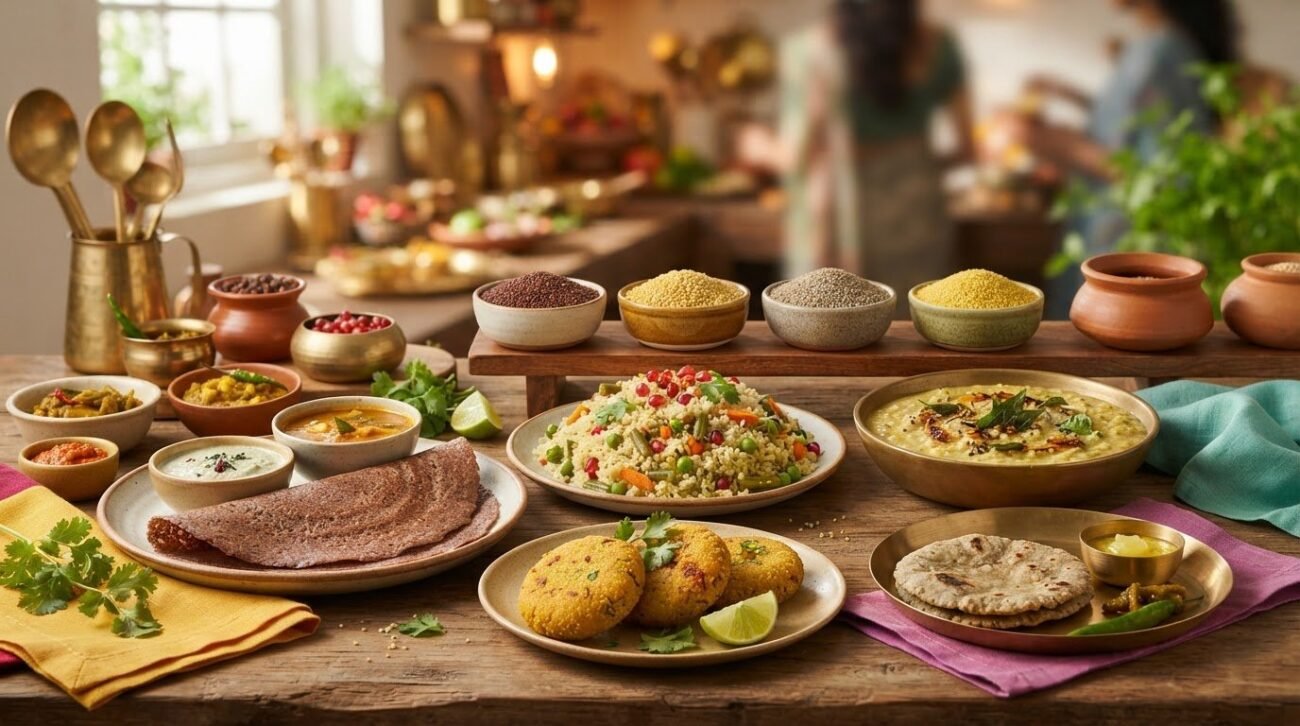
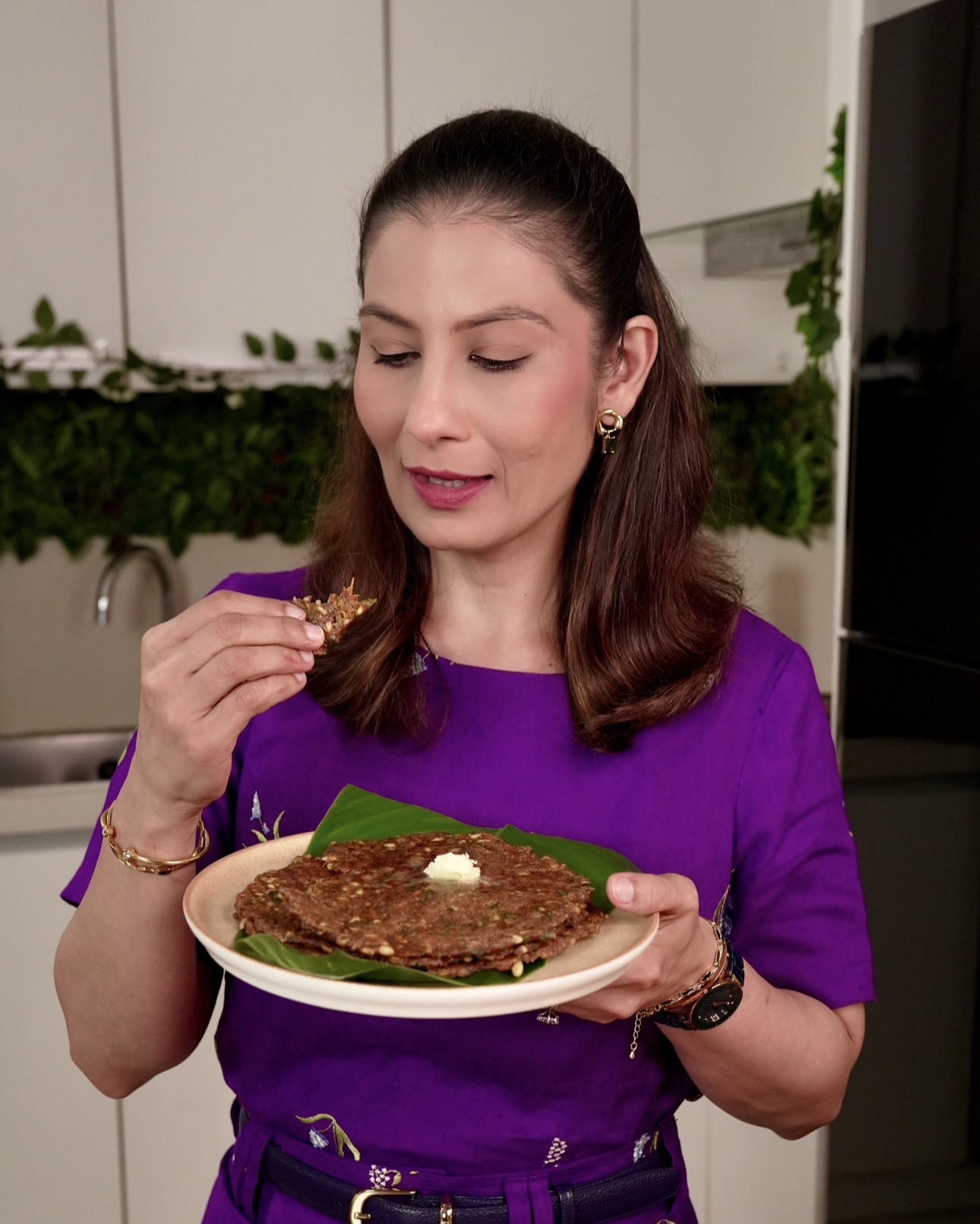
Millets aren’t limited to porridge. In Indian kitchens, their culinary applications range from fluffy rice-style sides and savoury khichdi to soft dosas, crisp snacks and wholesome bakes, depending on the grain and how it’s prepared.
Their appeal is easy to understand: familiar meals can take on new flavours and textures with ingredients such as ragi, jowar and bajra. The key is choosing a millet suited to the dish. Some work well as distinct, hearty grains, while millet flour can give batters and doughs a tender or crisp finish.
This guide explores practical ways to use millets in everyday breakfasts, lunches, dinners and snacks, with approachable examples. You’ll also find useful phrases for describing millet preparations, from “a hearty grain base” to “a naturally nutty flour.” Understanding texture and preparation makes it easier to experiment, adapt familiar recipes and find millet dishes your household will enjoy.
Key Takeaways
- Bring millets into familiar meals, from breakfast batters to hearty lunch and dinner dishes.
- Choose whole grains or millet flour according to the texture you want in the finished dish.
- Learn how preparation choices, including soaking, can influence a millet’s texture and use.
- Use clear culinary phrases to describe millet dishes by their flavour, texture and role in a meal.
- Explore Meghna’s Food Magic’s free recipe database for millet, high-protein and fitness-focused recipe ideas.
Application examples and collocations
Millets can go well beyond the breakfast bowl. Foxtail millet can serve as a grain base for a vegetable lunch, while pearl millet flour can become soft bhakri. Ragi flour suits dosa batter, where it can be combined with rice or lentil ingredients. Each example shows a different role, making “millet dish” a more specific description.
Collocations are words that naturally appear together. Phrases such as “ragi dosa batter,” “foxtail millet salad” and “pearl millet bhakri” identify both the ingredient and the preparation. Add a texture word to make the result easier to imagine: “soft ragi dosa,” “fluffy cooked millet” or “crisp millet cutlets.” These combinations help distinguish one dish from another.
The grain you choose shapes the result. Use whole foxtail millet when you want distinct grains in a salad or pulao. Choose ragi flour for a smooth addition to dosa batter or porridge. Jowar flour works well in flatbreads, where its earthy flavour pairs naturally with vegetables or dal. These applications depend on the millet’s form as much as the recipe name.
Useful culinary phrases describe what millet contributes, not just where it appears. “A hearty grain base” suggests a filling foundation, while “a nutty flour in the batter” points to flavour and form. Say “cooked millet folded through vegetables” when grains are mixed in near the end. Precise wording helps readers picture the method and finished dish.
- For a grain bowl: “cooked little millet with roasted vegetables.”
- For breakfast: “warm ragi porridge topped with fruit.”
- For a flatbread: “jowar flour dough served with dal.”
- For a snack: “crisp millet cutlets with herbs.”
When describing a recipe, name the millet, its form and its role. “Ragi flour stirred into dosa batter” explains a mixing step. “Barnyard millet cooked with vegetables” identifies the grain and its companions. “Pearl millet as a bhakri” makes the preparation clear. These details are more useful than a broad label such as “healthy millet food.”
Millet can complement familiar ingredients without replacing every grain in a meal. Try cooked millet alongside dal and seasonal vegetables, or blend millet flour with another flour for a flatbread. The proportion affects texture and flavour, so start with a recipe designed for that combination. Small adjustments can help you find pairings your household enjoys.
Choose descriptive words that match the finished dish. “Toasted” suggests a deeper, warmer flavour; “tender” describes grains cooked until soft; “crisp” suits a cutlet with a browned exterior. A phrase such as “tender barnyard millet with spiced vegetables” gives readers a sensory picture. Clear language makes culinary applications easier to understand and helps cooks choose a dish for the meal.
For a concise description, combine the ingredient, method and result: “ragi flour whisked into a smooth dosa batter” or “foxtail millet simmered until fluffy.” This format works in recipe notes, menus and everyday conversation. It tells readers what to expect without overstating a dish’s qualities and gives home cooks a practical starting point for their own millet-based meals.
“Toasted” suggests a preparation choice, while “soft,” “crisp” and “hearty” describe qualities of the finished dish. Keep these words true to the recipe: a description should not promise a texture or flavour the preparation does not deliver. If a dish has several components, make millet’s role clear. It may be the grain base, flour mixed into batter or an ingredient folded through vegetables. This gives readers a useful picture without relying on broad claims. Naming the grain, its form and its role also makes a short description more informative than a string of appealing adjectives. Consistent phrasing keeps a recipe collection clear, even when several dishes use the same millet in different ways.
A digital recipe guide can use precise language in both descriptions and instructions. Progressive web apps can combine browser-based access with features such as offline functionality and push notifications. Concise labels can identify a preparation at a glance, while fuller descriptions can explain whether a recipe uses whole grains or flour. A notification might name the millet and preparation rather than use a generic food label. These are ways to apply clear culinary wording: the essential description remains focused on the ingredient, its form and its role in the dish. That care makes a recipe easier to understand, whether the wording appears in a short prompt or alongside the cooking directions.
Ways something can be used
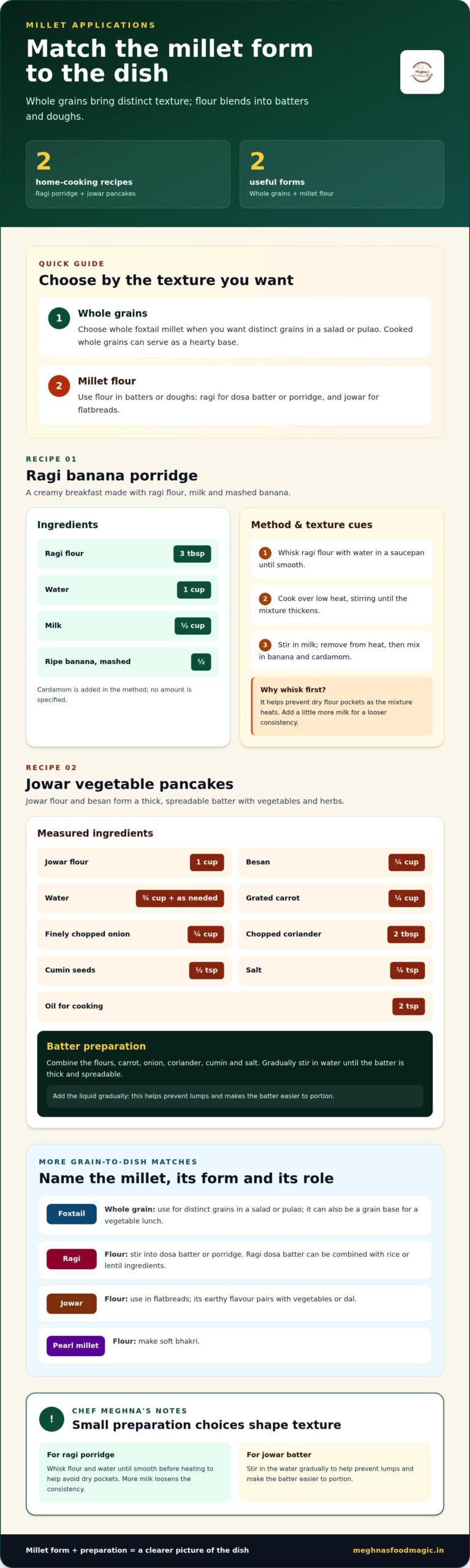
Millets can play different roles in an Indian meal, and the grain’s form affects the result. Whole grains make a tender, distinct base; flour blends into batter or dough. The recipes below demonstrate two useful applications: breakfast porridge and savoury pancakes. The measurements are for home cooking and help make the texture easier to reproduce.
Ragi banana porridge
- Ragi flour: 3 tablespoons
- Water: 1 cup
- Milk: ½ cup
- Ripe banana: ½, mashed
Whisk the ragi flour with water in a small saucepan until smooth. This helps prevent dry flour pockets as it heats. Cook over low heat, stirring until the mixture thickens. Add milk and keep stirring until creamy. Remove from the heat, then mix in mashed banana and cardamom. Add a little more milk for a looser consistency. Banana adds sweetness and softens ragi’s earthy flavour.
Jowar vegetable pancakes
- Jowar flour: 1 cup
- Besan: ¼ cup
- Water: ¾ cup, plus more as needed
- Grated carrot: ¼ cup
- Finely chopped onion: ¼ cup
- Chopped coriander: 2 tablespoons
- Cumin seeds: ½ teaspoon
- Salt: ¼ teaspoon
- Oil: 2 teaspoons for cooking
Combine the flours, carrot, onion, coriander, cumin and salt. Gradually stir in water until you have a thick, spreadable batter. Adding liquid gradually helps prevent lumps and makes the batter easier to portion. Heat a lightly oiled pan, spread a small ladleful into a pancake and cook until the edges look set. Flip and cook the other side. If the batter cracks as you spread it, add water a tablespoon at a time.
These recipes illustrate two different applications without asking you to change an entire meal. Ragi flour thickens a breakfast bowl, while jowar flour forms the base of a savoury snack. For other meal ideas, the millet recipe collection offers more inspiration for adapting familiar dishes.
Chef Meghna’s Notes
For the porridge, whisk the flour into cool water before heating; adding it directly to hot liquid can create lumps. If it gets too thick, loosen it with milk or water. For the pancakes, finely grated vegetables distribute more evenly and help the batter spread. You can substitute grated bottle gourd for carrot, but squeeze out excess moisture first so the batter holds together. Adjust salt and spices to suit your meal.
For the best texture, choose whole grains when you want them to remain distinct and flour when you need a smooth batter or dough. Soaking whole grains can soften them before cooking, while the required duration varies with the millet and recipe. To plan your own applications, decide whether the dish should be spoonable, fluffy, or crisp, then select the grain form and method to match. Meghna’s cooking videos can help you explore more ways to bring millets to the table.
Beyond food, “applications” can also refer to software tools. In this context, the distinction is how broadly a product is intended to be used. Horizontal applications are general-purpose and widely used, while vertical applications are niche products designed for a particular industry, business or organisational department. The contrast is useful when considering fit: a general-purpose tool is intended for broad use, while a niche product serves a defined setting. These labels describe scope, not a rule that every organisation or user must choose one type. Thinking about the intended audience clarifies what “application” means in a particular context, just as an ingredient can have a different role in each dish.
Access is another aspect of how a software application can be used. Web applications can be accessed on desktops, laptops and mobile devices with an internet connection, without requiring installation. This description covers the device, the connection needed and the lack of an installation requirement. It includes desktops, laptops and mobile devices rather than specifying one required device. Users can understand these access conditions without confusing them with whether the software is general-purpose or specialised. One describes the product’s intended scope; the other describes how it can be reached through connected devices. Keeping these ideas separate gives “ways something can be used” a broader meaning: an application can be considered by both its intended scope and how it is accessed.
Meghna’s Food Magic: Free Digital Recipe Database
Meghna’s Food Magic offers a free digital recipe database for home cooks looking to turn millet ideas into everyday meals. Explore Millets Recipes for inspiration on using grains and flours in familiar dishes, or browse High Protein Recipes and Weight Loss Fitness Recipes for options that suit your meal preferences. These collections can take you from choosing an ingredient to finding a practical recipe, whether you’re planning breakfast, a filling lunch or a light dinner. Use them as a starting point, then adapt the seasonings and accompaniments to suit your table.
For more recipe inspiration, visit Meghna’s Food Magic.
Bring One New Millet Idea to Your Kitchen
Let your next meal be a small experiment, not a complete kitchen overhaul. Choose one millet preparation that suits your day, then notice how its texture and flavour work with the rest of the plate. That simple observation can guide your next choice better than following a trend.
As you explore new applications, keep a few notes: which grain you used, whether it was whole or ground, and how the finished dish turned out. These details can help you adjust moisture, seasoning and preparation next time. A personal record also makes it easier to repeat a dish your household enjoys or adapt it for another meal.
For fresh ideas and inspiration to keep your cooking curious, explore Meghna’s recipe videos. Choose a dish that appeals to you, make it your own and let each attempt build your confidence.
Every thoughtful kitchen experiment is an opportunity to discover a new favourite. Enjoy the process and keep creating meals that feel right for your table.
Disclaimer
This is a recipe food blog page and not nutrition or doctor and hence do not claim to cure any illness. If you have specific health issues please consult a qualified doctor or certified nutritionist.
I do consult experts, research Internet and at times seek help from Gemini to collect relevant information to put together some of these blogs.

