
Jowar vs Wheat: Why This Swap Improves Your Gut Health
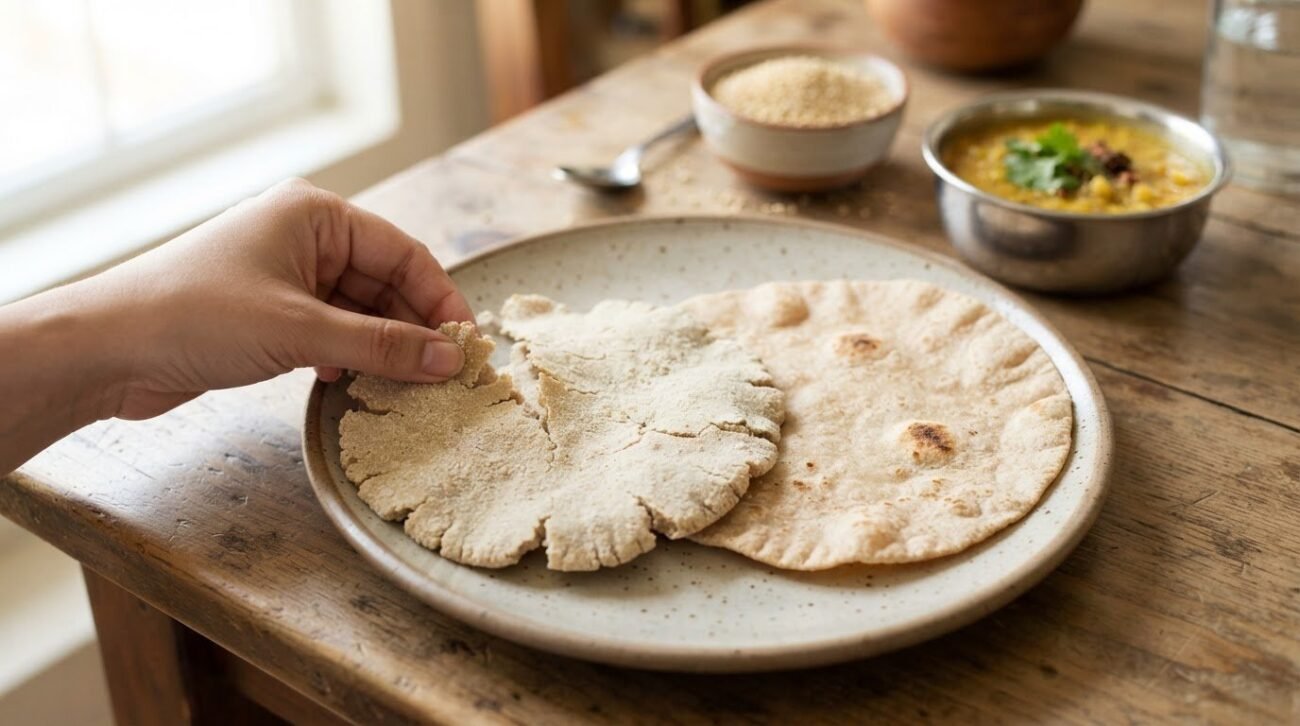
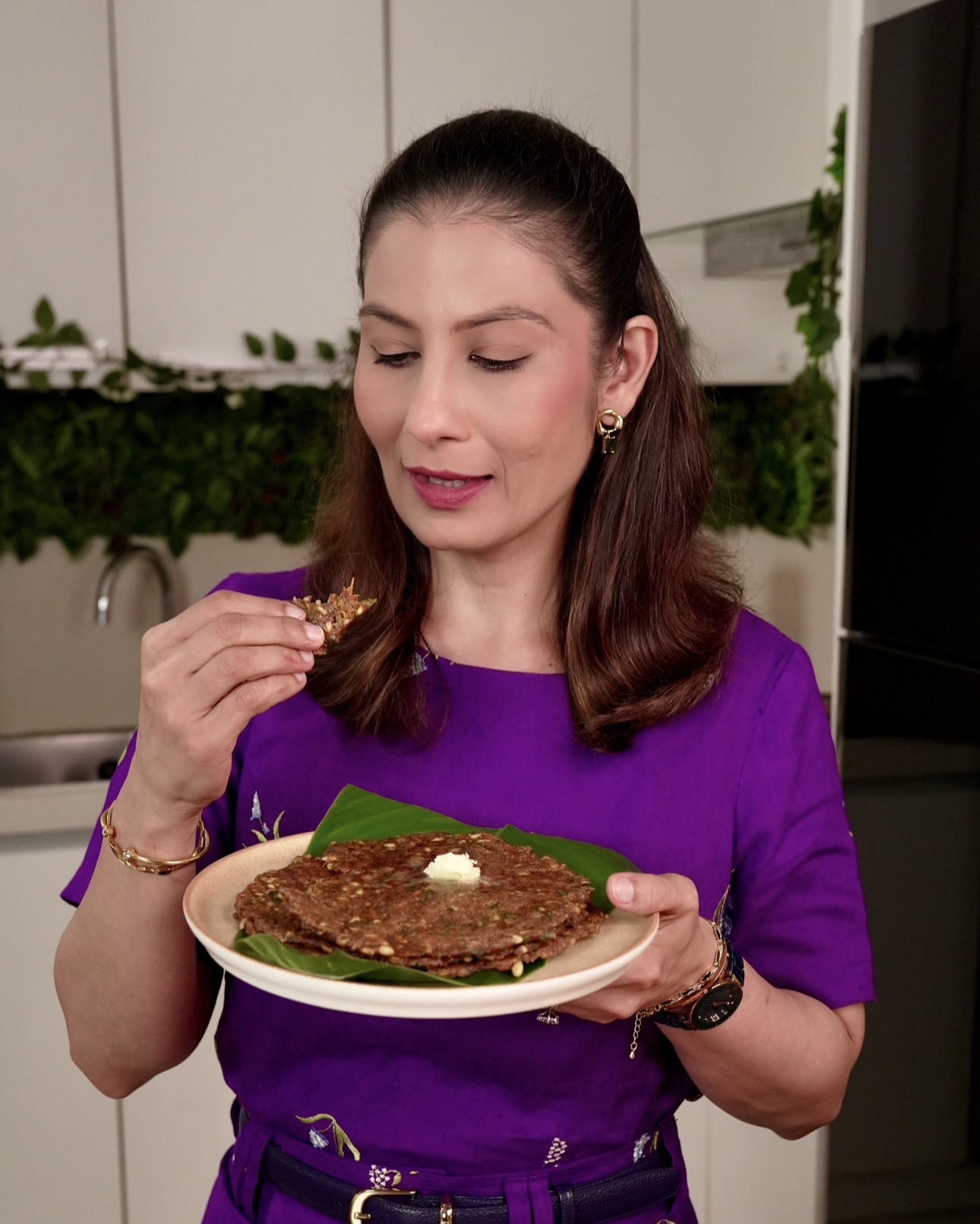
Wheat roti isn’t automatically gentler on every gut. To understand why you might swap wheat roti for jowar, and how the change may support gut health, start with a simple distinction: jowar is sorghum, a naturally gluten-free grain with a different mix of fibre and texture for everyday meals.
If you enjoy soft wheat rotis, switching grains can feel like giving up a familiar staple. It doesn’t have to be all or nothing, and jowar isn’t a guaranteed fix for digestive discomfort. Its fibre may suit some people, but a sudden increase can feel heavy or cause bloating for others.
Here, you’ll see how jowar and wheat compare nutritionally and in everyday rotis, what their fibre means for digestion, and how to introduce jowar gradually. You’ll also learn what to consider for weight and blood sugar, so you can decide whether to swap flours, blend them, or add jowar to your rotation.
Key Takeaways
- Compare jowar and wheat by their nutrients and roti-making qualities before deciding which grain suits your meals.
- Introduce jowar gradually and notice how your digestion responds, since a sudden increase in fibre may feel uncomfortable.
- Learn how portion size and the rest of your meal shape jowar’s role in weight management and blood sugar balance.
- Understand when jowar’s naturally gluten-free quality may matter, and why that alone doesn’t make every meal suitable for everyone.
- Try measured jowar recipes and use practical cooking tips to improve texture, handle sticky dough and make rotis easier to shape.
Jowar and wheat nutrition comparison
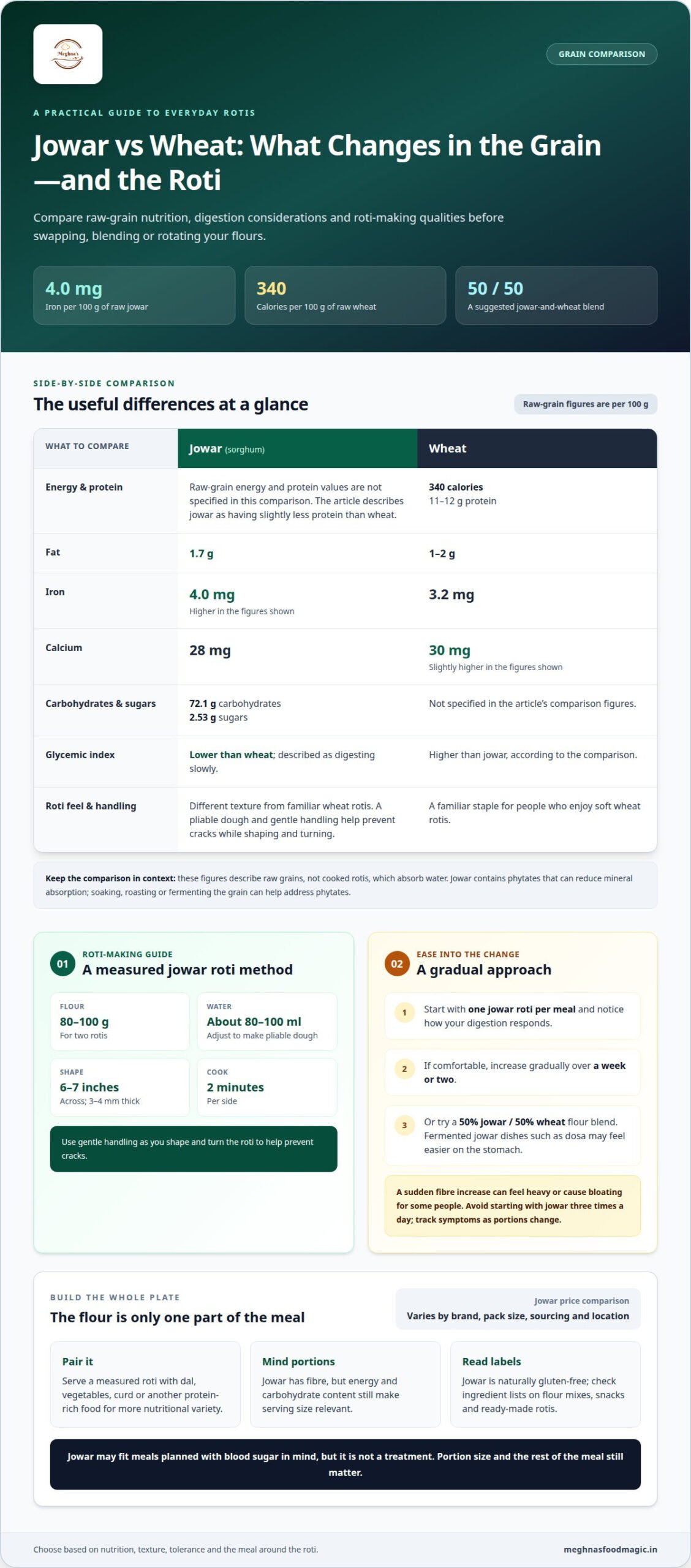
Jowar, also called sorghum, is a familiar grain in Indian kitchens. Compare its raw-grain nutrition with wheat before judging either flour by one nutrient alone. Raw jowar provides energy, protein and dietary fibre. Wheat provides 340 calories and 11-12 g protein per 100 g.
Both grains provide useful nutrients, though their profiles differ. The figures below describe raw grains, not cooked rotis, which gain weight as they absorb water.
- Jowar, per 100 g: 1.7 g fat, 4.0 mg iron and 28 mg calcium.
- Wheat, per 100 g: 1-2 g fat, 3.2 mg iron and 30 mg calcium.
- Fibre: wheat contains 7-12 g per 100 g, while raw jowar contains 10.2 g.
These figures show jowar with slightly less protein than wheat, alongside a notable fibre contribution. Its iron content is higher, while wheat has slightly more calcium. Jowar also contains phytates, which can reduce mineral absorption. Soaking, roasting, or fermenting the grain can help address phytates. The whole meal matters too: dal, vegetables, or curd alongside roti add nutritional variety beyond the flour.
In India, there’s no single fixed price comparison for jowar flour and wheat atta. Retail prices vary by brand, pack size, sourcing, and location, so compare the unit prices on current packs rather than assuming one grain always costs more.
For soft jowar rotis, mix 80-100 g flour with approximately 80-100 ml water for two rotis. Shape each disc to 6-7 inches across and 3-4 mm thick. Cook for 2 minutes per side. A pliable dough and gentle handling help prevent cracks as you shape and turn each roti.
Jowar for weight management and blood sugar
Jowar’s fibre and slower digestion can affect how a roti fits into a meal. Portion size and the foods served alongside it matter too.
Jowar and Blood Sugar Balance
Blood sugar balance means managing a meal’s effect on glucose levels over time. Jowar contains 2.53 g of sugars per 100 g, alongside 72.1 g of carbohydrates. That makes portion size relevant, even when choosing a grain with fibre. Pair a jowar roti with dal, vegetables, or another protein source, rather than treating the roti as the whole meal. The combination makes a more complete plate.
Glycemic Index Compared with Wheat
Glycemic index compares how quickly carbohydrate-containing foods raise blood glucose. Jowar has a lower glycemic index than wheat and is described as a grain the body digests slowly. These qualities may help explain its appeal in meals planned with blood sugar in mind, but they don’t make it a treatment. Jowar can fit into meals for people with diabetes, though carbohydrate content and serving size still need consideration.
Jowar for Weight Management
Weight management depends on your overall eating pattern, not on swapping one flour in isolation. Jowar’s fibre can help make a meal satisfying, but its energy content means portions still count. Build a plate around a measured roti, vegetables, and dal or another protein-rich food. For example, replacing an extra roti with cooked vegetables changes the meal’s balance without making jowar a weight-loss shortcut.
For more Indian meal ideas, explore Meghna’s recipe videos for ways to pair rotis with everyday dishes.
Potential bloating and digestive discomfort
Jowar, or sorghum, adds fibre to meals, but a sudden switch can feel uncomfortable. Gradual portions give your digestion time to adjust.
Jowar Fibre and Digestive Health
Dietary fibre adds bulk to food moving through the digestive system, making its amount relevant to gut health. Jowar contains 6.7 g of fibre per 100 g in the nutrition figures used here. Fibre can support regular digestion, but it isn’t a cure for gut problems. The fibre in two jowar rotis can vary with the amount of flour used.
Does jowar have evidence-backed benefits for digestion? Its fibre gives a clear nutritional reason to include it, but that alone doesn’t establish treatment benefits for a digestive condition. Jowar’s condensed tannins can interact with starches and proteins, adding bulk in the intestines and making the grain less digestible for some people.
Jowar and Constipation or IBS
Constipation and irritable bowel syndrome (IBS) can involve different symptoms, so changing roti flour won’t reliably resolve either. Jowar may add fibre to meals, but increasing it quickly can trigger bloating or discomfort. If you’re managing diabetes as well as digestive symptoms, consider both needs rather than assuming one grain suits everyone.
Start with one jowar roti per meal, then increase gradually over a week or two if comfortable. Another gentle approach is mixing 50% jowar flour with wheat flour. Fermented jowar dishes, such as dosa, are easier on the stomach. Avoid serving jowar three times a day when you’re new to it; track symptoms as portions change.
Gluten-free grain choices
Jowar is naturally gluten-free, making it a useful grain for people avoiding gluten. The grain itself, though, is only one part of the meal.
Gluten-Free Grain Claims
A gluten-free claim describes the grain or product, not every benefit you might expect from eating it. Jowar’s naturally gluten-free quality doesn’t make it a treatment for bloating, weight concerns, or blood sugar changes. Nor does it mean every packaged jowar food has the same ingredients. Check ingredient lists on flour mixes, snacks, and ready-made rotis before choosing them.
Plain jowar flour and a packaged jowar roti are different products to assess. The flour may list jowar alone, while a prepared product can include additional ingredients. Read the label instead of relying only on a prominent gluten-free claim. This simple step helps you know what you’re bringing to the plate.
Gluten-Free Suitability
Gluten-free suitability means choosing foods that fit a person’s need to avoid gluten. Jowar is one grain option, but the rest of the meal still matters. A jowar roti with dal and vegetables adds variety, while wheat roti is a different grain choice. If avoiding gluten is medically important, assess the complete product and meal, not just the flour’s name.
Keep one distinction in mind: gluten-free doesn’t automatically mean gentle on every stomach. Jowar contains fibre, and a quick change in grain or portion can cause digestive discomfort. If you’re exploring jowar, start with a modest serving and notice how it feels. Choose plain jowar flour for homemade rotis when you want direct control over the ingredients.
Treat “gluten-free” as one useful detail, not a promise of improved gut health. Jowar can add a naturally gluten-free option to Indian meals, while preparation, portion size, and the other foods on your plate shape the experience.
Jowar and wheat as everyday roti grains
Wheat and jowar can both make everyday rotis, but their dough handles differently. Why you need to swap wheat roti for jowar, and whether it may support your gut, depends on your needs.
Jowar Roti in Everyday Meals
Wheat dough stretches easily, while jowar dough is less elastic and needs careful shaping. That difference matters when making rotis for a family meal. Jowar is naturally gluten-free, making it an alternative grain for people avoiding gluten. But swapping flour won’t necessarily ease every kind of wheat sensitivity or digestive discomfort. Serve either roti with dal, vegetables, and a protein-rich accompaniment for a more balanced meal.
For energy through the meal, consider the whole plate, not just the flour. A jowar roti with moong dal and cooked vegetables combines grains with other foods. Wheat roti can also fit a varied meal. If you prefer a familiar texture, blend 50% jowar flour with regular wheat flour. This adds jowar while retaining some of wheat’s workable dough quality.
Jowar Roti Amount and Frequency
A practical starting portion is two jowar rotis per meal, two to three times a week. If you’re new to jowar, begin with one roti per meal and increase gradually over a week or two. This gives you time to notice how the change feels instead of replacing every wheat roti at once.
For a simple rotation, try jowar rotis at lunch on selected days and wheat rotis at other meals. If you’re considering why you need to swap wheat roti for jowar and how it may affect your gut, start with your reason for switching and your own response. Jowar’s gluten-free nature doesn’t guarantee symptom relief. Pair your chosen roti with dal or vegetables, and adjust the portion to your appetite and activity.
Three Jowar Recipes to Try
These three ideas bring jowar into familiar Indian meals: soft rotis, dosa, and savoury upma. Measure the flour and add water gradually, since jowar dough and batter need a different touch from wheat.
Soft Jowar Roti
Ingredients: 80-100 g jowar flour, 80-100 ml warm water, and salt to taste. Method: Mix flour and salt, then add water gradually to make soft dough. Divide into two portions. Pat each into a 6-7-inch disc, using your hands or a sheet of baking paper. Cook on a hot tawa for 2 minutes per side. Keep the cooked rotis covered in a clean cloth to retain softness.
Jowar Dosa
Ingredients: 1 cup jowar flour, ¼ cup rice flour, ¼ cup plain yoghurt, 1 cup water, ¼ teaspoon salt, and 1 teaspoon oil. Method: Whisk the flours, yoghurt, salt, and water into a pourable batter. Cover and leave in a warm place until lightly fermented. Stir, pour a ladleful onto a hot, lightly oiled tawa, and spread thinly. Cook until the edges lift, then turn and cook the other side.
Savoury Jowar Upma
Ingredients: 1 cup jowar rava, 2 cups water, 1 tablespoon oil, ½ teaspoon mustard seeds, 1 chopped green chilli, ¼ cup diced carrot, and salt to taste. Method: Heat oil; add mustard seeds, chilli, and carrot. Stir in jowar rava, then add water and salt. Cover and cook, stirring occasionally, until tender. Add a splash of water if the mixture becomes too dry. Serve warm with lemon.
Chef Meghna’s Notes
Jowar dough needs a gentler touch than wheat dough. Add warm water gradually as you mix, so the flour hydrates evenly without becoming loose. Let the dough rest briefly under a damp cloth to keep the surface from drying while you shape each portion. If it sticks to your hands or worktop, try patting it between lightly floured sheets.
If the dough crumbles at the edges, work in a little more warm water. If it feels too sticky to handle, dust your fingers lightly with jowar flour instead of adding a large amount to the whole batch. For a more pliable dough, a 50% jowar and 50% wheat-flour blend is an option, but it contains wheat and isn’t gluten-free. For dosa, rice flour can bring a crisper finish.
Choose flour to match the texture you want. Finely milled jowar gives a smoother result, while coarser flour creates a more rustic bite. Steady heat on the tawa helps the roti cook evenly; excessive heat can brown the outside before the centre cooks through. If a roti feels dry, keep it covered after cooking and serve it warm with a moist sabzi or dal.
For a softer finish, avoid pressing hard with a spatula, which can make the roti dense. Use a broad spatula to turn it carefully, and stack finished rotis under a clean cloth. Small adjustments to hydration, heat, and handling make jowar easier to cook, while leaving room to find a texture your household enjoys.
Meghna’s Food Magic: Jowar Bajra Ragi Nachni recipes
Meghna’s Food Magic offers Jowar Bajra Ragi Nachni recipes for home cooks looking to bring these grains into everyday meals. Explore them when you want ideas beyond roti or a starting point for cooking with jowar. Trying different preparations can help you discover textures and flavours that work for your table.
The Free Digital Recipe Database brings recipe ideas together, while Millets Recipes offer more ways to use these grains. The millet recipe collection can inspire further exploration of jowar, bajra, ragi, and other millet dishes. Choose a preparation that suits your meal and cooking routine; there’s no need to replace wheat in every meal.
If protein is a priority, explore High Protein Recipes for dishes where protein plays a central role. Pair a grain-based recipe with dal, paneer, or another protein-rich food to build a more complete plate. Choose ingredients and flavours that suit your household and the meal you’re planning.
Start with a familiar preparation, then branch out as you get comfortable with jowar’s flavour and texture. Try a new dish alongside your usual sabzi or dal and see how it fits your regular menu. This makes it easier to build variety at your own pace, without treating one grain as a strict rule.
Explore Meghna’s Food Magic for recipe ideas featuring jowar, bajra, ragi, and nachni.
Make Your Next Roti a Curious Experiment
Let your next meal be a small kitchen experiment, not a strict food rule. Understanding why you need to swap wheat roti for jowar, and how it may support your gut, starts with noticing what you enjoy and how your body responds. Try a new jowar preparation alongside familiar dishes, then make the choice that feels sustainable for your everyday table.
Keep pleasure in the picture alongside nourishment. A grain swap isn’t a guaranteed fix for digestive symptoms, and there’s no need to force a change that doesn’t suit you. If you’re curious, choose a recipe, shape the dough gently, and give yourself room to learn through cooking.
Every meal is another chance to find a combination that tastes good and fits your routine. Enjoy the process, one roti at a time.
Frequently Asked Questions
What is Jowar?
Jowar is sorghum, a cereal grain eaten in India as flour, whole grain, and in dishes such as roti, dosa, or porridge. Its naturally gluten-free grain adds another option to a household’s usual wheat-based meals. Jowar flour behaves differently from wheat atta, so recipes may need adjustments to water, handling, and cooking technique. Try a familiar dish first to learn its texture.
How Do These Grains Affect Your Health?
Jowar and wheat both provide carbohydrates, protein, fibre, and minerals, but their nutritional profiles differ. The effect of either grain depends on portion size, preparation, and what else is on your plate. Roti served with dal and vegetables, for example, makes a different meal from roti eaten alone. If you’re changing grains because of digestive symptoms, introduce the new choice gradually and notice how your meals feel.
What is Jowar and Why is it a Popular Grain Today?
Jowar is sorghum, a grain used in traditional Indian cooking and suited to rotis, porridge, dosa, snacks, and baked foods. Its versatility lets home cooks explore different textures without relying on a single roti recipe. Jowar is also described as drought-resistant and requiring less water than wheat. These qualities help explain its wider appeal, alongside interest in adding varied grains to everyday cooking.
What is jowar and how does it compare with wheat roti nutritionally?
Jowar is sorghum; compared with wheat, its raw grain provides a similar amount of energy, slightly less protein, and a different mineral profile. Raw jowar contains 334 kcal and around 10 g protein per 100 g; wheat contains 340 calories and 11-12 g protein per 100 g. These figures describe raw grains, not the finished rotis. Water added during cooking changes a roti’s weight.
How much fiber is in jowar flour versus whole wheat atta per 100 g?
The nutrition figures give raw jowar as 10.2 g of dietary fibre per 100 g, while wheat contains 7-12 g per 100 g. These are grain figures, so the exact amount in a flour product can depend on the grain and milling. For a fair comparison, look at the nutrition information on the specific jowar flour and atta packs you use, and compare equal weights.
Is jowar gluten-free, and who should avoid wheat or jowar?
Jowar is naturally gluten-free, while wheat contains gluten, so people who need to avoid gluten should not treat wheat roti as interchangeable with jowar roti. Packaged mixes and prepared rotis may include other ingredients, so read their labels. Jowar can also cause discomfort for some people, particularly if they increase fibre quickly. Choose based on your dietary needs and your own response to each grain.
What are the possible side effects or risks of eating jowar regularly?
Some people may experience digestive discomfort when adding jowar to their diet, so it can help to introduce it gradually. Start with a small amount and increase gradually instead of making it part of every meal straight away. Jowar also contains phytates, which can reduce absorption of minerals such as iron or zinc; soaking, roasting, or fermenting are preparation options. If it feels heavy, reduce the portion or try a fermented dish such as dosa.
Disclaimer
This is a recipe food blog page and not nutrition or doctor and hence do not claim to cure any illness. If you have specific health issues please consult a qualified doctor or certified nutritionist.
I do consult experts, research Internet and at times seek help from Gemini to collect relevant information to put together some of these blogs.

