
Quick and Healthy High-Protein Recipes for Busy Days
“Quick” is pronounced /kwɪk/ and rhymes with “lick.” It describes something done fast, such as a quick reply or meal. Start with the blended “kw” sound and end with a crisp “k.”
A quick meal can be handy on a busy day, and speed doesn’t have to mean bland or unsatisfying food. In everyday English, “quick” also appears in familiar phrases, so knowing how it sounds and works can help you recognise it in conversation and writing.
This guide explains how to pronounce “quick,” explores related words and common combinations, and offers vegetarian, high-protein recipe ideas for busy days. You’ll see how the word fits different contexts, then find inspiration for a quick, flavourful meal.
Key Takeaways
- Choose a suitable alternative based on whether you’re describing speed, a brief action, or a fast reaction.
- Recognise common word pairings and use them naturally in everyday sentences.
- Explore measured vegetarian recipe ideas for adding satisfying protein to busy-day meals.
- Use practical cooking tips to adjust ingredients and troubleshoot texture or flavour.
- Find more health-conscious inspiration in Meghna’s Food Magic’s free digital recipe database.
Synonyms and related words
Synonyms share some of a word’s meaning, but the best choice depends on context. Dictionaries may list several alternatives; example sentences help show how they differ.
Synonyms for Quick
A synonym is a word with a meaning similar to another word. “Fast,” “rapid,” “swift,” and “speedy” can describe movement or action, but each has a slightly different feel.
“Fast” works as an adjective or adverb: “a fast runner” and “run fast.” “Quick” is usually an adjective, as in “a quick decision.” Use “rapid” for a process, such as rapid growth. “Swift” often suits a polished phrase like “a swift response,” while “speedy” sounds more conversational, as in “speedy service.”
Choose a word that fits the subject. “A fast train” sounds natural, while “a rapid train” is less common. In “Quick, catch the bus,” the word acts as an informal adverb in a spoken instruction.
Related Words for Quick
A related word can connect through meaning, grammar, or history. “Quickly” is the standard adverb form, as in “stir quickly” or “quickly stir the sauce.”
“Prompt” means without delay, as in “a prompt reply.” It emphasises timeliness, while “quick” can suggest a brief action or near-immediate reaction. A quick glance lasts only a short time; a prompt answer arrives without delay.
The word also has a less familiar noun meaning: the living flesh beneath a fingernail. “Quick” is recorded in English before 900, with an Old English sense of “living.” An American English speaker might say, “Give me a quick opinion,” meaning a brief response. Context distinguishes that use from the noun meaning.
Common collocations with quick
A collocation is a pair of words that commonly appear together. Learning familiar combinations helps you understand and use “quick” naturally. The noun that follows shapes the phrase: an answer, a meal, or an action each gives it a distinct meaning.
Quick answer means a reply given without delay. “Could you give me a quick answer about lunch?” suits a simple decision. For a sensitive topic, though, a thoughtful answer may matter more than speed. The phrase describes timing, not accuracy or care.
Quick look means a brief examination. “Take a quick look at this menu” asks someone to scan it, not study every detail. By contrast, “quick decision” describes a choice made promptly, as in “I made a quick decision to pack a sandwich.”
Quick response refers to a reply or reaction that comes soon. “The moving boxes slipped, and she took quick action” describes an immediate, practical response. A quick response can help, but the phrase alone doesn’t say whether it solved the problem.
Quick meal describes food prepared or eaten in little time. “I made a quick meal with leftover rice and peas” tells you about convenience, not nutritional quality. “Quick fix” means a fast solution, often a temporary one: adding water may loosen thick dal, though stirring it in gradually gives you more control.
“Quick” pairs with different nouns, and the companion word sharpens the meaning. Compare “quick look” with “careful inspection”: the first suggests a glance, the second a closer review. Examples make the phrases easier to understand than memorising a definition alone. Practise by writing a sentence with “quick reply,” then replace “reply” with “decision” and notice how the context changes.
Quick Vegetarian Recipes
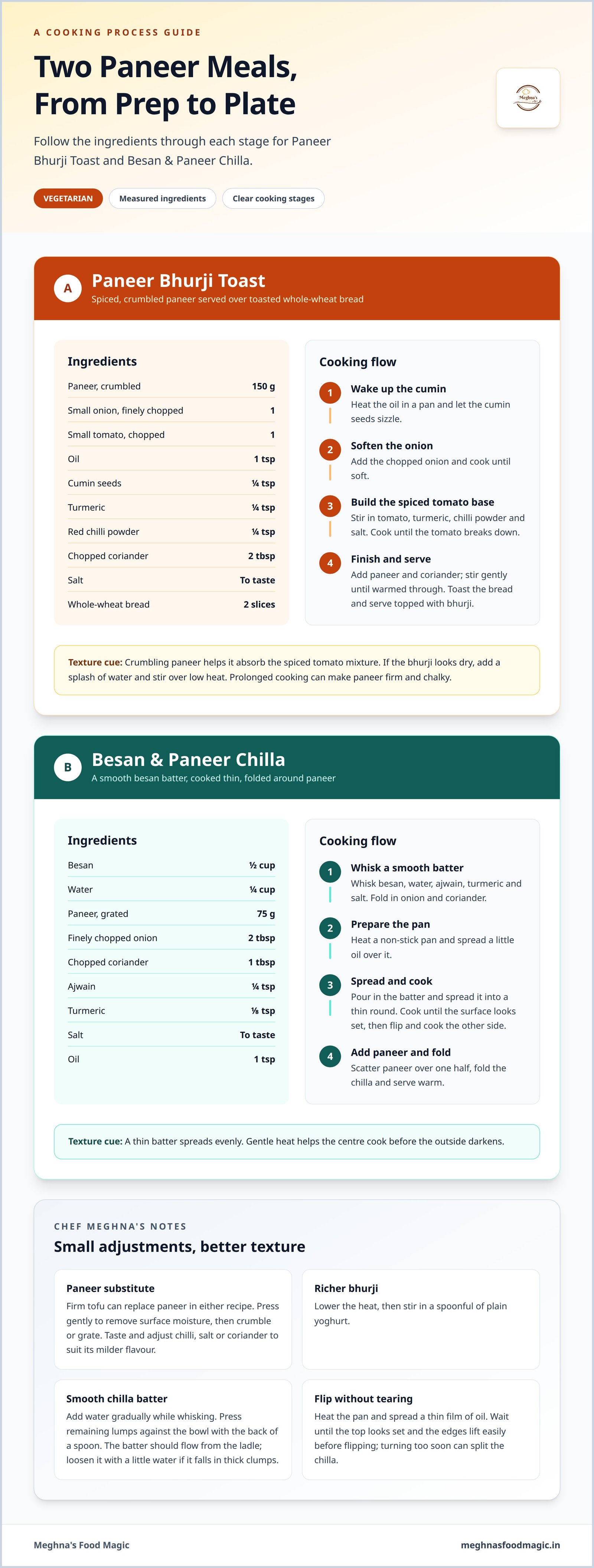
These two vegetarian dishes use familiar ingredients and straightforward cooking steps. Measured quantities make them easy to prepare without guesswork.
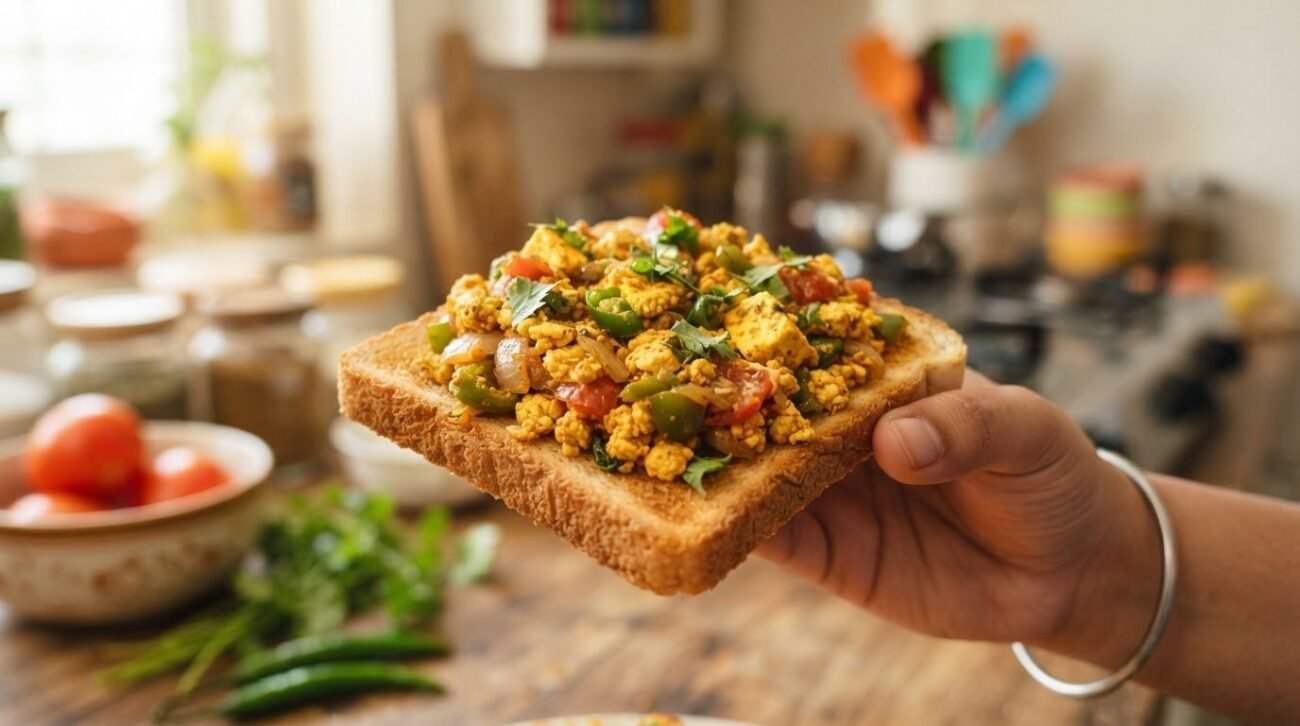
Paneer Bhurji Toast
Ingredients: 150 g paneer, crumbled; 1 small onion, finely chopped; 1 small tomato, chopped; 1 teaspoon oil; ¼ teaspoon cumin seeds; ¼ teaspoon turmeric; ¼ teaspoon red chilli powder; 2 tablespoons chopped coriander; salt to taste; 2 slices whole-wheat bread.
Heat oil in a pan and let the cumin seeds sizzle. Add the onion and cook until soft, then stir in the tomato, turmeric, chilli powder, and salt. Cook until the tomato breaks down. Add paneer and coriander, then stir gently until warmed through. Toast the bread and serve it topped with the bhurji. Crumbling the paneer helps it absorb the spiced tomato mixture.
Besan and Paneer Chilla
Ingredients: ½ cup besan; ¼ cup water; 75 g grated paneer; 2 tablespoons finely chopped onion; 1 tablespoon chopped coriander; ¼ teaspoon ajwain; ⅛ teaspoon turmeric; salt to taste; 1 teaspoon oil.
Whisk besan, water, ajwain, turmeric, and salt into a smooth batter. Fold in the onion and coriander. Heat a non-stick pan and spread a little oil over it. Pour in the batter and spread it into a thin round. Cook until the surface looks set, flip, then cook the other side. Scatter paneer over one half, fold, and serve warm. A thin batter spreads evenly, while gentle heat helps the centre cook before the outside darkens.
For more ways to use this versatile ingredient, explore paneer recipe ideas.
Chef Meghna’s Notes
Keep paneer soft: Crumble it with your fingers rather than grating it finely. Small, uneven pieces stay tender in bhurji. If the mixture looks dry, add a splash of water and stir over low heat; prolonged cooking can make paneer firm and chalky.
Make a suitable swap: Firm tofu can replace paneer in either recipe. Press it gently to remove surface moisture, then crumble or grate it. Tofu has a milder flavour, so taste the mixture before serving and adjust the chilli, salt, or coriander to suit. For a richer bhurji, stir in a spoonful of plain yoghurt after lowering the heat.
Rescue lumpy chilla batter: Add the water gradually while whisking the besan. This helps the flour hydrate evenly and prevents dry pockets. If lumps remain, press them against the bowl with the back of a spoon. The batter should flow from the ladle; loosen it with a little water if it falls in thick clumps.
Prevent sticking and tearing: Heat the pan before adding batter, then spread a thin film of oil over the surface. Wait until the top looks set and the edges lift easily before flipping. Turning too soon can split the chilla because its centre hasn’t firmed up.
Build flavour in stages: Let cumin seeds sizzle in warm oil before adding the onion. This brief step releases their aroma into the cooking fat. Add the tomato once the onion softens, and cook until it loses its raw, watery texture. Taste at the end, since paneer and tofu vary in saltiness. Serve the chilla straight from the pan for a tender centre and lightly crisp edges.
Meghna’s Food Magic: easy quick recipes
Meghna’s Food Magic shares easy, quick recipes for busy home cooks looking for practical meal inspiration. When a packed schedule makes planning harder, the free recipe collection offers ideas to explore and dishes to suit your kitchen routine. The focus is on useful inspiration, not complicated cooking.
For meals centred on vegetarian protein, explore the High Protein Recipes and Vegetarian High Protein Recipes collections. They offer ideas for satisfying meals built around ingredients such as paneer, lentils, or beans. Choose a dish that suits what’s already in your kitchen, then follow its measurements and method for a more dependable result.
The Millets Recipes collection offers another way to explore grains such as ragi, jowar, or bajra. Grain choice affects a dish’s texture, so consider whether you want a soft batter, a firm flatbread, or a spoonable meal before choosing a recipe. That small decision helps you pick something that suits what you feel like cooking.
Turn to these recipe collections for weekday meal ideas, vegetarian menu inspiration, or a chance to try a different grain. A clear method can also make cooking easier to plan: gather the ingredients, prepare vegetables before heating the pan, and keep the instructions close by. A little preparation makes each step more manageable.
Start with a dish that fits your appetite and available ingredients, then adapt flavours to your preference while keeping the recipe’s core proportions intact. For more inspiration, explore the recipe collection and find options for your next meal.
Contact Meghna’s Food Magic with your recipe enquiry.
Frequently Asked Questions
What is the pronunciation of quick?
“Quick” is pronounced /kwɪk/ and has one syllable. Start with the “kw” sound, as in “queen,” then add the short vowel in “sit” and finish with a crisp “k.” Blend the sounds smoothly: “kw-ick.” Avoid adding a syllable or stretching the vowel. Practise with “quick” and “wick” to hear the difference at the start.
What does “quick” mean in English?
In English, “quick” usually describes something that happens fast or takes little time. It can also describe a person or response that reacts promptly, as in “a quick learner” or “a quick reply.” In “She took a quick break,” it signals a short duration. The exact meaning depends on the noun or action, so read the whole phrase for context.
What are synonyms and antonyms of quick?
Synonyms include “brisk,” “speedy,” and “swift”; antonyms include “slow,” “sluggish,” and “delayed.” Use “brisk” for an energetic pace, as in “a brisk walk,” and “delayed” when something happens later than expected, as in “a delayed train.” These words aren’t interchangeable in every sentence. “A sluggish response” suggests low energy, while “a slow response” mainly describes its pace.
What are common phrases and idioms using quick?
Common expressions include “quick thinking,” meaning prompt, effective judgment, and “quick-witted,” describing someone who responds cleverly. “Quick as a flash” means extremely fast, while “be quick about it” tells someone to act promptly. “Her quick thinking helped organise the crowded kitchen” describes a useful response under pressure. Idioms add emphasis, so use them when a plain description feels too neutral.
How is “quick” pronounced?
Say “quick” as one beat: /kwɪk/. The first sound blends /k/ and /w/, like the beginning of “quite.” The middle vowel is short, like the vowel in “lip,” and the final /k/ should be clear. Try saying “wick,” then add the /kw/ blend at the beginning. Moving from slow to smooth helps keep the word clear without turning it into two syllables.
Disclaimer
This is a recipe food blog page and not nutrition or doctor and hence do not claim to cure any illness. If you have specific health issues please consult a qualified doctor or certified nutritionist.
I do consult experts, research Internet and at times seek help from Gemini to collect relevant information to put together some of these blogs.

