
Ragi Malt Recipe for Adults: A Smooth, Comforting Drink
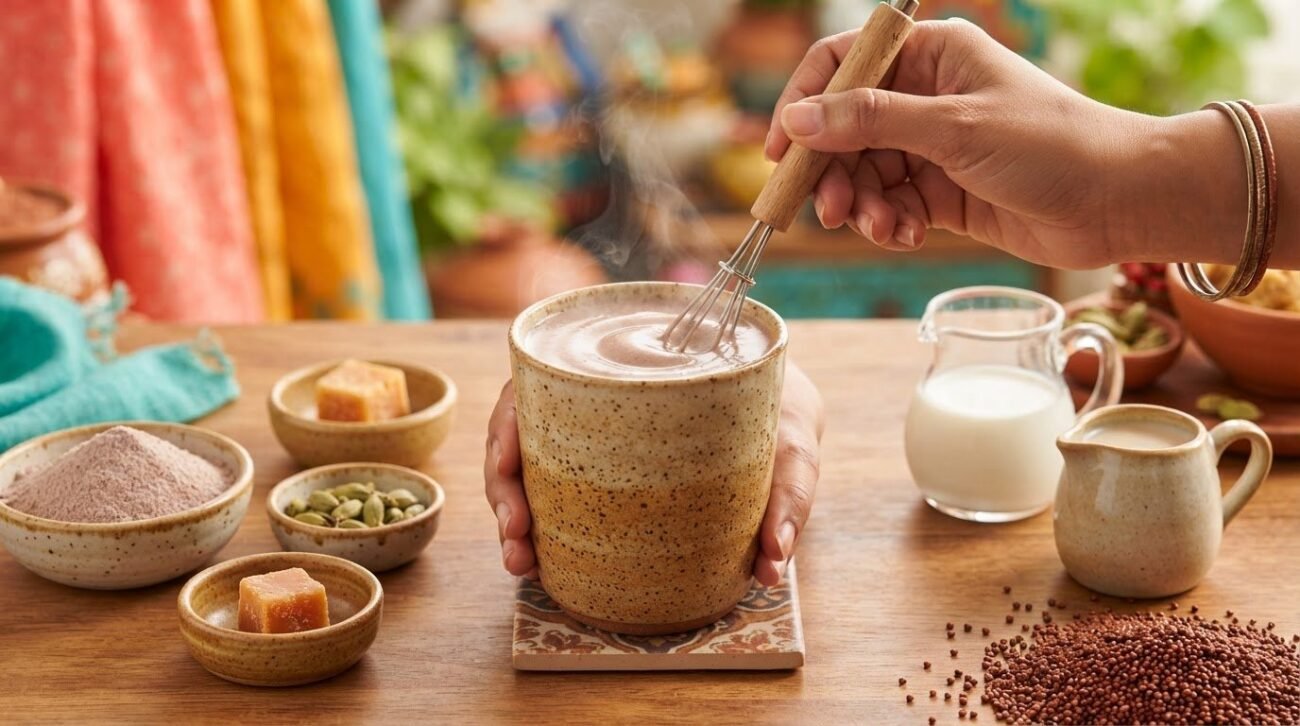
What makes a smooth ragi malt often comes down to the first few minutes, before the flour reaches the heat. Lumps, a raw taste or a drink that turns too thick can make this comforting staple feel fussy, but each has a straightforward cooking fix. A dependable ragi malt recipe for adults starts by whisking the flour with cool water into a lump-free slurry, then cooking it while stirring until the mixture is glossy and fully cooked.
You want a drink that fits your taste and routine, not a one-texture-fits-all recipe. This guide shows you how to make a reliable cooked base, adjust its thickness and balance its earthy flavour with ingredients you enjoy. You’ll find measured sweet, savoury and dairy-free versions, along with practical ways to troubleshoot the texture. You’ll also learn why the order of cooking and adding ingredients matters, so you can make a smooth cup for breakfast, an evening drink or a savoury ragi ambali.
Key Takeaways
- For a smooth ragi malt recipe for adults, whisk the flour with cool liquid first so it disperses before cooking.
- Cook the ragi mixture while stirring until it thickens and turns glossy, which helps prevent a raw flour taste.
- Choose a sweet, savoury or dairy-free variation, then adjust the flavour to your preference.
- Fix a lumpy, overly thick or bland drink by identifying the likely cause and making a targeted adjustment.
- Measure dry ingredients ahead, cook the liquid mixture fresh, and serve your malt warm at the thickness you enjoy.
What Is Ragi Malt for Adults, and What Makes a Smooth Cup?
Ragi malt is a cooked drink made by combining finger millet flour with liquid and heating it until the mixture thickens. It can be creamy without feeling heavy, with a flavour and consistency you can tailor to your taste. A smooth cup depends on dispersing the flour before it heats, then stirring as it cooks.
This adult-friendly version gives you room to choose flavours that suit your palate. Make it gently sweet with cardamom, or savoury with salt and cumin. Adult preparations can use seasonings and flavour combinations suited to a grown-up palate. Baby-focused recipes are made for a different feeding context. For background on the grain itself, finger millet (Eleusine coracana) is also known as ragi in India.
Ragi flour, liquid, and the texture of the finished drink
Fine ragi flour is a helpful starting point because it disperses more evenly, but the mixing method matters just as much. Whisking it thoroughly with cool liquid before cooking helps prevent dry pockets from turning into lumps as the mixture heats. Keep stirring so the flour thickens evenly and the finished drink feels smooth.
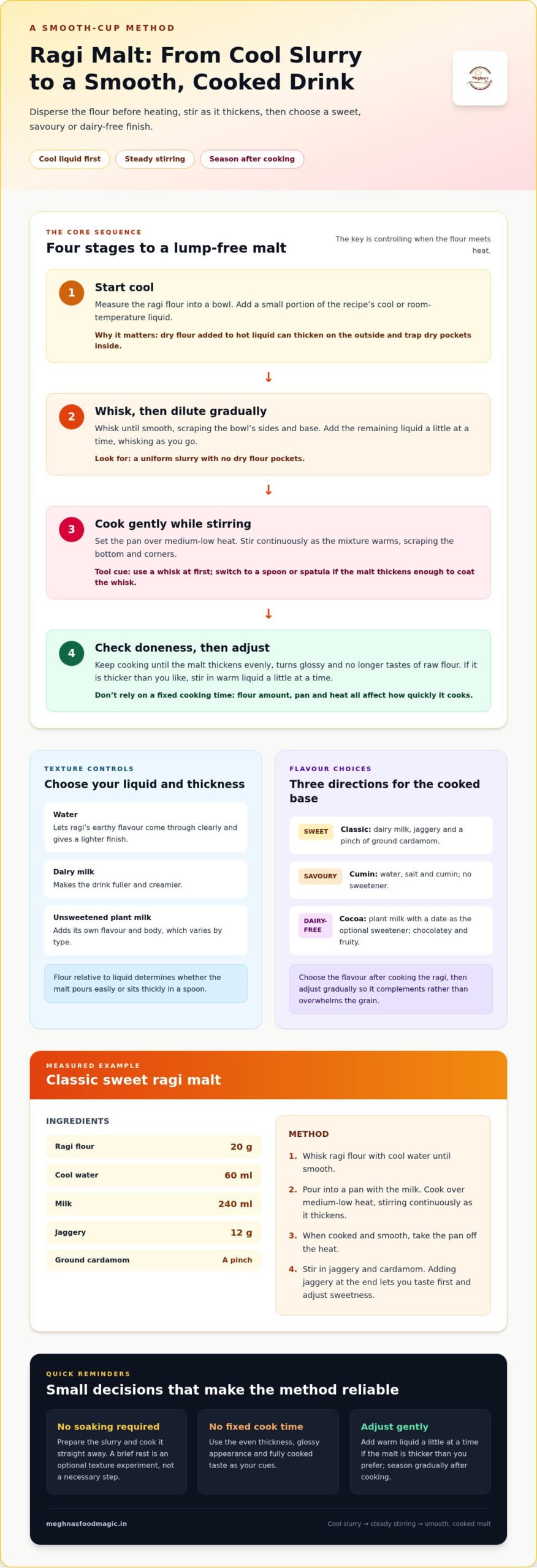
Your choice of liquid also changes the result. Water lets ragi’s earthy flavour come through clearly and gives a lighter finish. Dairy milk makes the drink fuller and creamier, while unsweetened plant milk adds its own flavour and body, which varies by type. The amount of flour relative to liquid determines whether the malt pours easily or sits thickly in a spoon.
Sweet or savoury: choosing an adult-friendly direction
For a softly sweet cup, add jaggery and a pinch of cardamom to complement ragi’s earthy notes. For a savoury version, try salt and cumin. Decide on the flavour after cooking the ragi, then adjust gradually so the seasoning complements rather than overwhelms the grain.
Once you understand the cooked base, you can adapt it to the occasion: make a thinner, gently sweet drink or a thicker, savoury cup. Explore the free recipe database for more cooking inspiration alongside your own variations.
How to Cook Ragi Malt Without Lumps or Raw Flour Taste
A smooth ragi malt recipe for adults depends on controlling when the flour meets heat. If dry flour hits hot liquid, its outer layer can thicken quickly and trap dry pockets inside. A cool slurry gives the flour a chance to disperse first. Steady stirring and gentle heat then help you control the drink as it thickens.
For lump-free ragi malt, whisk the flour with cool liquid first, dilute it gradually, then cook while stirring until smooth and fully cooked.
Make a cool slurry before heating
- Measure the ragi flour specified in your recipe into a bowl. Add a small portion of the recipe’s cool or room-temperature liquid.
- Whisk until smooth. Scrape the sides and base of the bowl so no dry flour pockets remain.
- Dilute gradually. Whisk in the remaining liquid a little at a time. This loosens the slurry evenly and makes it easier to pour into the pan without clumps.
Flour disperses more evenly in cool liquid because it hasn’t begun to thicken. Once the slurry is uniform, you can heat it without asking the flour to hydrate and thicken all at once. The International Year of Millets page offers wider context on millets. For a smooth cup, the key is controlling the liquid and heat.
Cook, stir, and adjust the consistency
Set the pan over medium-low heat and stir continuously as the mixture warms. Use a whisk at first, then switch to a spoon or spatula if the malt thickens enough to coat the whisk. Scrape the bottom and corners of the pan, where the mixture can catch and form lumps. Gentle cooking gives you time to respond as the texture changes.
Keep cooking until the malt thickens evenly and no longer tastes of raw flour. Don’t rely on a fixed cooking time: the amount of flour, the pan and the heat all affect how quickly it cooks. If it becomes thicker than you like, stir in warm liquid a little at a time until it pours the way you prefer.
Should you soak or rest ragi flour?
Soaking isn’t required for this flour-based method. You can prepare the slurry and cook it straight away. If you want to experiment with a brief rest after mixing, compare the texture with a freshly made slurry using the same ingredients and method. Treat resting as a personal texture adjustment, not a necessary step or a promise of improved digestion.
For more ragi cooking ideas and techniques, browse Meghna’s cooking videos.
Three Ragi Malt Recipes for Adults: Sweet, Savoury, and Dairy-Free
Each variation starts with a smooth ragi-and-cool-water slurry. From there, the liquid and flavourings take the drink in a different direction. Use the comparison table to choose a version, then adjust its sweetness and thickness to your preference.
| Variation | Flavour | Liquid | Optional sweetener |
|---|---|---|---|
| Classic sweet | Warm, gently spiced | Dairy milk | Jaggery |
| Savoury cumin | Earthy and savoury | Water | None |
| Dairy-free cocoa | Chocolatey and fruity | Plant milk | Date |
Classic sweet ragi malt with jaggery and cardamom
Ingredients: 20 g ragi flour, 60 ml cool water, 240 ml milk, 12 g jaggery and a pinch of ground cardamom.
Method: Whisk the ragi flour with the cool water until smooth. Pour it into a pan with the milk and cook over medium-low heat, stirring continuously as it thickens. When the flour is cooked and the malt is smooth, take the pan off the heat. Stir in the jaggery and cardamom. Adding jaggery at the end lets you taste the drink first and adjust the sweetness.
Savoury ragi malt with cumin
Ingredients: 20 g ragi flour, 60 ml cool water, 240 ml water, ¼ teaspoon cumin, a pinch of salt and, if desired, 1 teaspoon ghee.
Method: Whisk the flour with the cool water to make a lump-free slurry. Add it to a pan with the remaining water and cumin. Cook over medium-low heat, stirring steadily until the mixture thickens and the flour no longer tastes raw. Season with salt. Stir in the optional ghee at the end for a rounder, richer finish.
Dairy-free cocoa and date ragi malt
Ingredients: 20 g ragi flour, 60 ml cool water, 200 ml unsweetened plant milk, 1 date and 1 teaspoon cocoa powder.
Method: Whisk the flour with the cool water. Blend the date with the plant milk, or finely chop it so it softens as it cooks. Add the slurry, plant milk and cocoa to a pan. Cook over medium-low heat, stirring until smooth and thickened. Taste before serving. Plant milks vary in flavour, and the date may provide enough sweetness.
To adjust any finished ragi malt recipe for adults, stir in warm water or milk a little at a time to thin it, or cook it briefly longer to thicken. Add sweetener or seasoning in small amounts, tasting as you go. For more visual inspiration, explore the millet recipe video collection.
Ragi Malt Troubleshooting: Fix Lumps, Thickness, and Bland Flavour
Ragi malt is easier to manage when you start with a smooth slurry and pay attention as it cooks. If a batch doesn’t turn out as you hoped, match the symptom to its likely cause before adjusting it.
Gentle heat and steady stirring give ragi malt time to thicken evenly, helping create a smoother cup.
- Lumps: Dry flour added straight to hot liquid, or flour that wasn’t whisked into a slurry, can clump as it thickens. Whisk the mixture thoroughly while it’s still fluid. If cooked lumps remain, pass the malt through a sieve for a smoother finish.
- Too thick: The flour-to-liquid ratio may be high for your preferred texture, or the malt may have continued thickening as it cooled. Stir in warm water, dairy milk or unsweetened plant milk a little at a time until it loosens.
- Raw flour flavour: The malt may need more cooking. Return it to gentle heat and keep stirring until the flour no longer tastes raw and the mixture looks evenly cooked.
- Bland flavour: Add a little salt and cumin for a savoury cup, or cardamom and a small amount of jaggery for a sweet one. Taste as you go.
- Too sweet: Stir in unsweetened warm liquid to soften the sweetness. Taste again before adding other flavourings.
Why did my ragi malt turn lumpy or too thick?
Ragi flour begins thickening as it heats, so flour that hasn’t been dispersed first can form clumps. For your next batch, whisk it with cool liquid before heating. For the current serving, warm it gently while whisking, then add warm liquid gradually if it’s too thick. A hot malt may look thinner than it will once it cools, so make adjustments in small amounts.
How can I improve raw, bland, or overly sweet malt?
If the malt tastes raw, keep it over gentle heat and stir so it cooks evenly without catching at the bottom of the pan. For blandness, choose a seasoning that suits the drink: cardamom or a little jaggery for sweet malt, cumin and salt for savoury. If it’s already too sweet, unsweetened warm liquid is a better fix than adding more flavourings.
Chef Meghna’s Notes: substitutions and texture tips
Water gives ragi’s earthy flavour a lighter finish; dairy milk brings a fuller body, while unsweetened plant milk adds its own character. Finer flour tends to make a smoother drink. If yours looks visibly coarse, sift it before mixing. Taste the cooked base before adding sweetener, then adjust in small increments. If the malt thickens more than you want, loosen it with warm liquid rather than adding cold liquid, which can make it harder to stir in evenly. These small adjustments keep this ragi malt recipe for adults balanced and suited to your preference.
Serving and Preparing Adult Ragi Malt for Your Routine
Ragi malt is easiest to enjoy when it’s served warm and made to the thickness you like. A thinner cup can be sipped comfortably, while a thicker one feels more substantial. Since the drink can thicken as it cools, make it slightly looser than your ideal consistency if you won’t drink it straight away. Stir in warm liquid gradually if it becomes too thick.
Make the recipe easier to repeat
A little preparation helps on busy mornings without compromising the texture. Measure the ragi flour and dry seasonings, such as cardamom or cumin, into a small bowl or container ahead of time. Keep sweeteners separate so you can taste the cooked malt before deciding how much to add.
Mix the flour with cool liquid just before cooking. Preparing the wet slurry too far ahead can make it harder to pour and stir evenly, so keep this step close to the time you start heating the pan. To recreate a result you enjoy, jot down your preferred liquid, flour amount and sweetness. A short note such as “milk, pourable, lightly sweet” can help you make the next cup just right.
For the freshest texture, cook the liquid mixture when you’re ready to serve rather than relying on a prepared batch. This keeps the process simple and lets you adjust the consistency while the malt is warm. Keep the dry ingredients measured separately until you’re ready to make the slurry.
Explore more ragi cooking inspiration
Once you’ve found a version that suits your taste, try other ragi preparations for variety. The ragi recipe collection offers more ideas to explore. If you’re reading recipes for different age groups, keep their directions distinct: an adult drink’s seasoning and texture preferences aren’t a substitute for baby-specific feeding guidance.
Make this ragi malt recipe for adults your own by noting what you enjoyed, then adjusting the liquid or flavour next time. Small changes can make the same simple base feel new.
Make Your Next Cup Smooth and Your Own
A dependable ragi malt recipe for adults begins with a smooth flour-and-cool-liquid slurry, followed by gentle cooking and steady stirring. Once the base is cooked, choose a sweet, savoury or dairy-free flavour, then adjust the thickness with a little warm liquid to suit the moment.
Small choices make the recipe easier to repeat: taste before sweetening, add seasonings gradually, and note the liquid and texture you prefer. For more ideas, explore the free recipe database’s ragi and millet recipes, where familiar ingredients can inspire fresh variations for your kitchen.
Try one of the measured versions above, then explore Meghna’s ragi recipes to find more ideas for your next cup.
Frequently Asked Questions
Can adults drink ragi malt every day?
Whether to include ragi malt regularly depends on your personal dietary needs and the portion that suits you. This recipe is a food, not medical advice, and it doesn’t promise a particular health outcome. Consider how it fits alongside your other meals and usual ingredients, including any sweetener or milk you add. If you have individual dietary concerns, follow guidance from a qualified professional.
How do you make ragi malt without lumps?
Whisk the ragi flour with cool water or another cool recipe liquid until you have a smooth slurry with no dry pockets. Gradually stir in the remaining liquid before adding the mixture to the pan. Cook over gentle heat, stirring as it thickens. If lumps start to form, whisk promptly to break them up. If the malt becomes too thick, add warm liquid a little at a time until it loosens.
Should ragi flour be soaked before making malt?
Soaking isn’t essential for the flour-based ragi malt recipe for adults described here. The important preparation for a smooth texture is whisking the flour with cool liquid into an even slurry before cooking. You can try resting the mixed slurry as a personal texture experiment, but it’s optional and doesn’t guarantee a digestion benefit. Compare it with a freshly mixed slurry to see which texture you prefer.
Can I make ragi malt without milk?
Yes, you can use water or unsweetened plant milk instead of dairy milk. Water gives the malt a lighter body, while plant milk brings its own flavour and may make the drink feel creamier. Add your chosen liquid gradually as you cook, then adjust the final consistency to your liking. Sweetener is optional, so taste the finished malt before adding more.
How can I make ragi malt sweet or savoury?
For a sweet cup, stir in optional jaggery and cardamom after cooking the ragi base. For a savoury version, season it with cumin and salt instead. Keep the flour-and-liquid cooking method consistent, then taste and adjust the flavourings gradually. The measured recipes above make either style easy to reproduce and tailor to your preference.
Why does ragi malt become thick after cooking?
Ragi flour thickens as it cooks, and the malt may continue to set as it cools. If your serving becomes thicker than you’d like, stir in warm water, dairy milk or unsweetened plant milk gradually. Mix well and taste before adding more, since a small amount can change the consistency quickly. Make the adjustment before serving so the drink reaches a smooth, comfortable texture.
Can I prepare ragi malt ahead of time?
You can measure the ragi flour and dry seasonings ahead, then cook the drink close to serving for its best texture. Cooked malt can thicken as it stands, so it may need stirring and a little warm liquid to loosen before serving. Don’t assume a particular storage period; follow reliable food-safety practices for any prepared food, and reheat it only when appropriate.
Disclaimer
This is a recipe food blog page and not nutrition or doctor and hence do not claim to cure any illness. If you have specific health issues please consult a qualified doctor or certified nutritionist.
I do consult experts, research Internet and at times seek help from Gemini to collect relevant information to put together some of these blogs.

