
Relieve Constipation: Homemade Science-Backed Prune Juice
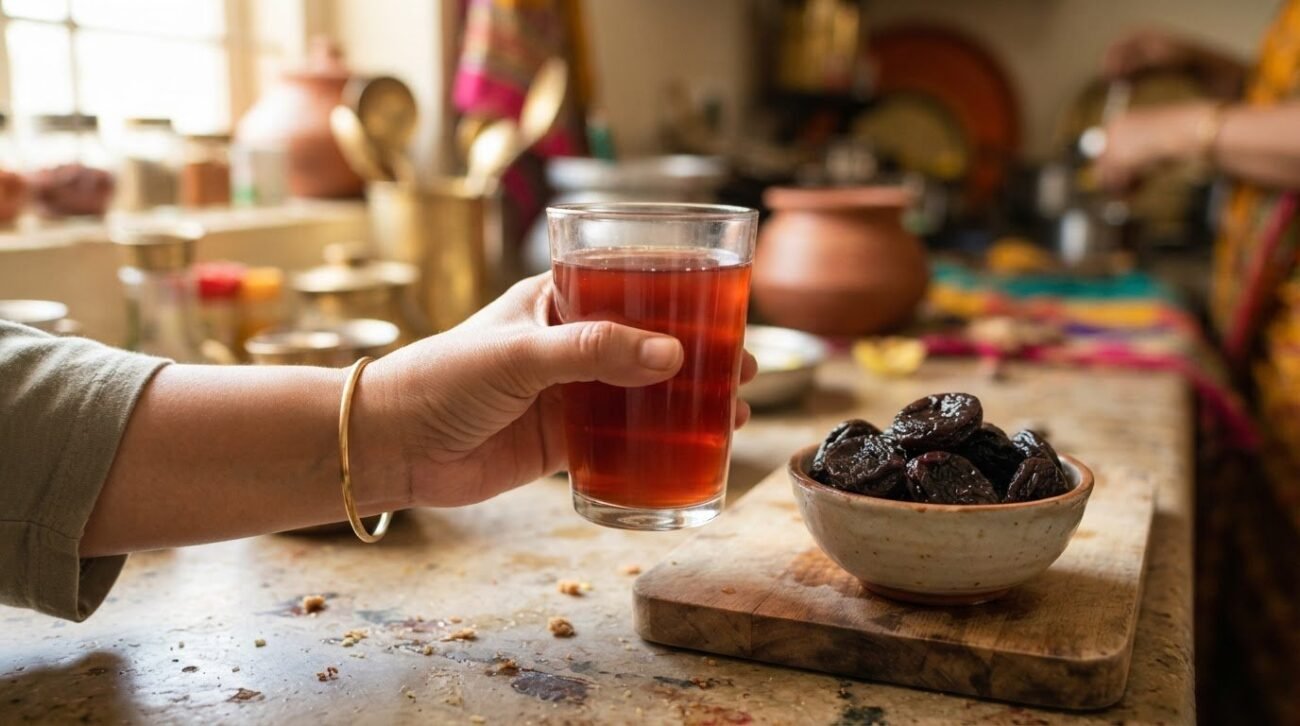

Prune juice may help ease constipation, but whole prunes offer something a glass may not: dried prunes contain more than twice as much sorbitol as prune juice in the same serving size. If you’re constipated, understanding how homemade prune juice uses science to support digestion starts with this difference and why the drink may still be a useful option.
When digestion feels sluggish, it’s natural to want a simple, comforting option. Prunes and prune juice may support bowel movements through sorbitol, while dried prunes also provide fibre. Making prune juice at home is a straightforward way to enjoy the fruit. This guide explains what the evidence says, how to prepare the drink by soaking prunes, and what other food and lifestyle approaches may help. You’ll also find guidance on portions and when persistent symptoms call for medical advice.
Key Takeaways
- Dried prunes offer fibre alongside naturally occurring sorbitol, while filtered prune juice provides less fibre.
- Learn how constipation is identified and how a simple journal can help you notice changes in bowel habits.
- Explore practical food and lifestyle approaches, including how to make homemade prune juice and tasty variations.
- Find out how portion size and the drink’s natural sugars can shape your choice between whole prunes and juice.
- Recognise when persistent constipation or concerning symptoms should prompt a conversation with a doctor.
Will eating prunes relieve constipation?
Prunes may help relieve constipation, especially as part of an eating pattern that includes fibre-rich foods and fluids. Their fibre and sorbitol make whole prunes different from a glass of filtered juice.
Nutritional Approaches to Mild Constipation
Food and fluids can support softer, easier bowel movements. For mild constipation, include fibre-rich choices such as beans, vegetables, whole grains, and fruit in your meals, and drink fluids regularly. Increase fibre gradually to give your body time to adjust. Whole prunes are one fruit-based option, but work best as part of varied meals, not as a substitute for other nourishing foods.
Keep the routine practical: add fruit to breakfast, beans to lunch, or vegetables to dinner. These small changes can increase fibre throughout the day without relying on a single remedy.
Prune Nutrients and Sugar
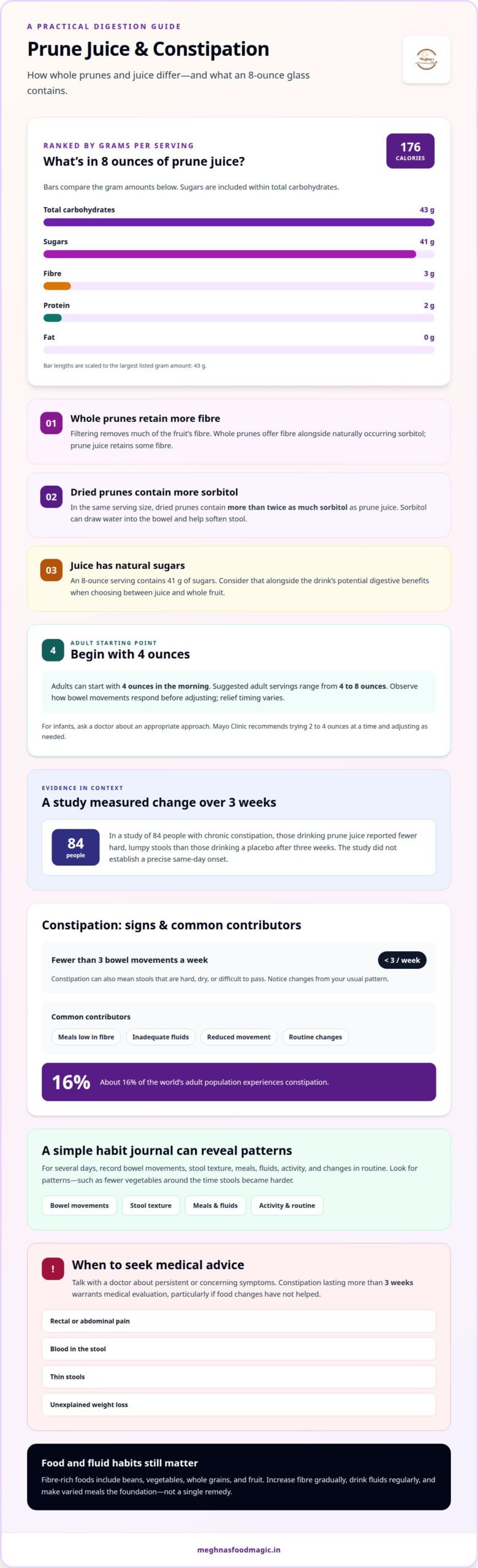
Prunes are dried plums and are a source of fibre. They also contain sorbitol, a sugar alcohol that can draw water into the bowel. Dried prunes have more than twice as much sorbitol as prune juice in the same serving size, while whole fruit retains more fibre than filtered juice.
An 8-ounce serving of prune juice contains 176 calories and 41 grams of sugars. It also provides 43 grams of total carbohydrates, including sugars, plus 3 grams of fibre, 2 grams of protein, and 0 grams of fat. Those figures help you weigh the drink’s potential digestive benefits against its natural sugar content. Whole prunes provide the more fibre-rich choice.
Who Should Use Caution
Don’t let prune juice delay medical advice if symptoms persist or concern you. Talk with a doctor about rectal or abdominal pain, blood in the stool, thin stools, or unexplained weight loss. Constipation lasting more than three weeks also warrants medical evaluation, particularly if food changes at home haven’t helped.
For infants, ask a doctor about an appropriate approach; Mayo Clinic recommends trying 2 to 4 ounces of prune juice at a time and adjusting as needed. Adults with chronic constipation should also discuss ongoing symptoms with a doctor rather than relying on prunes alone. These precautions help keep a food-based approach in perspective.
Prune Juice for Constipation: Does It Work?
Prune juice may support bowel movements through sorbitol and some remaining fibre. To understand how homemade prune juice uses science to support digestion, consider how these components affect stool and water in the bowel.
Sorbitol’s Effect on the Colon
Sorbitol is a sugar alcohol that can draw water into the colon and help soften stool. This water-retaining effect helps explain why prunes and prune juice can act as laxatives. Xylitol is another sugar alcohol, but sorbitol is the compound associated with prunes’ laxative effect. Softer stool may be easier to pass, although the amount and frequency of intake affect how your digestive system responds.
Fiber and Sorbitol in Prune Juice
Prune juice combines sorbitol with less fibre than whole prunes, because filtering removes much of the fruit’s fibre. An 8-ounce serving contains 3 grams of fibre. Sorbitol draws water into the bowel, while fibre adds bulk and supports stool movement. Xylitol is sometimes mentioned alongside sorbitol, but it shouldn’t be confused with prune juice’s sorbitol content. This helps explain why juice and whole fruit can affect digestion differently.
Comparing Prune Juice and Other Options
Whole prunes provide more fibre than filtered juice, while both contain sorbitol. Prunes have been reported to work better than medications containing psyllium, and prune juice appears more effective than psyllium for stool frequency and consistency. In a study of 84 people with chronic constipation, participants drinking prune juice reported fewer hard, lumpy stools than those drinking a placebo after three weeks. These findings help readers choose between whole fruit and juice.
Amount and Onset of Relief
Adults trying prune juice can start with 4 ounces in the morning; suggested adult servings range from 4 to 8 ounces. Begin with the smaller serving and observe how your bowel movements respond before adjusting. The study of 84 people reported fewer hard, lumpy stools after three weeks, rather than establishing a precise same-day onset. If you’re constipated, homemade prune juice uses science to explain a possible food-based approach, not an instant fix. For more fruit-forward recipe ideas, explore fruit-based cooking inspiration.
Definition and causes of constipation
Constipation means having infrequent bowel movements or stools that are hard, dry, and difficult to pass. Fewer than three bowel movements a week is considered constipation. Going two or three days without passing stool can also be a sign, especially if you strain or feel discomfort. Frequency varies, so pay attention to changes from your usual pattern, not just the calendar.
About 16% of the world’s adult population experiences constipation. Common contributors include meals low in fibre, inadequate fluid intake, reduced movement, and changes to daily routines. For example, a long journey may disrupt meal times and bathroom habits. These factors can affect stool softness and the ease of passing it. Looking at several days of habits can reveal patterns more clearly than focusing on one difficult bowel movement.
Beans, vegetables, fruit, and whole grains provide fibre, which adds bulk to stool. If your meals regularly lack these foods, bowel movements may become harder or less frequent. A sudden change in eating habits can matter, too. Note what changed, such as swapping fruit at breakfast for a low-fibre snack, and whether symptoms followed.
Keep a simple journal for several days. Record bowel movements, stool texture, meals, fluids, activity, and changes in routine. For example, noting that you ate fewer vegetables around the time your stools became harder may help identify a dietary pattern. The journal isn’t a diagnosis, but it can give you a clearer account of your symptoms and habits to discuss with a doctor if needed.
Constipation can accompany health conditions or occur alongside medicines that affect digestion. Causes vary, so don’t assume a change in diet explains every symptom. Persistent constipation, blood in the stool, abdominal or rectal pain, thin stools, or unexplained weight loss calls for medical attention. Constipation lasting more than three weeks should also be evaluated by a doctor. A record of when symptoms occur and how your stool changes can make that conversation more useful.
Diet and lifestyle approaches to constipation
For adults, a steady routine can make food choices easier to maintain. Plan meals around familiar Indian staples, such as dal with vegetables, rather than relying on one drink or ingredient. Choose whole fruit, such as guava, instead of strained fruit juice when you want the pulp. Small, repeatable choices help bring variety to meals.
Make changes one at a time. For example, add a whole fruit to breakfast before changing several meals at once. This makes it easier to notice which choice suits your appetite and digestion. If a meal feels too heavy, adjust its ingredients or portion at the next meal rather than giving up on the routine.
Pay attention to bathroom habits, too. Respond to the urge to pass stool instead of repeatedly postponing it during a busy workday. Choose a calm, private moment, and avoid rushing or straining. One practical adjustment is to plan a bathroom break before leaving home, especially when commuting makes access less predictable.
Prune juice can be one part of your food routine, but it doesn’t need to take centre stage. If you’d rather not drink it, whole prunes or another fruit can fit into your meals instead. Try one change at a time, and stop eating a food that clearly worsens discomfort. Your tolerance matters more than forcing a particular ingredient.
For infants with constipation, the Mayo Clinic recommends trying 2 to 4 ounces of prune juice at a time and adjusting the amount as needed. Ask a doctor before changing an infant’s feeding routine. Adults should seek medical evaluation if constipation lasts more than three weeks, or if it comes with rectal or abdominal pain, blood in the stool, thin stool, or unexplained weight loss. A clinic visit is also appropriate when symptoms continue despite practical food and routine changes.
Prunes can be an optional food choice for people with constipation. For children, check with a healthcare professional before using prune juice or prunes. A smoothie with prunes or other fruit is another optional way to include fruit in your meals.
Homemade prune juice preparation
Soaking dried prunes softens them and makes them easier to blend into a smooth drink. For gastrointestinal comfort, start with a modest portion and sip slowly; sorbitol can increase gas or loosen stools for some people. Making juice at home lets you choose whether to strain the pulp, which changes the drink’s texture and fibre content.
Simple Homemade Prune Juice
Ingredients: 100 g pitted prunes and 250 ml water, plus extra water to adjust consistency.
- Rinse the prunes under clean running water, then place them in a bowl.
- Cover with 250 ml water and soak for 20 minutes.
- Blend the prunes and soaking water until smooth. Add water gradually if needed.
- For a thinner drink, strain through a fine sieve. For more fruit pulp, leave it unstrained.
This recipe makes a concentrated drink, so divide it into smaller servings rather than drinking the full batch quickly. The unstrained version keeps the blended fruit in the glass, while straining removes much of the pulp and fibre.
Prune, Papaya, and Kiwi Blend
Ingredients: 125 ml prepared prune juice, 4 ounces chopped papaya, and 1 whole peeled kiwifruit.
- Add the prune juice, papaya, and peeled kiwi to a blender.
- Blend until evenly combined, then serve immediately.
Papaya and kiwi add fresh fruit flavour and a thicker texture. This smoothie combines several fruits, but it isn’t a guaranteed treatment. If it feels too thick, add water a little at a time and blend again.
Keep preparation simple: use pitted prunes, clean equipment, and measured water. Choose the strained version for a lighter texture, or keep the pulp for a fuller-bodied drink. If sorbitol causes discomfort, reduce the amount in your glass or stop drinking it. Seek medical advice if symptoms persist. Making it at home changes the texture and ingredients, but doesn’t remove the natural sugars in prune juice.
Chef Meghna’s Notes
For the best flavour, choose prunes that feel soft and look plump rather than unusually dry. If buying packaged fruit, check the ingredients and choose plain prunes without added flavourings. Remove any pits before blending. This simple step protects the blender and helps keep the finished drink smooth.
If the drink feels grainy, blend it again in short bursts, scraping down the sides between pulses. If it thickens after standing, stir in a little water until it pours easily. If it tastes too tart, add a small squeeze of lemon gradually, tasting as you go.
Cardamom adds a gentle Indian-inspired aroma, while a little cinnamon brings a warmer note. Use either sparingly so the fruit remains the star. For a more substantial smoothie, pair the prune blend with plain yoghurt and adjust the liquid to your preferred consistency. These additions change flavour and texture, but don’t guarantee a digestive result.
Serve the drink in a chilled glass for a refreshing finish. If you prepare it ahead for a meal, stir before pouring because blended fruit can settle. A narrow glass can make a thick blend easier to sip, while a bowl and spoon suit a smoothie texture. These small choices can make a simple kitchen preparation an enjoyable part of breakfast.
Keep the recipe flexible, but change one ingredient at a time. That makes it easier to identify the flavours and textures you prefer. Start with a simple version, then try cardamom, cinnamon, or yoghurt separately. If symptoms continue or become concerning, follow the medical guidance in this article rather than relying on recipe adjustments.
Meghna’s Food Magic
Meghna’s Food Magic helps home cooks explore nourishing meal ideas through its Free Digital Recipe Database. If you’re choosing foods to support digestive wellbeing, a variety of recipes can make everyday meals easier to plan. The collection offers inspiration, not a constipation treatment or a replacement for advice from a doctor.
Fruit-based healthy recipes can help you include more fruit in breakfasts, snacks, and blended drinks. Choose ideas that suit your meals and preferences, then pair them with other fibre-containing foods such as vegetables, beans, and whole grains. Variety matters: no single juice or recipe needs to do all the work of building a balanced eating routine.
The database also includes High Protein Recipes and Weight Loss Fitness Recipes. These collections support different cooking goals and offer options beyond a prune drink. For example, you could include a fruit recipe at breakfast and choose a separate protein-rich dish for another meal. The aim is practical inspiration, not reliance on one ingredient to address every digestive concern.
As you explore recipes, keep in mind what you’ve learned here: consider fibre, portions, and how a food fits your routine. Prune juice contains natural sugars, and its sorbitol may affect people differently. A recipe can make fruit enjoyable and convenient, but persistent constipation or concerning symptoms still deserve medical attention. Food inspiration works best alongside sensible habits and appropriate care.
Explore the Free Digital Recipe Database for ideas that suit your kitchen and the meals you enjoy. Start with a simple fruit-based recipe, then add variety throughout the day. Try other recipe collections as your needs and tastes change, without treating any one dish as a guaranteed fix. If digestive symptoms persist, keep a doctor involved in your care.
Contact Meghna’s Food Magic to get in touch.
Make Your Next Food Choice Count
If you’re constipated, understanding how homemade prune juice uses science to support digestion can help you make an informed choice in the kitchen. Your next step can be a steady, sustainable eating routine built around foods you enjoy and can comfortably include. Notice how your body responds, and adjust thoughtfully rather than chasing a quick fix.
Food can support wellbeing, but it doesn’t replace medical care. If symptoms persist or concern you, speak with a doctor. For everyday cooking inspiration, explore recipes that bring nourishing ingredients to your meals with flavour and ease.
Small, considered choices can make caring for yourself more joyful. Keep cooking with curiosity, and choose the next meal that feels right for you.
Frequently Asked Questions
What compounds in prunes support digestion and bowel movements?
The key components are sorbitol and dietary fibre. Choose whole prunes when you want the fruit’s pulp as a snack; juice offers a drinkable alternative. If you buy packaged juice, read the ingredient list and choose a version that suits your preferences. There’s no need to combine either option with several other new remedies at once.
What is the evidence that prune juice treats constipation?
Evidence includes controlled human studies that tracked bowel frequency and stool consistency during prune juice use. These measured outcomes offer a more useful basis than personal anecdotes, but they don’t show that prune juice addresses every cause of constipation or works the same way for everyone. Consider it a food-based option for mild symptoms, not a substitute for medical assessment when symptoms persist or need investigation.
How do I make homemade prune juice step by step?
Rinse the dried prunes, inspect them, and remove any pits. Add them to a blender with water and blend until smooth. Add water gradually if the blades struggle or the drink is too thick. Strain for a smoother finish, or keep the pulp for a fuller texture. Pour any leftovers into a clean, covered container and refrigerate promptly.
What are the side effects of prune juice, including bloating and diarrhea?
Possible effects include gas, abdominal fullness, and loose stools or diarrhoea. If discomfort appears, pause the drink and avoid introducing other new digestive remedies at the same time; this makes your response easier to track. Note the timing and symptoms in a food journal. Seek medical advice if symptoms are severe, continue after you stop drinking the juice, or occur alongside other concerning changes.
What are safe constipation remedies and dietary guidelines in India?
Build meals around familiar options such as vegetable dalia, whole-grain roti with vegetables, and whole fruit as a snack. Add fibre-containing foods gradually, drink fluids regularly, and include comfortable movement in your routine. Avoid trying several new remedies together, since it’s harder to tell what suits you. For a child, an infant, or ongoing symptoms, discuss food changes with a doctor.
Disclaimer
This is a recipe food blog page and not nutrition or doctor and hence do not claim to cure any illness. If you have specific health issues please consult a qualified doctor or certified nutritionist.
I do consult experts, research Internet and at times seek help from Gemini to collect relevant information to put together some of these blogs.

