
Best Millets for Weight Loss in India: A Chef’s Guide
What if the secret to reaching your fitness goals isn’t about eating less, but about eating better with grains that actually love you back? We’ve all been there, trying to swap white rice for ancient grains only to end up with a plate that feels like cardboard or a stomach that feels uncomfortably bloated. It’s deeply frustrating when you’re searching for the best millets for weight loss in india but your meals lack that essential “magic” touch. I truly believe that health food should never feel like a chore; it should be a vibrant celebration of flavor and self-care.
In this guide, I’m pulling back the curtain on my kitchen secrets to show you that effective fat loss and spectacular taste can coexist beautifully. You’ll discover which specific Indian millets truly accelerate your metabolism and, more importantly, how to prepare them so they’re light, fluffy, and easy on your digestion. We’ll cover everything from professional soaking techniques to creating high-protein meals that keep you satisfied for hours. By the end of this, you’ll have the confidence to turn these superfoods into your own form of culinary therapy, making your 2026 wellness journey both effortless and delicious.
Key Takeaways
- Identify the top-performing grains like Foxtail and Finger millet as the best millets for weight loss in india to naturally boost fiber and curb hunger.
- Master the essential 6-8 hour soaking rule to neutralize anti-nutrients, ensuring your grains are perfectly digestible and never cause bloating.
- Gain access to three exclusive, chef-approved recipes that transform humble millets into high-protein, spectacular meals you’ll actually look forward to eating.
- Understand the science of satiety and how the complex carbohydrates in ancient grains prevent the insulin spikes that lead to stubborn fat storage.
- Learn a foolproof strategy for a gradual transition from wheat and rice to a millet-based lifestyle that keeps your digestion happy and your energy high.
Why Indian Millets are the Ultimate Weight Loss Superfood in 2026
We are witnessing a beautiful transformation in Indian kitchens today. The ‘Siridhanya’ resurgence isn’t just a fleeting trend; it’s a passionate return to our roots. People are finally realizing that these ancient grains are far superior to the refined wheat and rice that have dominated our plates for decades. In 2026, the shift is undeniable. These millets offer more than just basic nutrition. They provide a soulful connection to a healthier, more vibrant way of living that celebrates abundance rather than restriction.
Why do we often feel hungry just an hour after eating a large bowl of white rice? It’s because refined grains lack the structural complexity our bodies crave. Millets are nutrient-dense powerhouses that deliver a punch of vitamins and minerals in every bite. This density is exactly why they are considered the best millets for weight loss in india. A smaller portion keeps you fueled and focused for much longer, effectively silencing those pesky mid-day cravings by keeping your blood sugar levels beautifully stable.
Many of us struggle with gut health issues without ever pinpointing the cause. Systemic inflammation often stems from the heavy, modern grains we consume daily. By choosing naturally gluten-free millets, you give your digestive tract the chance to heal. You’ll notice that heavy, sluggish feeling after a meal simply disappears, replaced by a light and energetic spirit that makes staying active feel like a joy rather than a chore.
Understanding the Low Glycemic Index (GI) Advantage
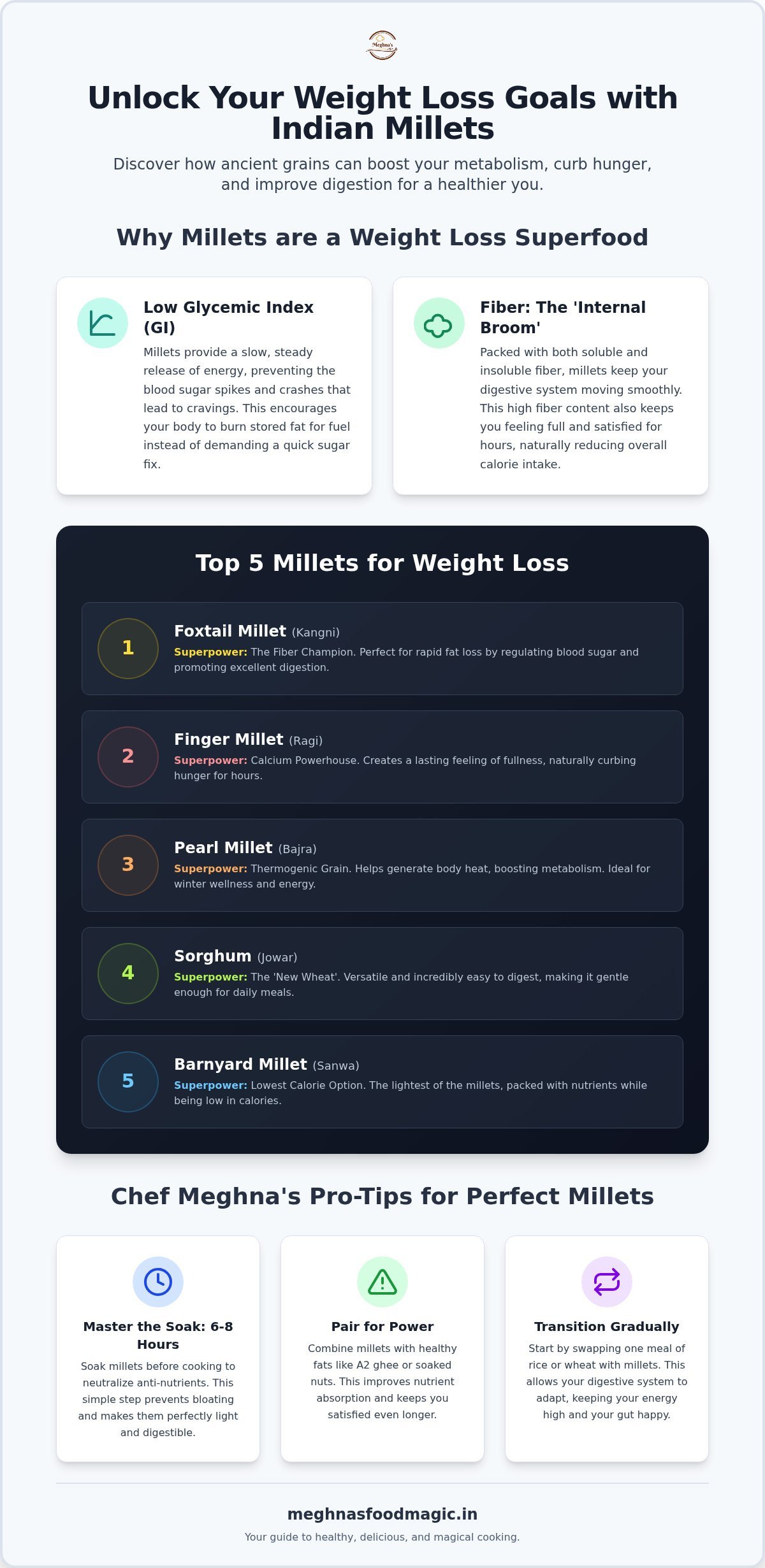
Glycemic Index is essentially a measure of how quickly a food turns into sugar in your bloodstream. High GI foods cause a massive spike followed by a painful crash, leaving you tired and reaching for snacks. Low GI grains, however, provide a slow and steady release of energy. This consistent flow is crucial for fat oxidation. It encourages your body to tap into stored fat for fuel throughout the day instead of constantly demanding a quick sugar fix.
Chef Meghna’s Notes
To get the most out of your low GI meals, try pairing your millets with healthy fats like a drizzle of cold-pressed A2 ghee or a handful of soaked nuts. These fats slow down digestion even further, which aids in better nutrient absorption and keeps you feeling satisfied for much longer. It’s all about creating that perfect, harmonious balance on your plate!
Fiber: The Internal ‘Broom’ for Fat Loss
Fiber is the unsung hero of any successful weight loss journey. Millets are packed with both soluble and insoluble fiber, each playing a vital role. Insoluble fiber acts like an internal broom, sweeping through your digestive system to keep everything moving smoothly. Soluble fiber helps manage cholesterol levels and supports a healthy heart. If you’re looking to build a sustainable fitness routine, these high-fiber grains are your best friends. You can explore more creative ways to integrate these into your daily life with my Get Fit With Meghna YouTube Playlist.
Comparison: The Top 5 Best Millets for Weight Loss in India
Choosing the right grain can feel overwhelming, but I’m here to simplify it for you. When we talk about the best millets for weight loss in india, five specific varieties stand out for their incredible ability to transform your health and your plate. Each one brings a unique superpower to your kitchen, ensuring your journey is never boring or tasteless.
- Foxtail Millet (Kangni): This is my absolute favorite fiber champion. It’s perfect for those aiming for rapid fat loss because it keeps your digestion moving beautifully and helps regulate blood sugar levels.
- Finger Millet (Ragi): A calcium powerhouse that I recommend to everyone. It creates a satisfying sense of fullness that naturally curbs hunger for hours, making it a staple for busy mornings.
- Pearl Millet (Bajra): This is a thermogenic grain, meaning it helps generate body heat. It’s the ideal choice for winter weight loss when your body needs that extra warmth and energy.
- Sorghum (Jowar): Often called the ‘New Wheat,’ Jowar is versatile and incredibly easy to digest. It makes the softest rotis and is gentle enough for daily consumption.
- Barnyard Millet (Sanwa): This is the lowest calorie option in the millet family. I always suggest Sanwa for light, guilt-free dinners that won’t leave you feeling heavy before bed.
Jowar vs. Bajra: Which is Better for Your Diet?
I often get asked which of these two is superior. The answer lies in the seasons. Bajra is deeply warming, making it a winter essential, whereas Jowar is a cooling, neutral grain suitable for year-round use. Texture plays a big role too; Jowar yields a soft, pliable roti, while Bajra offers a rustic, hearty bite that feels wonderfully traditional. If you want to see how these textures come alive, check out the creative ideas on my YouTube channel.
Chef Meghna’s Notes
If you find Bajra rotis too dry or difficult to roll, don’t give up! Try mixing 70% Jowar with 30% Bajra. This blend gives you the thermogenic benefits of Pearl Millet while keeping the bhakri soft and easy to handle. It’s a professional secret for a perfect weight-loss meal that actually tastes spectacular.
Foxtail and Little Millet: The Rice Replacements
If you can’t live without your Pulaos and Khichdis, Foxtail and Little Millet are your new best friends. These small grains mimic the texture of rice almost perfectly but without the starch-induced sugar crashes. While white rice is mostly empty carbs, these millets provide roughly 330 to 350 calories per 100g but are packed with protein and minerals. You can find plenty of ways to swap your rice for these grains in my 30+ Millet Recipes By Meghna collection.
Chef’s Secrets: Overcoming the 3 Biggest Millet Challenges
Mastering the art of millet cooking is like unlocking a secret door to vibrant health. While many people struggle with grains that turn out dry, bitter, or lead to uncomfortable bloating, these challenges are simply signs that the grain hasn’t been prepared with the respect it deserves. When you’re using the best millets for weight loss in india, you want to ensure every bite is a celebration of texture and flavor. It’s not just about the “how” but understanding the “why” behind every step in the kitchen.
The first secret to success is the non-negotiable 6-8 hour soaking rule. This isn’t just about making the grain softer; it’s a transformative process that neutralizes anti-nutrients and makes the nutrients inside truly accessible to your body. To achieve that perfect, fluffy texture, you must master the water-to-grain ratio. For larger grains like Jowar, a 1:2 ratio works wonders, while smaller grains often thrive with a 1:3 ratio. This precision ensures your millets are never sticky or mushy, but light and airy instead.
Soaking and Fermentation for Gut Health
Raw millets contain phytic acid, which can act as a barrier to mineral absorption. By soaking your grains, you effectively break down this acid, ensuring your body absorbs all the calcium and iron these superfoods offer. If you want to take it a step further, fermentation is your best friend. When you ferment millet batter for idlis or dosas, you’re not just creating a delicious tang; you’re significantly increasing the bioavailability of B-vitamins. This process turns a simple meal into a powerful tool for gut health and fat loss.
Chef Meghna’s Notes
I know morning prep can be hectic! My secret is to soak the grains right before I go to bed. By the time you wake up, they’ve had their full 8 hours and are ready to be rinsed and cooked. This simple habit saves time and ensures you never skip the most important step for digestion. If you’re using unpolished grains, add a pinch of salt to the soaking water to help soften the outer bran even more. Choosing the best millets for weight loss in india is only half the battle; cooking them correctly is the other!
Flavor Pairing: Making Millets Family-Friendly
Millets have a naturally earthy profile that some find intimidating. The trick is to pair them with vibrant aromatics that bring the dish to life. Tempering with fresh curry leaves, grated ginger, and a few slit green chilies can completely mask those earthy notes and make the dish feel “magic.” For a complete amino acid profile, always pair your grains with a protein-rich dal. This creates a balanced meal that supports muscle recovery while you lose weight. You can find more tips on balancing your meals in my High Protein Guide for Indian Vegetarians.
3 Signature Millet Recipes for Weight Loss (Chef Meghna Approved)
Bringing the best millets for weight loss in india to your table doesn’t have to be complicated. It’s about transforming these ancient grains into meals that feel like a warm hug for your soul. Let’s dive into three of my favorite recipes that prove health food can be absolutely spectacular when prepared with a little bit of magic and professional technique.
High-Protein Bajra & Moong Dal Khichdi
This is the ultimate comfort meal for those busy weeknights when you want something nourishing yet light. It combines the thermogenic properties of pearl millet with the easy digestibility of moong dal.
- Ingredients: 1/2 cup Bajra (soaked for 8 hours), 1/2 cup Yellow Moong Dal, 1 tsp Ghee, 1/2 tsp Cumin seeds, a pinch of Hing (Asafoetida), 1/2 tsp Turmeric powder, 3 cups Water, and 1 cup fresh chopped spinach.
- Method: Place the soaked Bajra, dal, turmeric, and water in a pressure cooker. Cook for 4-5 whistles until soft and mushy. In a separate pan, heat ghee and add cumin and hing. Once they crackle, toss in the spinach until wilted, then fold this vibrant tempering into the cooked khichdi.
Chef Meghna’s Notes
Always use unpolished Bajra for maximum fiber content. The hing isn’t just for flavor; it acts as a natural digestive aid to ensure the dense grain doesn’t cause any discomfort. If you’re looking for more variety, explore my Ragi and other millet-based ideas in the recipe database.
Savory Ragi Malt & Jowar Veggie Upma
Breakfast is the perfect time to fuel your body with complex carbohydrates that prevent mid-day energy crashes. These two options are quick, delicious, and incredibly effective for a weight loss journey. If you’re looking to expand your morning repertoire beyond millets, these quick south indian breakfast recipes are a fantastic complement that bring restaurant-style flavors to your table in under 15 minutes.
Recipe 2: Savory Ragi Malt
Ingredients: 2 tbsp Ragi flour, 1 cup Water, 1/2 cup Buttermilk, Salt to taste, and 1/2 tsp Roasted Cumin powder.
Method: Whisk the flour with water to ensure no lumps. Cook on medium heat, stirring constantly until the mixture thickens and looks glossy. Let it cool slightly, then stir in the buttermilk, salt, and cumin for a refreshing, probiotic-rich start to your day.
Recipe 3: Veggie-Loaded Jowar Upma
Ingredients: 1 cup Jowar Rava, 2.5 cups Water, 1/2 cup Mixed Veggies (Carrots, Beans, Peas), 1 tsp Mustard seeds, and 8-10 Curry leaves.
Method: Dry roast the Jowar rava for 3-4 minutes until aromatic. In a pan, temper mustard seeds and curry leaves, sauté your mixed veggies, then add water and salt. Once the water reaches a rolling boil, slowly stir in the roasted rava. Cover and cook on a low flame until all water is absorbed.
Chef Meghna’s Notes
For the Upma, dry roasting the Jowar Rava is a non-negotiable step. It changes the starch structure so the grains stay separate and fluffy rather than turning into a sticky mass. This small professional secret makes a world of difference in the final texture! If you’re looking to extend this sorghum magic beyond breakfast, explore these healthy jowar recipes for dinner that bring the same light, satisfying qualities to your evening meals.
Designing Your Millet-Based Lifestyle: Next Steps to Fitness
Embracing a millet-based lifestyle is a journey of discovery, not a sudden overhaul of your kitchen. If you’ve been searching for the best millets for weight loss in india, you’ve already taken the first step toward a more vibrant version of yourself. The key to long-term success is a gradual transition. Don’t swap everything overnight; start by mixing millet flour into your regular wheat dough or replacing just one meal a day with these ancient grains. This prevents digestive shock and allows your palate to fall in love with the new textures and earthy flavors naturally.
I truly believe that wellness should feel like a celebration. By integrating these grains thoughtfully, you’re not just dieting; you’re engaging in a form of culinary therapy that respects your body’s needs. As you become more comfortable with soaking and cooking times, you’ll find that these grains become the most versatile tools in your fitness arsenal. They offer a sense of abundance that makes the process of getting fit feel exciting and deeply rewarding.
Millet Meal Planning for Busy Professionals
Success in any fitness goal comes down to preparation. For busy professionals, a structured plan ensures you don’t reach for processed snacks when hunger strikes. I recommend a light Ragi malt in the morning to keep you sharp, followed by hearty Jowar rotis for a satisfying lunch. End your day with an easy-to-digest Barnyard khichdi for dinner to ensure a restful sleep without heaviness. For those evenings when you want something more substantial yet still light, my collection of healthy jowar recipes for dinner offers gourmet options that are perfectly suited to your weight loss goals. You can find plenty of portable, office-friendly ideas in my Tiffin Recipes YouTube Playlist.
Chef Meghna’s Notes
Batch-cook your whole millets like Foxtail or Little Millet on Sundays. Store them in airtight containers in the fridge, and you’ll have a base ready for quick stir-fries, salads, or lemon-millet rice all week long. It’s a lifesaver for those long workdays when you want to stay on track with the best millets for weight loss in india.
Millet-Based Snacking and Air Fryer Magic
Snacking is often where weight loss plans falter, but it doesn’t have to be that way. My ‘Get Fit’ philosophy includes snacks that are as crunchy as they are healthy. You can make incredible crispy millet crackers or even savory ‘Paniyaram’ using your air fryer. These modern tools make it effortless to achieve that perfect crunch without the heavy oil used in traditional deep-frying. Check out my Airfryer Recipes Playlist for some creative inspiration.
Chef Meghna’s Notes
Millets are naturally lean, so they can dry out quickly in high-heat environments. Always give your snacks a tiny spray of cold-pressed oil before air-frying. This traps the moisture inside and gives you that professional, golden finish every time without compromising your health goals.
Don’t forget the ‘Cake Therapy’ side of things! Millet flours like Jowar and Bajra are fantastic for gluten-free, guilt-free baking. They add a nutty depth to cookies and cakes that refined flour simply can’t match. If you love indulging your sweet tooth without derailing your progress, explore these guilt-free Indian dessert recipes that use smart ingredient swaps to keep your treats both delicious and diet-friendly. As you move forward, remember that healthy Indian cooking is a celebration of life. Fitness is an act of self-care, and you deserve to enjoy every single bite of the process. You’ve got this!
Transform Your Kitchen Into a Wellness Sanctuary
You’ve now unlocked the secrets to making ancient grains taste like pure magic. By choosing the best millets for weight loss in india and respecting the essential soaking rule, you’re doing more than just changing your diet. You’re giving your body the slow-release energy and deep nourishment it’s been craving for years. It’s important to remember that the goal isn’t perfection; it’s about making small, delicious choices that add up to a vibrant, high-energy life.
Whether you’re starting your morning with a savory Ragi malt or batch-cooking Jowar for the week, you’re part of a movement that celebrates health without sacrificing flavor. You have the tools to avoid bloating, master textures, and create meals that the whole family will love. I’m so excited to see you embrace this culinary therapy and find your own rhythm in the kitchen. Join our vibrant community of health enthusiasts and get free access to 1000+ recipes and chef-approved nutritional hacks to keep your journey exciting.
Your journey to a fitter, happier you starts with the very next meal. Keep cooking, keep experimenting, and always remember to add that special touch of food magic to everything you create. You’ve got this!
Frequently Asked Questions
Which millet is best for reducing belly fat specifically?
Foxtail millet and Little millet are your strongest allies for targeting stubborn belly fat due to their incredible fiber content and low glycemic index. These specific grains help regulate blood sugar and prevent the insulin spikes that directly contribute to abdominal fat storage. By keeping you full for much longer, they naturally reduce your overall calorie intake. Incorporating these as the best millets for weight loss in india into your daily meals can significantly accelerate your fitness progress.
Can I eat millets every day for weight loss?
You can absolutely enjoy millets every day, but I always recommend rotating different varieties to ensure a diverse nutrient profile. Eating only one type can sometimes lead to minor digestive boredom or nutrient imbalances over time. Start by replacing just one meal a day with a millet based dish like Jowar roti or Ragi porridge. This gradual approach helps your gut adapt to the increased fiber while keeping your journey exciting and sustainable through variety.
Do millets cause heat in the body?
Certain millets like Bajra are considered thermogenic, meaning they can increase body heat, which makes them ideal for the cooler winter months. Conversely, varieties like Jowar and Ragi are more neutral or even cooling, making them perfect for year round consumption or during the summer heat. If you’re concerned about excess internal heat, simply pair your millets with cooling ingredients like fresh buttermilk, cucumber, or a dollop of homemade curd to maintain a perfect balance.
Is Ragi better than oats for weight loss?
Ragi is often superior to oats for weight loss in an Indian context because it is significantly higher in calcium and contains more complex fibers for long term satiety. While oats are a good option, Ragi is a local superfood that is usually less processed and more compatible with traditional Indian spices and cooking methods. Its unique amino acid profile also helps in curbing appetite more effectively, making it a powerful and accessible ally for your fitness goals.
What are the common mistakes when cooking millets for weight loss?
What are the common mistakes when cooking millets for weight loss?
People with thyroid issues should be cautious with specific millets like Bajra and Jowar, as they contain small amounts of goitrogens that might interfere with iodine uptake. However, you don’t need to avoid them entirely. Thoroughly soaking, sprouting, or cooking these grains well can significantly reduce goitrogenic activity. It’s always best to consult your healthcare provider and focus on a balanced rotation of different grains to keep your thyroid health and weight loss goals in harmony.
How much millet should I eat in a single meal?
A standard serving size for a single meal is typically 30 to 50 grams of dry millet, which expands significantly once cooked. This portion provides enough complex carbohydrates to fuel your body without overdoing the calorie count. I suggest filling half your plate with colorful vegetables, one quarter with a protein source like dal or paneer, and the remaining quarter with your chosen millet. This balanced plate method ensures you get the best millets for weight loss in india benefits.
What is the best time to eat millets for maximum weight loss?
Breakfast and lunch are the most effective times to eat millets for maximum weight loss results. Consuming these high fiber grains early in the day provides a steady stream of energy and keeps you satiated, preventing the mid afternoon energy crashes that lead to unhealthy snacking. While you can eat lighter millets like Barnyard for dinner, your body processes these complex carbs most efficiently when you are active during the daylight hours.
Disclaimer
This is a recipe food blog page and not nutrition or doctor and hence do not claim to cure any illness. If you have specific health issues please consult a qualified doctor or certified nutritionist.
I do consult experts, research Internet and at times seek help from Gemini to collect relevant information to put together some of these blogs.

