
Millet Idli Recipe Without Rice: The Ultimate Guide to Soft, Fluffy Idlis (2026)
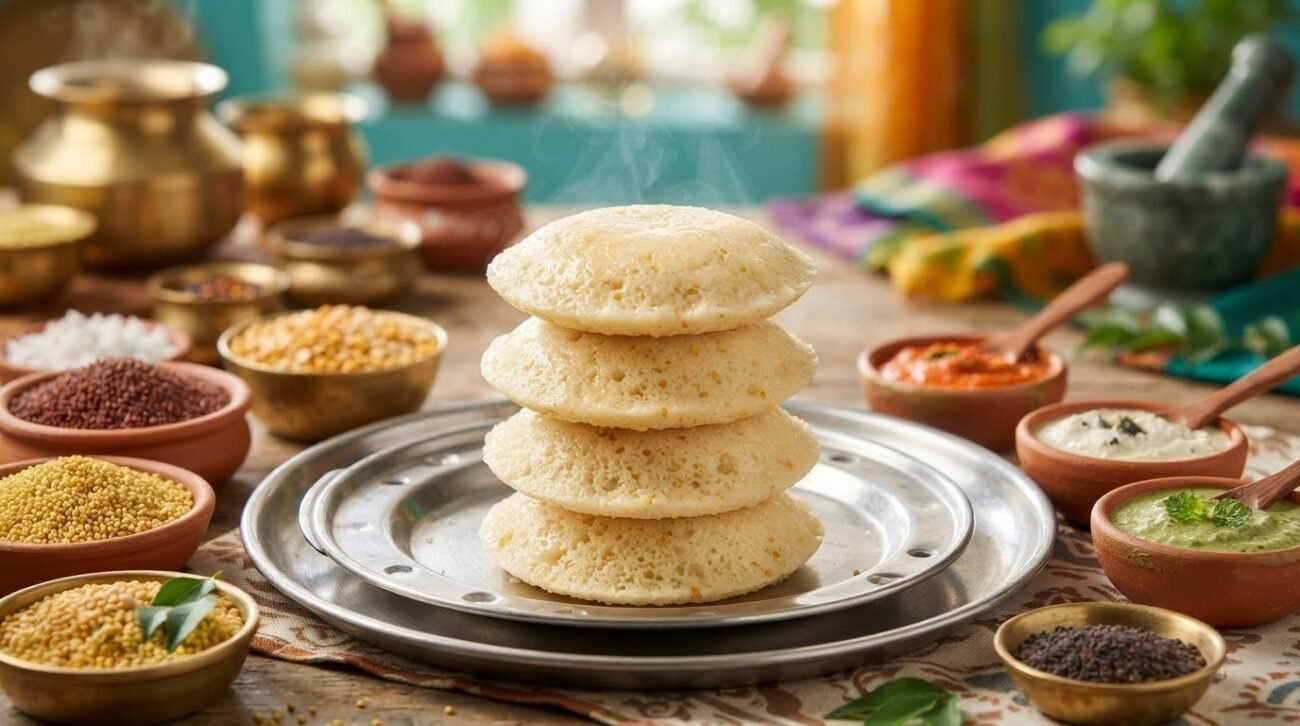
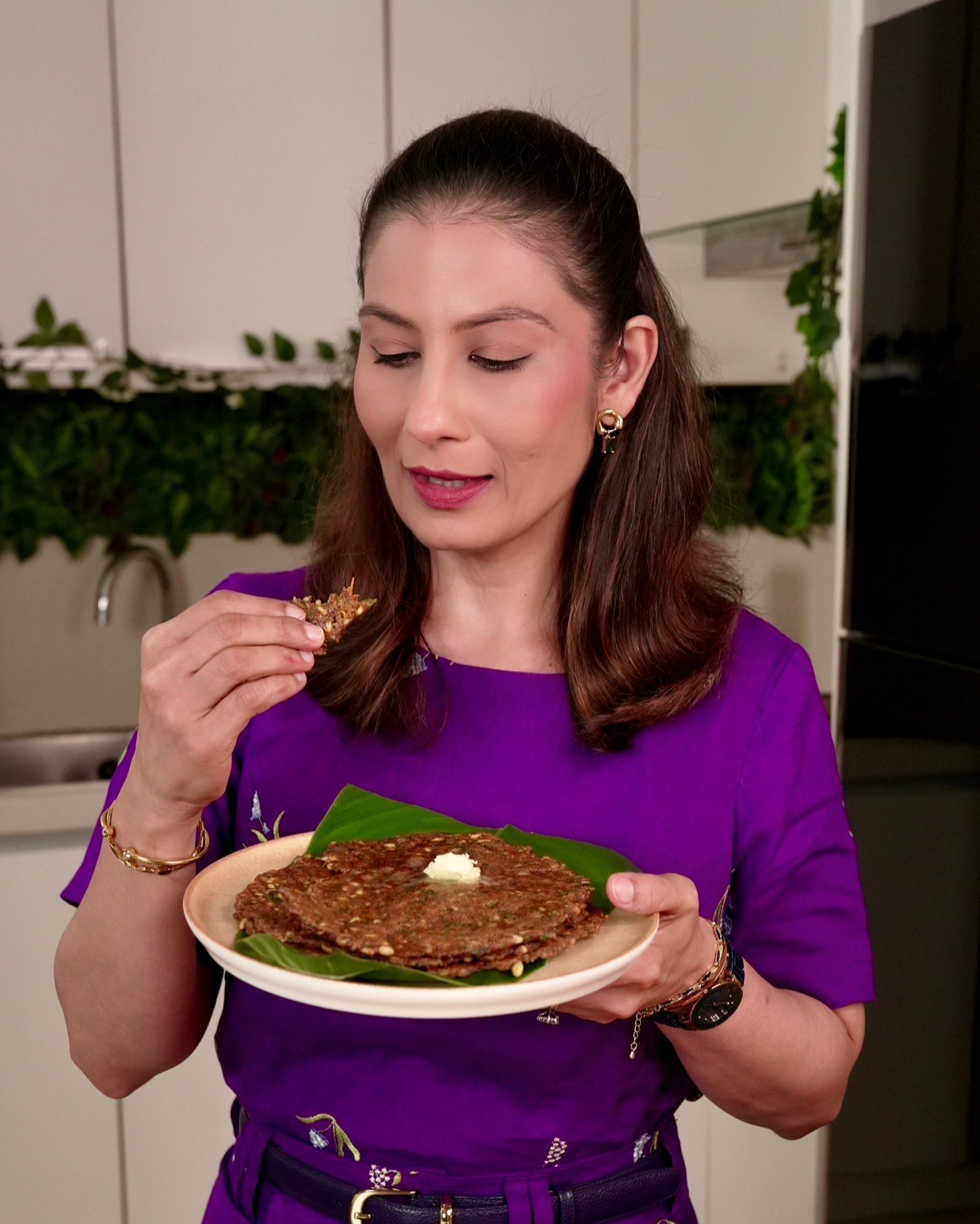
The secret to a cloud-soft, spongy idli has never been polished white rice; it’s the aeration and natural mucilage unlocked by a properly whipped dal emulsion. If you’ve ever pulled a batch of dense, rubbery discs from your steamer, you know how frustrating finding a reliable millet idli recipe without rice can feel. We’ve all experienced that quiet kitchen heartbreak: batter that stubbornly refuses to bubble, digestion that feels heavy from improper preparation, and the worry that ancient grains can never match traditional comfort.
Wholesome cooking should feel like an energizing celebration, not a culinary compromise. You can easily master pillowy, naturally fermented millet idlis using 100% whole grains and zero white rice starches. By applying simple digestive soaking science alongside Chef Meghna’s precise ratios, you’ll achieve dependable, airy rises across any season for steady blood sugar and lasting morning vitality. Ahead, discover the ideal millet varieties for authentic fluffiness, practical fermentation secrets, and three tested recipes designed for breakfast success.
Key Takeaways
- Understand how complex carbohydrates and dal aeration replace polished starches, giving you a blood-sugar-friendly breakfast without sacrificing softness.
- Discover the optimal six-to-eight-hour soaking window needed to neutralize phytic acid and ensure effortless digestion from grains like Kodo and Foxtail.
- Master three tested formulas for the perfect millet idli recipe without rice, complete with exact gram measurements for single-grain and high-protein batters.
- Learn the professional cold-grinding method and visual foam indicators that protect delicate wild yeasts and ensure reliable fermentation in any climate.
- Use Chef Meghna’s practical troubleshooting notes to easily revive unrisen batter and adapt techniques for hearty grains like ragi or bajra.
Why Make Millet Idli Without Rice? The Nutritional and Culinary Science
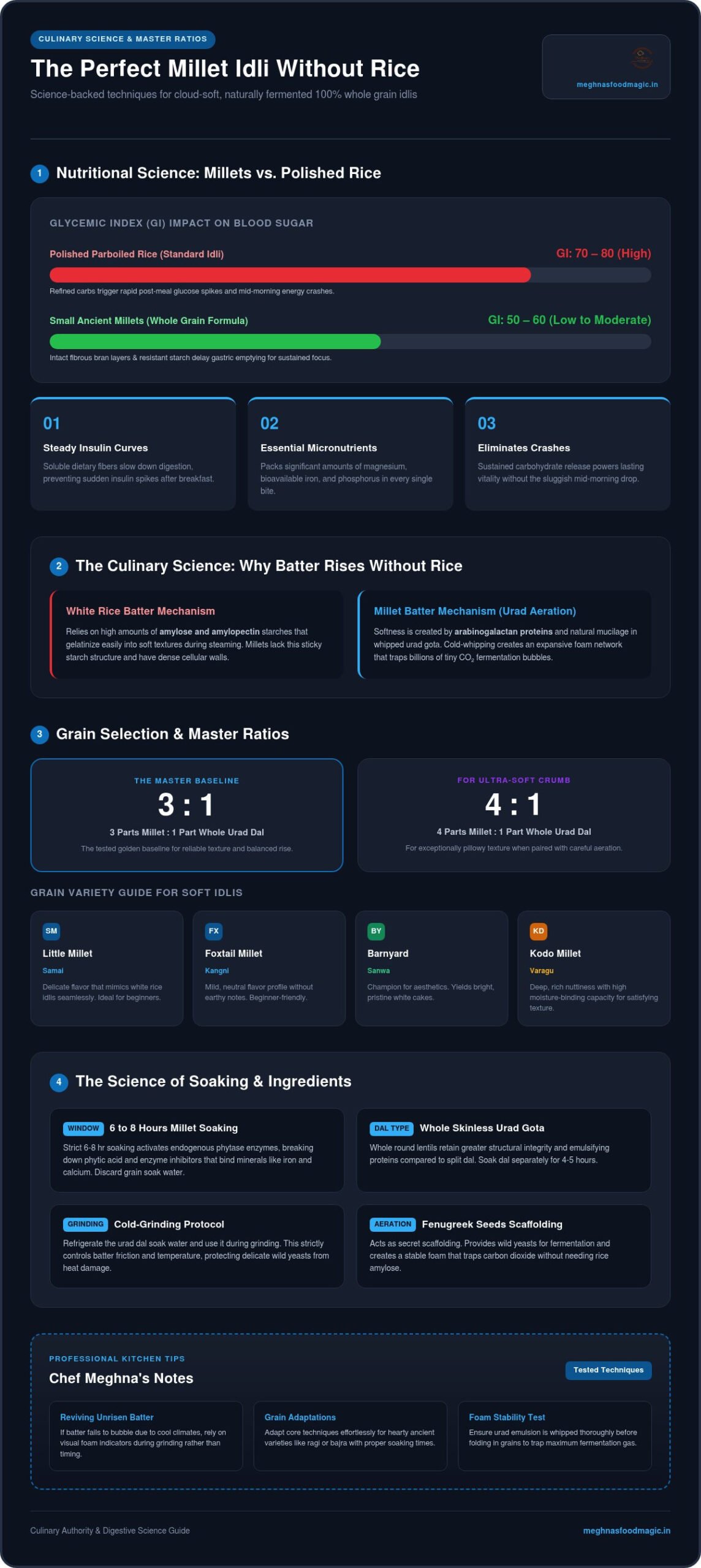
Traditional South Indian breakfasts hold a beloved place on our morning tables, yet the standard pairing of parboiled white rice and black gram can cause rapid spikes in post-meal blood sugar. Polished idli rice carries a high glycemic index (GI), often ranging between 70 and 80. In contrast, small ancient grains grouped under the broad botanical family of millet feature a low-to-moderate GI, typically between 50 and 60. Choosing a thoughtfully crafted millet idli recipe without rice allows you to enjoy the comforting ritual of warm, steamed cakes while nourishing your body with slow-burning energy.
Blood Sugar Balance and Sustainable Energy
Unlike polished rice, whole grains retain their fibrous bran layers and germ. This intact architecture delivers abundant dietary fiber and resistant starch, which work together to delay gastric emptying. Digestion slows down, blunting the rapid glucose surges commonly triggered by refined carbs.
- Steady insulin curves: Soluble fibers prevent sudden insulin spikes, promoting balanced endocrine responses after breakfast.
- Essential micronutrient density: Whole millets pack significant amounts of magnesium, bioavailable iron, and phosphorus into every bite.
- Lasting focus: Sustained carbohydrate release helps eliminate the sluggish mid-morning crashes often caused by simple starches.
The Texture Challenge: Amylose vs. Legume Aeration
Removing rice from batter fundamentally alters batter chemistry. Parboiled rice provides high concentrations of amylose and amylopectin starches that gelatinize easily into soft, tender textures during steaming. Unpolished millets behave differently; their dense cellular walls and lack of sticky amylose can yield hard or crumbly cakes if treated like white rice.
Overcoming this structural challenge requires leaning on whole black gram (urad gota) as your primary architecture. As you grind soaked urad dal with cold water, its soluble arabinogalactan proteins and natural mucilage whip into an expansive, stable foam. This viscous network traps billions of tiny carbon dioxide bubbles produced during fermentation. That means when you make a millet idli recipe without rice, the cloud-like rise depends entirely on how skillfully you aerate and stabilize your dal emulsion before folding in the grain.
Choosing and Prepping Your Grains: Soaking Times and Fermentation Ratios
Working with ancient grains requires adjusting traditional hydration habits. You cannot simply swap millets into a standard rice formula; whole unpolished kernels absorb liquid differently and demand precise preparation to yield light, cloud-like textures. For any master millet idli recipe without rice, the golden baseline is a 3:1 ratio (three parts millet to one part whole urad dal). If you prefer an exceptionally soft, pillowy crumb, moving to a 4:1 ratio works wonderfully when paired with careful grinding.
Selecting the Best Millets for Soft Idlis
Different grain varieties bring unique personalities to your breakfast table:
- Little Millet (Samai) & Foxtail Millet (Kangni): Perfect for beginners. Their delicate flavor profiles mimic traditional rice idlis seamlessly without overpowering earthy notes.
- Barnyard Millet (Sanwa): The champion for aesthetics. It produces bright, pristine white idlis that look remarkably close to classic versions.
- Kodo Millet (Varagu): Yields a deep, rich nuttiness. It possesses high moisture-binding capacity, making it exceptionally satisfying.
The Science of Soaking: Breaking Down Anti-Nutrients
Soaking unpolished grains for a strict six-to-eight-hour window is vital for comfortable digestion. This prolonged hydration activates endogenous phytase enzymes, breaking down phytic acid and enzyme inhibitors that naturally bind minerals like iron and calcium. Wash your grains thoroughly through three or four changes of water until the runoff is clear. Always discard the grain soak liquid. Conversely, soak your whole urad dal separately for four to five hours and chill its soak water in the refrigerator, saving it to regulate batter temperature during grinding.
Fenugreek Seeds and Dal Ratios: The Secret Scaffolding
Whole skinless urad gota outshines split dal every time. Whole round lentils retain greater structural integrity and emulsifying proteins, which allow maximum batter expansion. Adding half a teaspoon of methi (fenugreek seeds) to the soaking dal provides crucial galactomannan mucilage. This natural plant gel reinforces cell walls within the batter, holding pockets of carbon dioxide intact as the mixture ferments in warm room temperatures (between 28°C and 32°C).
Curious about more creative ways to bring these ancient grains alive in your kitchen? You can explore dynamic batch-cooking ideas across the Meghna’s Food Magic YouTube channel, turning wholesome weekend prep into effortless morning meals.
3 Fail-Proof Millet Idli Recipes Without Rice (Exact Measurements)
Many online shortcuts sneak in white rice flakes or parboiled starches to mimic traditional softness. We don’t do that here. Each formula below delivers a pure, authentic millet idli recipe without rice, relying entirely on clean whole grains, whole lentils, and the lifting power of natural fermentation.
Recipe 1: Classic Foxtail Millet (Kangni) Feather-Soft Idlis
This single-grain recipe creates an exceptionally light, neutral crumb that rivals traditional idlis.
- 1.5 cups (300g) foxtail millet
- 0.5 cup (100g) whole urad gota
- 1 tsp (5g) fenugreek seeds
- 1 tsp non-iodized rock salt
- 1.25 cups ice-cold water (divided for grinding)
Soak foxtail millet and urad dal separately for six hours, adding methi seeds to the dal. Grind the dal with iced water until it forms a cloud-like, floating emulsion. Grind the millet to a fine, slightly granular consistency, then mix both batters together gently by hand with rock salt to aerate. Ferment for 8 to 10 hours. If you love organized mornings, explore our Quick South Indian Breakfast Recipes guide to streamline your weekly prep.
Recipe 2: Little Millet (Samai) and Barnyard Melange Idlis
Barnyard millet brings a snowy white hue, while little millet provides tender moisture retention.
- 1 cup (200g) little millet
- 1 cup (200g) barnyard millet
- 0.66 cup (135g) whole urad gota
- 1 tsp (5g) fenugreek seeds
- 1 tsp sea salt
Rinse both millets together until the water runs crystal clear, then soak for six hours. Soak urad dal with methi separately. Grind the lentils into a lofty foam before grinding the grains into a silkier paste than traditional rice batter. Combining these two small grains prevents dryness and eliminates grit, producing a supple, velvety bite after a gentle 10-minute steam.
Recipe 3: High-Protein Kodo and Yellow Moong Power Idlis
This fitness-focused variation adds yellow split moong dal for enhanced plant protein and a golden crumb.
- 1.5 cups (300g) kodo millet
- 0.33 cup (70g) whole urad gota
- 0.33 cup (70g) washed yellow moong dal
- 1 tsp (5g) fenugreek seeds
- 1 tsp pink Himalayan salt
Soak kodo grains for seven hours to soften their fibrous hulls. Soak urad and moong dal together with methi seeds for four hours. Grind the lentils into a rich cream, then blend in the kodo millet. This batter yields deeply satisfying cakes packed with sustained morning fuel. For more nourishing meals that support your fitness goals, explore our curated weight loss recipe resources.
The Master Step-by-Step Method: Grinding, Fermentation, and Steaming
Precision execution transforms modest ingredients into culinary magic. When making a millet idli recipe without rice, you don’t need a heavy stone wet grinder to achieve commercial-grade fluffiness. A standard high-speed mixer-grinder works brilliantly as long as you control frictional heat and preserve the delicate aeration scaffolding built by your lentils.
Grinding Mechanics: Ice Water and Aeration
Blender motors generate friction quickly. If your batter temperature creeps above 25°C during grinding, the heat degrades delicate proteins and kills the wild airborne yeasts essential for leavening. Grind soaked urad dal first, splashing in small amounts of ice-cold water in 30-second pulses.
- The Float Test: Drop a spoonful of whipped dal foam into a bowl of room-temperature water. If it bobs on the surface like a buoyant cloud, your emulsion is fully aerated.
- Grain Texture Target: Drain your soaked millets thoroughly and grind them with minimal chilled liquid until they reach the consistency of fine semolina (fine sooji), avoiding a paste that feels pasty or gluey.
Mastering Natural Batter Fermentation
Combine both ground components in a large ceramic, glass, or food-grade stainless vessel. Wash your hands thoroughly, then use your bare fingers to vigorously whip the batter in a circular direction for two full minutes. Your hands introduce warmth and beneficial lactic acid bacteria that kickstart active bubbling.
Leave at least 50% headspace inside your pot, because active batter expands dramatically as it ferments over 8 to 12 hours. During cooler months, avoid leaving the jar under an intensely hot oven incandescent bulb, which can cook delicate yeasts. Instead, place the pot inside an unlit oven next to a bowl of steaming water, or set an electric pressure cooker to its lowest yogurt setting for reliable warmth.
Precision Steaming and Effortless Demolding
Once your batter smells pleasantly tangy and looks visibly aerated, season it gently without deflating the trapped bubbles. Generously grease idli plate depressions with cold-pressed sesame oil or homemade desi ghee for a clean release and rich aroma.
Bring the water in your steamer to a rolling boil before sliding the loaded trays inside. Cover tightly and steam over medium-high heat for exactly 10 to 12 minutes. Steaming longer than 12 minutes dehydrates whole-grain batter, leading to tough edges. Remove the lid immediately, allow the plates to rest on your counter for 3 minutes, then run a wet stainless steel spoon around each perimeter. The cakes will slip free effortlessly, whole and pillowy soft.
Chef Meghna’s Notes: Troubleshooting, Substitutions, and Side Pairings
Cooking with whole grains should be an empowering act of kitchen self-care, not an exercise in anxiety. While competitors often recommend dumping commercial baking soda or chemical fruit salts into sluggish batter, that approach masks technique flaws and strips away digestive benefits. With a few professional culinary adjustments, any batch made from a millet idli recipe without rice can be saved without sacrificing natural gut health.
Chef Meghna’s Troubleshooting Guide for Common Idli Errors
If your batter hasn’t budged after twelve hours, don’t throw it out. You can gently revive stalled fermentation without synthetic leaveners:
- Stalled rise: Fold in two tablespoons of warm, thick sour curd (dahi) and rest the bowl in a sunny spot for two hours to reboot microbial activity.
- Overly sour batter: If hot weather causes rapid over-fermentation, blend in two tablespoons of fine roasted chana dal flour (sattu) to neutralize excess lactic acidity without thinning the consistency.
- Rubbery or hard texture: This stems from either insufficient water aeration during dal grinding or steaming beyond twelve minutes. Hydrate your dal with an extra splash of chilled water on your next attempt and check doneness at the ten-minute mark.
Ingredient Substitutions and Zero-Waste Tips
Whole urad gota remains our gold standard, but if you only have split washed urad dal on hand, increase its volume by 15% to compensate for reduced foaming power. You can also substitute the base grains with proso, finger millet (ragi), or pearl millet (bajra). Keep in mind that darker grains like ragi demand an additional two hours of soaking due to their fibrous bran coats.
Never toss day-three batter. As natural tang develops, repurpose it into crisp appe (paniyaram) by folding in mustard seeds and curry leaves, or spread it thick on a cast-iron skillet for savory vegetable uttapams. To store fresh, unfermented batter for up to four days, transfer it to airtight glass containers immediately after grinding, chilling it before leavening begins.
Wholesome Accompaniments: Chutneys, Sambar, and Podi
Nutty, whole-grain idlis pair best with vibrant, low-oil sides that awaken your palate. Try dipping warm pieces into homemade roasted flaxseed-curry leaf gun powder (idli podi) combined with raw gingelly oil. Balance that warmth with traditional drumstick sambar and a zesty roasted chana-coconut green chutney. To expand your weekday whole-grain repertoire, check out our curated 30+ Millet Recipes By Meghna playlist for endless breakfast ideas.
Elevate Your Morning Routine With Ancient Grain Magic
Stepping away from polished white grains doesn’t mean giving up the pillowy, cloud-like comfort of South Indian breakfasts. By understanding that aeration comes from a well-whipped urad dal emulsion rather than heavy starches, you can achieve extraordinary results every single time. Armed with patient six-to-eight-hour soaking, exact cold-grinding methods, and Chef Meghna’s tested ratios, mastering a wholesome millet idli recipe without rice becomes a joyful, restorative act of everyday self-care.
These science-backed techniques ensure reliable fermentation and steady blood sugar across every season. Best of all, they open up endless possibilities to nourish your family with vibrant, gut-friendly ancient grains that never compromise on texture or satisfaction.
Trust the process, enjoy the quiet rhythm of grinding your batter, and celebrate the incredible magic of whole-food cooking in your home.
Frequently Asked Questions
Can I make soft millet idlis without adding any white rice or poha?
Yes, you can make wonderfully soft and airy idlis entirely without white rice, rice rava, or flattened rice flakes (poha). The secret lies in whipping whole urad gota with ice-cold water into an airy, cloud-like emulsion. This lentil foam creates the structural framework that holds carbon dioxide bubbles during fermentation. When you fold finely ground millets into this whipped dal base, your millet idli recipe without rice yields a pillowy, tender texture without needing grain starches.
Which millet variety produces the softest texture in rice-free idli recipes?
Barnyard millet (sanwa) and little millet (samai) consistently produce the softest, most tender crumb. Their delicate grain size and moderate starch composition allow them to hydrate deeply without creating gritty grains. Foxtail millet also yields exceptional results with a mild, classic taste. If you’re looking for an idli that visually matches traditional white rice cakes while remaining light on your digestion, barnyard millet is your best culinary choice.
Why is my millet idli batter not rising during fermentation?
A sluggish or non-rising batter usually results from grinder motor heat exceeding 25°C, which kills natural wild yeasts, or from an ambient room that’s too cold. Using old, dried-out lentils also reduces active fermentation enzymes. Always use ice water while blending to keep the mixture cool. If your kitchen stays below 25°C, place the batter bowl inside an unlit oven beside a cup of boiling water to create an inviting, humid microclimate.
How long should I soak millets before grinding them for idli batter?
Millets require a strict soaking duration of six to eight hours at room temperature. Unpolished grains contain naturally occurring phytic acid and enzyme inhibitors that guard their nutrients. A generous soaking period triggers essential phytase activity, breaking down these antinutrients for optimal mineral absorption and smoother digestion. Never rush this step; properly hydrated grains grind smoothly into a uniform semolina consistency, ensuring soft, spongy steamed idlis without any heavy after-meal sluggishness.
What should I do if my millet idli turns out hard or dense?
Hard idlis usually point to insufficient water in the dal emulsion or over-steaming in the pot. For your next batch of this millet idli recipe without rice, aerate the urad dal until a small dollop floats effortlessly in water. When cooking, steam on medium-high heat for only 10 to 12 minutes. Steaming past the 12-minute threshold rapidly strips moisture from whole grains, causing the idlis to harden and dry out.
Can I use this same rice-free millet batter to make crispy dosas?
Yes, this fermented batter transitions seamlessly into golden, crispy dosas. Simply thin the thick idli batter with a few tablespoons of water until it flows in a steady, ribbon-like consistency. Spread the batter thinly across a hot, well-seasoned cast-iron skillet, drizzle cold-pressed sesame oil or homemade ghee around the edges, and cook over medium heat. The natural sugars caramelize beautifully, delivering an irresistible, lace-like crunch without polished rice starches.
How long can I safely store fermented millet idli batter in the refrigerator?
Fermented millet batter keeps well in an airtight glass container for three to four days in the coldest section of your refrigerator. Because ancient grains ferment slightly faster than polished rice, lactic acid builds up more quickly. Use the fresh batter for steamed idlis during the first two days when its volume is highest. After day two, repurpose the naturally tangy batter into crispy paniyaram (appe) or savory vegetable uttapams.
Disclaimer
This is a recipe food blog page and not nutrition or doctor and hence do not claim to cure any illness. If you have specific health issues please consult a qualified doctor or certified nutritionist.
I do consult experts, research Internet and at times seek help from Gemini to collect relevant information to put together some of these blogs.

