
5 Nutritious Kid-Friendly Indian Broccoli Recipes
Why Broccoli is a Superfood Secret for Growing Indian Kids
Let’s be honest: convincing a child to eat a green vegetable can feel like a culinary battle. But what if I told you there’s a green powerhouse that, with a little Food Magic, can become your child’s next favorite meal? Enter broccoli, the vibrant, tree-like vegetable that’s often misunderstood in Indian kitchens. It’s more than just a salad ingredient; it’s a high-fiber, high-protein superfood essential for your child’s bone health and overall growth.
The magic isn’t just in the broccoli itself, but in how we pair it with our incredible Indian spices. Aromatic spices like turmeric and ginger don’t just add flavor; they contain digestive properties that make broccoli easier on little tummies. We’ll transform this vegetable from a source of "green phobia"—that common childhood fear where green equals bitter—into a delicious and exciting part of their diet. Our strategy? The "Cauliflower Cousin" approach. By treating broccoli with the same familiar techniques and masalas we use for gobi, we can introduce this new flavor in a comforting, recognizable way.
The Nutritional Breakdown: More Than Just Fiber
Broccoli’s brilliant green hue is a sign of its incredible nutritional density, a perfect fit for growing bodies, especially in Indian vegetarian households where meeting every nutritional need requires smart choices.
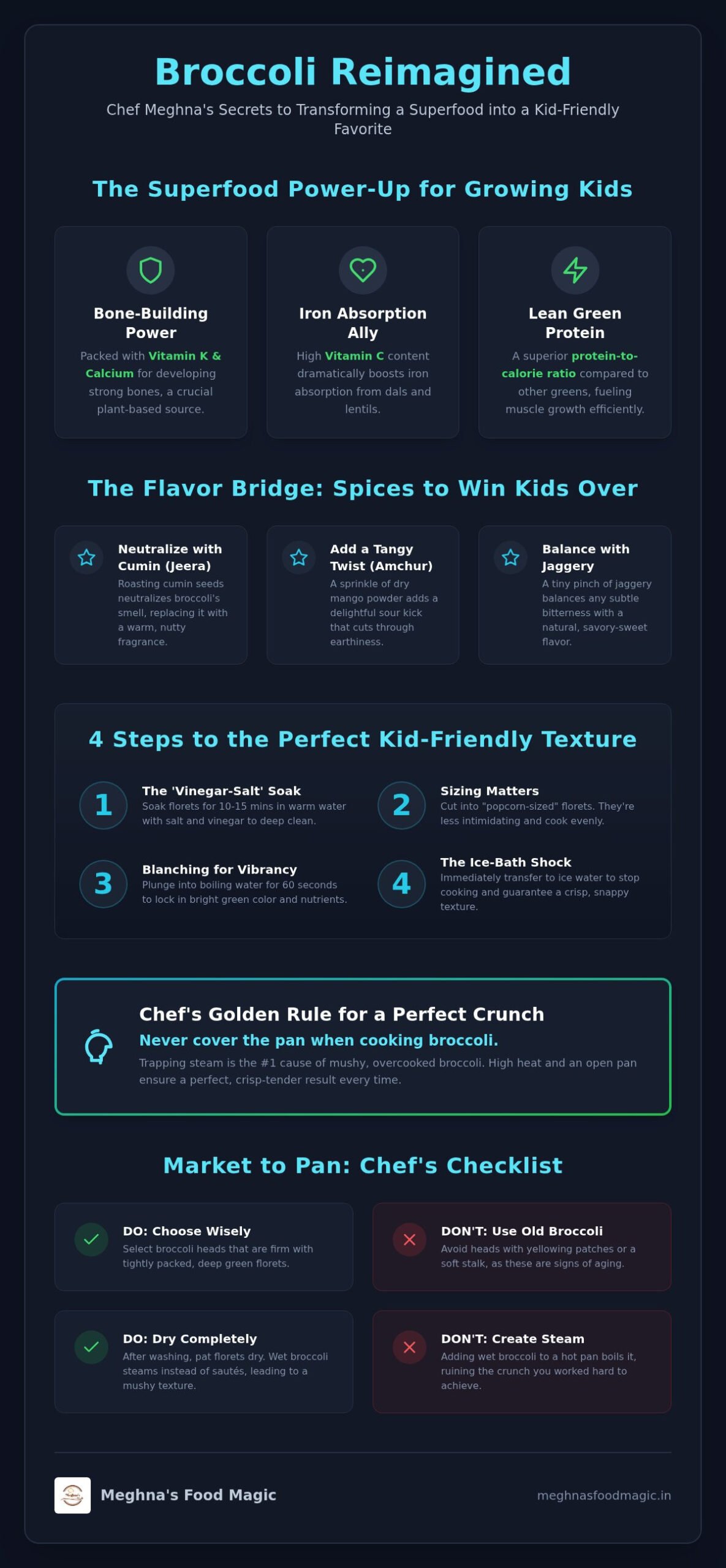
- Bone-Building Power: It’s packed with Vitamin K and Calcium, two non-negotiable nutrients for developing strong bones. While we rely on dairy, adding broccoli to the mix provides a crucial plant-based source of these bone-building blocks.
- Iron Absorption Ally: The high Vitamin C content in broccoli is a game-changer for our diet. It dramatically boosts the absorption of iron from plant-based sources like dal and lentils, ensuring your child gets the maximum benefit from every meal.
- A Lean Green Protein Machine: Compared to other greens like spinach or kale, broccoli boasts a superior protein-to-calorie ratio, making it an efficient source of muscle-building fuel without unnecessary calories.
Spices as a Bridge to Flavor
The secret to making any vegetable kid-friendly lies in flavor, and our Indian spice box is a treasure chest of possibilities. Instead of masking the broccoli, we use spices to complement and elevate its natural taste, turning potential objections into enthusiastic requests for more.
- Neutralizing with Cumin: That slightly sulfurous smell of cooking broccoli is often what puts kids off. Roasting whole cumin seeds (jeera) before adding the broccoli works wonders to neutralize this aroma, replacing it with a warm, nutty fragrance they’ll love.
- Adding a Tangy Twist: Kids are naturally drawn to tangy flavors. A sprinkle of amchur (dry mango powder) towards the end of cooking introduces a delightful, sour kick that cuts through broccoli’s earthiness and makes it instantly more appealing.
- Balancing with Jaggery: The subtle bitterness of broccoli can be easily balanced. A tiny pinch of jaggery, a natural and mineral-rich sweetener, can round out the flavor profile, making the florets taste less "green" and more savory-sweet.
Mastering the Prep: Texture Secrets for Fussy Eaters
The number one reason kids reject broccoli isn’t the taste—it’s the texture. Mushy, overcooked broccoli is a mealtime tragedy. But achieving that perfect, crisp-tender bite that even the fussiest eaters will enjoy is a science you can easily master. It all starts with thoughtful preparation.
- Step 1: The ‘Vinegar-Salt’ Soak. To ensure your broccoli is perfectly clean and free of any hidden pests, a quick soak is essential. Submerge the florets in a bowl of warm water with a teaspoon of salt and a splash of vinegar for 10-15 minutes. This gentle process cleanses it thoroughly from the inside out.
- Step 2: Sizing Matters. Forget large, intimidating chunks. The key is to cut the broccoli into "popcorn-sized" florets. These small, bite-sized pieces are less overwhelming for a child, cook more evenly, and are perfect for little hands to pick up and eat.
- Step 3: Blanching for Vibrancy. To lock in that beautiful, bright green color that kids find visually appealing, a quick blanch is your best friend. Briefly plunge the florets into boiling water for 60 seconds. This technique pre-cooks them slightly while preserving their color and nutrients.
- Step 4: The Ice-Bath Shock. Immediately after blanching, transfer the broccoli to a bowl of ice-cold water. This "shock" stops the cooking process instantly, guaranteeing a snappy, crisp texture and preventing the florets from turning dull and mushy.
The Science of the Perfect Crunch
Why is a snappy texture so crucial? Mushy vegetables trigger a sensory aversion in many children, making them reject the food before they even truly taste it. The goal is a tender floret with a slight "bite." A quick sauté over high heat is the best way to achieve this. The high temperature sears the outside quickly, cooking the broccoli without letting it steam in its own moisture. And here’s a pro tip from my kitchen to yours: never cover the pan when cooking broccoli. Trapping the steam is what causes it to overcook, lose its vibrant color, and turn mushy.
Cleaning and Safety Standards
Your journey to delicious broccoli begins at the market. Always choose broccoli heads that are firm, with tightly packed, deep green florets. Avoid any with yellowing patches or a soft stalk, as these are signs of aging. After the vinegar-salt soak, it’s crucial to dry the broccoli completely. Pat the florets dry with a clean kitchen towel or use a salad spinner. Adding wet broccoli to a hot pan will create steam, effectively boiling it and ruining that perfect crunch you’re aiming for. Taking these few extra moments in prep makes all the difference.
5 Chef-Approved Broccoli Indian Recipes for Tiffin and Dinner
Now that we’ve mastered the prep, it’s time to turn that perfectly crisp broccoli into meals your kids will devour. These five recipes are designed to be fun, packed with nutrition, and perfect for everything from a quick weeknight dinner to a delightful surprise in their tiffin box.
1. Broccoli Mutter Tikki with Smokey Tomato Chutney
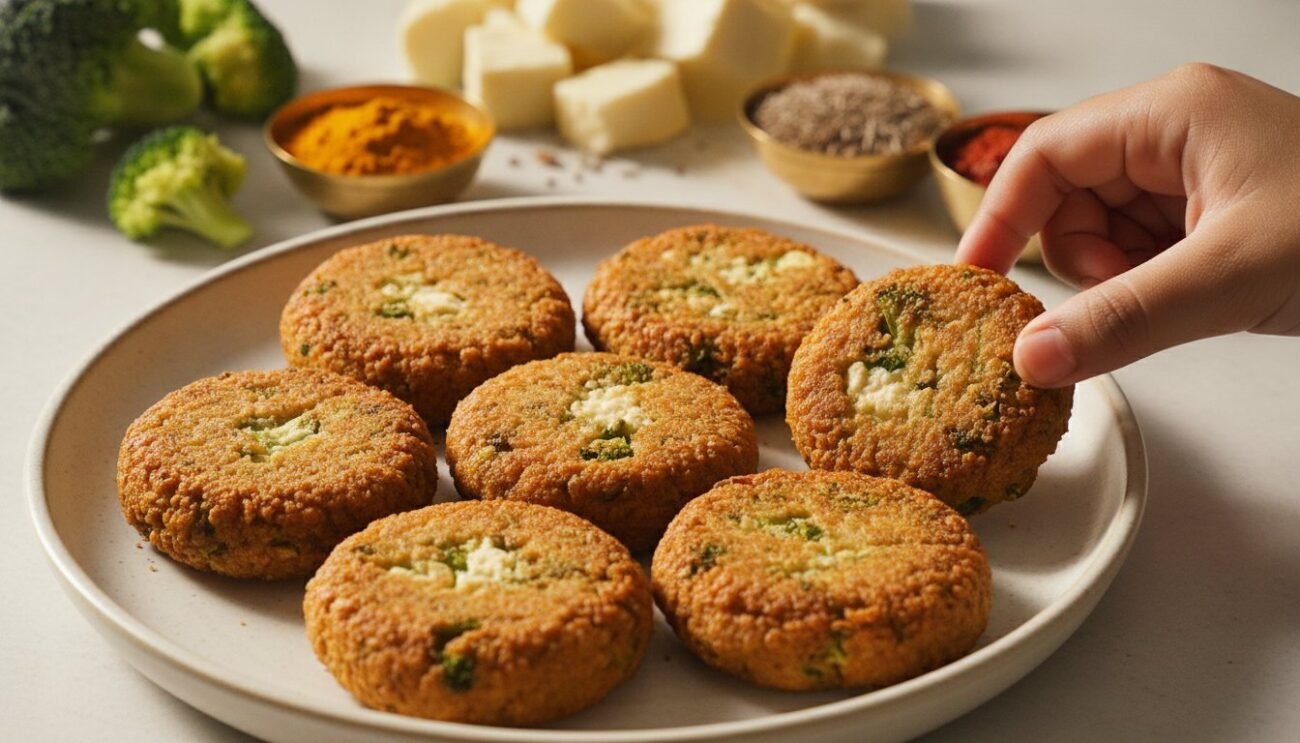
This recipe transforms broccoli into a savory, protein-packed patty that’s impossible to resist. By combining it with green peas (mutter) and aromatic spices, we create a soft, flavorful tikki that’s perfect for little hands. It’s an ideal way to sneak in greens without a single complaint.
Watch How It’s Made: Broccoli Mutter Tikki & Smokey Tomato Chutney
Chef Meghna’s Notes: For an extra crispy texture, coat the tikkis in a thin layer of semolina (suji) or breadcrumbs before shallow frying. If you’re short on time, you can prepare the tikki mixture ahead of time and store it in the refrigerator for up to 24 hours. These are also fantastic in the air fryer—just a light brush of oil is all you need!
2. Fusion Broccoli Tacos
Who says tacos can’t have an Indian twist? This vibrant, modern recipe uses Indian spices to marinate bite-sized broccoli florets, which are then pan-seared to perfection. Served in a warm tortilla with a cooling yogurt drizzle, it’s a fun, interactive meal that kids will love assembling themselves.
Watch How It’s Made: Broccoli Tacos
Chef Meghna’s Notes: The secret to great flavor here is the marinade. Let the broccoli sit in the yogurt and spice mixture for at least 20 minutes. For a gluten-free option, serve the spiced broccoli in lettuce cups instead of tortillas. Add some finely chopped onions and tomatoes for extra crunch and freshness.
3. Creamy Broccoli Cheese Soup (Desi Style)
A warm bowl of soup is the ultimate comfort food, and this recipe gives the classic broccoli cheese soup a delightful Indian makeover. We use a hint of garlic and cumin to build a savory base, creating a creamy, cheesy, and deeply satisfying soup that hides the goodness of broccoli in every spoonful. It’s a guaranteed winner on a rainy day.
Watch How It’s Made: Broccoli Cheese Soup
Chef Meghna’s Notes: To make the soup extra creamy without using heavy cream, blend in a small boiled potato or a handful of soaked cashews. Always add the cheese at the very end with the heat turned off to prevent it from splitting. Serve with toasted bread for dipping!
4. One-Pot Meal
For busy parents, a one-pot meal is a lifesaver. This simple yet flavorful pulao combines fragrant basmati rice, sweet corn, and popcorn-sized broccoli florets, all cooked together with whole spices. It’s a complete, balanced meal that’s ready in under 30 minutes and perfect for packing in a lunchbox.
Watch How It’s Made: Easy One Pot Meal
Chef Meghna’s Notes: To keep the broccoli vibrant and crisp, add it during the last 5-7 minutes of the rice cooking. A squeeze of lemon juice and a garnish of fresh coriander leaves at the end will brighten up all the flavors beautifully. You can also add paneer cubes for an extra protein boost.
5. Tandoori Broccoli Skewers (Air Fryer Magic)
Bring the magic of the tandoor to your kitchen with this incredibly easy and healthy recipe. Broccoli florets are coated in a thick, spiced yogurt marinade and air-fried until perfectly charred at the edges and tender on the inside. It’s a smoky, delicious snack or appetizer that feels like a treat.
Watch How It’s Made: Paneer Moong Kebabs & Grilled Veggies in Skewers
Chef Meghna’s Notes: The key to a great tandoori marinade is using thick or hung curd so it coats the broccoli well. Don’t overcrowd the air fryer basket; cook in batches if needed to ensure the broccoli gets crispy. These skewers are a fantastic addition to any meal, inspired by my Paneer and Veggie Skewers recipe.
The Tiffin Transformation
Packing a lunchbox that comes back empty is the ultimate goal. The key is to ensure the food stays fresh and appealing. For recipes like the Broccoli Tikki, let them cool completely before packing to prevent them from getting soggy. A small container of chutney or yogurt dip makes it more fun. For the pulao, pack it in an insulated container to keep it warm and delicious. For more inspiration, explore these 10 Healthy Tiffin Recipes for Toddlers that are both nutritious and easy to make.
The Millet Connection: Pairing Broccoli with Jowar and Bajra
In our quest for ultimate nutrition, pairing broccoli with ancient Indian superfoods like millets is a game-changer. Millets and broccoli are a "Power Couple" for child growth and immunity. This combination delivers a powerful dose of fiber, iron, calcium, and protein, all in one meal. It’s the perfect way to bring traditional grains into your modern kitchen.
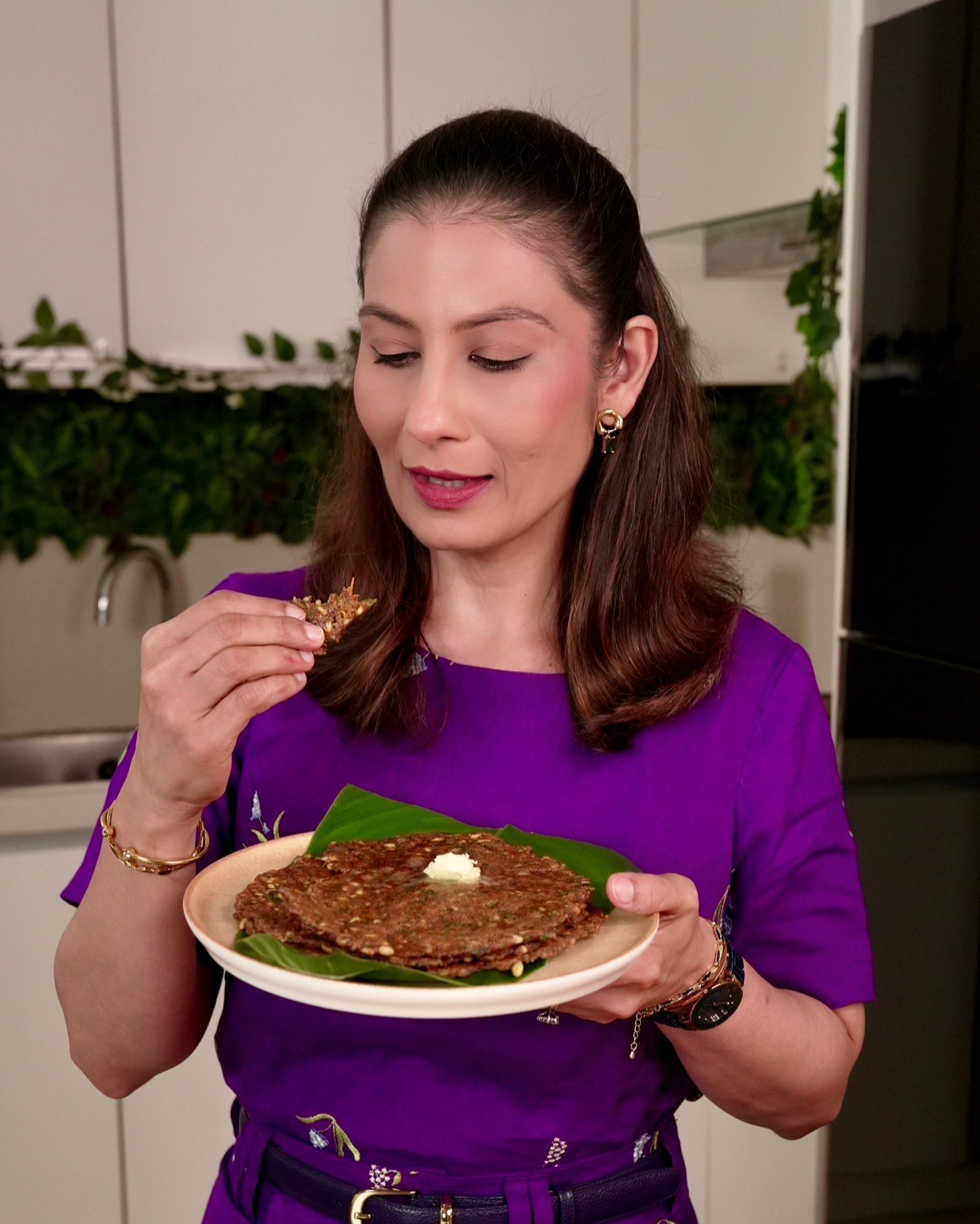
- Jowar-Broccoli Thalipeeth: A gluten-free, iron-rich flatbread perfect for a hearty breakfast. Grated broccoli blends seamlessly into the jowar dough, adding moisture and nutrients.
- Bajra and Broccoli Khichdi: The ultimate comfort food reimagined. This khichdi combines the earthy flavor of bajra with tender broccoli florets for a wholesome, easily digestible meal.
- Ragi-Broccoli Savory Pancakes: Combine calcium-rich Ragi flour with finely chopped broccoli to make delicious, savory pancakes (chillas) that are perfect for breakfast or an after-school snack.
Millet Preparation for Better Digestion
To unlock the full nutritional potential of millets, proper preparation is key. The most important step is soaking. Soaking grains like Jowar and Bajra for at least 6-8 hours helps to break down phytic acid, an anti-nutrient that can interfere with mineral absorption. This simple step makes the millets easier for little tummies to digest and ensures your child gets all the goodness. For extremely picky eaters, you can even blend steamed broccoli into a puree and mix it directly into the millet batter for pancakes or thalipeeth—they’ll never know it’s there! For the youngest members of the family, Ragi is the best first millet to introduce alongside broccoli, as its high calcium content is vital for babies around one year of age.
Texture Harmony: Grains and Greens
Creating a pleasant mouthfeel is crucial when combining different ingredients. To achieve texture harmony, match the coarse, hearty texture of Bajra with finely chopped or grated broccoli for a more uniform bite. This prevents a single spoonful from being too lumpy or texturally jarring for a child. Here’s a zero-waste tip: when you steam or blanch your broccoli, don’t throw away the water! This nutrient-rich liquid is perfect for kneading your millet doughs or cooking your khichdi, ensuring no vitamins are lost.
Chef Meghna’s Notes: Zero-Waste Secrets and Pro-Tips
A truly magical kitchen is one that is smart, efficient, and sustainable. Embracing a zero-waste philosophy not only helps the environment but also unlocks hidden flavors and nutrients you might be throwing away. Broccoli stalks, for instance, are just as nutritious as the florets!
- Zero-Waste Hero: Don’t discard the thick broccoli stems! Peel off the tough outer layer, chop the tender core, and blend it with cilantro, green chilies, and lemon juice to create a creamy, delicious ‘Stems & Cilantro’ chutney.
- The ‘Peel’ Secret: The outer layer of a broccoli stalk can be tough and fibrous. Always use a vegetable peeler to remove this skin before chopping or grating the stalk for use in stir-fries, parathas, or soups.
- Troubleshooting: If your broccoli curry or sabzi becomes too watery, simply cook it on high heat for a few minutes without a lid to allow the excess moisture to evaporate. If it tastes slightly bitter, a small pinch of sugar or jaggery and a squeeze of lemon juice will balance it out perfectly.
- Storage Hack: To keep broccoli fresh in the fridge for over a week, try the ‘Bouquet Method.’ Trim the end of the stalk, place it in a jar with an inch of water (like a bouquet of flowers), and cover the head loosely with a plastic bag.
Zero-Waste Kitchen Management
Adopting a zero-waste mindset can transform your cooking. Grate leftover broccoli stalks and add them to your paratha fillings or soup bases for extra fiber and nutrition. Always save the water from blanching vegetables; this "vegetable stock" is liquid gold, perfect for adding flavor and nutrients to your next dal, gravy, or soup. For more ideas on running a sustainable kitchen, check out these 10 Zero Waste Kitchen Tips that are both practical and easy to implement.
Chef Meghna’s Final Success Secrets
To leave you with a few final pearls of wisdom, here are my top secrets for broccoli success:
- The ‘One-Minute Rule’: For stir-fries, remember that broccoli needs very little time on high heat. Often, 60-90 seconds is enough to cook it to a perfect, crisp-tender texture while keeping its color and nutrients intact.
- Ingredient Substitution: If broccoli isn’t available, the best substitute for texture and flavor in Indian cooking is its cousin, the cauliflower. For leafy preparations, Bok Choy can also be a wonderful, quick-cooking alternative.
- Stay Inspired: The journey of making healthy food delicious is always evolving. For more weekly Food Magic, creative recipes, and pro tips, I invite you to Subscribe to my channel on YouTube!
Disclaimer
This is a recipe food blog page and not nutrition or doctor and hence do not claim to cure any illness. If you have specific health issues please consult a qualified doctor or certified nutritionist.
I do consult experts, research Internet and at times seek help from Gemini to collect relevant information to put together some of these blogs.

