
Comprehensive Guide to a Balanced Vegan Diet and Lifestyle
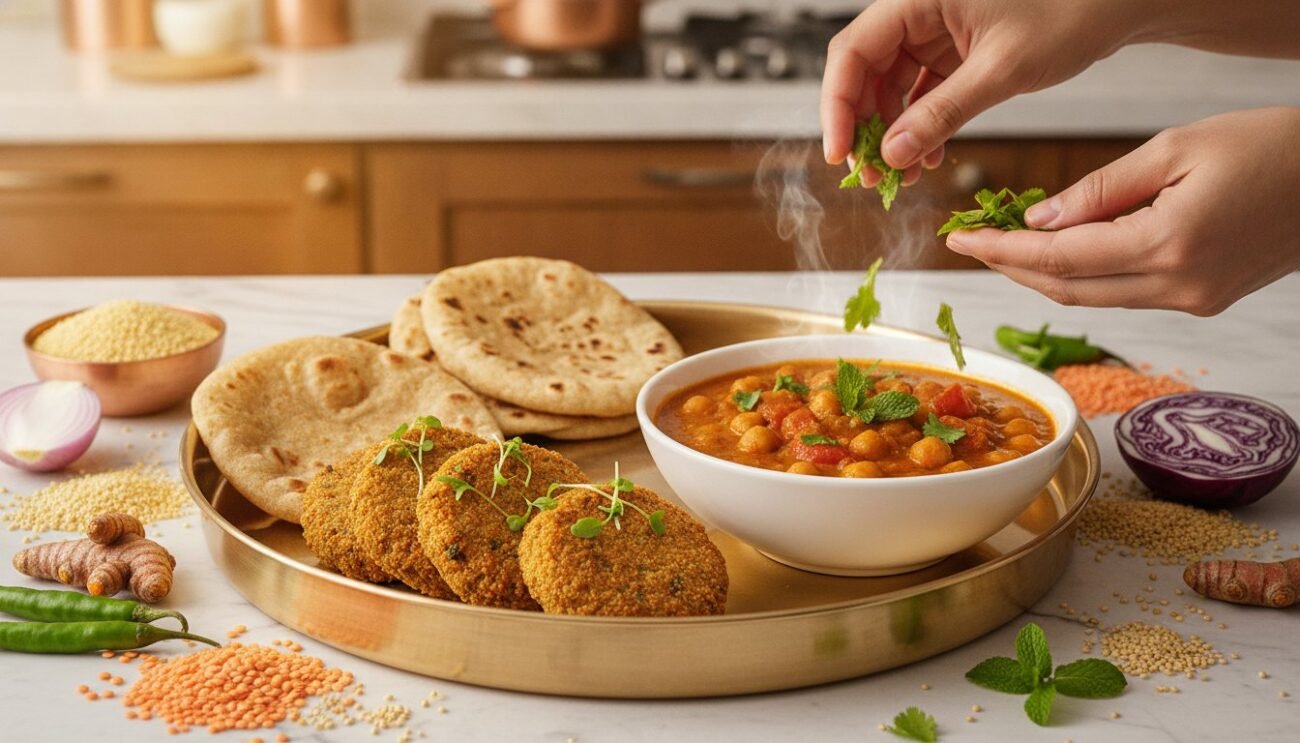
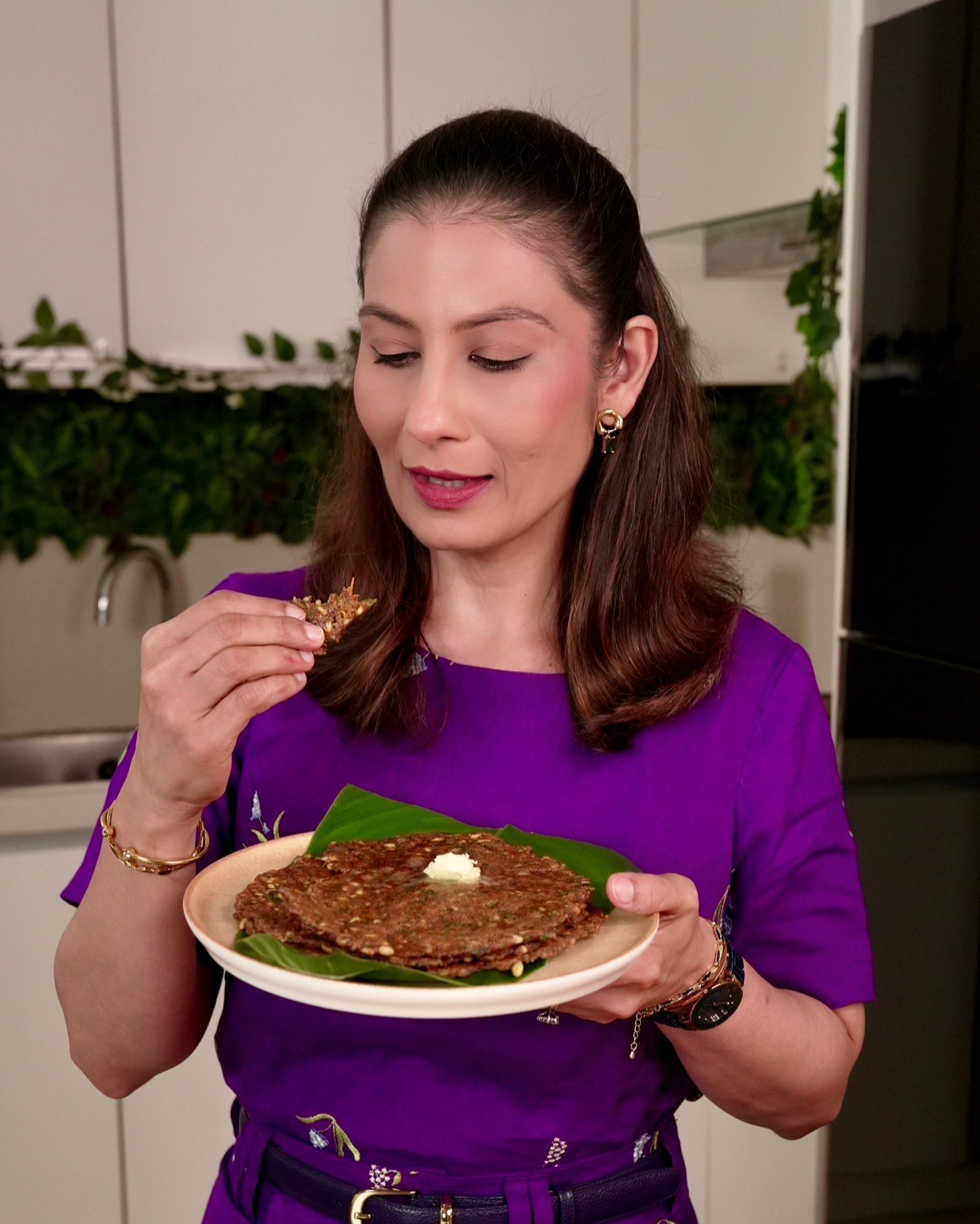
Are you ready to discover the secret to a joyful, high-protein vegan lifestyle? Forget everything you thought you knew about restriction and blandness. We’re about to embark on a culinary adventure that blends the ancient wisdom of Indian super-grains with the effortless magic of a modern kitchen. This is not about what you can’t eat; it’s about celebrating an abundance of flavors, textures, and vibrant wellness that will transform your plate and your life. At Meghna’s Food Magic, we believe that healthy living should feel like a celebration, and this guide is your personal invitation to the party.
For health-conscious home cooks in India, the journey to a balanced vegan diet can feel daunting. You might worry about getting enough protein, feel bored with the same old sabzis, or wonder how to cook with powerful ancient grains like millets. This guide is here to answer your biggest question: “How can I be a healthy vegan while still enjoying delicious, protein-rich, and traditionally satisfying meals?” Let’s unlock the secrets together.
What is Veganism? Redefining Plant-Based Abundance in 2026
Let’s start by redefining what it means to be vegan today. It’s far more than a list of prohibited ingredients; it’s a vibrant philosophy of compassion, a celebration of incredible plant diversity, and a powerful tool for personal and planetary wellness. While the term ‘plant-based’ often refers purely to a nutritional choice, ‘veganism’ encompasses an ethical framework that seeks to exclude all forms of animal exploitation as far as is practicable and possible. But here, in our kitchen, we call it ‘Culinary Therapy’—a joyful approach to making wellness feel like an indulgence, not a duty. By choosing a varied vegan diet, you’re not just nourishing your body; you’re also making a positive impact on the environment and your long-term health.
The Core Philosophy: Compassion on the Plate
At its heart, veganism is about making conscious, compassionate choices. The key phrase is “practicable and possible,” which means it’s not about perfection but about intention and doing your best in your circumstances. This is a crucial mindset shift: you are not ‘giving up’ foods, you are ‘discovering’ a whole new world of ingredients, spices, and cooking techniques. It’s a journey of exploration that expands your culinary horizons. In a single sentence, veganism is a vibrant, inclusive lifestyle choice that celebrates the abundance of the plant kingdom to nourish our bodies and honor our planet.
Veganism vs. Traditional Vegetarianism
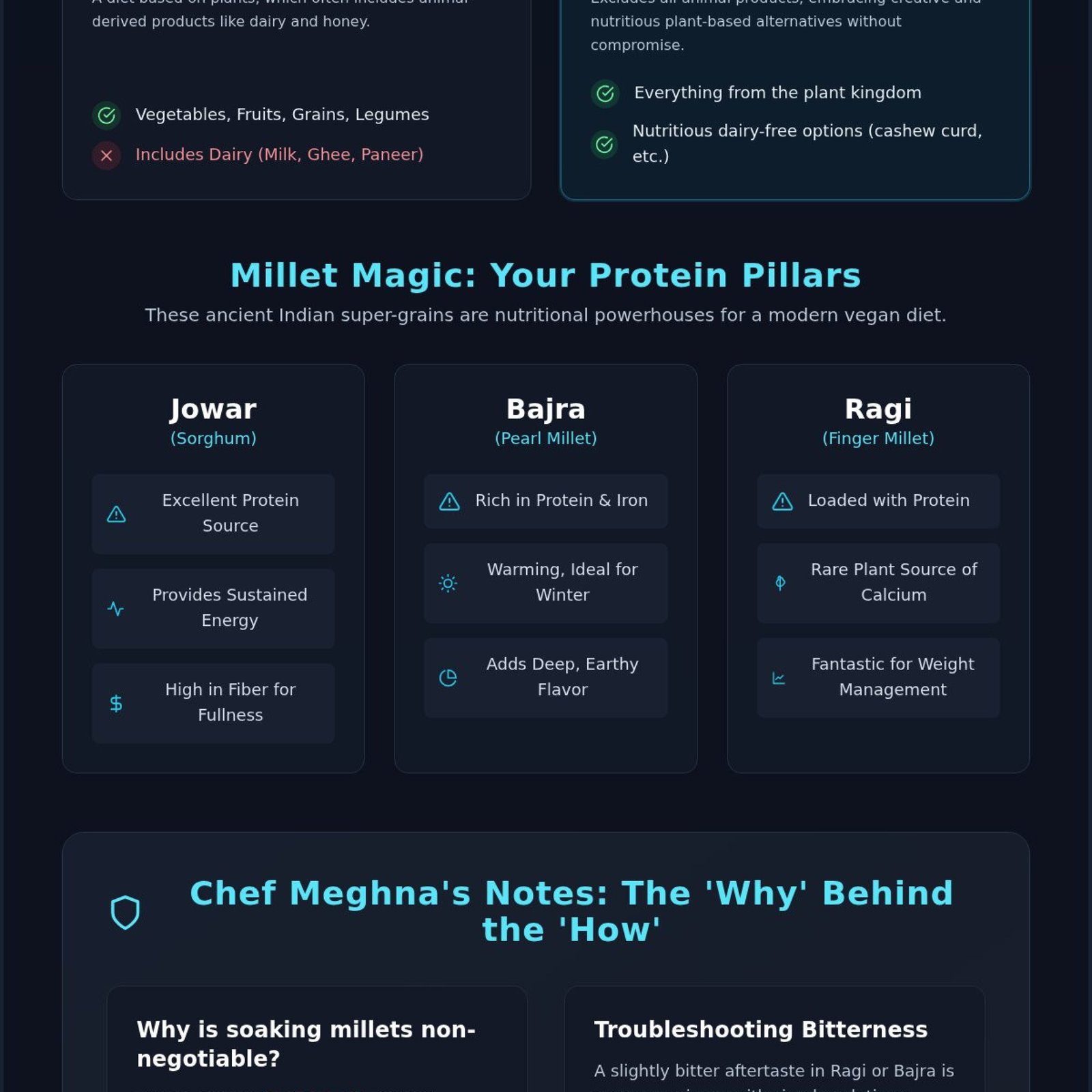
The wonderful truth is that the Indian pantry is already perfectly primed for vegan success. So many of our beloved classics are ‘accidentally vegan‘—think of hearty dal, flavorful chana masala, or crispy vegetable pakoras. The primary difference from a traditional vegetarian diet is the exclusion of dairy products like milk, ghee, paneer, and yogurt. But in today’s world, this is hardly a sacrifice. The rise of delicious and nutritious dairy alternatives—from creamy cashew curd to rich coconut milk and homemade nut-based paneer—means you can enjoy the same rich textures and flavors of modern Indian cooking without compromise.
The Science of Vegan Nutrition: Protein, Millets, and the ‘Why’
One of the biggest concerns for anyone transitioning to a vegan diet is protein. “How will I build muscle and stay full without meat or dairy?” The answer lies in understanding the incredible power of plant-based proteins. Legumes, lentils, seeds, nuts, and whole grains provide all the essential amino acids your body needs to thrive. The key is variety! By combining different plant sources throughout the day, you create a complete protein profile that supports everything from muscle gain to sustained energy.
This is where millets—our ancient Indian superfoods—truly shine. These humble grains are nutritional powerhouses, packed with protein, fiber, and essential minerals. Embracing the ‘Get Fit With Meghna’ mindset is about more than just counting calories; it’s about intelligently balancing your macronutrients (protein, carbs, and fats) while maximizing flavor. Let’s tackle that #1 concern and show you how to get more than enough protein, deliciously and effortlessly.
Millet Magic: Jowar, Bajra, and Ragi as Protein Pillars
Millets are the undisputed kings of the modern vegan pantry. They are gluten-free, low on the glycemic index, and incredibly versatile. Let’s break down the protein profiles of our top three:
- Jowar (Sorghum): An excellent source of protein and fiber, Jowar is perfect for making soft rotis and provides sustained energy, making you feel full for longer.
- Bajra (Pearl Millet): Rich in protein and iron, Bajra is warming and ideal for winter months. Its earthy flavor adds incredible depth to bhakris and khichdis.
- Ragi (Finger Millet): A true superfood, Ragi is a rare plant source of calcium and is loaded with protein. It’s fantastic for weight management and can be used in everything from dosas to healthy desserts.
Ready to explore their full potential? Dive into our 30+ Millet Recipes collection for a universe of diverse and delicious meal ideas.
Chef Meghna’s Notes: The Art of Soaking and Sprouting
Why is soaking millets for 6-8 hours non-negotiable? Millets, like many grains and legumes, contain phytic acid, an ‘anti-nutrient’ that can bind to minerals like iron, zinc, and calcium, preventing your body from absorbing them. Soaking is the magic step that neutralizes phytic acid. This simple act unlocks the full nutritional potential of the grain and, just as importantly, makes them significantly easier to digest, preventing bloating and discomfort. For harder millets like Bajra, a longer soak is always better. For softer ones like Barnyard millet, 4-6 hours is sufficient.
Troubleshooting Bitterness: Some people find Ragi and Bajra can have a slightly bitter aftertaste. This is often due to the flour not being fresh. Always buy these flours in small batches. The second trick is to use warm water when kneading the dough for rotis or bhakris—this helps to mellow the flavor and results in a softer, more pliable texture.
Debunking Vegan Myths: From ‘Boring’ to ‘Breathtaking’
- Myth: Vegan food lacks protein.
Truth: The world of dals, legumes, and pulses is a protein powerhouse! A simple bowl of Moong dal contains a hefty dose of protein, and when paired with rice or roti, it forms a complete protein. Tofu, chickpeas, kidney beans, and seeds are all fantastic sources. - Myth: You can’t bake without eggs.
Truth: Welcome to the ‘Cake Therapy’ revolution! We can create moist, fluffy, and decadent cakes and sponges without a single egg. The secrets lie in natural binders like flax eggs, fruit purees (like apple or banana), and plant-based yogurts. - Myth: Veganism is expensive.
Truth: A vegan diet built on local, seasonal Indian produce is one of the most affordable ways to eat! Dals, rice, millets, and seasonal vegetables are budget-friendly staples. The expense only comes from relying on imported mock meats and specialty products, which are completely optional.
Cake Therapy: Healthy Baking Without the Guilt
Baking is a form of joy, and there’s no reason to give it up. With a few smart swaps, you can create breathtakingly delicious desserts that are also nourishing. We replace refined sugar with the caramel notes of jaggery and the natural sweetness of dates. Instead of refined flour, we use whole wheat, oat flour, or even millet flours for an extra nutritional punch. A “flax egg” (1 tablespoon ground flaxseed mixed with 3 tablespoons water) is a perfect substitute for a real egg in most recipes, providing structure and moisture. For inspiration on creating nutritious and guilt-free treats, explore our collection of Cake Therapy recipes. You can also learn more about healthy sweetening by reading our guide to replacing sugar with jaggery in sweets.
Hidden Nutrition: Making Vegetables Irresistible
Struggling with fussy eaters who turn their noses up at vegetables? The secret is in the technique. Grating vegetables like carrots, zucchini, or bottle gourd and “hiding” them in paratha dough, dosa batter, or kofta balls is a time-honored trick. Flavor is also key. Simple plant-based meals are instantly elevated by the power of chutneys and pickles, which add a burst of complex flavor and aid digestion. As we always say in the Food Magic kitchen, “Spices are the paintbrushes of the culinary artist; they transform humble grains and simple vegetables into pure Food Magic.”
The Master Vegan Kitchen: Stocking and Smart Cooking
Success begins with preparation. Building a well-stocked vegan pantry is your first step towards effortless, delicious meals. Think of it as creating your personal ‘Culinary Therapy’ station, where everything you need for a healthy, flavorful meal is right at your fingertips. From there, we can embrace modern tools like the Air Fryer to create our favorite snacks without the oil. A zero-waste approach, where we creatively repurpose leftovers, ensures we get the most out of every ingredient, saving money and reducing our environmental footprint.
Essential Pantry Staples for Every Vegan
- Flours: Stock up on Jowar, Bajra, and Ragi flours for daily rotis and chilas. Keep whole wheat and gram flour (besan) on hand for their versatility.
- Lentils & Legumes: Have a variety of dals (Toor, Moong, Masoor) and legumes (Chickpeas, Kidney Beans, Black-eyed Peas) for curries, salads, and hummus.
- Grains: Besides millets, keep brown rice and oats for wholesome meals.
- Seeds & Nuts: A jar of mixed seeds (Chia, Flax, Pumpkin, Sunflower) is essential for Omega-3s and a protein boost. Almonds, walnuts, and cashews are great for snacking and making creamy sauces.
- Natural Sweeteners: Keep dates, jaggery, and coconut sugar as healthy alternatives to refined white sugar.
Air Fryer Mastery for Vegans
The Air Fryer is a vegan‘s best friend. It allows you to transform deep-fried favorites like samosas, vadas, and cutlets into crispy, golden, and healthy snacks with a fraction of the oil. It’s also the perfect tool for making crispy millet-based ‘crackers’ or kale chips for a guilt-free crunch. The circulating hot air creates that irresistible texture we all crave, proving that healthy food can be incredibly satisfying. To learn how to make crispiness happen without the oil, check out our Airfryer recipe playlist. If you’re deciding which appliance is right for you, our guide on Oven vs Microwave vs Air Fryer can help you choose the best fit for your kitchen.
Chef Meghna’s Roadmap: Your Next Steps to Vegan Magic
Your journey to vibrant vegan living is just beginning, and you don’t have to do it alone. The ‘Get Fit With Meghna’ resources on YouTube are designed to guide you every step of the way, with practical tips and recipes that fit into your real life. Community is a powerful motivator, so join the Food Magic conversation on our social media channels to share your creations and get inspired by others. Remember, every small, plant-based change you make contributes to a larger, positive impact. For a complete library of recipes to get you started, explore our Free Digital Recipe Database and my dedicated Meghna’s Vegan Recipes playlist on YouTube.
Meal Planning for Busy Families
For busy working mothers, planning is everything. A ‘Sunday Prep’ strategy can be a game-changer: pre-soak millets, chop vegetables, or make a big batch of dosa or chila batter to last a few days. This makes whipping up a quick 15-minute vegan Tiffin not just possible, but easy. Think millet chilas stuffed with grated veggies, mini idlis with a simple coconut chutney, or a hearty vegetable poha. For more kid-approved ideas, take a look at our Tiffin Recipes playlist and our article on 10 Healthy Tiffin Recipes for Toddlers.
Troubleshooting Your Vegan Transition
Hitting a small roadblock is a normal part of any new journey. Here are solutions to common challenges:
- My millet rotis are breaking! The secret is the ‘hot water hack.’ Always use hot, almost boiling, water to knead millet flour dough. This gelatinizes the starches, making the dough more elastic and much easier to roll without breaking.
- How do I get creamy curries without cream? Cashew paste is your magic ingredient! Soak a handful of cashews in hot water for 20-30 minutes, then blend until perfectly smooth. It adds a rich, creamy texture to any gravy without the heaviness of dairy cream.
For daily inspiration and visual guidance on these techniques and more, your next step is simple: Subscribe to Meghna’s Food Magic on YouTube and join our community of over 2 million food lovers!
Frequently Asked Questions (FAQs)
- Is a vegan diet safe for growing children?
- A well-planned vegan diet can be perfectly healthy and nutritionally adequate for all stages of life, including childhood. The key is to ensure they get enough calories and key nutrients like iron, calcium, vitamin D, and B12. Focus on a variety of whole foods, including fortified plant milks, tofu, lentils, and leafy greens. It’s always best to consult with a pediatrician or a registered dietitian.
- How do I get enough Vitamin B12 on a vegan diet in India?
- Vitamin B12 is the one nutrient not reliably found in plant foods. It is produced by bacteria, not animals. The most reliable way for vegans to get B12 is through fortified foods (like some plant milks, cereals, and nutritional yeast) or a B12 supplement. This is a simple and crucial step for long-term health on a vegan diet.
- Can I lose weight effectively on a vegan diet?
- Absolutely. A whole-food vegan diet is naturally rich in fiber and lower in saturated fat, which can promote satiety and help with weight management. Focusing on whole grains like millets, abundant vegetables, and lean proteins like lentils can be a very effective strategy for sustainable weight loss.
- Which millets are best for beginners starting a vegan journey?
- Jowar (sorghum) and Ragi (finger millet) are excellent starting points. Jowar flour is relatively easy to work with for making rotis, and Ragi is incredibly versatile for porridges, dosas, and even healthy baking. They are both nutritional powerhouses that will give you a great foundation.
- What are the best vegan substitutes for paneer in Indian recipes?
- Firm or extra-firm tofu is the most popular and accessible substitute. Pressing the tofu to remove excess water will give it a firmer, chewier texture, very similar to paneer. For a homemade option, you can also make paneer from nuts like almonds or cashews.
- How can I make vegan food taste as rich as traditional dairy-based dishes?
- The secret to richness lies in healthy fats and clever techniques. Use cashew cream for gravies, coconut milk for kormas, and a good quality plant-based oil or nut butter for flavor. Roasting your vegetables and toasting your spices before grinding also deepens their flavor profiles immensely.
- What happens if I forget to soak my millets before cooking?
- Forgetting to soak isn’t a disaster, but it’s not ideal. The millets will still cook, but they may take longer and can be harder to digest, potentially causing bloating or gas for some people. You also won’t get the full benefit of their mineral content due to the presence of phytic acid. If you’re short on time, even a quick 30-minute soak in hot water is better than nothing.
- Are there any vegan-friendly Indian snacks for tea time?
- Yes, plenty! Many of our classic snacks are naturally vegan
Disclaimer
This is a recipe food blog page and not nutrition or doctor and hence do not claim to cure any illness. If you have specific health issues please consult a qualified doctor or certified nutritionist.
I do consult experts, research Internet and at times seek help from Gemini to collect relevant information to put together some of these blogs.
